B.C. Supreme Court dismisses Xatśūll First Nation’s challenge to Mount Polley mine expansion
The Secwépemc community was trying to stop the company from increasing the height of its tailings storage dam, which collapsed in 2014

This story originally appeared in The Tyee and is republished here with permission and minor stylistic edits.
A B.C. Supreme Court justice has dismissed the Xatśūll First Nation’s request to overturn a provincial decision allowing the expansion of the Mount Polley mine’s tailings facility.
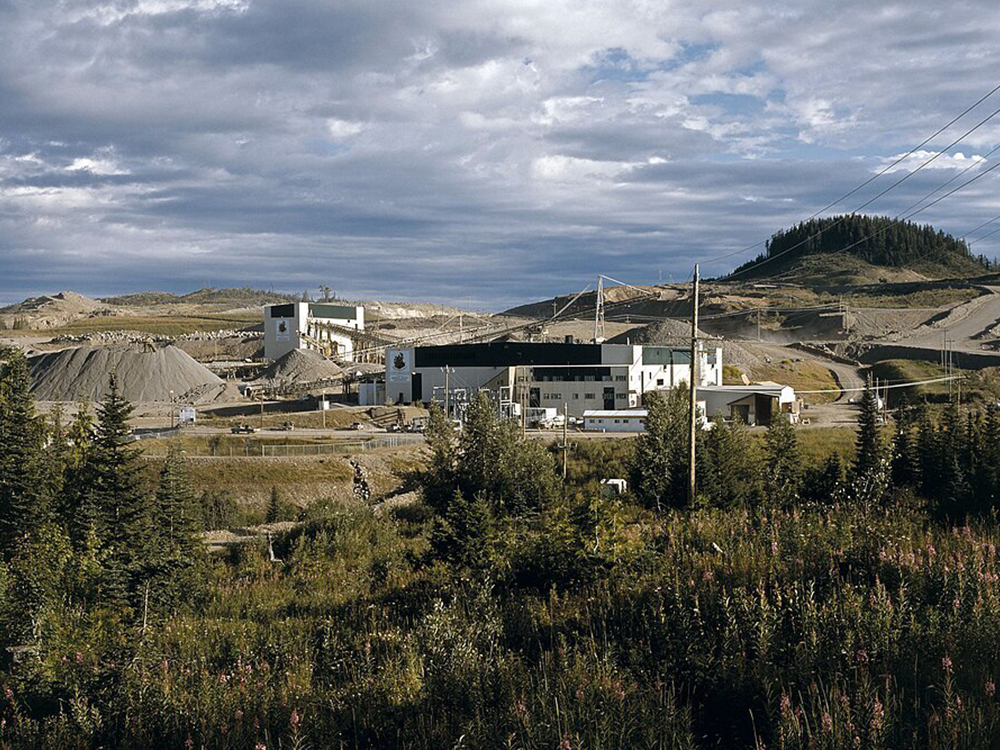
The mine’s tailings dam failed catastrophically on Aug. 4, 2014, depositing 25 million cubic metres of mine waste into the Fraser watershed. It’s considered one of the worst mining disasters in the country’s history.
“Vancouver”-based mining company Imperial Metals, which operates Mount Polley, faces federal charges related to the 2014 breach.
In December, the company was charged with 15 offences under the federal Fisheries Act. Those charges remain before the court.
First Nation says it was not properly consulted
The gold and copper mine, which is about 55 kilometres northeast of Williams Lake in “B.C.’s” central Interior, resumed limited operations one year after the disaster and returned to full operations in June 2016, after receiving authorization to continue depositing mine waste into Quesnel Lake.
In March — following a recommendation by the province’s Environmental Assessment Office — mines minister Jagrup Brar and environment minister Tamara Davidson signed an order approving the tailings expansion through a material alteration to Mount Polley’s original Mines Act certificate, which was issued in 1992.
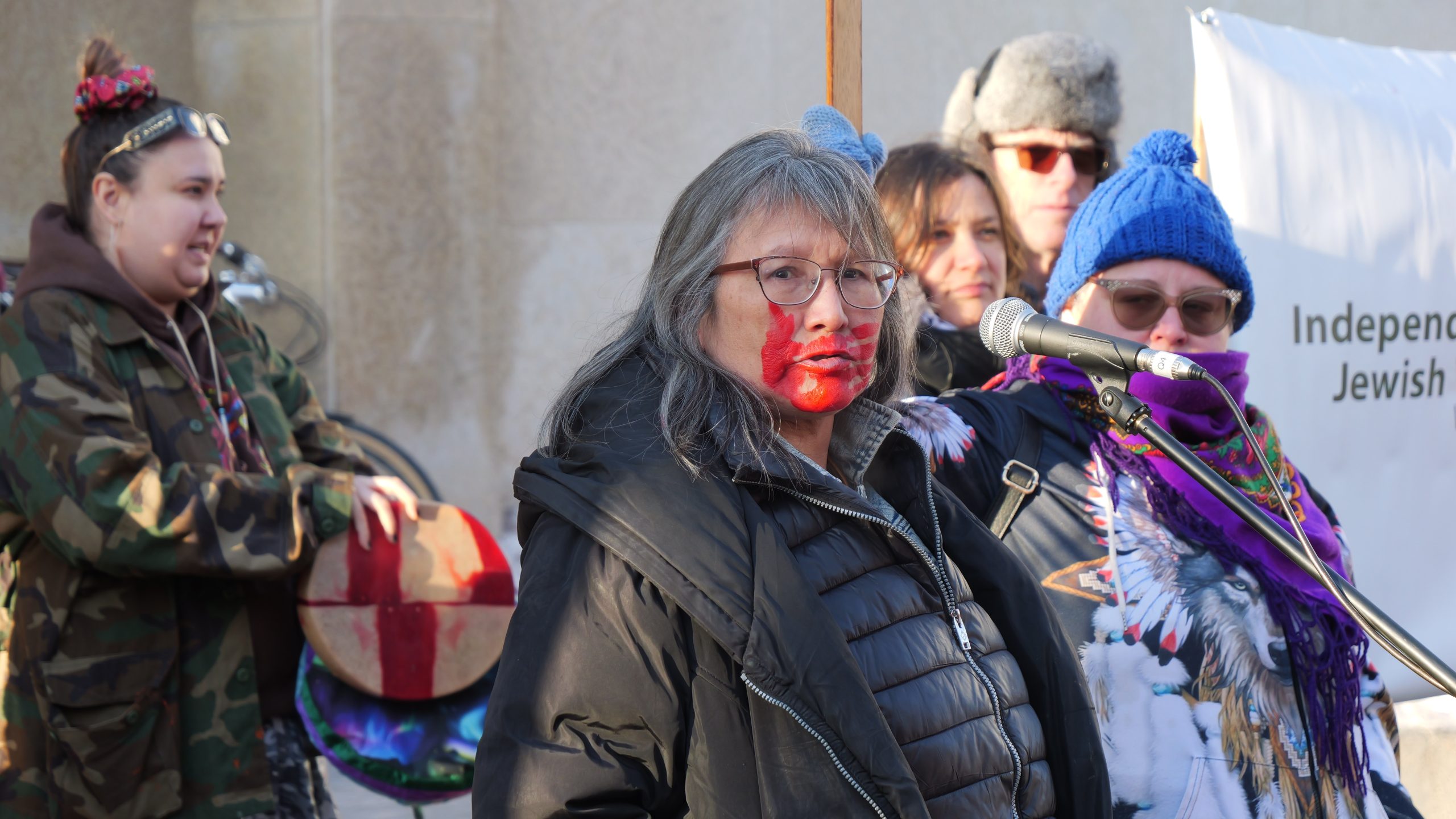
In a statement issued Wednesday afternoon, Xatśūll First Nation said it is disappointed with the court’s decision.
“This is the same facility that breached and devastated Xatśūll’s territory in 2014 — the worst mining disaster on record,” the First Nation wrote. “Its impacts are still harming our nation’s rights, culture and way of life today.
“We will be reviewing the decision as well as exploring our options to determine next steps.”
Xatśūll applied to the court in April for a judicial review of the province’s decision.
The First Nation said it was not properly consulted and argued that the mine should have to undergo an environmental assessment before the tailings dam raise was approved.
Judge says Xatśūll had ‘ample opportunity’ to show impacts
As he delivered his decision Wednesday morning, Justice Michael Tammen acknowledged the “widespread and long-lasting environmental damage” the tailings pond breach has caused, as well as its impacts to Xatśūll rights, title and way of life. The First Nation’s 5.6 million hectares of traditional territory include the mine site.
“Xatśūll is obviously and understandably extremely concerned about the potential for a further failure,” Tammen said, “and thus has a corresponding interest in ensuring that the mine is being operated in an environmentally responsible and safe manner.”
But the judge disagreed that the province’s Environmental Assessment Office did not adequately consult Xatśūll on plans to expand the tailings facility.
The bar for deep consultation had been met, he said.
“I view the consultation here as deep and, importantly, the process employed by the province provided Xatśūll with ample opportunity to present their perspective on impacts to their Section 35 rights,” he said.
“The procedure taken was substantively fair to Xatśūll.”
While Xatśūll’s lawyers argued that the province’s “agree to disagree” response to nation’s concerns contravened the province’s duty to consult, and that the government should have engaged in dispute resolution, Tammen disagreed.
He said the province does not have a legal obligation to reach a consensus with First Nations.
“I am also satisfied that the broader matter in which the EAO interpreted its legislative scheme was consistent with the [Declaration on the Rights of Indigenous Peoples Act],” Tammen added.
“No consensus was ultimately reached, but the EAO made legitimate efforts in that regard.”
Tammen added that he “would not hesitate” to overturn the provincial approvals if the province had breached its duty to consult.
However, he said that consultation needed to be “focused on a specific issue” — in this case, the decision to allow the mine to raise its tailings dam by four metres, from 970 metres to 974 metres above sea level.
Mount Polley has also applied to further expand operations and extend the mine’s life, something that would include an additional dam raise to 987 metres. Tammen said that a decision on what is known as the Springer Pit expansion has not been made and was therefore was not part of the judicial review.
Mine’s environmental certificate ‘atypical’
During a hearing held over several days in June, the court heard that Mount Polley has incrementally raised its tailings dam facility since the mine began operations in 1997 under a condition of its original certificate that allows “staged expansion.”
It had already exceeded the maximum height authorized under that certificate when the dam failed in 2014, Xatśūll’s lawyers told the court.
Tammen said Mount Polley’s environmental certificate, issued long before the province overhauled its Environmental Assessment Act in 2018, is “atypical” by today’s standards. Unlike modern certificates, Mount Polley has a “built-in mechanism” for approving material alterations to the project, he said.
The task for the EAO, and by extension the ministers who approved the project, was to determine how Mount Polley’s certificate “interfaces” with existing legislation, he said. He disagreed with Xatśūll’s position that the mine did not have a valid certificate because there had been no amendment to its Environmental Assessment Certificate prior to the province’s approval.
In dismissing Xatśūll’s petition, Tammen said there was “no basis” for an injunction also requested by the First Nation.
The First Nation had originally applied for an interim injunction that would have stopped construction on the tailings facility dam raise as the matter remained before the court.
The parties instead reached an agreement in May that the mine could continue construction to raise the dam as long as the additional tailings capacity wasn’t used until the case was settled.
Injunctions are rarely granted to First Nations who oppose industrial projects on their traditional territories, according to a 2019 study by the Yellowhead Institute.
The study looked at more than 100 injunction cases involving First Nations going back to the 1950s. It found that injunction applications filed by industry and government against First Nations had a 76 per cent success rate, while injunction applications by Indigenous groups had an 18.5 per cent success rate.
University of Windsor assistant law professor Irina Cerić updated those statistics in 2021 and found injunctions sought by corporations against First Nations had jumped to an 81 per cent success rate following the Wet’suwet’en solidarity protests the year prior.
Author
We live in a media ecosystem that thrives on misinformation. Big Tech and AI companies are consuming the work of real human beings and Canadian news has been banned on Facebook and Instagram.

And yet, I have hope for journalism because of the work we’re doing at IndigiNews.
At IndigiNews, we embody tâpwêwin — the Cree value of integrity and responsibility in truth-telling. We are committed to our independent, Indigenous-led newsroom rooted in community, accountability, and relationality. We believe storytelling is a sacred fire that connects our pasts, presents, and futures through the storytellers in our Storytelling Lodge. IndigiNews creates space for Indigenous journalists, storytellers, Knowledge Keepers, and communities to gather, learn, and share stories that matter.
As a registered charity, we are building a fire that allows our work not just to ignite but to thrive. Rather than relying on advertising or corporate acquisition, IndigiNews is sustained by people like you who believe Indigenous stories are important for the future of our communities.
Your support is making a real difference.
Our community of supporters, our Firekeepers, make it possible to grow our newsroom, publish award-winning journalism, train emerging Indigenous journalists through initiatives like the ReFocus Photojournalism Fellowship, and publish trustworthy stories that serve our communities across the country. Every story we publish helps fill in gaps left by mainstream media and ensures Indigenous perspectives are represented with care, accuracy and respect.
But there is still more work to do.
As the media landscape becomes more and more uncertain, community support is as necessary and essential as it’s ever been. Every new Firekeeper helps protect the independence of our newsroom and strengthens journalism that is accountable to our many and varied communities over corporations.
That’s why we’re inviting you to become a Firekeeper.
Firekeepers tend to and protect the sacred fire. Your monthly contributions directly support IndigiNews’s Storytelling Lodge, helps sustain our independent, Indigenous-led newsroom, and ensures future generations of Indigenous storytellers have the resources they need to do the work.
As a registered Canadian charity, all eligible donations receive a charitable tax receipt.
If you believe Indigenous stories matter, if you value independent journalism, and if you want to help build a strong future for Indigenous media, we invite you to join our circle of Firekeepers today.
Together, we can keep the fire burning.
— Eden Fineday, Publisher, IndigiNews
Support us nowLatest Stories
-

In the Okanagan desert, snakes offer lessons on protecting a fragile ecosystem
For two decades, researchers at the Nk’Mip Desert Cultural Centre have tracked snakes across syilx homelands — while helping people appreciate the often-feared creatures
-
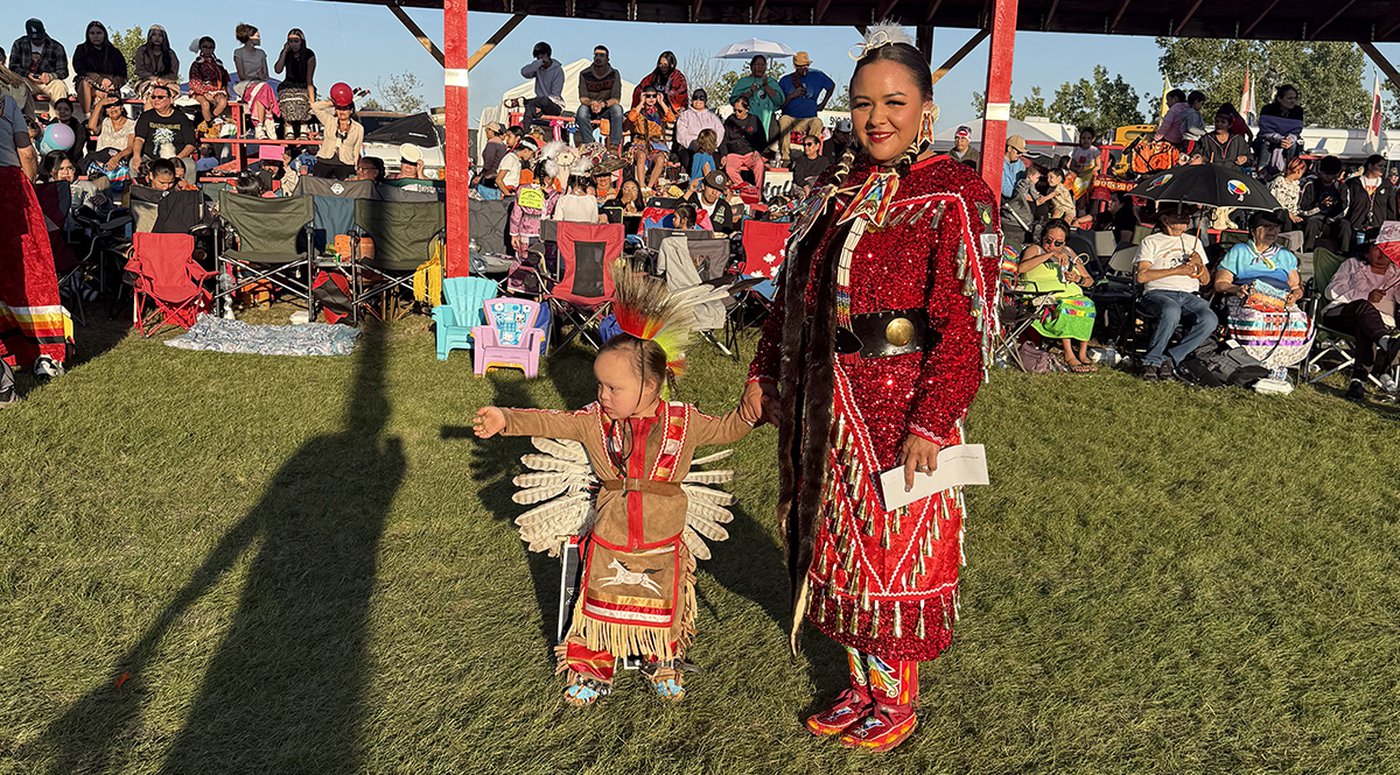
Beloved on the powwow circuit, young boy’s connection to the drum inspires
Now four, Waseskwan Redcrow was dancing ‘before he could even fully walk’ — his family says participating in powwows has brought them joy and belonging