With lands ravaged by logging, Nuu-chah-nulth community launches Aboriginal title claim against ‘B.C.’
Mowachaht/Muchalaht leaders say the filing aims to bring decision making and ecological stewardship back into the hands of the First Nation


This story originally appeared in Ha-Shilth-Sa and is reprinted here with minor style edits
Mowachaht/Muchalaht First Nation (MMFN) is taking the Government of British Columbia to court in pursuit of self-governance and land stewardship of their unceded traditional territory.
Tyee Ha’wilth Mike Maquinna and Ha’wilth Jerry Jack announced in “Victoria” on Thursday that they are a filing a title claim in the B.C. Supreme Court. The First Nation seeks a declaration of Aboriginal title and monetary compensation for the infringement to their historical lands.
Located on the west coast of “Vancouver Island” around Nootka Sound and the Village of Gold River, MMFN says the title claim aims to bring decision making and ecological stewardship back into the hands of MMFN following the devastating impact of Crown-authorized exploitation of their territory without consent or benefit. The size of the land claim is 430,000 hectares.
Exercising jurisdiction ‘since time immemorial’
The Nuchatlaht First Nation, a smaller Nuu-chah-nulth community covering the northern portion of Nootka Island right above Mowachaht/Muchalaht’s ancestral lands, is also pursuing Aboriginal title over its traditional territory through a court case.
Mowachaht/Muchalaht’s representation for their claim, Woodward & Co, is the same legal firm currently representing the Nuchatlaht in their case against the province, in which the small Nuu-chah-nulth First Nation seeks Aboriginal title over its traditional territory covering the northern portion of Nootka Island right above Mowachaht/Muchalaht’s ancestral lands.
“The Crown has acted as if it is the sole decision-making authority for our forests; however, MMFN has been exercising jurisdiction regarding forestry management in our territory since time immemorial. Through this Aboriginal title claim, MMFN aims to ensure a sustainable future for our community and for future generations,” said Chief Maquinna.
“Our story is one of resilience, culture and commitment to the betterment of our land and our community,” Chief Maquinna continued. “We want to make sure through this process our members have a better life to look forward to and want to and know that their children will be safe in our territories and using our resources in our lands and waters.”
In March 1778, Captain James Cook was greeted by the Mowachaht when he first set foot on Yuquot, or “Friendly Cove” as it was dubbed. This encounter was the point of first contact between Europeans and Indigenous people of what is now the “B.C.” coast.
“We have been stewards of these lands since time immemorial — we all know we were here before Captain Cook,” said Hereditary Chief Jerry Jack.
“It’s time for the Province of British Columbia to uphold its commitment to the United Nations Declaration on the Rights of Indigenous Peoples and return the decision-making power over our lands to us. It’s the right thing to do.”
MMFN say they have been working towards this case for many decades, compiling historical evidence to prove occupancy of their lands.
“We have culturally modified trees everywhere in our territory. Those are really important because it tells our history, it tells us that we lived there,” said Chief Jack.
“If you go to museums all over the world, you will always find something from Mowachaht. I just recently came back from New York City because we have a Whaler’s Shrine that was stolen.”
‘I couldn’t believe how much of our territory was gone’
MMFN territory is almost completely covered by Crown-issued and Crown-authorized tree farm licenses and Timber Supply Areas. The First Nation estimates that the forestry activity authorized by “British Columbia” has removed millions of cubic metres of timber from the territory since the 1990s — with the economic benefit retained by province and logging companies.
In recent years, the First Nation has been working to gain more control over its territory, notably the Salmon Parks initiative, which protects a large portion of Mowachaht/Muchalaht Ḥahahuułi (traditional territory) from industrial logging. Salmon Parks have been recognised under Mowachaht/Muchalaht law, and in October 2023, the federal government pledged $15 million to help fund the project.
MMFN territory stretches from Buttle Lake in Strathcona Provincial Park out to the village of Tahsis and encompasses Nootka Island. Out of all the Nuu-chah-nulth territories, MMFN has the largest land mass.
Chief Jack recalls seeing the devastation from forestry while he was working with the Canadian Coast Guard.
“I got to see our land from the air, right from one end to the other, and I couldn’t believe how much of our territory was gone. No more forests,” he shared.
MMFN chiefs did not disclose how much compensation they would be seeking, and said any treaty negotiations are off the table.
“We dropped out of treaty a long time ago,” said Jack. “The Crown has given us reservations to live on and that’s owned by King Charles. We don’t even own it. That’s frustrating. The ordinary person owns that land, they own that house, and we don’t. That’s very hurtful for people that have been here since the beginning of time.”
MMFN say the title claim is directed solely at the Government of British Columbia and private landowners “have nothing to worry about.”
“We’re not interested in them. It’s the Crown, it’s (the) province because they are the ones who wronged us. That’s why we are in a situation today that we shouldn’t be in,” said Chief Jack.
According to The Canadian Press, “B.C.” Premier David Eby responded to the claim by saying the province prefers negotiated land claim settlements to court cases but said “we have no problem” with MMFN going the legal route.
Author
We live in a media ecosystem that thrives on misinformation. Big Tech and AI companies are consuming the work of real human beings and Canadian news has been banned on Facebook and Instagram.
And yet, I have hope for journalism because of the work we’re doing at IndigiNews.
At IndigiNews, we embody tâpwêwin — the Cree value of integrity and responsibility in truth-telling. We are committed to our independent, Indigenous-led newsroom rooted in community, accountability, and relationality. We believe storytelling is a sacred fire that connects our pasts, presents, and futures through the storytellers in our Storytelling Lodge. IndigiNews creates space for Indigenous journalists, storytellers, Knowledge Keepers, and communities to gather, learn, and share stories that matter.
As a registered charity, we are building a fire that allows our work not just to ignite but to thrive. Rather than relying on advertising or corporate acquisition, IndigiNews is sustained by people like you who believe Indigenous stories are important for the future of our communities.
Your support is making a real difference.
Our community of supporters, our Firekeepers, make it possible to grow our newsroom, publish award-winning journalism, train emerging Indigenous journalists through initiatives like the ReFocus Photojournalism Fellowship, and publish trustworthy stories that serve our communities across the country. Every story we publish helps fill in gaps left by mainstream media and ensures Indigenous perspectives are represented with care, accuracy and respect.
But there is still more work to do.
As the media landscape becomes more and more uncertain, community support is as necessary and essential as it’s ever been. Every new Firekeeper helps protect the independence of our newsroom and strengthens journalism that is accountable to our many and varied communities over corporations.
That’s why we’re inviting you to become a Firekeeper.
Firekeepers tend to and protect the sacred fire. Your monthly contributions directly support IndigiNews’s Storytelling Lodge, helps sustain our independent, Indigenous-led newsroom, and ensures future generations of Indigenous storytellers have the resources they need to do the work.
As a registered Canadian charity, all eligible donations receive a charitable tax receipt.
If you believe Indigenous stories matter, if you value independent journalism, and if you want to help build a strong future for Indigenous media, we invite you to join our circle of Firekeepers today.
Together, we can keep the fire burning.
— Eden Fineday, Publisher, IndigiNews
Support us nowLatest Stories
-
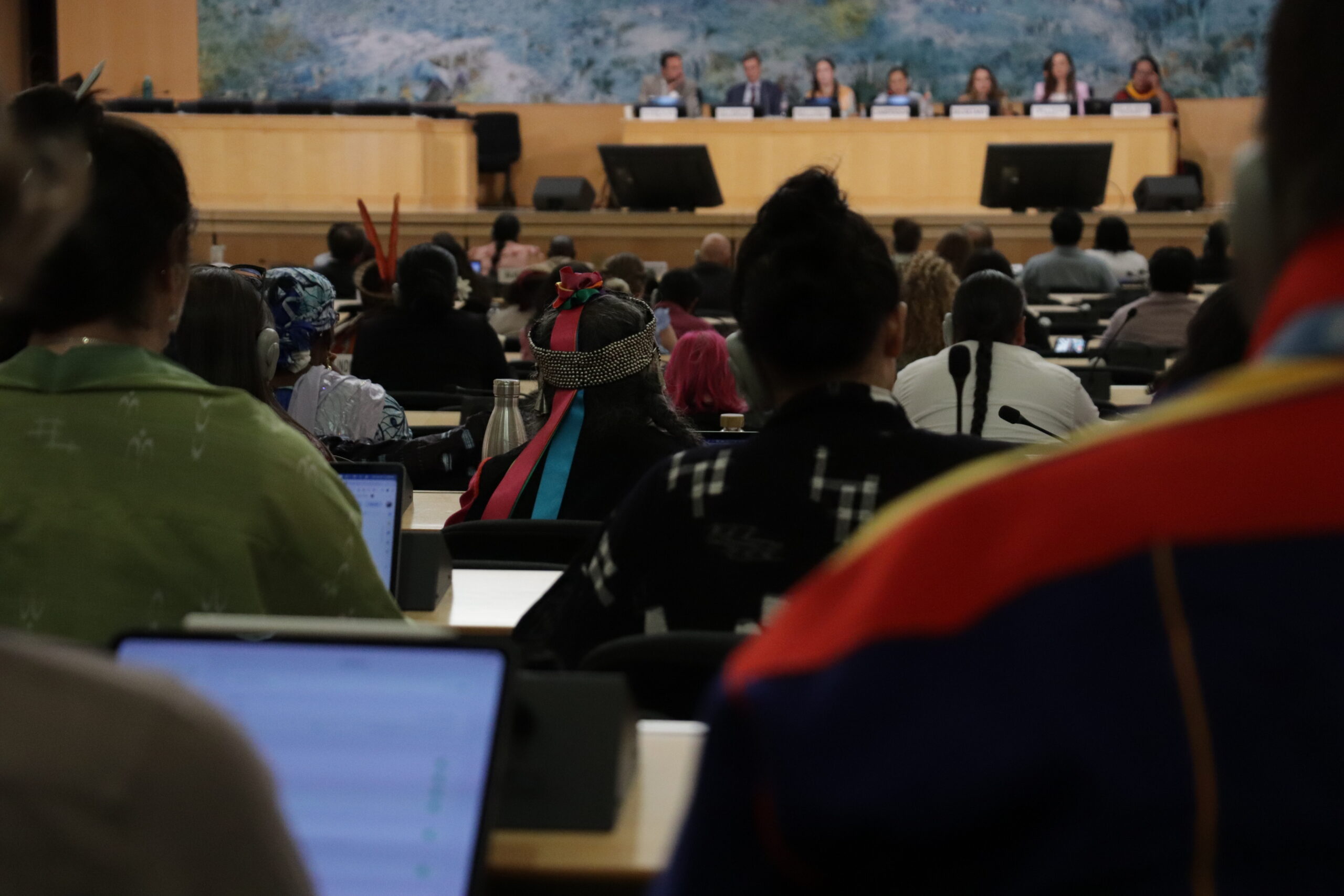
Indigenous leaders give the UN a roadmap for protecting their peoples
Amidst prayers and vows of solidarity, UN Expert Mechanism on the Rights of Indigenous Peoples ends annual meetings with demands for ‘action we’re not seeing globally’
-
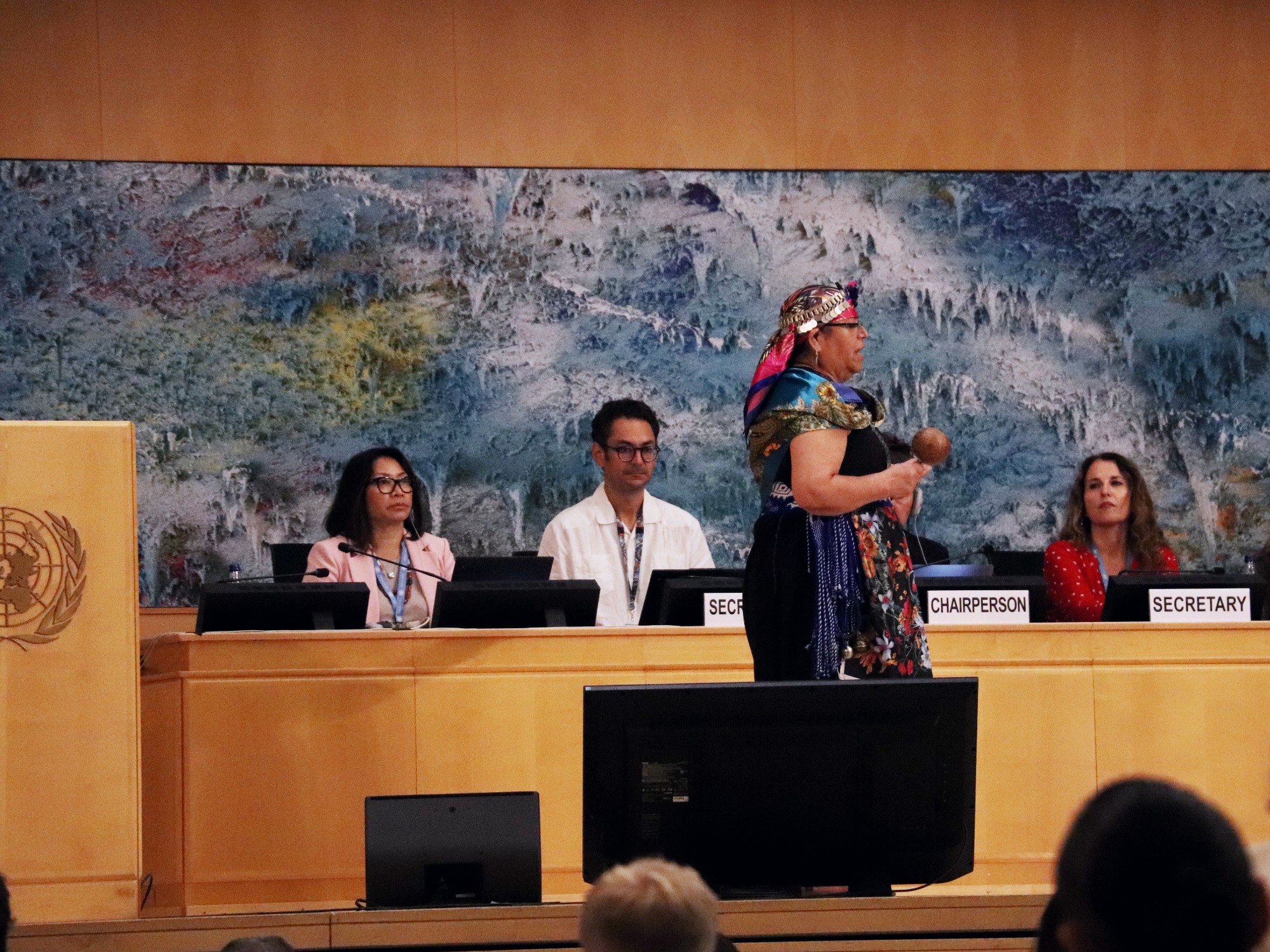
Indigenous people demand more say at the UN, as new crises hit their homelands
Indigenous nations live ‘on the frontlines’ of climate, conflict and new tech. But their voices remain sidelined in the global halls of power.