Native Courtworker position in ‘Kamloops’ left vacant, future of role uncertain
With speculations around funding and restructuring, sources say Indigenous people in the criminal justice system are left without on-site support
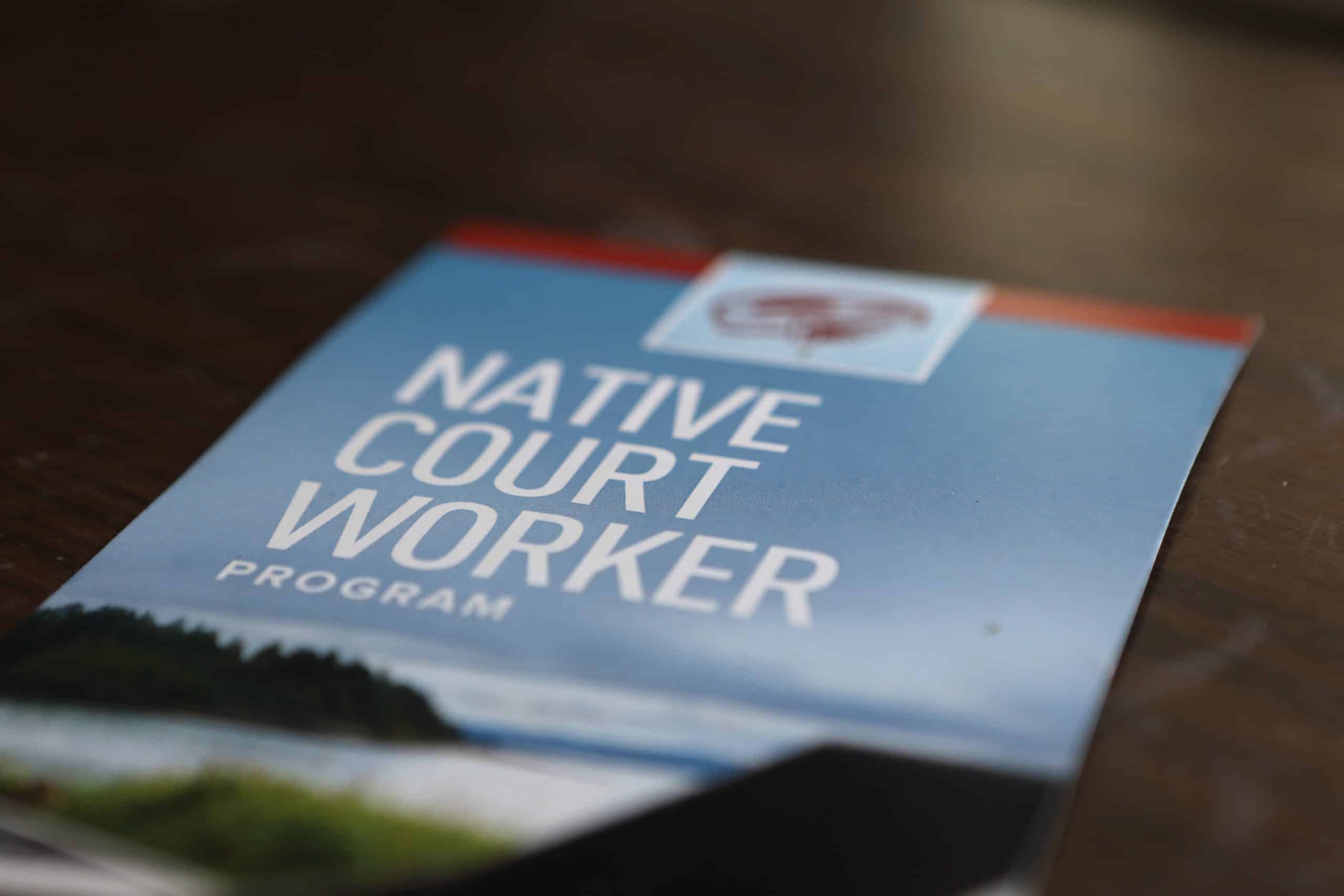

Indigenous people involved in the criminal justice system who require legal guidance from a Native Courtworker at the “Kamloops” courthouse are currently without on-site support.
Sources say the office has been vacant since the beginning of the month, with no clear timetable on when the Native Courtworker position will be filled, or if it will even resume. Speculation around funding and restructuring have left its future uncertain.
Connie Allen had been serving as the Native Courtworker for “Kamloops” and “Merritt” in an interim role since November, working with around 80 clients over a period of seven months.
By the time her tenure concluded at the end of June, she was still in the midst of supporting nearly 30 people, she said.
“The whole purpose of the Native Courtworker association is to help Indigenous people navigate the criminal justice system. You need boots on the ground for that,” said Allen.
While a future in the role was never confirmed, she said she expected some sort of extension or permanency, after building a strong rapport with her clients and courthouse faculty. Instead, she said she was offered — and declined — a junior courtworker role with less pay.
She’s not sure why the position wasn’t extended.
“I was really upset about leaving my clients behind,” Allen said. “Now they don’t have anybody (at the courthouse).”
The Native Courtworker program is delivered to dozens of communities across the province by the Native Courtworker and Counselling Association of British Columbia (NCCABC). Its primary function is to walk with Indigenous clients through the stages of the criminal justice process, and provide them with referrals to legal, social, medical and other resources.
Native Courtworkers often act as a liaison between Indigenous clients and criminal justice personnel, where they provide appropriate information to the courtroom such as cultural teachings and values, and are even able to speak on behalf of their clients.
“You walk into the courtroom and there’s a different energy in there. For First Nations people, it’s very, very intimidating,” said Allen.
In her role, she said would also help find a lawyer best suitable for her client, and assist in facilitating the process of gathering support letters for her clients from chief and council, their community and family.
She would often sit with them in court, and at times would cross the bar to speak to the judge on behalf of clients.
“They’re a lot more comfortable working with you to do those things, than they are working with someone who isn’t Indigenous,” she said.
“When you go up to somebody and tell them you’re the Native Courtworker, there’s a shift — here’s somebody who can help me. The system is so against them in many ways that they feel that way.”
She’s given her personal contact to eight of her former clients, agreeing to be their support person in First Nations Court, which is a criminal sentencing courtroom that focuses on healing plans and restorative justice.
One of those clients, an Indigenous man who has asked to remain anonymous because of ongoing legal proceedings, spoke of the importance of being supported by Allen, who had advocated for his wellness in the courtroom.
“She’s on her own time and has agreed to still support me, because she’s been supporting me for eight months,” he said.
“I’m lucky that she’s there, because I feel more concerned for new people. They’re not going to benefit from having the same experience that I have of being supported.”
He called Allen’s situation unfortunate, because outside of First Nations court, he described his experience in “Canada’s” criminal justice system as “very penal and not rehabilitative.”
He added that he didn’t receive any notice from NCCABC management regarding Allen’s position ending, or any follow-up since she’s been gone.
“And you have one person there that’s supportive, out of all of those people — I think it’s ridiculous,” he said. “Why get rid of the one person that’s there to support people?”
‘I feel kind of sabotaged’
IndigiNews reached out to NCCABC to ask about the future of the Native Courtworker office in “Kamloops.”
Darryl Shackelly, the association’s CEO, confirmed in an email to IndigiNews that the office is vacant, but didn’t provide any more details. He did not respond to follow-up inquiries regarding the history of the “Kamloops” office and what its future entails.
According to Allen, she was told by NCCABC that the reason her contract wasn’t renewed and the position remains vacant is because of funding and internal restructuring.
“You’re hiring people down on the coast, so it can’t be funding,” she recalled telling them.
“(They) said, ‘Those are jobs that are vacant that are just being refilled.’ ‘Well,’ I said, ‘so is Kamloops.’”
As of writing, there are five job postings listed on NCCABC’s career site, all located in the Lower Mainland.
In 2021, NCCABC reached a three-year tentative agreement with the BC General Employees’ Union (BCGEU), which expired this past March. Bargaining discussions over positions like the Kamloops Native Courtworker are expected to continue into the fall, Allen said.
Consistency issues around retaining a Native Courtworker in “Kamloops” precedes any bargaining agreements, she said.
“This office has had a hard time keeping a worker in here. For the last three or four years, that’s been true,” she said.
During her time in the role, Allen said that she felt unsupported. She said she learned through the help of other Native Courtworkers in nearby regions and courtroom faculty, as well as guidance from lawyers and judges in the courtroom.
No feedback was given on her job performance, Allen said, and when she would ask for better training, she said she was told that she wasn’t expected to know everything, as it could take up to a year for her to learn.
“I don’t even know why they hired me in the first place,” she said.
“Maybe I’m being dramatic. But I don’t feel like there was any effort made to support me and keep me in that office.”
A Secwépemc Community Justice Program worker with more than 20 years of industry experience in the region told IndigiNews that during the last three years, they’ve seen “a revolving door” of five Kamloops Native Courtworkers come and go.
The program is a local agency that works closely with NCCABC on referrals. The worker agreed to speak to IndigiNews under the condition of anonymity, due to fear of professional repercussions for speaking out.
They also said that minimal training was also often the case with Native Courtworkers who recently came before Allen.
“That’s where I see the change, is they don’t get the training, otherwise the people would stay,” they said.
Since the Native Courtworker office in “Kamloops” first opened in the 1980s, the Secwépemc Community Justice worker has seen it change from two-full time employees and one part-time worker, down to one courtworker and sometimes none.
Some of the early Native Courtworkers in “Kamloops” had spent decades in their roles, said the justice worker.
It was around 2018 when the worker said they noticed efforts around maintaining the program in “Kamloops” begin to change, noting that this isn’t the first time the office has been left vacant.
“It’s just that they don’t want to fund us up here, that’s the main issue,” they said, similarly noting the list of resources pooled into coastal positions.
“The people don’t fight for it … They want the services, but I guess some of them don’t have the resources to phone and find out who they should talk to, write letters, that sort of thing.”
They said that they’ve written letters to chief and council for Tk̓emlúps te Secwépemc and Skeetchestn Indian Band, advocating for better support of the program.
“Because I think it’s important to have a courtworker here to help the people. It’s not only that, a lot of this stuff is historical too,” they said, noting the impacts that intergenerational trauma and the former Kamloops Indian Residential School has had on many clients in the region.
“It may not be criminal or family, they just need somebody, where to refer them to, because there’s a lot of different things — education, housing, drug and alcohol counselling.”
Allen said that she misses her clients and feels for any new Indigenous people who are seeking help from a Native Courtworker in “Kamloops” only to find that there isn’t one.
“These are people. They’re literally some of my cousins. They are somebody’s family,” she said. “You stand close to them and you feel they’re kinda scared, lost or very skeptical. You connect to those people. You want to help them. Imagine how they feel.”
Author
We live in a media ecosystem that thrives on misinformation. Big Tech and AI companies are consuming the work of real human beings and Canadian news has been banned on Facebook and Instagram.

And yet, I have hope for journalism because of the work we’re doing at IndigiNews.
At IndigiNews, we embody tâpwêwin — the Cree value of integrity and responsibility in truth-telling. We are committed to our independent, Indigenous-led newsroom rooted in community, accountability, and relationality. We believe storytelling is a sacred fire that connects our pasts, presents, and futures through the storytellers in our Storytelling Lodge. IndigiNews creates space for Indigenous journalists, storytellers, Knowledge Keepers, and communities to gather, learn, and share stories that matter.
As a registered charity, we are building a fire that allows our work not just to ignite but to thrive. Rather than relying on advertising or corporate acquisition, IndigiNews is sustained by people like you who believe Indigenous stories are important for the future of our communities.
Your support is making a real difference.
Our community of supporters, our Firekeepers, make it possible to grow our newsroom, publish award-winning journalism, train emerging Indigenous journalists through initiatives like the ReFocus Photojournalism Fellowship, and publish trustworthy stories that serve our communities across the country. Every story we publish helps fill in gaps left by mainstream media and ensures Indigenous perspectives are represented with care, accuracy and respect.
But there is still more work to do.
As the media landscape becomes more and more uncertain, community support is as necessary and essential as it’s ever been. Every new Firekeeper helps protect the independence of our newsroom and strengthens journalism that is accountable to our many and varied communities over corporations.
That’s why we’re inviting you to become a Firekeeper.
Firekeepers tend to and protect the sacred fire. Your monthly contributions directly support IndigiNews’s Storytelling Lodge, helps sustain our independent, Indigenous-led newsroom, and ensures future generations of Indigenous storytellers have the resources they need to do the work.
As a registered Canadian charity, all eligible donations receive a charitable tax receipt.
If you believe Indigenous stories matter, if you value independent journalism, and if you want to help build a strong future for Indigenous media, we invite you to join our circle of Firekeepers today.
Together, we can keep the fire burning.
— Eden Fineday, Publisher, IndigiNews
Support us nowLatest Stories
-
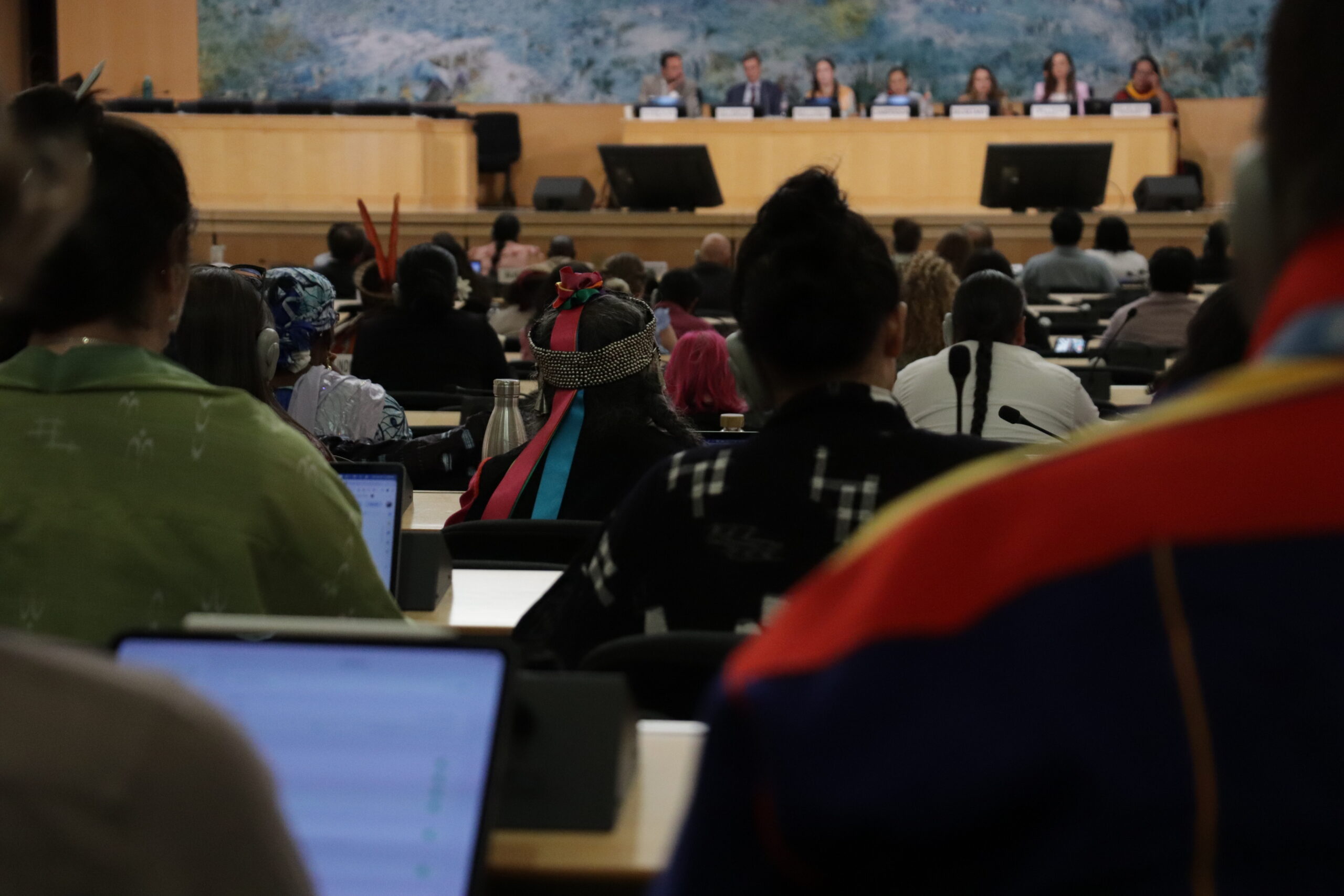
Indigenous leaders give the UN a roadmap for protecting their peoples
Amidst prayers and vows of solidarity, UN Expert Mechanism on the Rights of Indigenous Peoples ends annual meetings with demands for ‘action we’re not seeing globally’
-
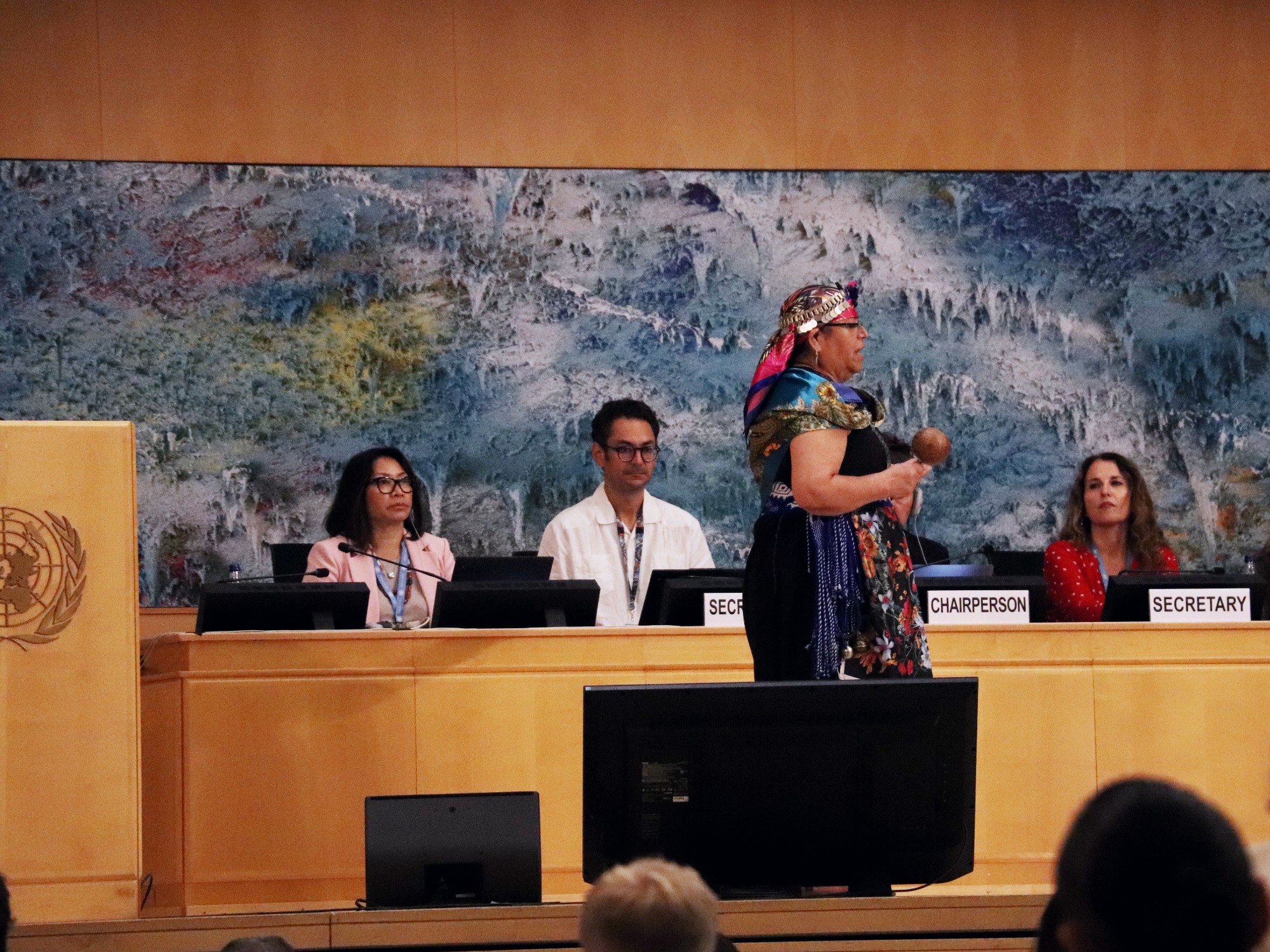
Indigenous people demand more say at the UN, as new crises hit their homelands
Indigenous nations live ‘on the frontlines’ of climate, conflict and new tech. But their voices remain sidelined in the global halls of power.