‘Not much has been done’ says Vernon-based MMIWG advocate
One year after MMIWG report, Meagan Louis talks about what the anniversary means in the Okanagan

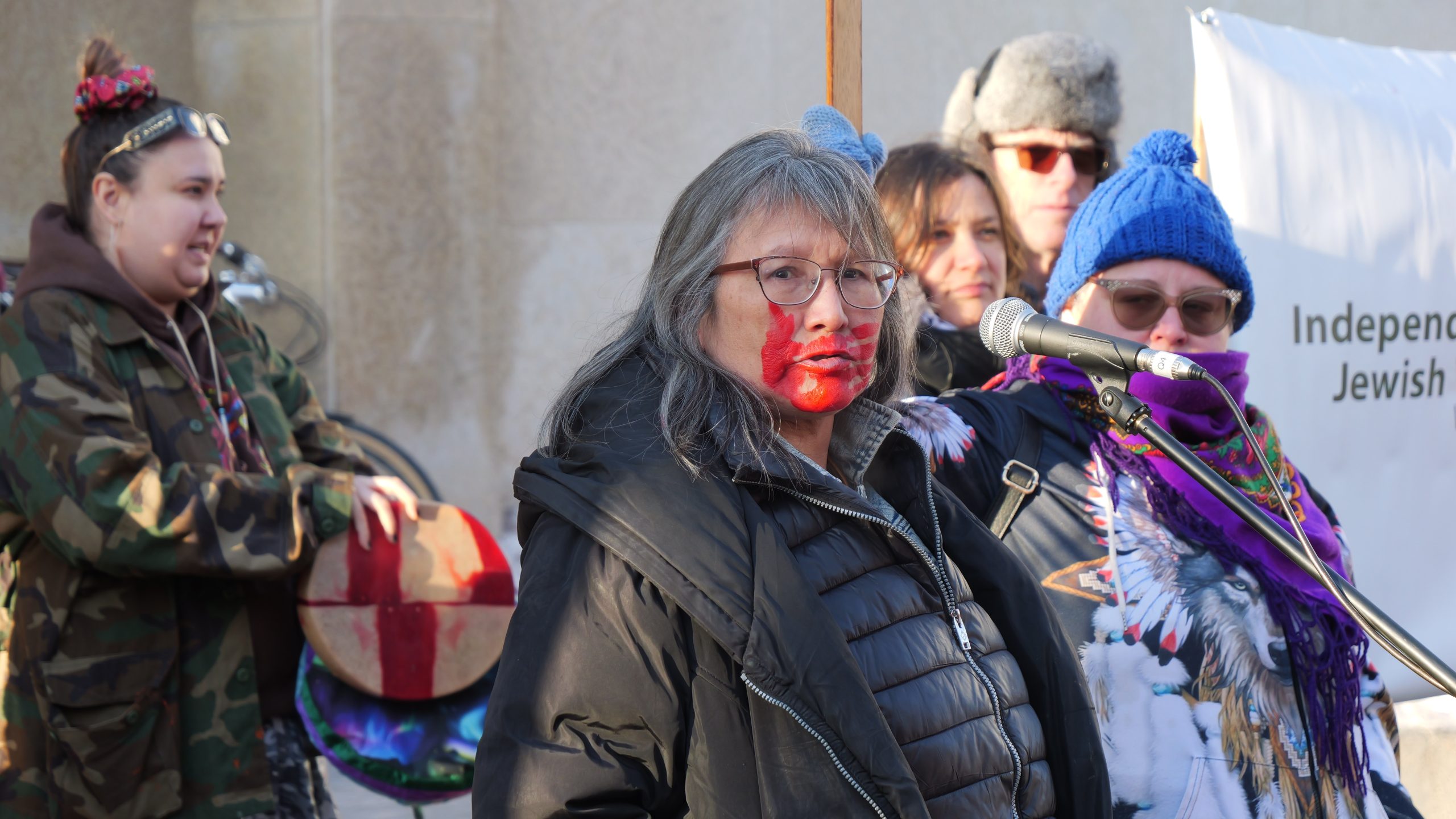
June 3, 2020, marks the one year anniversary of the release of the National Inquiry into Missing and Murdered Indigenous Women and Girls (MMIWG) — and the federal government has postponed the release of its action plan.
“It’s the one year anniversary and not much has been done,” says Meagan Louis.
Louis is an MMIWG advocate from the Cheslatta Carrier Nation living in Vernon, B.C.
“It makes me feel like again it’s not being taken seriously and it’s not a priority for the government to address what’s happening to Indigenous people,” she says.
Prime Minister Justin Trudeau released a statement on June 3 that says, “the National Inquiry has shown us the way forward. We know that there is still much more to do to end the systemic gender and racial discrimination that continues today.”
The statement does not address when the national action plan will be released and does not acknowledge the term genocide, which was widely used in the report. Last month, Crown-Indigenous Relations Minister Carolyn Bennett said the action plan, which was supposed to be released by the end of June, was delayed due to the COVID-19 pandemic.
On June 3, the four former MMIWG report commissioners, Marion Buller, Michele Audette, Qajaq Robinson and Brian Eyolfson released a statement stating that they “deplore inaction on the part of some governments.”
“Due to the one year of inaction, the lack of transparency, the growing race and gender based tensions, Indigenous people’s distrust of governments, and the failure to heed the principles for change in the Final Report, we assert the need for international attention to implementation,” the statement says.
What’s happening in the Okanagan
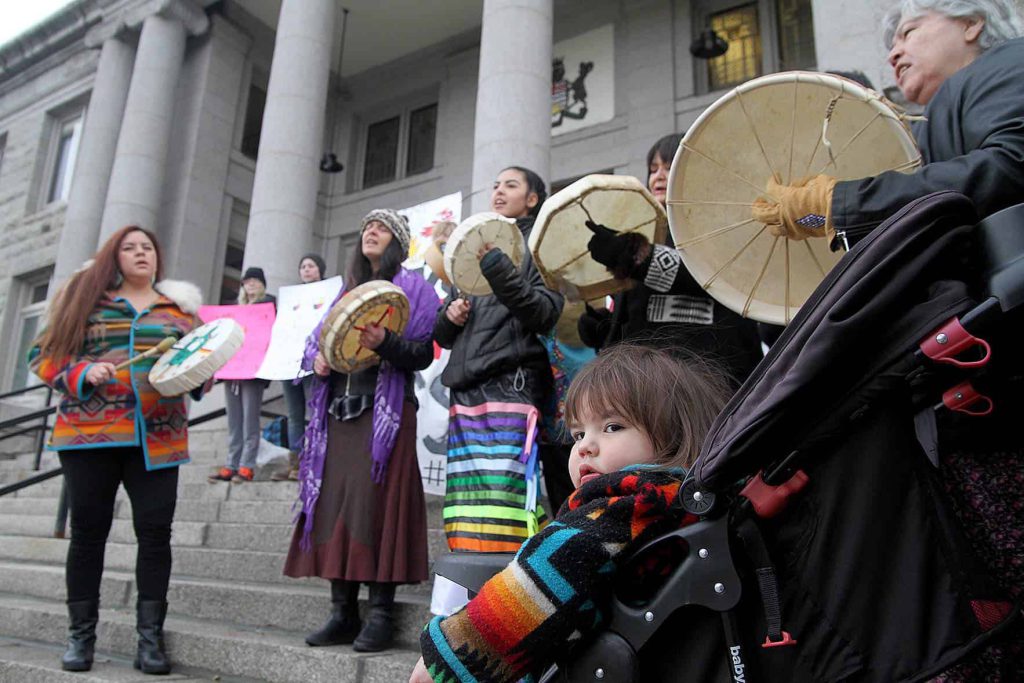
Louis currently advocates for MMIWG in the Okanagan as that is where she lives.
“Being an advocate to me that just means spreading awareness and you know sort of encouraging other people to join our movement and join our cause and you know help us to spread the word,” she says.
“I also help organize vigils for the missing women here in the Okanagan.”
Since 2016, at least five women have gone missing in the Okanagan including Ashley Simpson, 32, Deanna Wertz, 46, Caitlin Potts, 27, Nicole Bell, 31, and Traci Genereaux, 18, according to an in-depth report by The Star Vancouver investigating their disappearances.
When asked about the number of MMIWG cases in the Okanagan region, RCMP Cpl. Jesse O’Donaghey explains that the RCMP does not keep statistics, “we report crimes to Statistics Canada,” she says.
“The RCMP remains focused on resolving unsolved cases of missing and murdered Indigenous women and girls within each of its jurisdictions, and seeking closure for families.”
Moving forward
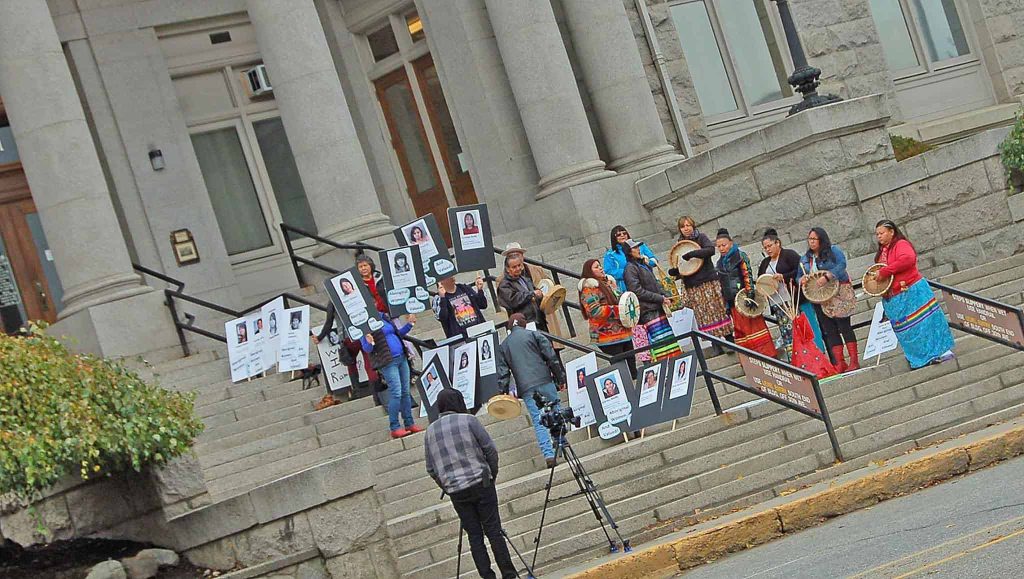
While these cases in the Okanagan remain unsolved, Louis says there are things people can do.
“Talk about this woman don’t let that woman go unnoticed or forgotten.”
She wants people to take action and says it can be something as simple as sharing a picture and story of someone who is missing on Facebook, taking part in a vigil or holding your local police department accountable.
“Call the local police department or detachment where that woman went missing and ask them,” Louis says.
She continues to advocate for MMIWG because it’s something that hits close to home.
“The whole missing and murdered Indigenous women movement has been personal for me because I know people that have gone missing,” she says. “I’ve grown up my whole life hearing about stories of women that have went missing along the highway of tears.”
“I also have a cousin who is missing in Saskatchewan, her name is Danita Faith Bigeagle and she has been missing since 2007.”
When it comes to the federal government’s action plan, Louis wants more transparency.
“I would like them to tell us exactly what they’re gonna do, when they’re gonna do it. If there’s a timeline that they could stick to. I think that would sort of quell a lot of the emotions that these families of these missing and murdered Indigenous women in Canada that are going through.”
Author
We live in a media ecosystem that thrives on misinformation. Big Tech and AI companies are consuming the work of real human beings and Canadian news has been banned on Facebook and Instagram.
And yet, I have hope for journalism because of the work we’re doing at IndigiNews.
At IndigiNews, we embody tâpwêwin — the Cree value of integrity and responsibility in truth-telling. We are committed to our independent, Indigenous-led newsroom rooted in community, accountability, and relationality. We believe storytelling is a sacred fire that connects our pasts, presents, and futures through the storytellers in our Storytelling Lodge. IndigiNews creates space for Indigenous journalists, storytellers, Knowledge Keepers, and communities to gather, learn, and share stories that matter.
As a registered charity, we are building a fire that allows our work not just to ignite but to thrive. Rather than relying on advertising or corporate acquisition, IndigiNews is sustained by people like you who believe Indigenous stories are important for the future of our communities.
Your support is making a real difference.
Our community of supporters, our Firekeepers, make it possible to grow our newsroom, publish award-winning journalism, train emerging Indigenous journalists through initiatives like the ReFocus Photojournalism Fellowship, and publish trustworthy stories that serve our communities across the country. Every story we publish helps fill in gaps left by mainstream media and ensures Indigenous perspectives are represented with care, accuracy and respect.
But there is still more work to do.
As the media landscape becomes more and more uncertain, community support is as necessary and essential as it’s ever been. Every new Firekeeper helps protect the independence of our newsroom and strengthens journalism that is accountable to our many and varied communities over corporations.
That’s why we’re inviting you to become a Firekeeper.
Firekeepers tend to and protect the sacred fire. Your monthly contributions directly support IndigiNews’s Storytelling Lodge, helps sustain our independent, Indigenous-led newsroom, and ensures future generations of Indigenous storytellers have the resources they need to do the work.
As a registered Canadian charity, all eligible donations receive a charitable tax receipt.
If you believe Indigenous stories matter, if you value independent journalism, and if you want to help build a strong future for Indigenous media, we invite you to join our circle of Firekeepers today.
Together, we can keep the fire burning.
— Eden Fineday, Publisher, IndigiNews
Support us nowLatest Stories
-
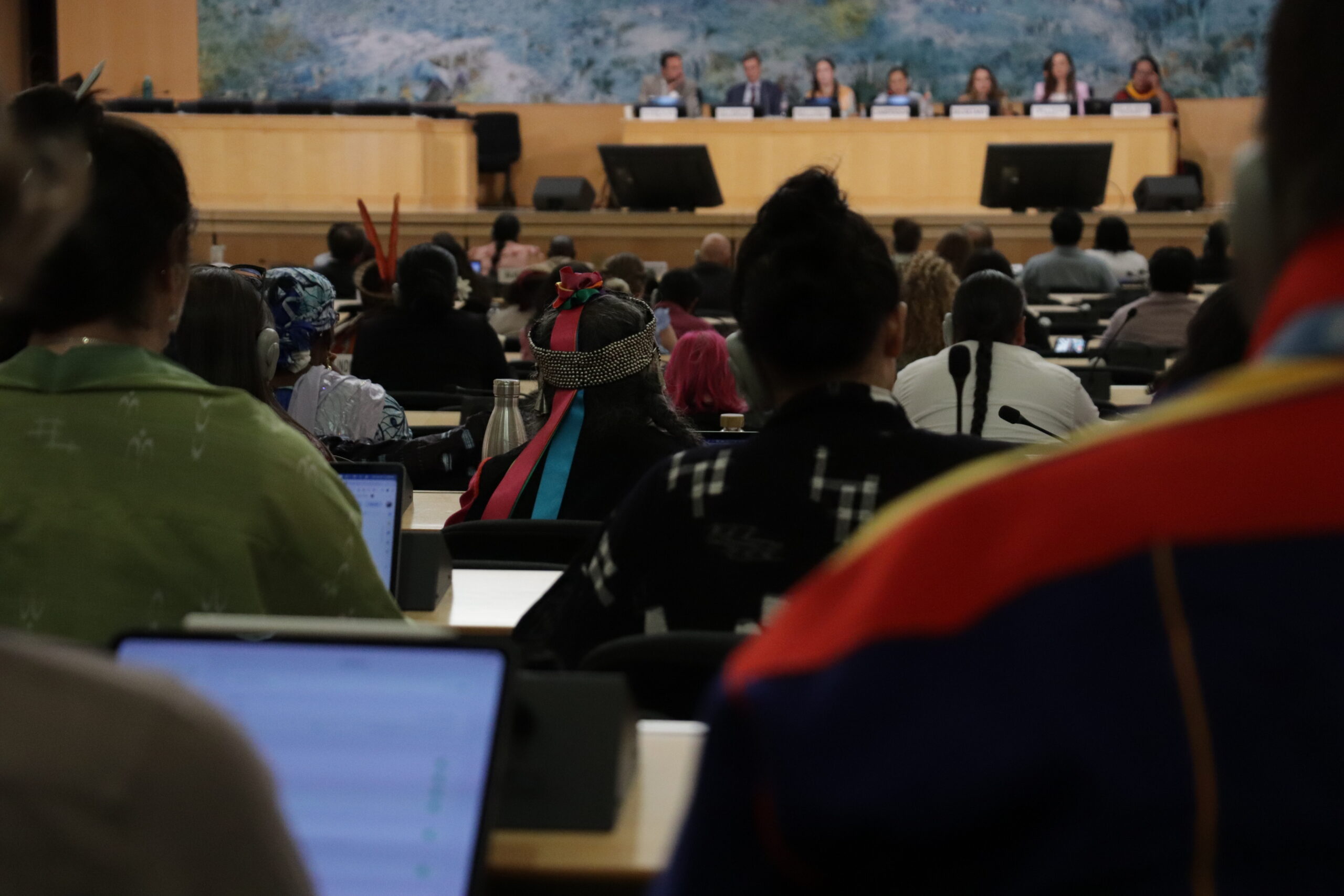
Indigenous leaders give the UN a roadmap for protecting their peoples
Amidst prayers and vows of solidarity, UN Expert Mechanism on the Rights of Indigenous Peoples ends annual meetings with demands for ‘action we’re not seeing globally’
-
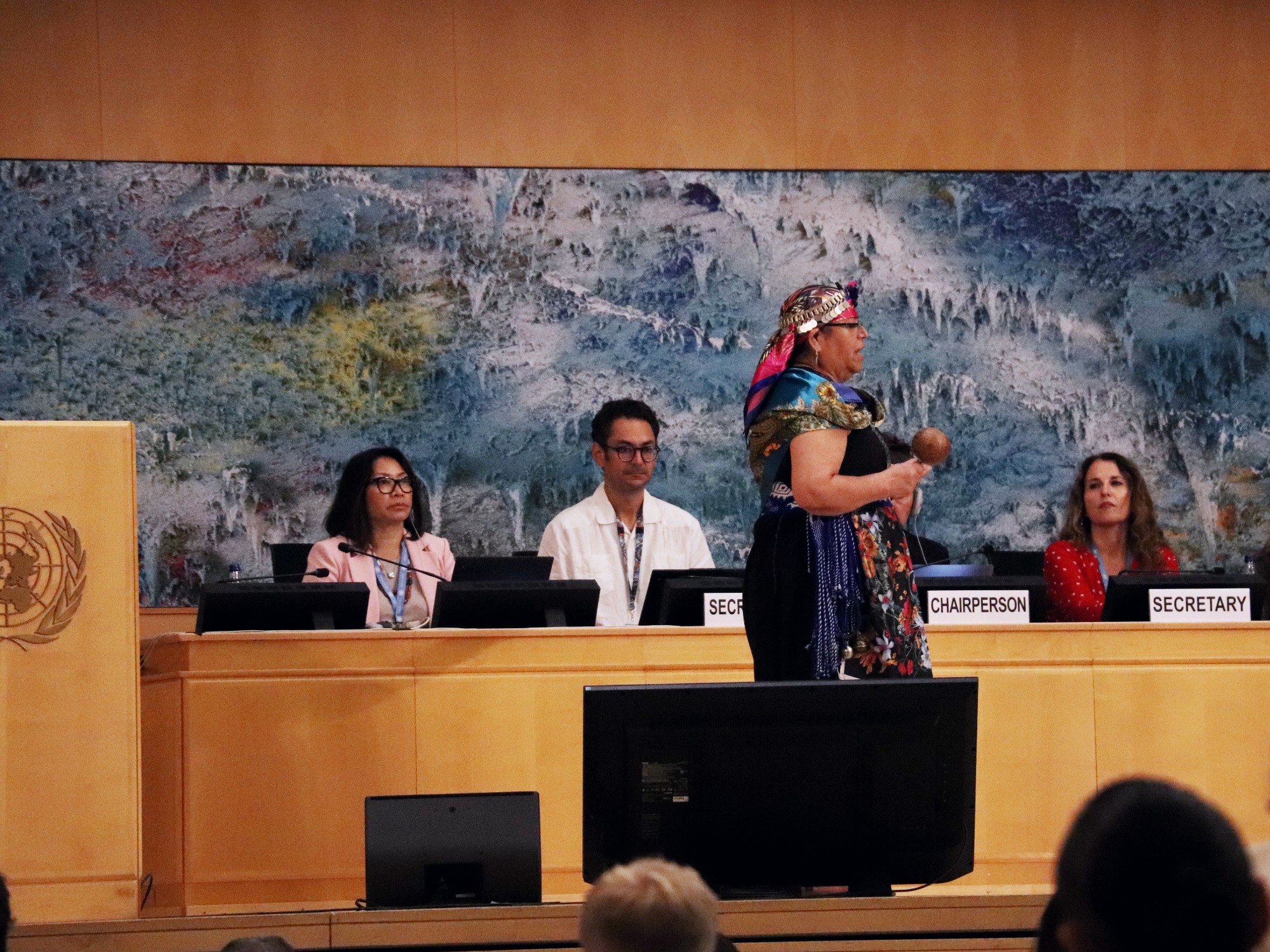
Indigenous people demand more say at the UN, as new crises hit their homelands
Indigenous nations live ‘on the frontlines’ of climate, conflict and new tech. But their voices remain sidelined in the global halls of power.