‘Our children are so important to us’: Youth treatment centre set to open in Snaw-naw-as territories
The Orca Lelum Youth Wellness Centre will incorporate ceremony and culture into its healing programs, with a focus on identity and belonging


Located down a quiet street on the territory of the Snaw-naw-as First Nation with an ocean view, the new Orca Lelum Youth Wellness Centre — which offers youth addiction services — gives off a placid spa vibe.
Clean and inviting, in addition to the bedrooms which will house up to 20 Youth, the space features a media room, outdoor sauna, gymnasium and a large meeting room for group sessions or Elder teachings.
The treatment centre, set to open in June, will offer culturally relevant detox and treatment services to Indigenous Youth from 12 to 18 years old who struggle with substance use, drug addiction, mental health crises and trauma.
On April 9, the centre hosted an event to launch the facility, attended by Snaw-naw-as Chief Gordon Edwards, Premier David Eby, University of Victoria vice president Qwul’sih’yah’maht Robina Thomas, Minister of Social Development and Poverty Reduction Sheila Malcolmson and others.
Run as a branch of Kw’umut Lelum — an Indigenous agency which serves families and children in nine First Nations on “Vancouver Island” — the centre will provide 20 substance use treatment beds. Ten of the beds are reserved for short-term detox and stabilization and the other 10 are for those taking part in the centre’s 10-week residential wellness and healing program.
The design of the space is intentional, so that the kids who come there to “feel as though they’re worth it, and know they matter,” says Kw’umut Lelum executive director Bill Yoachim.
Until now, Youth struggling with addiction have been sent away from community to get treatment, “but we know that they do best close to their community, [and] also close to their culture,” said Thomas, who is also the board chairperson of Kw’umut Lelum.
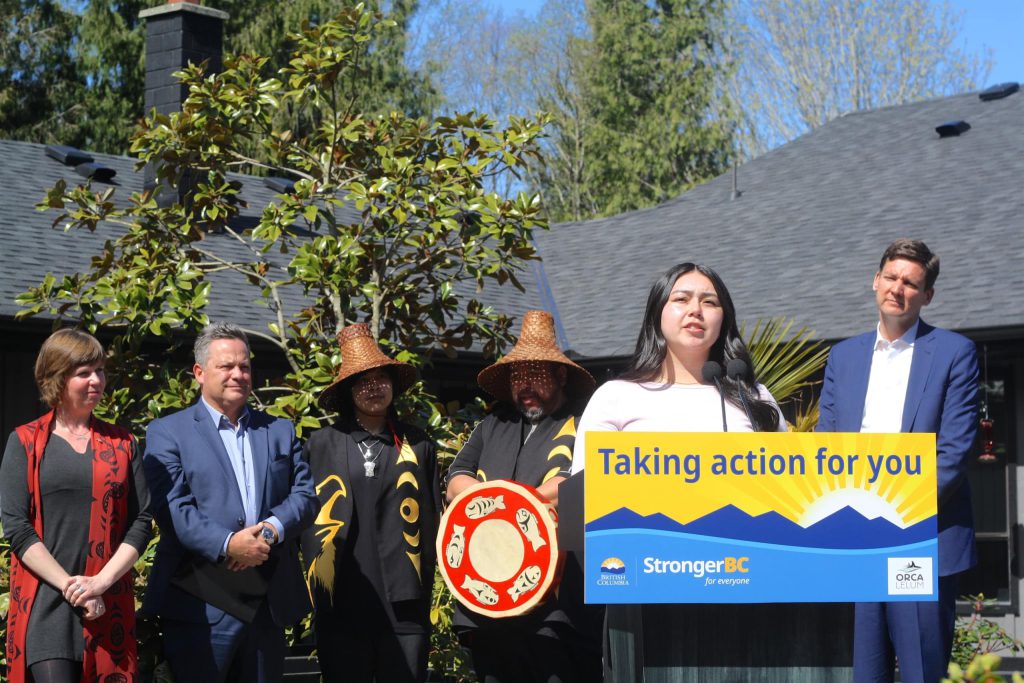
The goal of the facility is to ensure “we can look at every Indigenous Youth that was ever a part of [it] and say, ‘we did everything we could to give you a long, healthy life,’” Thomas said, referencing a quote from former Snuneymuxw First Nation Chief Douglas White Kwul’a’sul’tun at the 2010 opening of the Kw’umut Lelum building in Snuneymuxw.
The centre’s flagship program is a 10-week residential wellness and trauma healing program that features land-based practices that incorporate ceremony, traditional medicines and ceremonial bathing and brushings, with a focus on identity and belonging as well as the development of life skills and emotional and physical health.
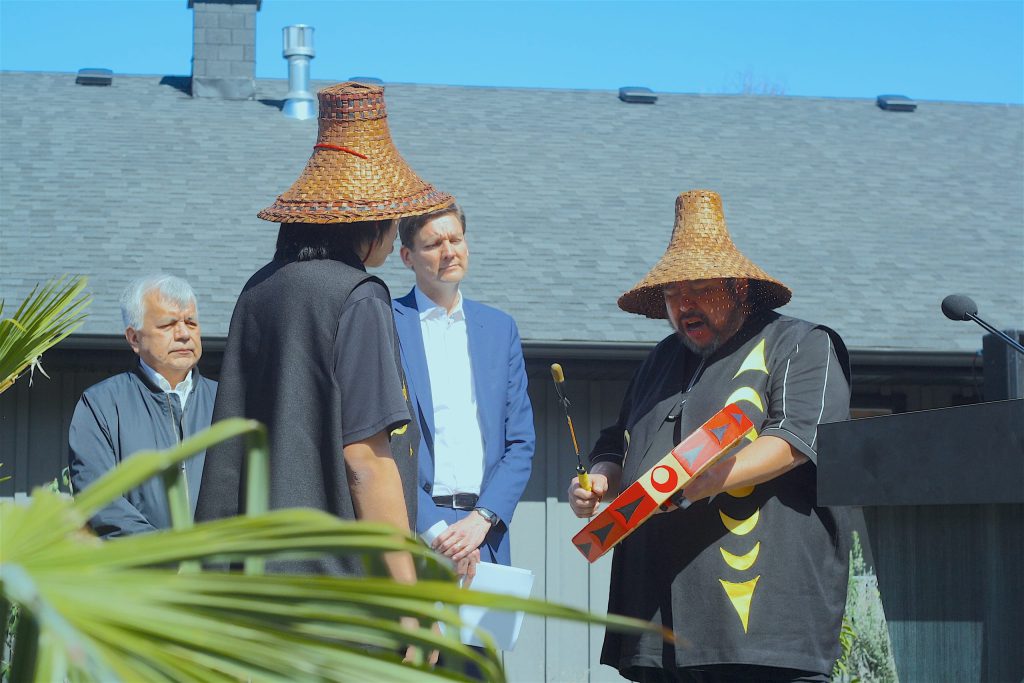
“Our children are so important to us, and I’m so grateful to see a facility designed strictly to help them out in their life, because that wasn’t available when I was a child,” said Snaw-naw-as First Nation member ‘Ćum’qwa:tun’ (Lawrence Mitchell), who sang at the event with his son Jaylen George.
“For almost 10 years of my life I was wandering the earth not knowing anything about myself, and because I didn’t know, I thought I could scrape the ‘Indian’ off my arms. I thought that’s what it was. But now seeing we have this state-of-the-art facility for our children, it touches me in a deep place.”
Toxic drug overdoses are now the leading cause of death among Youth aged 10 to 18 years old, according to the BC Coroners Service. The crisis also disproportionately affects Indigenous people, who are six times more likely to die than other “B.C.” residents from toxic drug poisoning, according to recent data from the First Nations Health Authority.
“Indigenous women [specifically] are almost 12 times more likely to die from toxic drug poisoning. And we know that so many of the issues that give rise to addictions challenges start when people are young,” added Jennifer Whiteside, B.C.’s minister of mental health and addictions.
Premier Eby said that this particular project — both the facility and the clients it will service — stemmed directly from the community.
“That is what we hope to do across the province, in terms of Indigenous health and wellness initiatives and addiction and mental health supports, is to empower nations to bring forward those proposals that will best serve them,” he said.
“We’ve been working with the First Nations Health Authority on ensuring that the treatment and responses to the toxic drug crisis in Indigenous communities and the treatment facilities and the supports that come forward are led by Indigenous people and are for Indigenous people.”
The province is investing $7.1 million in initial funding for the Orca Lelum centre, in addition to $1 million from Island Health, as part of a $171 million provincial investment in Indigenous-led treatment, recovery and aftercare services.
Author
We live in a media ecosystem that thrives on misinformation. Big Tech and AI companies are consuming the work of real human beings and Canadian news has been banned on Facebook and Instagram.
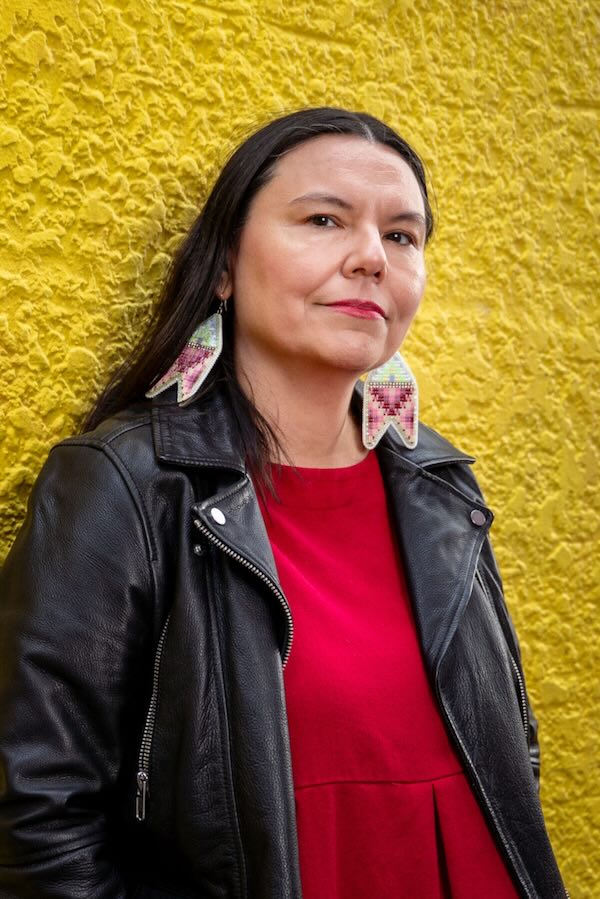
And yet, I have hope for journalism because of the work we’re doing at IndigiNews.
At IndigiNews, we embody tâpwêwin — the Cree value of integrity and responsibility in truth-telling. We are committed to our independent, Indigenous-led newsroom rooted in community, accountability, and relationality. We believe storytelling is a sacred fire that connects our pasts, presents, and futures through the storytellers in our Storytelling Lodge. IndigiNews creates space for Indigenous journalists, storytellers, Knowledge Keepers, and communities to gather, learn, and share stories that matter.
As a registered charity, we are building a fire that allows our work not just to ignite but to thrive. Rather than relying on advertising or corporate acquisition, IndigiNews is sustained by people like you who believe Indigenous stories are important for the future of our communities.
Your support is making a real difference.
Our community of supporters, our Firekeepers, make it possible to grow our newsroom, publish award-winning journalism, train emerging Indigenous journalists through initiatives like the ReFocus Photojournalism Fellowship, and publish trustworthy stories that serve our communities across the country. Every story we publish helps fill in gaps left by mainstream media and ensures Indigenous perspectives are represented with care, accuracy and respect.
But there is still more work to do.
As the media landscape becomes more and more uncertain, community support is as necessary and essential as it’s ever been. Every new Firekeeper helps protect the independence of our newsroom and strengthens journalism that is accountable to our many and varied communities over corporations.
That’s why we’re inviting you to become a Firekeeper.
Firekeepers tend to and protect the sacred fire. Your monthly contributions directly support IndigiNews’s Storytelling Lodge, helps sustain our independent, Indigenous-led newsroom, and ensures future generations of Indigenous storytellers have the resources they need to do the work.
As a registered Canadian charity, all eligible donations receive a charitable tax receipt.
If you believe Indigenous stories matter, if you value independent journalism, and if you want to help build a strong future for Indigenous media, we invite you to join our circle of Firekeepers today.
Together, we can keep the fire burning.
— Eden Fineday, Publisher, IndigiNews
Support us nowLatest Stories
-
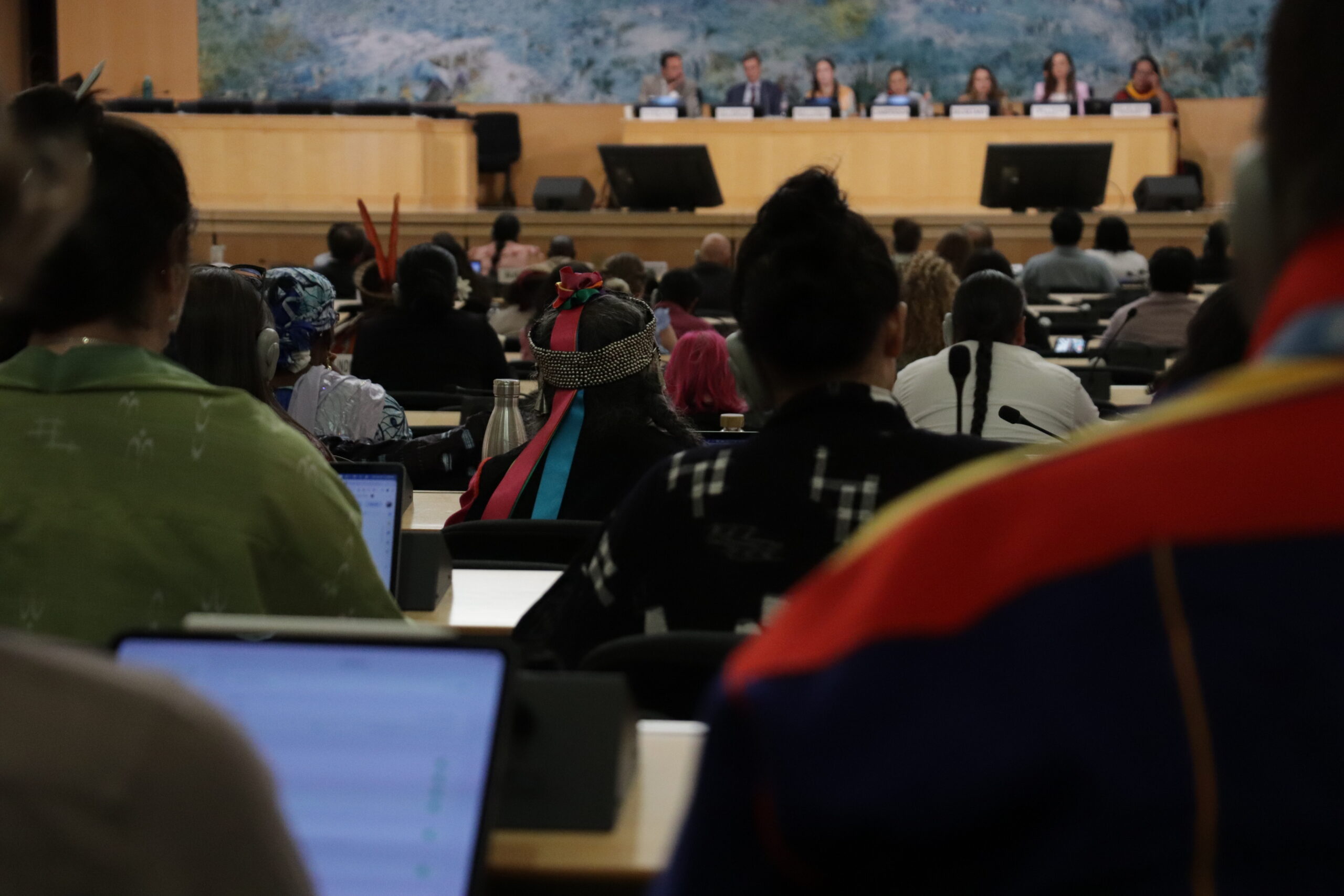
Indigenous leaders give the UN a roadmap for protecting their peoples
Amidst prayers and vows of solidarity, UN Expert Mechanism on the Rights of Indigenous Peoples ends annual meetings with demands for ‘action we’re not seeing globally’
-
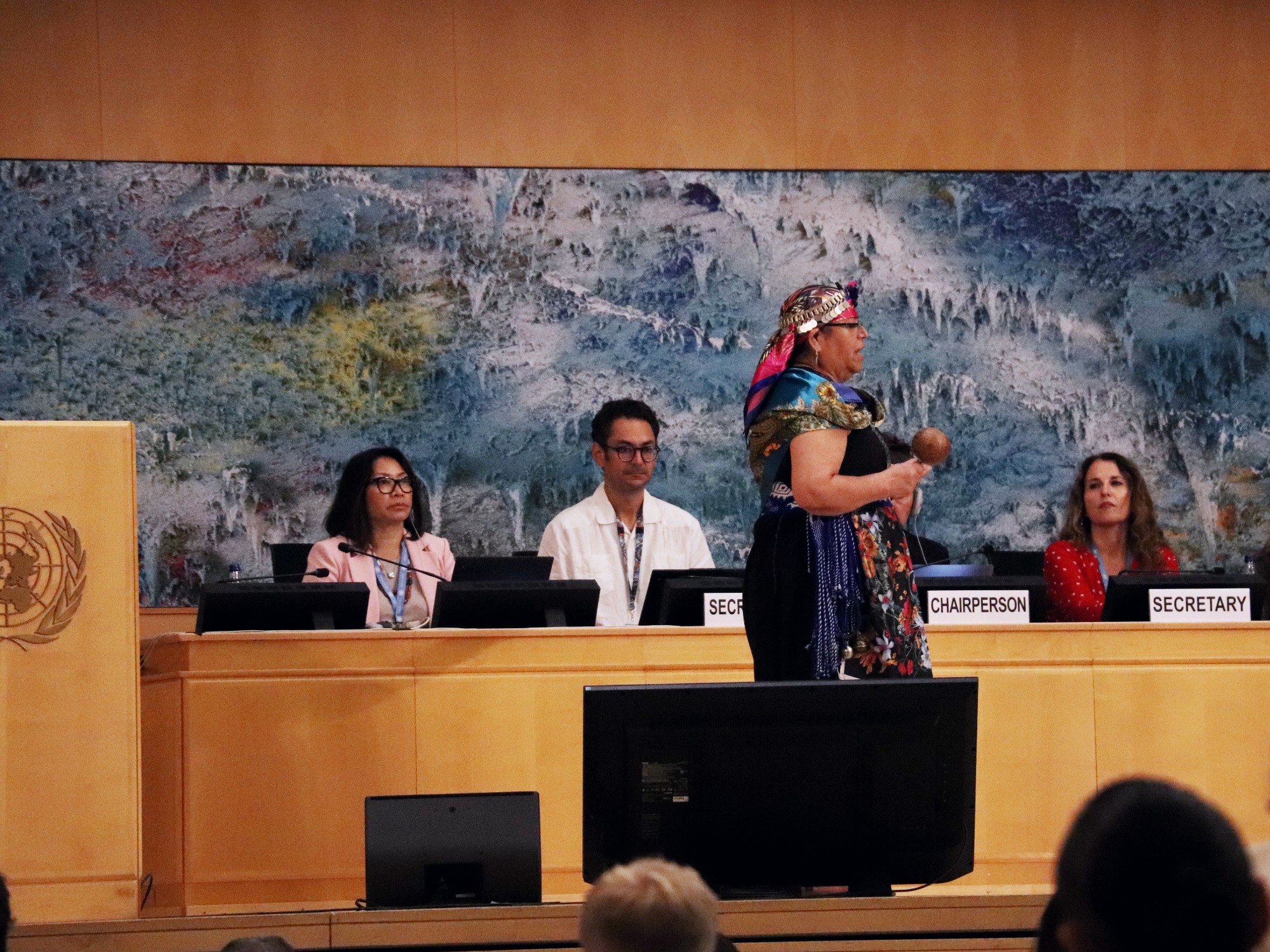
Indigenous people demand more say at the UN, as new crises hit their homelands
Indigenous nations live ‘on the frontlines’ of climate, conflict and new tech. But their voices remain sidelined in the global halls of power.