New resource challenges racist history as B.C.’s 150th year approaches
Authors of open-source educational booklet hope it will be utilized in schools, by policymakers

A new educational resource looks at British Columbia’s long history of racist policies and the resiliency of the many Indigenous, Black and racialized people who have been affected.
The open-source booklet Challenging Racist British Columbia: 150 Years and Counting was released today by co-publishers the University of Victoria (UVic) and the Canadian Centre for Policy Alternatives (CCPA).
The 80-page document is being made available as Black History Month wraps up and as B.C. approaches its 150th anniversary of joining Canada this July 20.
“In 1871, this province joined the Canadian federation and, ever since, communities of Indigenous, Black, and other racialized peoples have waged protracted struggles against the dispossession of Indigenous lands, institutionalized discrimination, and the politics of exclusion,” the report begins. “They have won many victories, yet, 150 years later, we are witnessing yet another uprising against systemic racism.”
The booklet was written by a group of academics and activists from diverse communities, who link historical events to recent anti-racism movements — around Black Lives Matter, the Wet’suwet’en blockades and more.
One of the report’s authors Christine O’Bonsawin, a historian from the Abenaki, Odanak Nation, says the goal of the report is to educate people in so-called B.C. about the many injustices that haven’t been widely discussed in schools.
O’Bonsawin is faculty of UVic’s History and Indigenous Studies departments, and the university’s former director of Indigenous Studies.
“An important role of historians is to connect the past with the present,” she tells IndigiNews over the phone.
“No doubt it’s a booklet about justice, and it’s about racism and oppression, but we wanted to prioritize activism, resistance and resilience.”

The booklet’s authors say it’s meant to be utilized by teachers, scholars, policymakers and others doing anti-racism work. O’Bonsawin says those behind the report are doing outreach to provincial education organizations to ensure that it does.
“One of our guiding objectives was that we hoped this would be useful for teachers to support the K-12 Indigenization process,” she says.
“We wanted to make sure this was a public document that was accessible to all.”
The document is divided into six sections covering various stories from the Indigenous, Black, Chinese, South Asian and Japanese communities. It spans from 1871, when B.C. joined Canada, to the present day.
It includes historical photos, poems, and profiles of key people and organizations.
Another of the report’s authors Sharanjit Kaur Sandhra — coordinator of the South Asian Studies Institute at the University of the Fraser Valley and co-curator of exhibits at the Sikh Heritage Museum — says it counteracts inaccurate information about B.C. history.
“This book offers a bold, honest, historical correction to the false narrative that Canada is exempt from white supremacy and racist nation state formations,” Sandhra says in a statement.
“And for that reason, this book is the exact resource needed in this pivotal moment where an anti-racist movement continues to take shape. It is a resource for activists, students, educators,
community professionals — it is a resource for all.”
President of the BC Black History of Awareness Society, Sylvia Mangue Alene, says the booklet showcases how racism must be challenged.
“In this booklet, subjects have answered in a very clear way what needs to be challenged, and that is racism,” she says in a statement.
“Racism is challenged because we believe that there are better ways to treat people and that is with respect and inclusiveness in all aspects that life has to offer.”

With B.C.’s 150th anniversary approaching, report co-author John Price, a historian at UVic, adds that it marks the ways in which activists and communities have been standing up to racism since the province’s formation.
“Hopefully it serves as a wake-up call to governments that no longer should they engage in divide-and-rule policies. 150 years is long enough,” he says.
The booklet’s other authors are Nicholas XEMŦOLTW̱ Claxton, Denise Fong, Fran Morrison and Maryka Omatsu.
According to the resource website and accompanying press release, an interactive digital version of the resource “providing direct access to primary and community-based sources,” as well as an accompanying 20-minute video, will be released sometime this spring.
Author
We live in a media ecosystem that thrives on misinformation. Big Tech and AI companies are consuming the work of real human beings and Canadian news has been banned on Facebook and Instagram.
And yet, I have hope for journalism because of the work we’re doing at IndigiNews.
At IndigiNews, we embody tâpwêwin — the Cree value of integrity and responsibility in truth-telling. We are committed to our independent, Indigenous-led newsroom rooted in community, accountability, and relationality. We believe storytelling is a sacred fire that connects our pasts, presents, and futures through the storytellers in our Storytelling Lodge. IndigiNews creates space for Indigenous journalists, storytellers, Knowledge Keepers, and communities to gather, learn, and share stories that matter.
As a registered charity, we are building a fire that allows our work not just to ignite but to thrive. Rather than relying on advertising or corporate acquisition, IndigiNews is sustained by people like you who believe Indigenous stories are important for the future of our communities.
Your support is making a real difference.
Our community of supporters, our Firekeepers, make it possible to grow our newsroom, publish award-winning journalism, train emerging Indigenous journalists through initiatives like the ReFocus Photojournalism Fellowship, and publish trustworthy stories that serve our communities across the country. Every story we publish helps fill in gaps left by mainstream media and ensures Indigenous perspectives are represented with care, accuracy and respect.
But there is still more work to do.
As the media landscape becomes more and more uncertain, community support is as necessary and essential as it’s ever been. Every new Firekeeper helps protect the independence of our newsroom and strengthens journalism that is accountable to our many and varied communities over corporations.
That’s why we’re inviting you to become a Firekeeper.
Firekeepers tend to and protect the sacred fire. Your monthly contributions directly support IndigiNews’s Storytelling Lodge, helps sustain our independent, Indigenous-led newsroom, and ensures future generations of Indigenous storytellers have the resources they need to do the work.
As a registered Canadian charity, all eligible donations receive a charitable tax receipt.
If you believe Indigenous stories matter, if you value independent journalism, and if you want to help build a strong future for Indigenous media, we invite you to join our circle of Firekeepers today.
Together, we can keep the fire burning.
— Eden Fineday, Publisher, IndigiNews
Support us nowLatest Stories
-
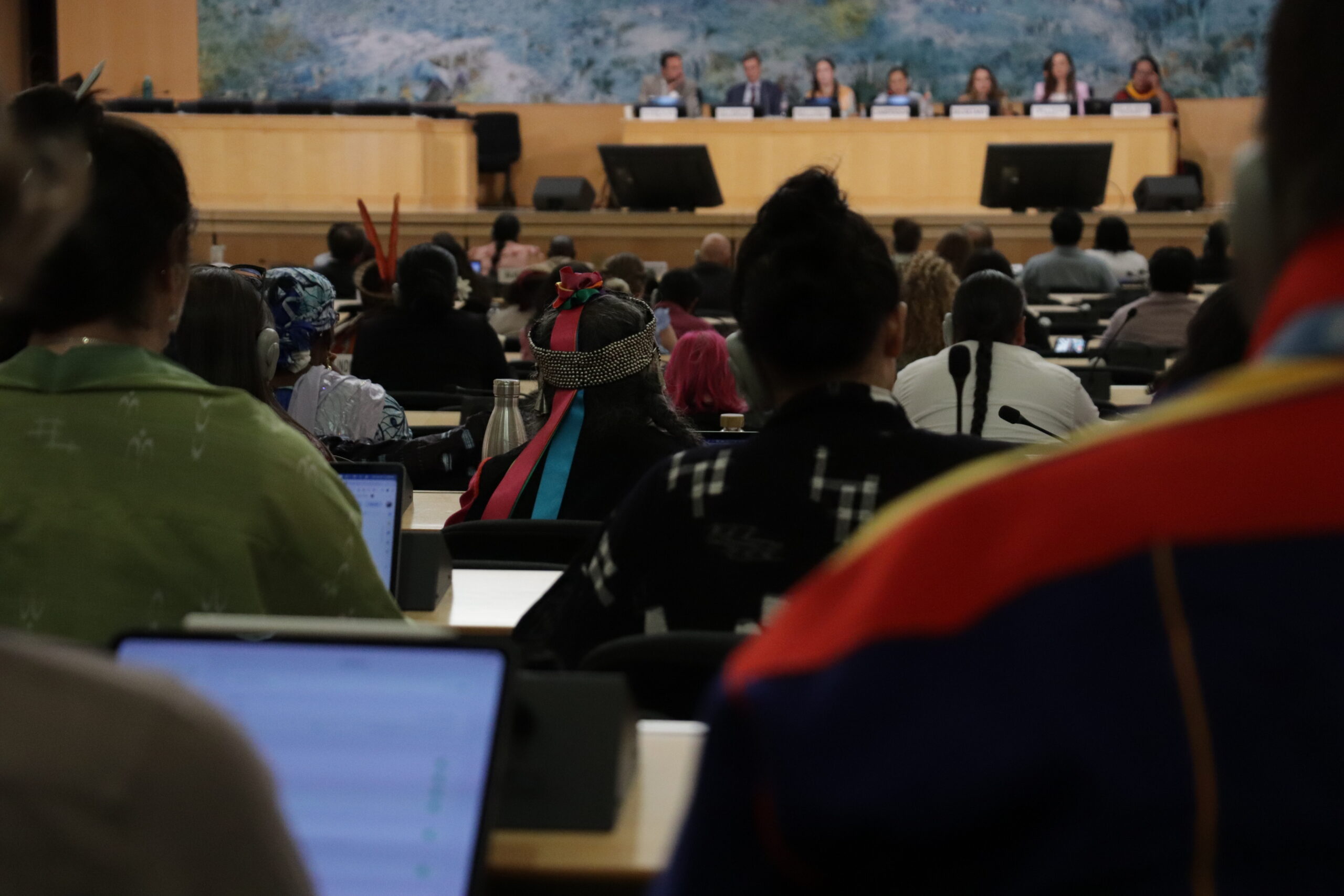
Indigenous leaders give the UN a roadmap for protecting their peoples
Amidst prayers and vows of solidarity, UN Expert Mechanism on the Rights of Indigenous Peoples ends annual meetings with demands for ‘action we’re not seeing globally’
-
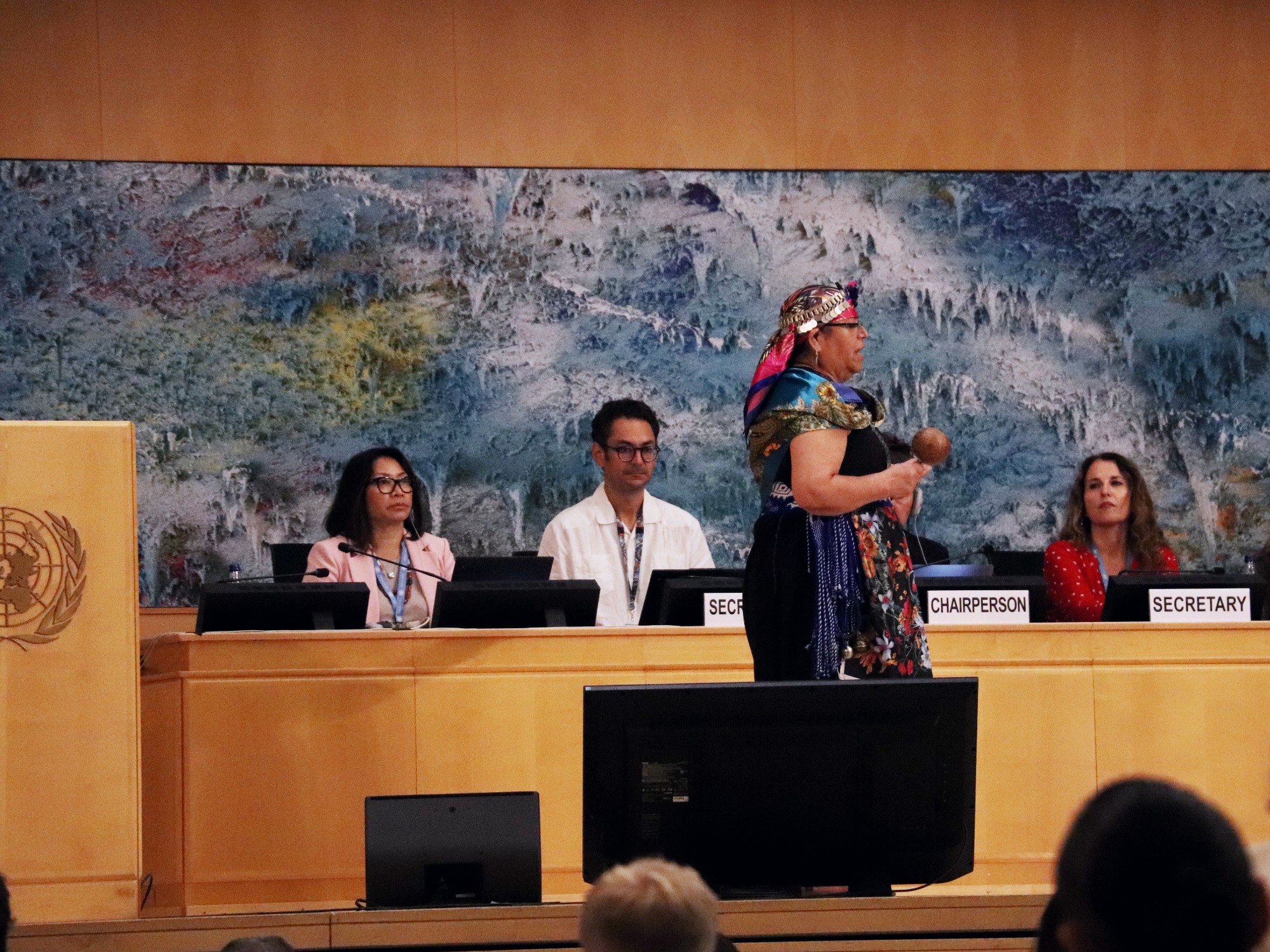
Indigenous people demand more say at the UN, as new crises hit their homelands
Indigenous nations live ‘on the frontlines’ of climate, conflict and new tech. But their voices remain sidelined in the global halls of power.