Westbank First Nation’s elementary school reopens
sənsisyustən House of Learning, which renovated and expanded a year ago, is back in session for the fall.
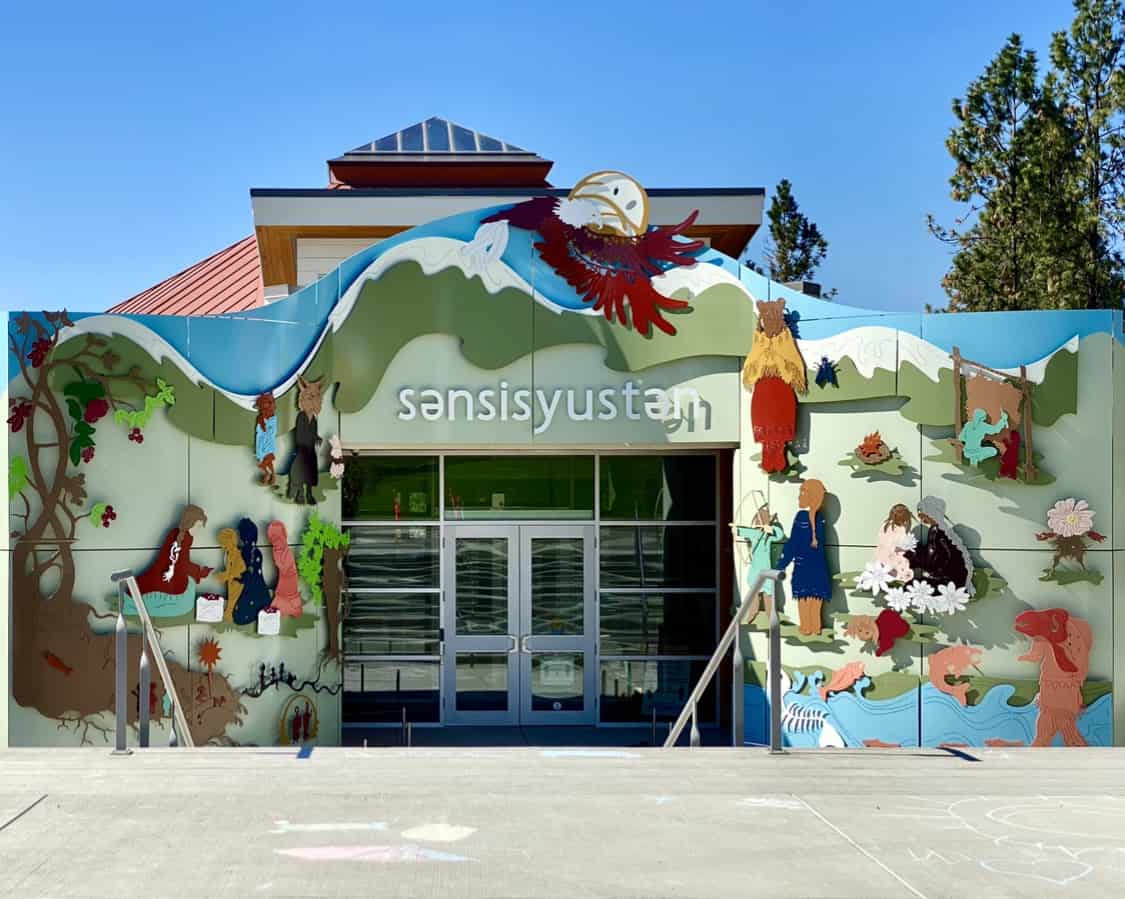
Last September, Westbank First Nation (WFN) celebrated the grand opening of its newly renovated elementary school, sənsisyustən House of Learning. The school year was cut short, however, when the building was closed in late March as the COVID-19 pandemic hit.
After a long week of preparing for the fall and incorporating pandemic safety measures, the sənsisyustən House of Learning, located on Westbank First Nation reserve, reopened for students on Sept. 8.
“The school is functioning wonderfully,” says Wes Malo, the principal of sənsisyustən House of Learning.
Newly renovated
Prior to renovations, the 26-year-old elementary school was smaller with less student capacity, according to Maria Reed, the director of WFN community services. With enrolment having risen over the last 20 years, the need for more space became essential.
“The school renovation was key, because of creating a really good learning environment for the children and to make sure that we could incorporate the outside learning,” says Reed. “We now have a wonderful luxury of outdoor classrooms for the children to actually be able to learn out on the land.”
WFN contributed to the renovation funding, alongside the Indigenous Services Canada innovation fund and the Province of B.C.’s clean energy business fund, according to the WFN website.
The $9-million expansion and renovation provided an additional five classrooms, a new language and computer room, a learning assistance room, a larger administration area, more storage and entrances. The outdoor classrooms, which feature traditional plants, will offer space for more culture-based learning, and offer a safer set-up during the pandemic.
The school also had exterior renovations, including the installation of rooftop solar panels, to improve utility costs and create a support renewable energy.
“In certain parts of the year, we actually provide more back into the grid that we’re using,” Reed explains.
What the school offers
sənsisyustən House of Learning is a private school. However, it is open to all students, Indigenous or non-Indigenous and living on- or off-reserve. The school offers classes from junior kindergarten to grade 5, and a B.C. curriculum “with integrated Syilx perspectives.”
“We collaborate with School District 23, working toward offering all students opportunities to share and build capacity together,” Malo says. “Our slogan is deliberate, superior, highly flexible, learner-centred education, enriched by the [Syilx] language, teaching language and culture.”
The school focuses on the individual learner, meaning the student-to-teacher ratio is smaller, approximately 1:18, says Malo, providing a more attentive teaching and learning experience.
Each morning, all students will come together in a virtual circle to share prayers, sing songs and listen to school updates.
The students will learn a mixture of western and Syilx traditional teachings, taught by Westbank First Nation Elders. All students will also take a language and culture program five days a week.
Extracurricular activities will be minimal this year due to the pandemic says Malo. However, he says the after school care program will be working hard to maintain all of the same programs that it did before the pandemic.
“We want to provide the best possible educational experience for students, as well as providing the strongest possible kind of culture that we possibly can for our students.”
Working together
As a safety measure, each child and teacher will have a face mask supplied to them, says Reed. The masks were handmade by Elders within the community using traditional material with traditional patterns.
“I think it is really good how our communities come together, and that Elders have actually made face masks for each of the children,” Reed says.
Students will continue to work closely with WFN Elders while learning traditional practices and language. This is an extra motivation for the elementary school to follow strict procedures to ensure students and staff are safe, explains Malo.
Their procedures include encouraging students to use regular hand hygiene and to avoid gathering. Serving meals in coordinated groups and in various locations for each grade, and cleaning and disinfecting procedures throughout the school day. Mask-wearing by teachers and students will be encouraged.
“The parents are responsible to make sure that they’re not sending their children to school when they’re unwell,” Malo explains. “And if staff notice anyone is unwell, we have an isolation room.”
Students who show any symptoms of COVID-19 will be placed in this designated space in the school’s medical room if they are unable to return home immediately, says Reed. School nurses will evaluate and care for the student until the parents are able to pick them up and keep them at home.
Author
We live in a media ecosystem that thrives on misinformation. Big Tech and AI companies are consuming the work of real human beings and Canadian news has been banned on Facebook and Instagram.
And yet, I have hope for journalism because of the work we’re doing at IndigiNews.
At IndigiNews, we embody tâpwêwin — the Cree value of integrity and responsibility in truth-telling. We are committed to our independent, Indigenous-led newsroom rooted in community, accountability, and relationality. We believe storytelling is a sacred fire that connects our pasts, presents, and futures through the storytellers in our Storytelling Lodge. IndigiNews creates space for Indigenous journalists, storytellers, Knowledge Keepers, and communities to gather, learn, and share stories that matter.
As a registered charity, we are building a fire that allows our work not just to ignite but to thrive. Rather than relying on advertising or corporate acquisition, IndigiNews is sustained by people like you who believe Indigenous stories are important for the future of our communities.
Your support is making a real difference.
Our community of supporters, our Firekeepers, make it possible to grow our newsroom, publish award-winning journalism, train emerging Indigenous journalists through initiatives like the ReFocus Photojournalism Fellowship, and publish trustworthy stories that serve our communities across the country. Every story we publish helps fill in gaps left by mainstream media and ensures Indigenous perspectives are represented with care, accuracy and respect.
But there is still more work to do.
As the media landscape becomes more and more uncertain, community support is as necessary and essential as it’s ever been. Every new Firekeeper helps protect the independence of our newsroom and strengthens journalism that is accountable to our many and varied communities over corporations.
That’s why we’re inviting you to become a Firekeeper.
Firekeepers tend to and protect the sacred fire. Your monthly contributions directly support IndigiNews’s Storytelling Lodge, helps sustain our independent, Indigenous-led newsroom, and ensures future generations of Indigenous storytellers have the resources they need to do the work.
As a registered Canadian charity, all eligible donations receive a charitable tax receipt.
If you believe Indigenous stories matter, if you value independent journalism, and if you want to help build a strong future for Indigenous media, we invite you to join our circle of Firekeepers today.
Together, we can keep the fire burning.
— Eden Fineday, Publisher, IndigiNews
Support us nowLatest Stories
-
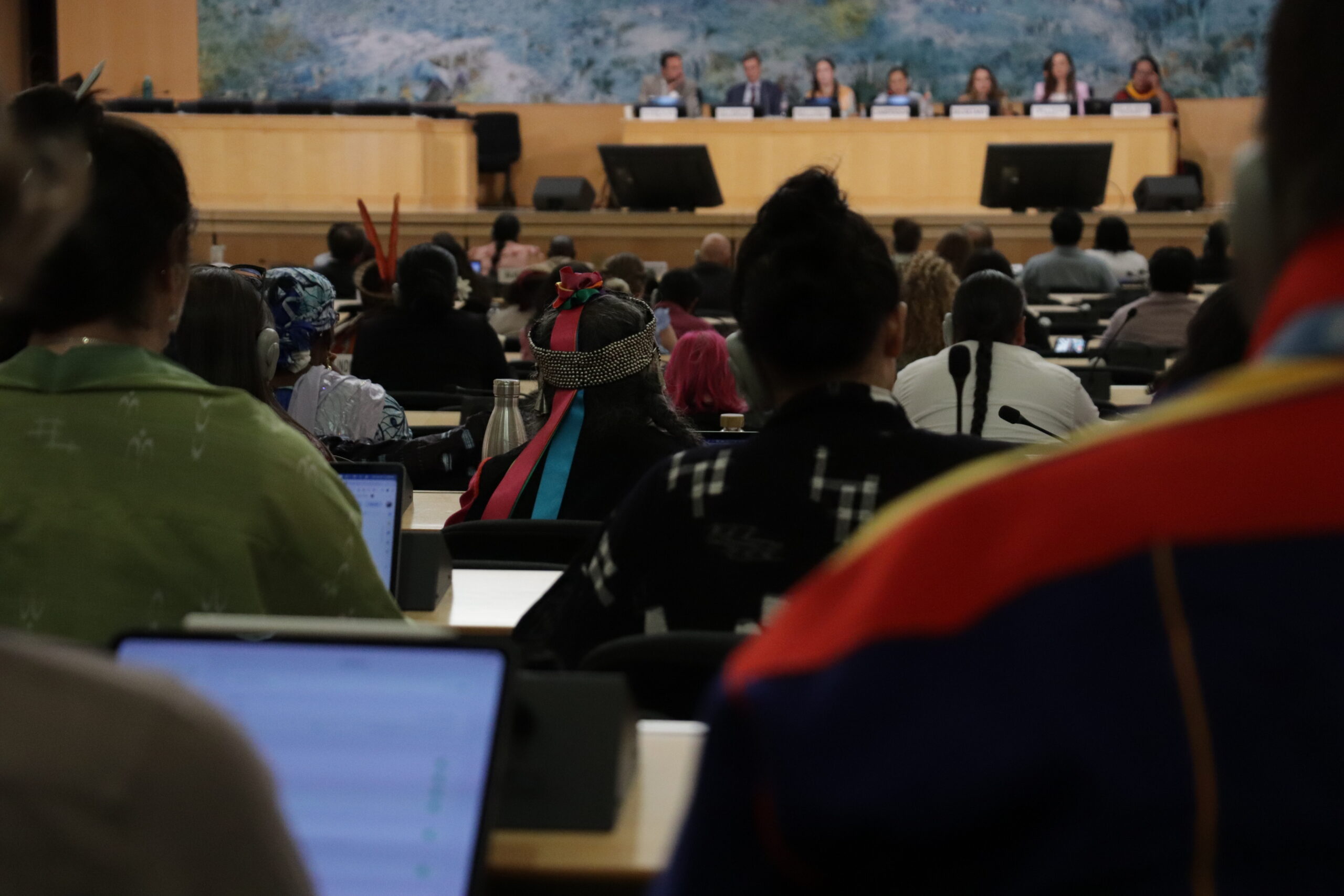
Indigenous leaders give the UN a roadmap for protecting their peoples
Amidst prayers and vows of solidarity, UN Expert Mechanism on the Rights of Indigenous Peoples ends annual meetings with demands for ‘action we’re not seeing globally’
-
Indigenous people demand more say at the UN, as new crises hit their homelands
Indigenous nations live ‘on the frontlines’ of climate, conflict and new tech. But their voices remain sidelined in the global halls of power.