Free sexual health Medicine Bundles offered to Two-Spirit, queer, trans Indigenous people
The creators hope to bring sacredness back into sex and increase access to healthcare.

Medicine Bundles, full of sexual health supplies and traditional medicines, made by and for Two-Spirit, queer and trans Indigenous people, have recently become available to Indigenous residents of what has been briefly known as British Columbia.
Spearheaded by the Community-Based Research Centre (CBRC)’s Two-Spirit Program team, the Medicine Bundle Project is a three-month-long research initiative that allows people to order a specialized Bundle to an address of their choice. The bundles include HIV and STBBI self-testing kits, and other sexual health items. During the ordering process, recipients are also offered a broad range of traditional Indigenous medicines which they can select based on their needs.
“Being able to choose which medicines are included in the Bundle really speaks to our own individual traditions, teachings and care practices, and recognizing that our physical health is innately linked to our spiritual health,” said Lane Bonertz, a Blackfoot member of the Piikani (Aapátohsipikáni) First Nation.
Bonertz, who is a team member of CBRC’s Two-Spirit Program, says that creating the Medicine Bundles has been a community effort that involved the help of Elders, knowledge keepers, Indigenous businesses, and Indigenous organizations.
“It’s really this idea that Indigenous health is, and should, look different. There is a lot of strength and power in community, and that really, us as Indigenous people, are the most suited to support one another,” he said.
Sacredness of sex
One of the intentions of the Bundle, Bonertz said, is to bring sacredness back into sex.
“When we say that, what we’re saying is that that intimacy, that exchange of energy between bodies, is something that is sacred and should be cherished in all of its consensual forms,” he says.
The Bundles are hand-made and have all been blessed by an Elder, while the different medicines are locally sourced by Indigenous people and businesses.
“Every step of this project is done by and for Indigenous people,” said Bonertz.
He added that Indigenous people understand each other in ways that other non-Indigenous care-providers and institutions might not.
“Which really positions us as suitable to provide sexual health guidance and support in ways that people without those same connections maybe can’t,” he said.
Accessible sexual healthcare
Madeline Terbasket, a syilx, Ho-Chunk, and Anishinaabe board member of the South Okanagan Similkameen Pride Society, said the initiative is amazing because for Indigenous people it can be difficult and sometimes traumatizing to access sexual healthcare.
“I think it’s really amazing because I think that it’s kind of hard as a Two-Spirit person to feel comfortable in the healthcare system because it’s so gendered,” Terbasket said. “I just feel like I can’t really be myself, so having access to care is really important for us.”
Terbasket praised the Bundle’s inclusion of traditional medicines.
“Sometimes, Two-Spirit people aren’t welcome in ceremony too, or people in ceremony are homophobic or transphobic. So having access to medicine isn’t always there for everyone,” they said. “It’s just so important to have medicine in your life to help with your mental wellness and spirituality.”
“It’s just so amazing to think people really care about you enough to send you a package.”
The project is open to Indigenous people living in British Columbia who are over the age of 18. Participants are also required to complete a short survey for research purposes.
According to the project’s website, people living with HIV can also participate in the study and it provides special instructions on which self-test kits they should request.
Bonertz said he hopes the project can be used as a model for providing sexual health care.
“I hope that what we can present back and give back to the community after this process is finished is really an example to show what Indigenous sexual health can look like, that there is a need for it and a desire for it,” Bonertz said.
“There is that strength and power by utilizing community to provide that support.”
Author
We live in a media ecosystem that thrives on misinformation. Big Tech and AI companies are consuming the work of real human beings and Canadian news has been banned on Facebook and Instagram.
And yet, I have hope for journalism because of the work we’re doing at IndigiNews.
At IndigiNews, we embody tâpwêwin — the Cree value of integrity and responsibility in truth-telling. We are committed to our independent, Indigenous-led newsroom rooted in community, accountability, and relationality. We believe storytelling is a sacred fire that connects our pasts, presents, and futures through the storytellers in our Storytelling Lodge. IndigiNews creates space for Indigenous journalists, storytellers, Knowledge Keepers, and communities to gather, learn, and share stories that matter.
As a registered charity, we are building a fire that allows our work not just to ignite but to thrive. Rather than relying on advertising or corporate acquisition, IndigiNews is sustained by people like you who believe Indigenous stories are important for the future of our communities.
Your support is making a real difference.
Our community of supporters, our Firekeepers, make it possible to grow our newsroom, publish award-winning journalism, train emerging Indigenous journalists through initiatives like the ReFocus Photojournalism Fellowship, and publish trustworthy stories that serve our communities across the country. Every story we publish helps fill in gaps left by mainstream media and ensures Indigenous perspectives are represented with care, accuracy and respect.
But there is still more work to do.
As the media landscape becomes more and more uncertain, community support is as necessary and essential as it’s ever been. Every new Firekeeper helps protect the independence of our newsroom and strengthens journalism that is accountable to our many and varied communities over corporations.
That’s why we’re inviting you to become a Firekeeper.
Firekeepers tend to and protect the sacred fire. Your monthly contributions directly support IndigiNews’s Storytelling Lodge, helps sustain our independent, Indigenous-led newsroom, and ensures future generations of Indigenous storytellers have the resources they need to do the work.
As a registered Canadian charity, all eligible donations receive a charitable tax receipt.
If you believe Indigenous stories matter, if you value independent journalism, and if you want to help build a strong future for Indigenous media, we invite you to join our circle of Firekeepers today.
Together, we can keep the fire burning.
— Eden Fineday, Publisher, IndigiNews
Support us nowLatest Stories
-
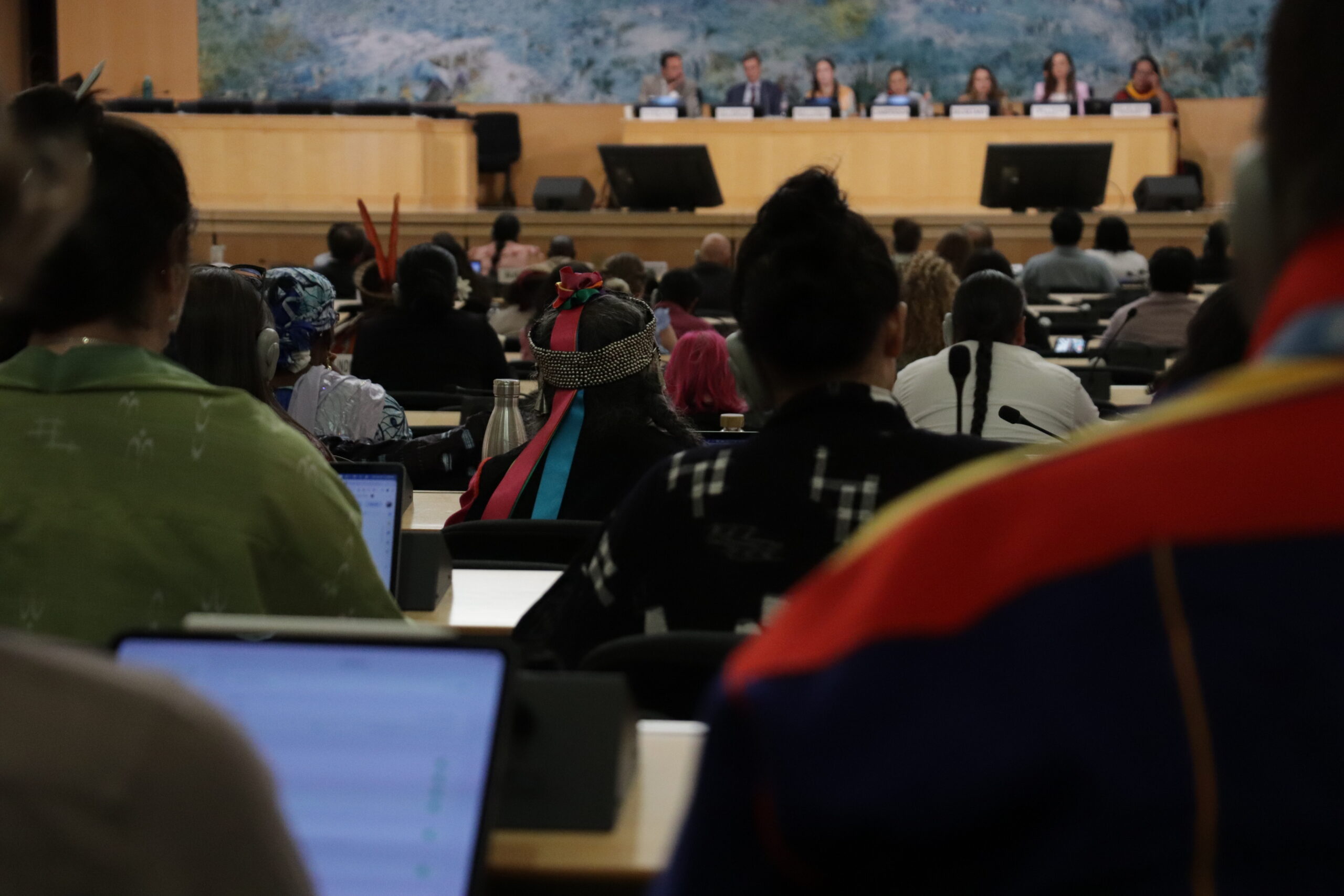
Indigenous leaders give the UN a roadmap for protecting their peoples
Amidst prayers and vows of solidarity, UN Expert Mechanism on the Rights of Indigenous Peoples ends annual meetings with demands for ‘action we’re not seeing globally’
-
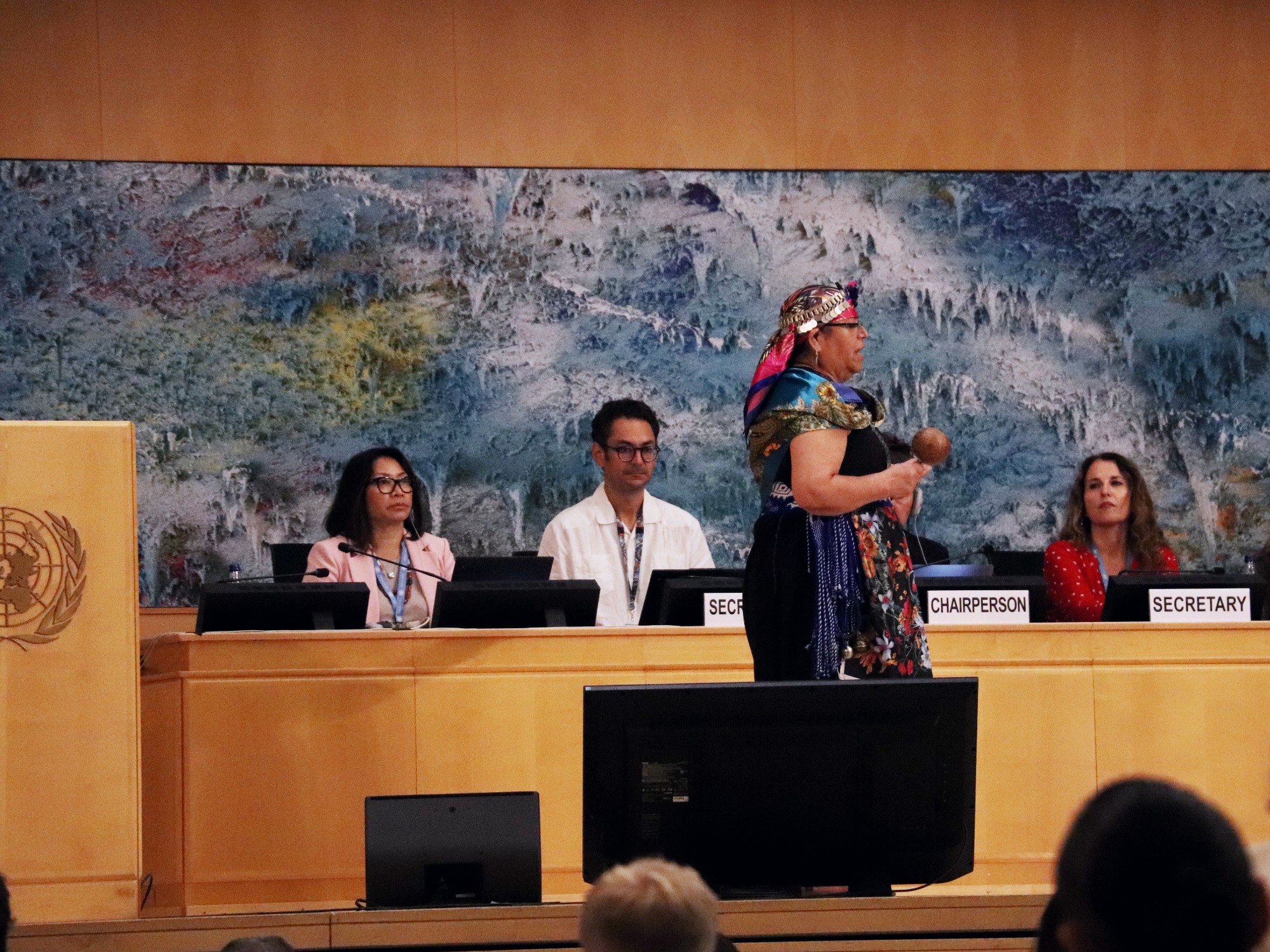
Indigenous people demand more say at the UN, as new crises hit their homelands
Indigenous nations live ‘on the frontlines’ of climate, conflict and new tech. But their voices remain sidelined in the global halls of power.