Splatsin Elder struggles to stop tubers from accessing his private property
Nathan Kinbasket wants the public and the government to respect his land by steering clear of it.
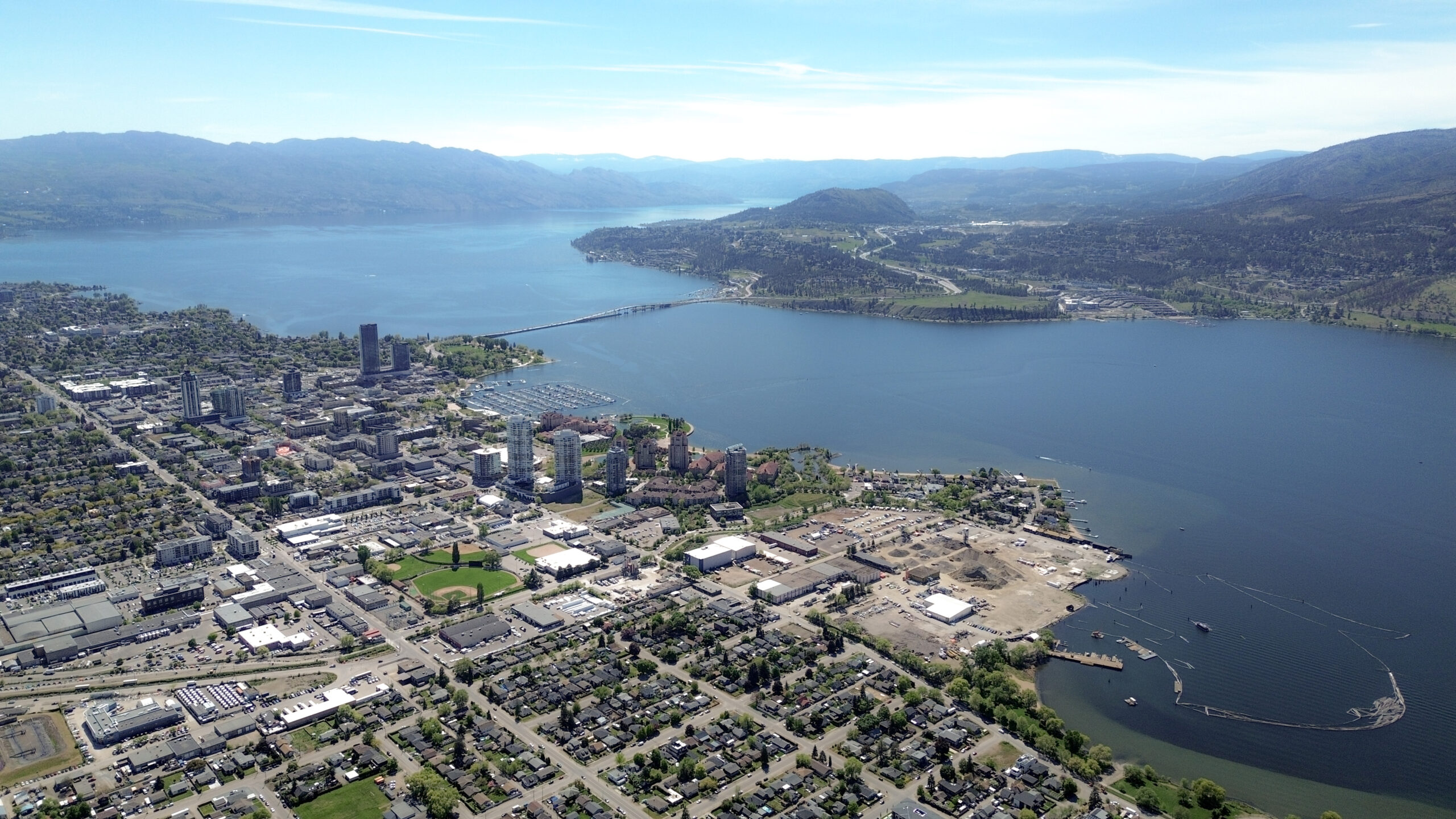
As you drive down Cliff Ave. in Enderby, B.C., you will come to a bridge that passes over the rushing Shuswap River. On any given summer day, you are likely to see cars lined up all along the roadside on Splatsin First Nation.
Over the years, this area has become a hotspot for locals and tourists. It is also often used as a pit stop for tubers who launch upriver, as a spot to jump off and enter into town.
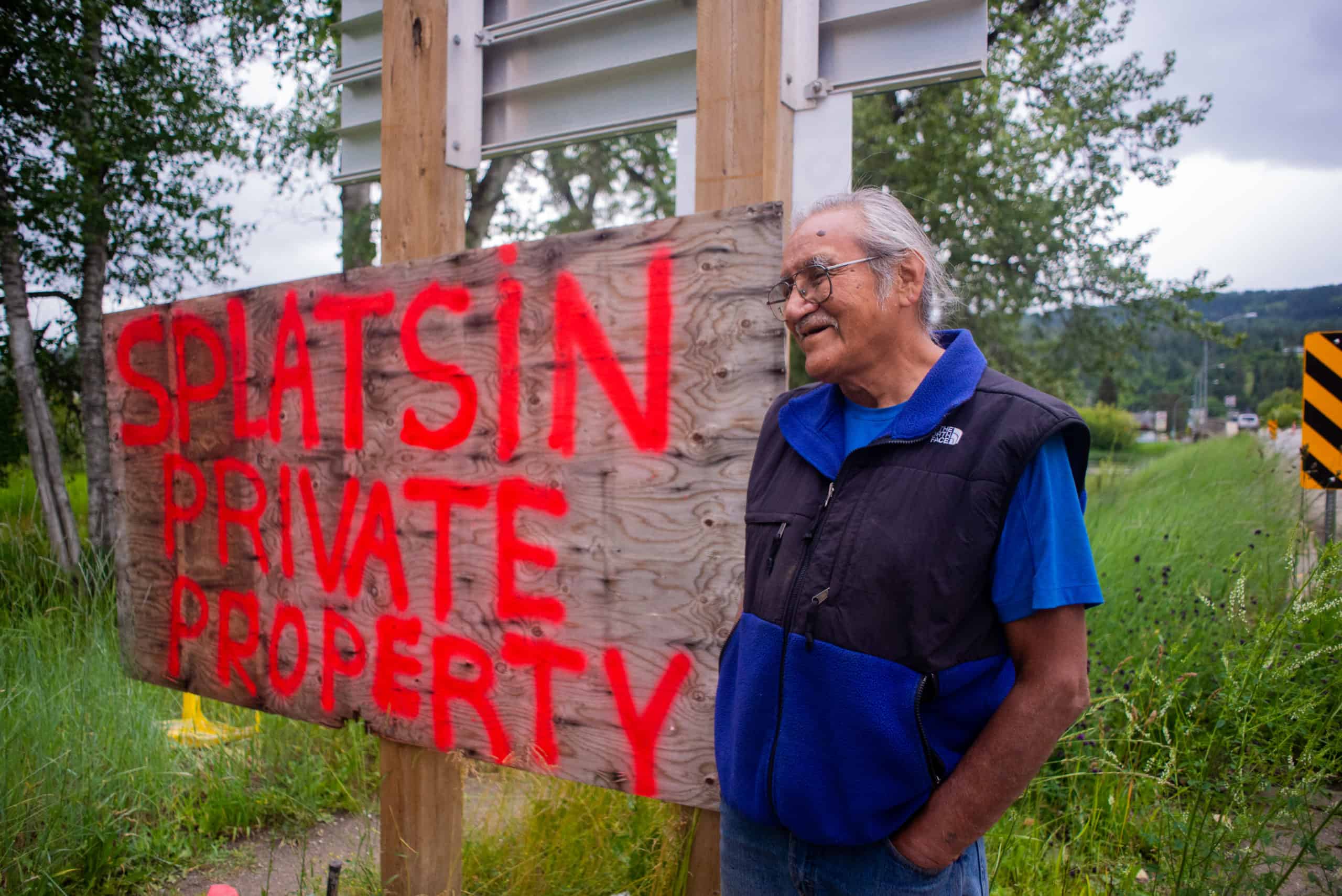
What most don’t know is that this entire riverfront – from the bridge all the way around – actually belongs to Splatsin Elder Nathan Kinbasket. He also owns the adjacent area that folks have been parking on.
Kinbasket has a certificate of possession on the area, which means his allotment has been approved by the Band Council, and he is able to lawfully use and occupy it.
He says he has been asking the public to access the beach on the other side of the river, and to respect that this is his land.
“All this straight on to where that sign is right there, that is all my property,” he says, while pointing north of the road.

“See where everybody is parking over here? They’re parking on my property, and last year they paved all this,” says Kinbasket, as he gestures toward his property line.
Kinbasket says the issue began when his grandmother allowed the public to access the waterfront because locals didn’t have a place to swim by the Cliff Ave. bridge that is adjacent to the Kinbasket property.
“The problem is, a long time ago, back in my grandmother’s day when we still had that wooden bridge here, she let the public come swim here,” he says.
“Because they didn’t have Barnes Park or anything, so out of the goodness of her heart, this was a swimming spot.”
The City of Enderby built the Enderby Lions swimming pool for the public at Barnes Park, a popular local spot for families. And, according to the City website, it is “one of the oldest public pools still operating in the province.”
However, all these years later, some of the locals and tourists still believe that the Kinbaskets’ land is for public access. He says they have resorted to destroying his many attempts at posting warning signs, clarifying his property is no longer open to the public.
“You know Indian Affairs gives you a lot of those signs, right? The ‘no trespassing’ ones. I put those up and those are all gone,” says Kinbasket.
On top of the signage that Kinbasket says has been torn down multiple times, he has tried other measures that have gone ignored.
“We have dug a ditch so cars couldn’t go in there and we put posts in too, but some people came in with a 4×4 and pulled them right out,” he says.
IndigiNews reached out to the RCMP on the matter, but it won’t release specific information “with regards to an individual or private property.”

Kinbasket is, however, trying to keep an open mind for his community. He says that if he fences off this land to stop the parking on and recreational use of his land, then the community members who walk along the road will not have a safe place to walk.
“I was even thinking of putting posts all along here, but if I do that, then I’ll be putting the band membership at jeopardy from walking here. I don’t want them to get hit or run over,” he says. “I really don’t want to put anyone in jeopardy. So I’m stuck in between a rock and a hard place.”
Highway expansion issues
Kinbasket’s concerns don’t stop with public access issues. He is pursuing legal action with B.C. Highways for allegedly widening the road onto his property, which he says was done without his consent.
“The highway is encroaching,” he says, gesturing toward where the highways paved over his land. “Last year, they paved all this…they put this road here without anyone’s permission.”
Kinbasket says that, over the years, B.C. Highways has been slowly moving onto his private property without consulting him, including putting up signage on his property.

“The current road location is a complex historical issue. The sign was installed over a decade ago. The ministry is looking to work with the certificate-of-possession owner and Splatsin to resolve the outstanding concerns,” says Peggy Kulmala, a representative from B.C. Highways and the Ministry of Transportation and Infrastructure, via email.
In the meantime, hopeful of a resolution, Kinbasket says he will continue developing his property and renovating his home on the Splatsin First Nations.
More than anything, he says, he hopes that his community will remain safe.
“My biggest fear is with all those cars parking here, there’s going to be one major accident and I don’t want that here.”
Author
We live in a media ecosystem that thrives on misinformation. Big Tech and AI companies are consuming the work of real human beings and Canadian news has been banned on Facebook and Instagram.

And yet, I have hope for journalism because of the work we’re doing at IndigiNews.
At IndigiNews, we embody tâpwêwin — the Cree value of integrity and responsibility in truth-telling. We are committed to our independent, Indigenous-led newsroom rooted in community, accountability, and relationality. We believe storytelling is a sacred fire that connects our pasts, presents, and futures through the storytellers in our Storytelling Lodge. IndigiNews creates space for Indigenous journalists, storytellers, Knowledge Keepers, and communities to gather, learn, and share stories that matter.
As a registered charity, we are building a fire that allows our work not just to ignite but to thrive. Rather than relying on advertising or corporate acquisition, IndigiNews is sustained by people like you who believe Indigenous stories are important for the future of our communities.
Your support is making a real difference.
Our community of supporters, our Firekeepers, make it possible to grow our newsroom, publish award-winning journalism, train emerging Indigenous journalists through initiatives like the ReFocus Photojournalism Fellowship, and publish trustworthy stories that serve our communities across the country. Every story we publish helps fill in gaps left by mainstream media and ensures Indigenous perspectives are represented with care, accuracy and respect.
But there is still more work to do.
As the media landscape becomes more and more uncertain, community support is as necessary and essential as it’s ever been. Every new Firekeeper helps protect the independence of our newsroom and strengthens journalism that is accountable to our many and varied communities over corporations.
That’s why we’re inviting you to become a Firekeeper.
Firekeepers tend to and protect the sacred fire. Your monthly contributions directly support IndigiNews’s Storytelling Lodge, helps sustain our independent, Indigenous-led newsroom, and ensures future generations of Indigenous storytellers have the resources they need to do the work.
As a registered Canadian charity, all eligible donations receive a charitable tax receipt.
If you believe Indigenous stories matter, if you value independent journalism, and if you want to help build a strong future for Indigenous media, we invite you to join our circle of Firekeepers today.
Together, we can keep the fire burning.
— Eden Fineday, Publisher, IndigiNews
Support us nowLatest Stories
-
Indigenous leaders give the UN a roadmap for protecting their peoples
Amidst prayers and vows of solidarity, UN Expert Mechanism on the Rights of Indigenous Peoples ends annual meetings with demands for ‘action we’re not seeing globally’
-
Indigenous people demand more say at the UN, as new crises hit their homelands
Indigenous nations live ‘on the frontlines’ of climate, conflict and new tech. But their voices remain sidelined in the global halls of power.