Table Talks program will bring reconciliation discussions to the kitchen table
The sessions are designed to promote relationship-building and to breathe life into sqilx’w beliefs and teachings.

A two-year pilot program will bring Indigenous and non-Indigenous community members together at the kitchen table to discuss truth and reconciliation. The first gatherings are planned in syilx Territory this fall.
Table Talks is a collaborative effort between the Community Foundation of the South Okanagan Similkameen (CFSOS) and IndigenEYEZ. During a Table Talk session, trained Indigenous and non-Indigenous facilitators will safely guide difficult conversations that delve into the truth about colonization and the historical and ongoing injustices committed by Canada against Indigenous peoples. At the same time, these discussions are designed to promote relationship-building and to breathe life into sqilx’w beliefs and teachings, specifically syilx principles in this case.
“Learning is relational and experiential. You can’t really change by sitting at a desk and getting a bunch of information alone,” said Kelly Terbasket, the director and co-founder of IndigenEYEZ, who is of syilx and European heritage.
“That helps to reframe and rethink. But to really create change, we need to do it. We need to be in the motion of it. And that’s what we do. We train people how to do that.”
The program follows a similar format to IndigenEYEZ’s kinSHIFT initiative, which launched in 2020. It is an Indigenous-led program that consists of Indigenous facilitators hosting related workshops at settler organizations and schools.
“How do we bring that to not only organizations and schools, but [also] to the neighbourhood kitchen table?” asked Terbasket. “You can’t have hard conversations if you don’t have connection.”
“We train people how to build that container of safety and to be able to hold harder conversations in a way that isn’t further dividing and furthering other-ing. In a way that brings us together instead of further apart.”
The foundation of the Table Talks, she continued, is captíkwł (syilx oral storytelling law), with the biggest teachers being sn̓k̓lip and x̌ʷaʕylxʷ (coyote and fox). As for the name of the program itself, she said that it was inspired by her grandma, Betty Terbasket.
The name “came from recognizing that my grandma’s kitchen table was where a lot of things happened,” she said. “A lot of conversation, connection over food. And that this is where we gathered to learn and be kin, was around the kitchen table.”
The idea for Table Talks gained momentum last year through discussions between Terbasket and Kim English, a fourth-generation settler who is the regional community development coordinator of CFSOS.
“I wanted to help cultivate, stimulate conversation between people of what localized colonization looks like. Non-Indigenous people – there’s a lot of talk of truth and reconciliation, and what is that truth, before reconciliation?” English said. “But as a settler myself, and in conversations with non-Indigenous people, many people don’t know how to start those conversations.”
The plan is to bring these conversations into the neighbourhood and into people’s homes, with an intentional focus on exploring the truth before reconciliation, English said.
“Indigenous people know what the truth is. It’s the non-Indigenous, the settler people, that have to do the work to learn what that truth is,” she said. “At that kitchen table where everyone feels safe, or safer, we hope that will then cultivate and grow those conversations for the settler perspective.”
Similarly, Terbasket said that you can’t have reconciliation without cultivating a respectful relationship first.
“You don’t want to make all the emotional labour on the Indigenous people that are going to be coming in. So how do we create enough safety so that when we have an Indigenous person come in, we can actually let them do the talking,” she said. “We can reflect on what we hear, that we can stay centred on the Indigenous story and lived experience. That’s a really big part, is shifting that.”
While both Indigenous and non-Indigenous facilitators will learn basic facilitation skills, Terbasket said that the training will also emphasise incorporating emotions, feelings, the spirit and the physical into the sessions.
“I really believe that learning, that transformation, requires our whole selves, not only our minds,” she said.
Table Talks will be offered through the IndigenEYEZ/kinSHIFT programming, and English estimates that up to 30 sessions will be hosted later this year and in 2023. Community members in the Okanagan who are interested to learn more about the program, or who want to possibly host a session at their home, can send their name and email address to enquiries@kinshift.ca.
Once the program is fine-tuned, a toolkit that can be tailored to fit nation-specific teachings will be developed, with the goal to have IndigenEYEZ offer the program provincially and across the country in 2024.
Terbasket said that the toolkits will be structured in a way that each nation can draw from its own teachings. Examples of how syilx teachings are used in the program will also be included to help inspire Indigenous facilitators from other nations on how to draw from their own principles and practices.
“I hope that people’s relationships change, settlers’ relationships begin to change too — their relationships with the Indigenous peoples and place where they live,” she said. “That they are able to begin learning about the truth and being able to be part of the healing.”
Author
We live in a media ecosystem that thrives on misinformation. Big Tech and AI companies are consuming the work of real human beings and Canadian news has been banned on Facebook and Instagram.
And yet, I have hope for journalism because of the work we’re doing at IndigiNews.
At IndigiNews, we embody tâpwêwin — the Cree value of integrity and responsibility in truth-telling. We are committed to our independent, Indigenous-led newsroom rooted in community, accountability, and relationality. We believe storytelling is a sacred fire that connects our pasts, presents, and futures through the storytellers in our Storytelling Lodge. IndigiNews creates space for Indigenous journalists, storytellers, Knowledge Keepers, and communities to gather, learn, and share stories that matter.
As a registered charity, we are building a fire that allows our work not just to ignite but to thrive. Rather than relying on advertising or corporate acquisition, IndigiNews is sustained by people like you who believe Indigenous stories are important for the future of our communities.
Your support is making a real difference.
Our community of supporters, our Firekeepers, make it possible to grow our newsroom, publish award-winning journalism, train emerging Indigenous journalists through initiatives like the ReFocus Photojournalism Fellowship, and publish trustworthy stories that serve our communities across the country. Every story we publish helps fill in gaps left by mainstream media and ensures Indigenous perspectives are represented with care, accuracy and respect.
But there is still more work to do.
As the media landscape becomes more and more uncertain, community support is as necessary and essential as it’s ever been. Every new Firekeeper helps protect the independence of our newsroom and strengthens journalism that is accountable to our many and varied communities over corporations.
That’s why we’re inviting you to become a Firekeeper.
Firekeepers tend to and protect the sacred fire. Your monthly contributions directly support IndigiNews’s Storytelling Lodge, helps sustain our independent, Indigenous-led newsroom, and ensures future generations of Indigenous storytellers have the resources they need to do the work.
As a registered Canadian charity, all eligible donations receive a charitable tax receipt.
If you believe Indigenous stories matter, if you value independent journalism, and if you want to help build a strong future for Indigenous media, we invite you to join our circle of Firekeepers today.
Together, we can keep the fire burning.
— Eden Fineday, Publisher, IndigiNews
Support us nowLatest Stories
-
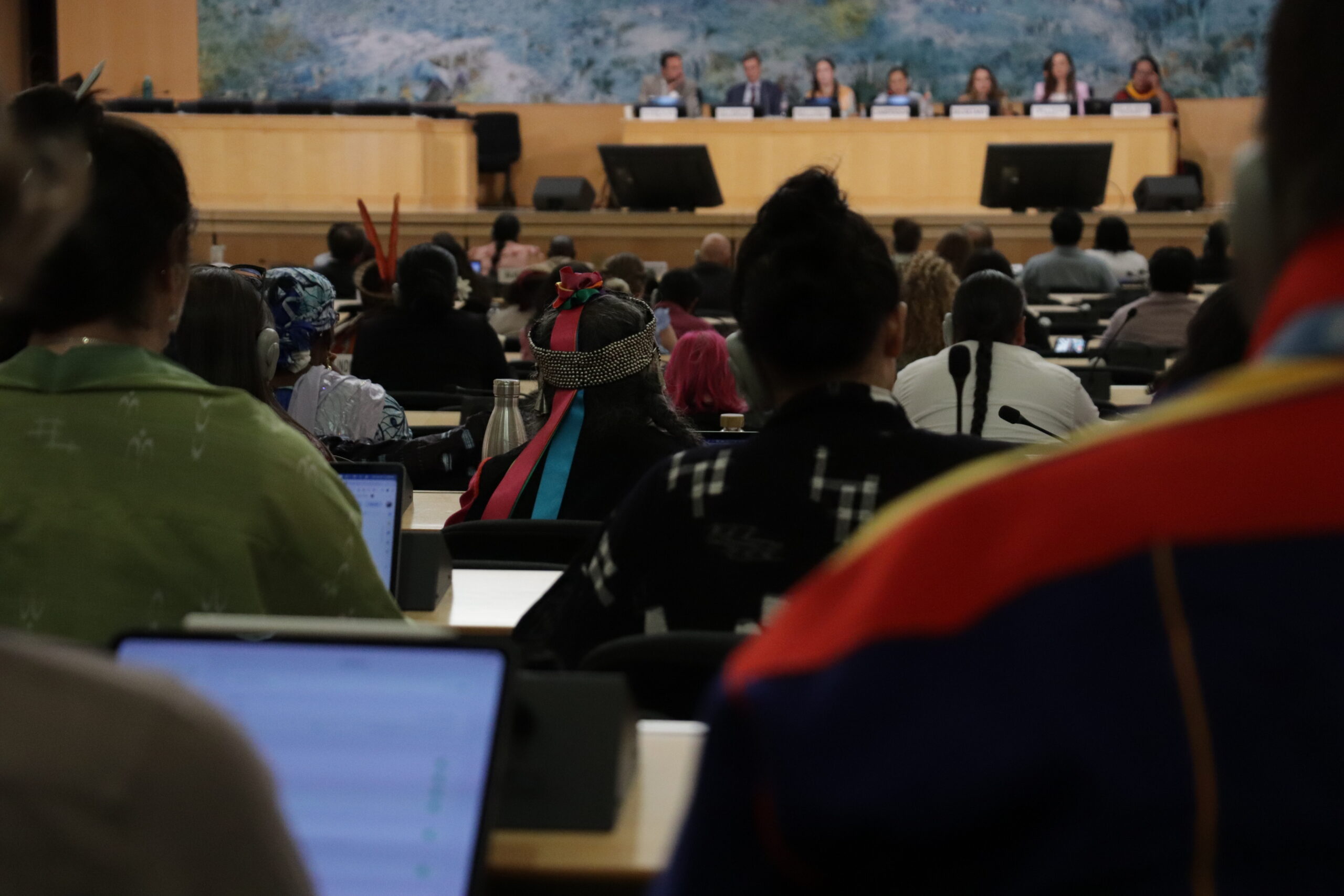
Indigenous leaders give the UN a roadmap for protecting their peoples
Amidst prayers and vows of solidarity, UN Expert Mechanism on the Rights of Indigenous Peoples ends annual meetings with demands for ‘action we’re not seeing globally’
-
Indigenous people demand more say at the UN, as new crises hit their homelands
Indigenous nations live ‘on the frontlines’ of climate, conflict and new tech. But their voices remain sidelined in the global halls of power.