Two years after ‘senseless killing,’ Jared Lowndes’s family sues RCMP officers
The Wet’suwet’en man’s mother and children are seeking damages from four Mounties and their employer the Minister of Public Safety

Content warning: This story contains details of police violence against Indigenous people. Please read with care.
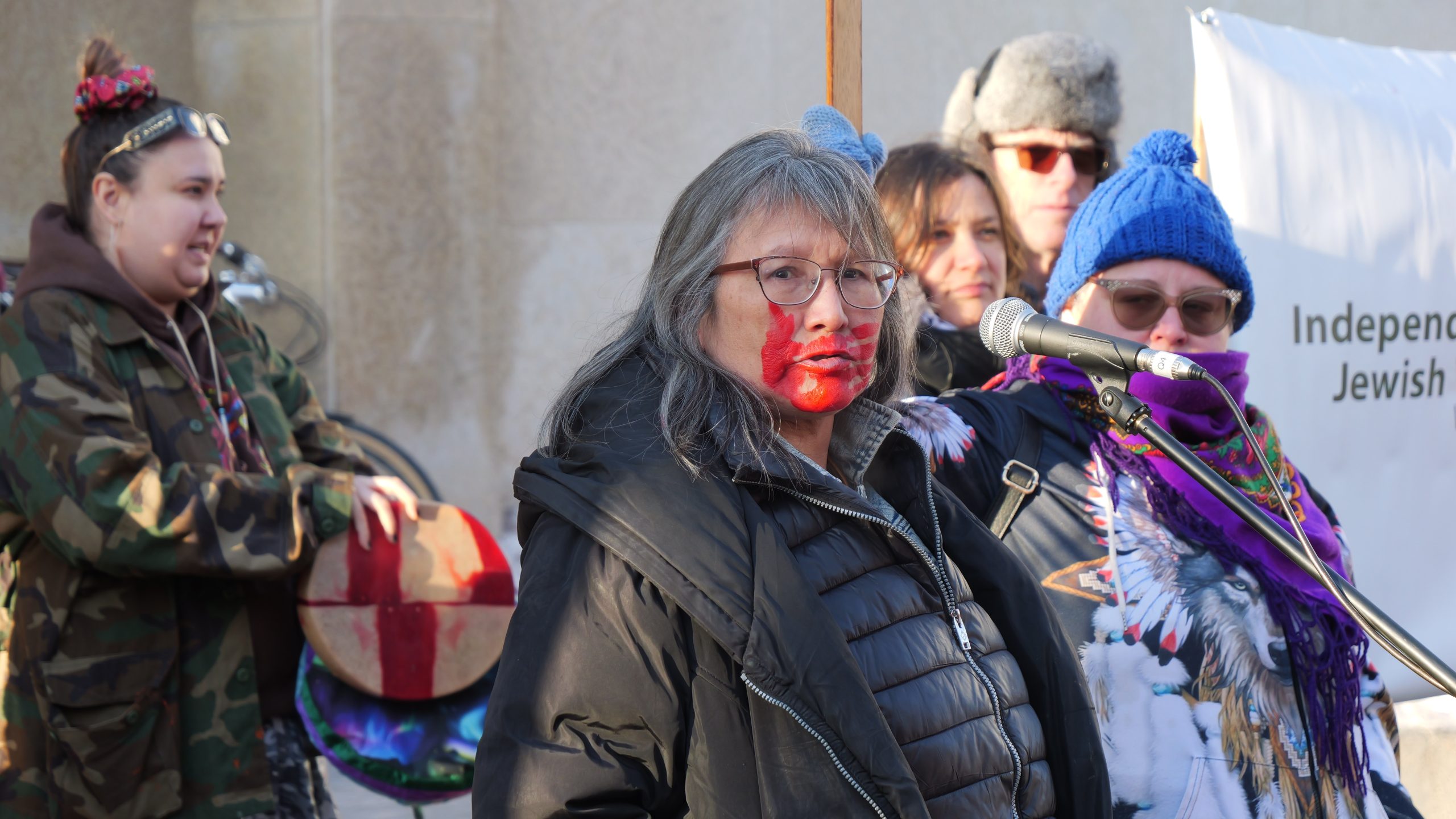
On the two-year anniversary of her son’s death, the mother of Jared Lowndes stood at a microphone in front of a “defend Indigenous lives” banner, explaining why her family is suing four members of the RCMP and the minister who oversees them.
“This civil suit is not about winning any monetary amount, it’s far from that,” Laura Holland said on Saturday in “Vancouver’s” Grandview Park.
“I want people to understand what we as Indigenous people face on a daily basis. … How we are targeted, how we are hunted down, how we are chased down in the streets.”
On July 8, 2021, Lowndes was shot during an interaction with police in a Tim Hortons parking lot in “Campbell River.”
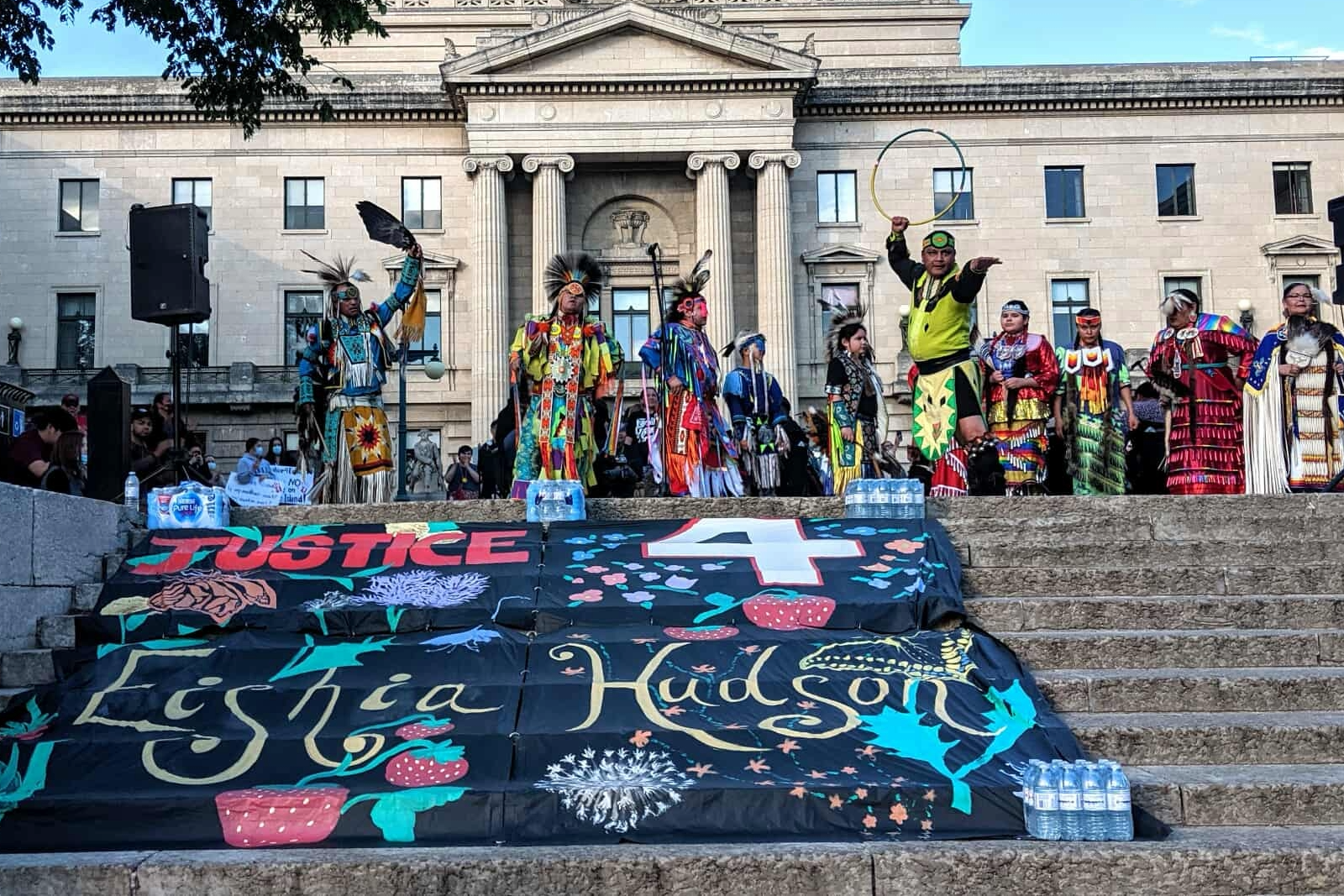
The Wet’suwet’en man’s death has brought up many concerns about what occurred that day and about wider systemic racism against Indigenous people — and has resulted in a wider police accountability movement called Justice For Jared.
In December, the Independent Investigations Office (IIO) announced it would recommend charges against three Mounties who confronted Lowndes, and the family is still awaiting a decision.
Meanwhile, Lowndes’s family has filed a notice of civil claim in B.C. Supreme Court against four unnamed Mounties and the province’s Minister of Public Safety and Solicitor General in right of the RCMP.
‘A senseless killing’
The plaintiffs, Holland as well as Lowndes’s two children, are seeking damages stemming from Lowndes’s death. The lawsuit alleges “grossly negligent conduct” from the Mounties and inadequate training of the four officers from the public safety ministry.
The lawsuit, dated July 7, alleges that one or more of the officers — all named in the suit as John Doe — had used an RCMP vehicle to “ram” Lowndes’s vehicle and surrounded him before deploying a police dog to attack him through an open window.
A statement from the National Police Federation at the time alleged that Lowndes had stabbed the police dog and “injured an RCMP officer.” The IIO confirmed that shots were fired by police but did not give many more details.
“At approximately 9:00 a.m., Mr. Lowndes was shot and killed by one or more of the police defendants,” the lawsuit states, in part.
“The actions of the police defendants were unprovoked, unwarranted and in complete disregard of the ordinary standard of morality or decent conduct.”
Neil Chantler, the family’s legal counsel in the case, called the incident “a senseless killing” and said Lowndes’s family has been profoundly affected.
“And while we hope this civil claim will result in some financial compensation for Jared’s mother and daughters, it highlights the outdated wrongful death laws in this province,” Chantler said in a statement.
“Families in this situation deserve to be treated better than they are under our Family Compensation Act. B.C. is the last province in Canada to modernize these colonial-era laws.”
‘How can anybody be prepared for this?’
During Saturday’s rally, Lowndes’s younger sister Shoshannah Holland said that, since losing her brother, she has wanted to talk publicly about him but has been at a loss for words.
“I’ve been thinking that I wanted to write and let everyone know what our conversations were like, what it was like growing up and how his murder affected me,” Holland said.
“I added stuff and I deleted so many stories, but this is what I wrote down.”
Holland went on to share about how Lowndes protected her and shared fond memories about spending time with him — often staying up late, telling stories and laughing so hard they couldn’t breathe.
“Our stomachs and faces would hurt,” she said. “He told me to stop it, that’s enough now, because we kept adding to the jokes, making it funnier and funnier.”
Holland said her brother would often talk about his fear about the police and how he was worried they were going to kill him — something he had also written about in a letter to his lawyer months before he died, according to his family.
The letter details alleged mistreatment by officers while being jailed and talks about being prepared for officers to show up with a warrant, even outright stating: “I’m First Nations and the RCMP is going to kill me.”
“As time went by he brought it up again and again,” Holland said.
“Even though Jay kept telling me over and over again and preparing me for this, I was not prepared for this at all. How can anybody be prepared for this?”
She shared that, despite all the pain, she still feels her brother there looking out for her.
“I knew he was there when I kept seeing butterflies, and when I kept hearing random people listening to his old favourite song ‘Still Fly’ by the Big Tymers,” she said.
“My brother always looked out for us growing up and he’s still here looking out for us.”
Systemic racism in policing
Lowndes’s mother Laura said that too many Indigenous deaths are “swept under the rug” because of a lack of resources to bring cases against the police and government “who have access to seemingly-endless resources to fight our people.”
Grand Chief Stewart Phillip of the Union of BC Indian Chiefs said the RCMP have been killing and displacing Indigenous people for the organization’s entire history, “and there has been little to no accountability.”
“We have been calling for an overhaul to the racist policing system for years; it is not working, and it is inherently discriminatory,” he said in a statement.
“The disproportionate number of Indigenous peoples in the prison systems, and the alarming increase in brutal deaths in police custody are a testament to this imbalance, and it stems from the systemic racism in these colonial institutions.”
Author
We live in a media ecosystem that thrives on misinformation. Big Tech and AI companies are consuming the work of real human beings and Canadian news has been banned on Facebook and Instagram.
And yet, I have hope for journalism because of the work we’re doing at IndigiNews.
At IndigiNews, we embody tâpwêwin — the Cree value of integrity and responsibility in truth-telling. We are committed to our independent, Indigenous-led newsroom rooted in community, accountability, and relationality. We believe storytelling is a sacred fire that connects our pasts, presents, and futures through the storytellers in our Storytelling Lodge. IndigiNews creates space for Indigenous journalists, storytellers, Knowledge Keepers, and communities to gather, learn, and share stories that matter.
As a registered charity, we are building a fire that allows our work not just to ignite but to thrive. Rather than relying on advertising or corporate acquisition, IndigiNews is sustained by people like you who believe Indigenous stories are important for the future of our communities.
Your support is making a real difference.
Our community of supporters, our Firekeepers, make it possible to grow our newsroom, publish award-winning journalism, train emerging Indigenous journalists through initiatives like the ReFocus Photojournalism Fellowship, and publish trustworthy stories that serve our communities across the country. Every story we publish helps fill in gaps left by mainstream media and ensures Indigenous perspectives are represented with care, accuracy and respect.
But there is still more work to do.
As the media landscape becomes more and more uncertain, community support is as necessary and essential as it’s ever been. Every new Firekeeper helps protect the independence of our newsroom and strengthens journalism that is accountable to our many and varied communities over corporations.
That’s why we’re inviting you to become a Firekeeper.
Firekeepers tend to and protect the sacred fire. Your monthly contributions directly support IndigiNews’s Storytelling Lodge, helps sustain our independent, Indigenous-led newsroom, and ensures future generations of Indigenous storytellers have the resources they need to do the work.
As a registered Canadian charity, all eligible donations receive a charitable tax receipt.
If you believe Indigenous stories matter, if you value independent journalism, and if you want to help build a strong future for Indigenous media, we invite you to join our circle of Firekeepers today.
Together, we can keep the fire burning.
— Eden Fineday, Publisher, IndigiNews
Support us nowLatest Stories
-
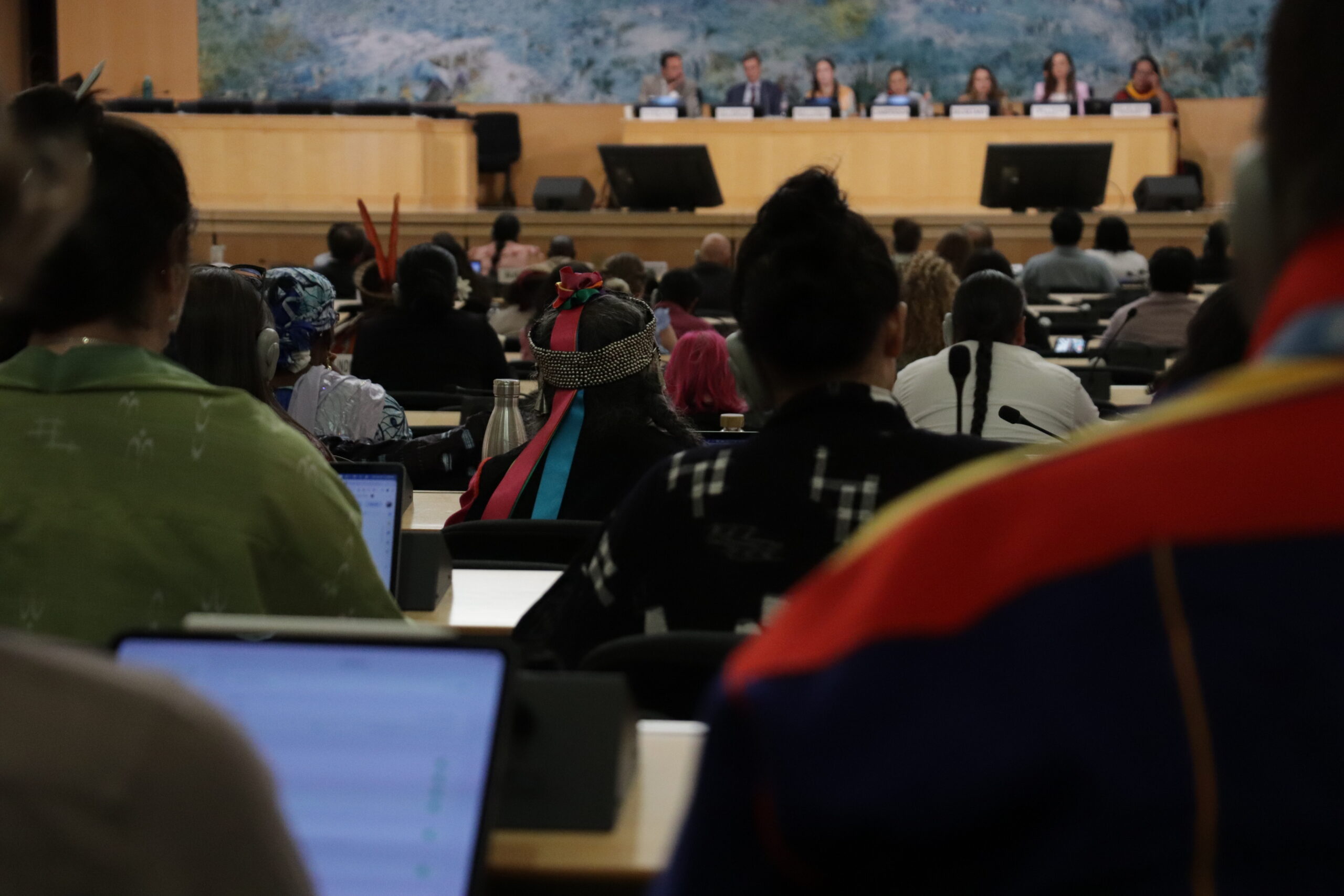
Indigenous leaders give the UN a roadmap for protecting their peoples
Amidst prayers and vows of solidarity, UN Expert Mechanism on the Rights of Indigenous Peoples ends annual meetings with demands for ‘action we’re not seeing globally’
-
Indigenous people demand more say at the UN, as new crises hit their homelands
Indigenous nations live ‘on the frontlines’ of climate, conflict and new tech. But their voices remain sidelined in the global halls of power.