AI data centers are booming. Indigenous People want help protecting their lands and knowledge
Indigenous leaders warn the UN that the rapid growth of artificial intelligence facilities threatens their rights
This story is published through the Indigenous News Alliance.
Artificial intelligence is often called the transformative technology of our time, with the potential to reshape our world on a global scale.
And yet, underpinning its potential is the need for so-called hyperscale data centers that require vast amounts of land, energy, and water.
As tech companies and governments continue to develop this infrastructure at a huge scale, Indigenous peoples around the world are responding to this threat in different ways.
They are raising concerns about mounting pressure on water resources and inadequate consultation, but in some cases embracing projects for their economic benefits.
The rapid expansion of this massive digital infrastructure has Indigenous leaders, governments and experts calling on those developing them to comply with the principle of free, prior, and informed consent — while exploring whether this infrastructure can be established in ways that advance Indigenous rights and priorities.

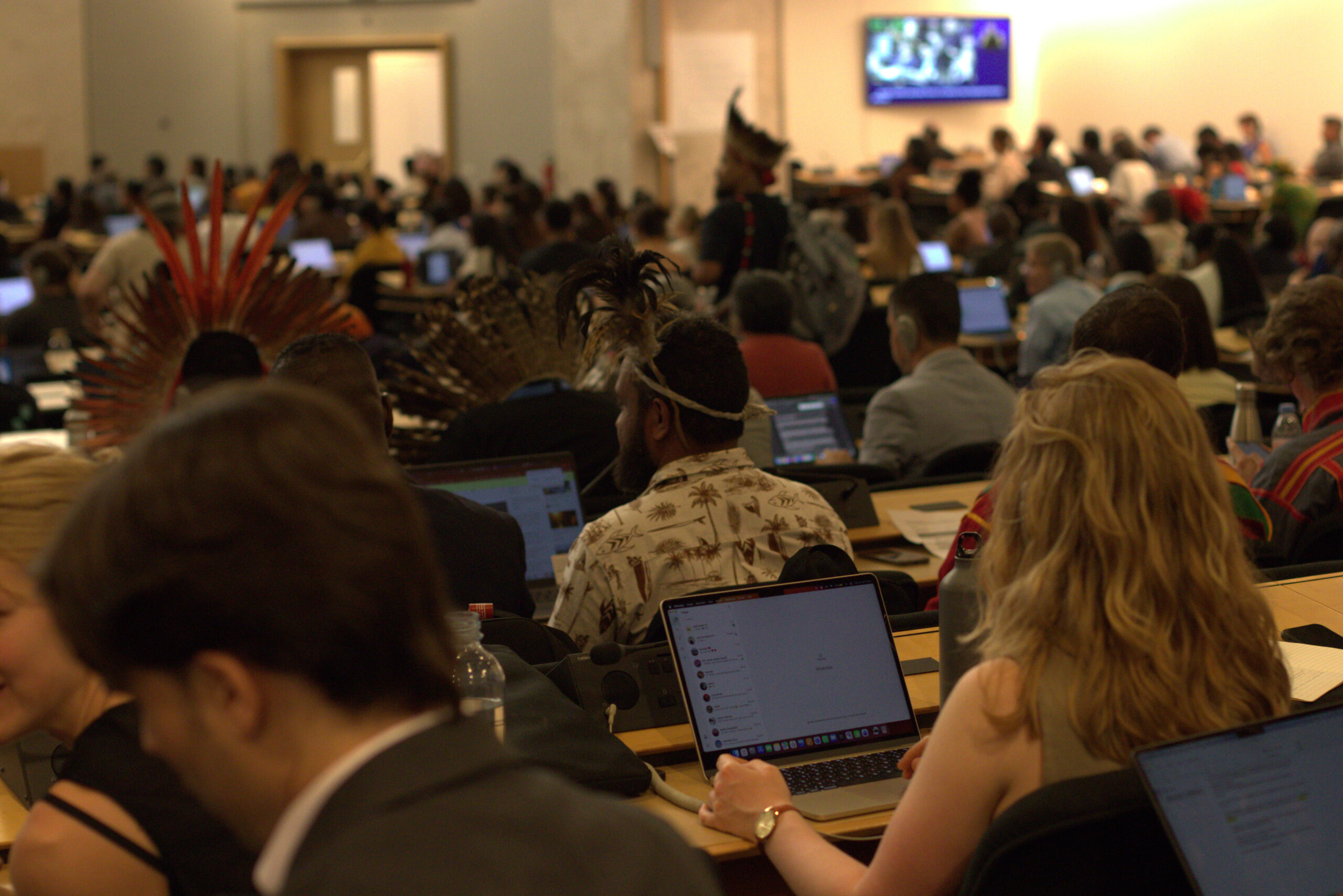
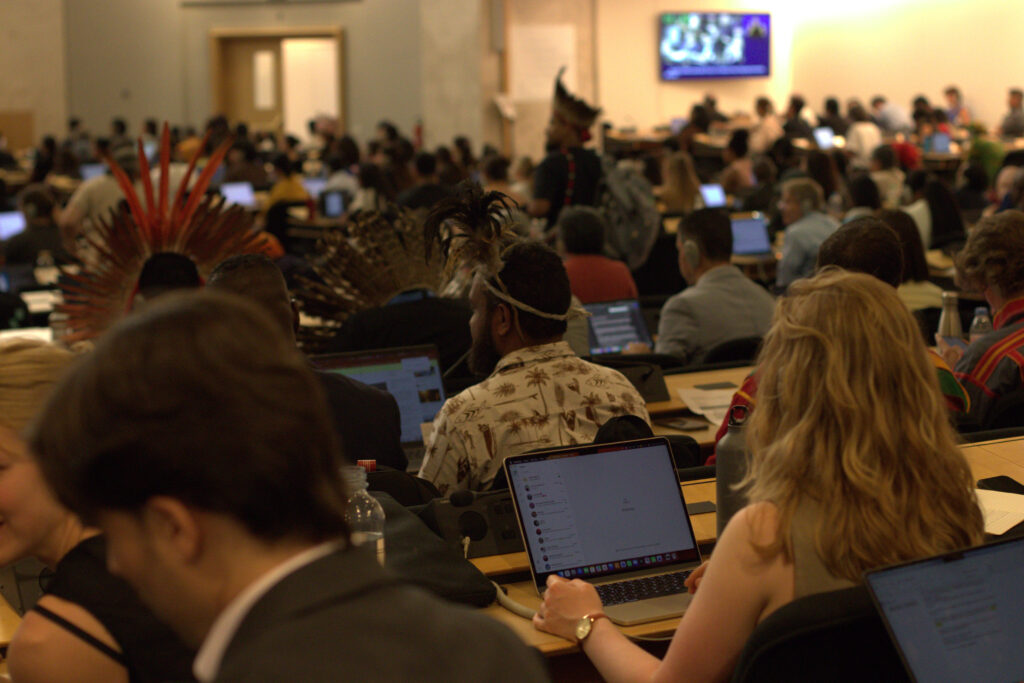
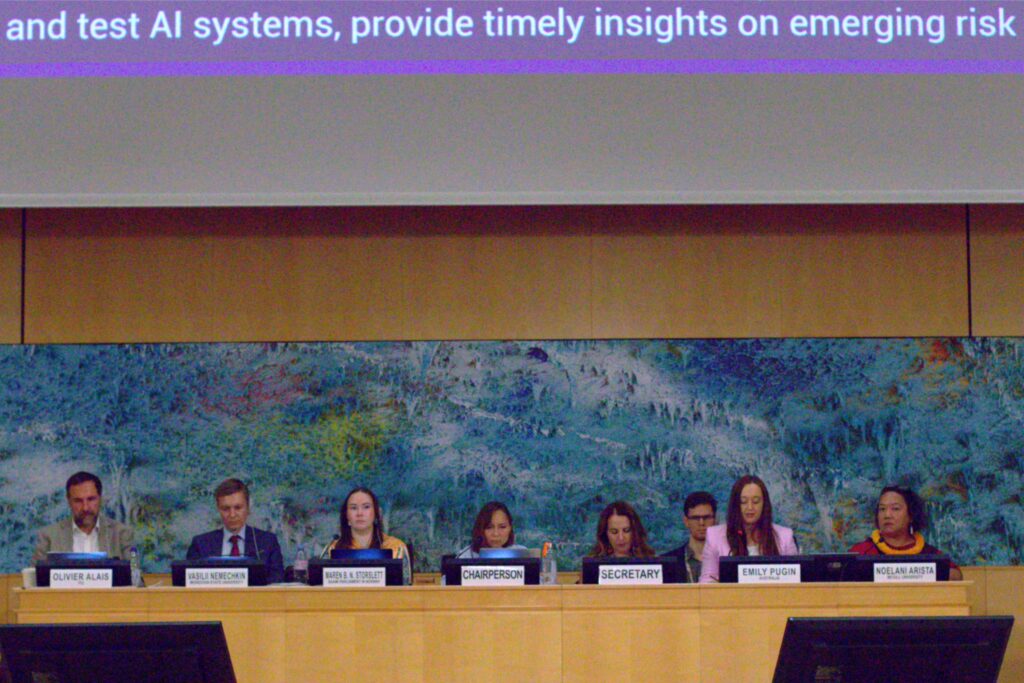
During a panel discussion on the second day of the United Nations Expert Mechanism on the Rights of Indigenous Peoples (EMRIP), Indigenous delegates said that while there must be policies to ensure that AI does not harvest Indigenous knowledge without consent, protections for Indigenous lands and waters are equally important.
“AI is resource-intensive and requires vast amounts of energy,” said Maren Storslett, who is a member of the Sámi Parliament in Norway. “In Sápmi, we already see how large data centers put pressure on our territories.
“This forces a conversation about priorities and limits and we need to be at the table on these discussions.”
Enough energy used to power 1.3B homes by 2030
According to the International Energy Agency, conventional data centers — which store thousands of computers and other equipment to power everyday digital life like cloud storage — may draw around 10 to 25 megawatts of power per year.
But a massive AI-focused data center, of the likes being built by or for transnational companies such as Google and Amazon, can require 100 megawatts or more annually, consuming as much electricity as 100,000 households would use over the same time.
All of that energy is needed to power the immense racks of servers that provide the computing power behind things like ChatGPT, Claude, and other AI platforms. They also require copious amounts of water to keep them cool.
This demand for energy and water, driven in part by the increasing rack power density for AI workloads, is a frequent concern raised by sources at the international Indigenous conference.
Research by the Lawrence Berkeley National Laboratory estimates that all data centers in the US alone directly consumed approximately 66 billion liters of water in 2023.
It also estimated that the energy generation consumed 800 billion liters of water.
Other research puts it into perspective: By 2030, the energy required for data centers is expected to double to 945 terawatt-hours — enough to meet the needs of all 1.3 billion residents of Sub-Saharan Africa for 5.5 years. Those facilities would also require enough to meet the domestic water needs of all the same people for a year.

“These technologies … come with environmental cost,” said Aluki Kotierk, who is Inuk from “Canada” and current chairperson of the UN Permanent Forum on Indigenous Issues.
“The data centers that power them consume vast amounts of energy water and minerals, resources that are often extracted from or developed on Indigenous peoples lands without their meaningful participation or consent, with potential serious consequences for their rights, livelihoods, and environments.”
Extraction for AI data center resources can result in the degradation of sacred sites and threats to fragile ecosystems, according to Camila Vergara, a board member of the Forum for Real Economic Emancipation.
While there are potential benefits for Indigenous people, the electricity and water needs of hyperscale, AI-focused data centers can be detrimental to Indigenous lands that lack the capacity to meet their resource requirements, according to Matthew Rantanen, a Cree descendant and advocate for Indigenous digital equity.
Rantanen, who co-chairs two technology-related subcommittees of the National Congress of American Indians, believes an industry shift toward renewable energy and alternative cooling methods is needed to ensure that AI infrastructure aligns with Indigenous priorities and rights.
The permitting needed to build these data centers should require in-depth studies of resource availability and the impacts on communities and ecosystems, as well as the involvement of those impacted throughout the lifecycle of a project — a point that was reinforced by participants at the EMRIP.
Others, like Rochelle Diver — a citizen of the Fond du Lac Band of Lake Superior Ojibwe and the UN environmental treaties co-ordinator for the International Indian Treaty Council — are calling for broader support for Indigenous-led moratoriums on data centers.
“We are in an urgent situation regarding the infrastructure being built on a massive scale to power AI technology,” she said.

‘This is not a drought, this is a robbery’
Data centers are often built in water-stressed regions, like Querétaro, Mexico and Santiago, Chile.
In a protest against the construction of a Google facility in Santiago, Indigenous peoples, local communities and workers’ unions rallied around the slogan “no es sequia, es saqueo” (“this is not a drought, this is a robbery”).
Last year, the Anacé Indigenous people in “Brazil” filed an official complaint before federal authorities, requesting the cancellation of a C$14 billion (US$10 billion) data center for the popular social media platform TikTok on their land.
Leaders said their right to consultation was violated, and their concerns dismissed.
Roberto Anacé, leader of the community in Brazil, said in a WhatsApp message that the project “hinders our community, first disrespectfully separating relatives, causing fights, personal interests, bringing out ambition and hatred in human beings, and above all destroying our sacred things: Mother Earth, water, climate, air.”
A recent analysis by the London School of Economics suggests that the next wave of climate litigation may relate to the impacts of large data centers that AI relies on.
In 2024, due to the efforts of Chilean protestors’ in Santiago, an environmental tribunal suspended construction of the Google data center, ruling that the environmental impact had not been properly considered.
So far, there has been no progress on the Anacé peoples’ lawsuit against TikTok.
In the US, a more than C$1.4 billion (US$1 billion) Meta data center project in Tulsa has received mixed responses among Indigenous and non-Indigenous community members.

While some support it, others firmly oppose it and have actively campaigned against it. Cheyenna Morgan, an enrolled member of the Keetoowah Band of Cherokee Native Americans and the coalition coordinator of Stop Data Colonialism, said in an email that the data center will place a heavy burden on local power and resources.
Meta, Google, and TikTok did not reply to requests for comment.
Through Stop Data Colonialism, Morgan works to stop the roll-out of hyperscale data centers on vulnerable lands, and said her community is already experiencing an increase in electricity bills and is expecting further rate hikes.
“These impacts will be felt on regular people who didn’t ask to have these in their neighbourhoods,” she said.
In March, the city council passed a moratorium to allow more time to assess the project’s impact.
Similar moratoriums have been passed by tribes in the US, including the Seminole Nation of Oklahoma, the Eastern Band of Cherokee Indians (EBCI), and the Sault Ste. Marie Tribe of Chippewa Indians.
Promises versus reality
At the UN, some delegates spoke of direct experience with harmful data centers, while others spoke of the potential risks.
Julia Aka Wille, who is Inuk from “Greenland,” said that even though her homeland does not have any data centers yet, the community is still concerned about their impact on the climate.
“They still affect us in that way, because they use so much energy and water, and it will contribute to the general climate change,” said Aka Wille, who was invited to speak at EMRIP by the Inuit Circumpolar Council.
“The Arctic is the region that is most affected by climate change because the ice is melting, and this affects us that we can’t really have the same way of living anymore.”
Although Aka Wille sees opportunity in AI to help teach and preserve Indigenous languages like hers, she hopes that Indigenous peoples from around the world can work together to ensure AI is used in a responsible way.
In “Alberta,” some Indigenous nations are embracing the data center boom, emerging as key stakeholders and investors.
The Woodland Cree First Nation recently announced plans for a 650-megawatt data center that will use an idle power plant for energy generation. Woodland Cree has a 51 per cent stake in the project.

Te Kāhui Raraunga, an Indigenous-led initiative in Aotearoa (New Zealand), demonstrates how some tribal nations are considering AI-initiatives that respect Indigenous rights and priorities.
The organization, linked to the Data Iwi Leaders Group, has created a Māori Data Governance Model and Māori AI Governance Framework focused on data policy and infrastructure.
As part of this initiative, leaders from 85 tribal nations gather each quarter to ensure the communities’ key priorities are upheld.
“These hyperscale data centres come with promises of economic development and digital sovereignty,” Erena Mikaere, the digital program lead for Te Kāhui Raraunga, said in an email.
“However, the reality can be much different, and it is vital that iwi Māori have the information they need to make informed decisions.”
She added that the organization has developed resources for tribal leaders that highlight the impacts of hyperscale data centers, as well as key considerations before signing any agreement allowing one.
At EMRIP, Indigenous delegates stressed the need for meaningful participation throughout the development, implementation and governance of AI initiatives that affect them.
“We must not only ask what AI can do, but what it should do,” said Maren Storslett.
“Respect for the rights of Indigenous peoples must apply across the entire life of AI systems.”
With files from Joseph Lee/Grist.
Author
We live in a media ecosystem that thrives on misinformation. Big Tech and AI companies are consuming the work of real human beings and Canadian news has been banned on Facebook and Instagram.

And yet, I have hope for journalism because of the work we’re doing at IndigiNews.
At IndigiNews, we embody tâpwêwin — the Cree value of integrity and responsibility in truth-telling. We are committed to our independent, Indigenous-led newsroom rooted in community, accountability, and relationality. We believe storytelling is a sacred fire that connects our pasts, presents, and futures through the storytellers in our Storytelling Lodge. IndigiNews creates space for Indigenous journalists, storytellers, Knowledge Keepers, and communities to gather, learn, and share stories that matter.
As a registered charity, we are building a fire that allows our work not just to ignite but to thrive. Rather than relying on advertising or corporate acquisition, IndigiNews is sustained by people like you who believe Indigenous stories are important for the future of our communities.
Your support is making a real difference.
Our community of supporters, our Firekeepers, make it possible to grow our newsroom, publish award-winning journalism, train emerging Indigenous journalists through initiatives like the ReFocus Photojournalism Fellowship, and publish trustworthy stories that serve our communities across the country. Every story we publish helps fill in gaps left by mainstream media and ensures Indigenous perspectives are represented with care, accuracy and respect.
But there is still more work to do.
As the media landscape becomes more and more uncertain, community support is as necessary and essential as it’s ever been. Every new Firekeeper helps protect the independence of our newsroom and strengthens journalism that is accountable to our many and varied communities over corporations.
That’s why we’re inviting you to become a Firekeeper.
Firekeepers tend to and protect the sacred fire. Your monthly contributions directly support IndigiNews’s Storytelling Lodge, helps sustain our independent, Indigenous-led newsroom, and ensures future generations of Indigenous storytellers have the resources they need to do the work.
As a registered Canadian charity, all eligible donations receive a charitable tax receipt.
If you believe Indigenous stories matter, if you value independent journalism, and if you want to help build a strong future for Indigenous media, we invite you to join our circle of Firekeepers today.
Together, we can keep the fire burning.
— Eden Fineday, Publisher, IndigiNews
Support us nowLatest Stories
-
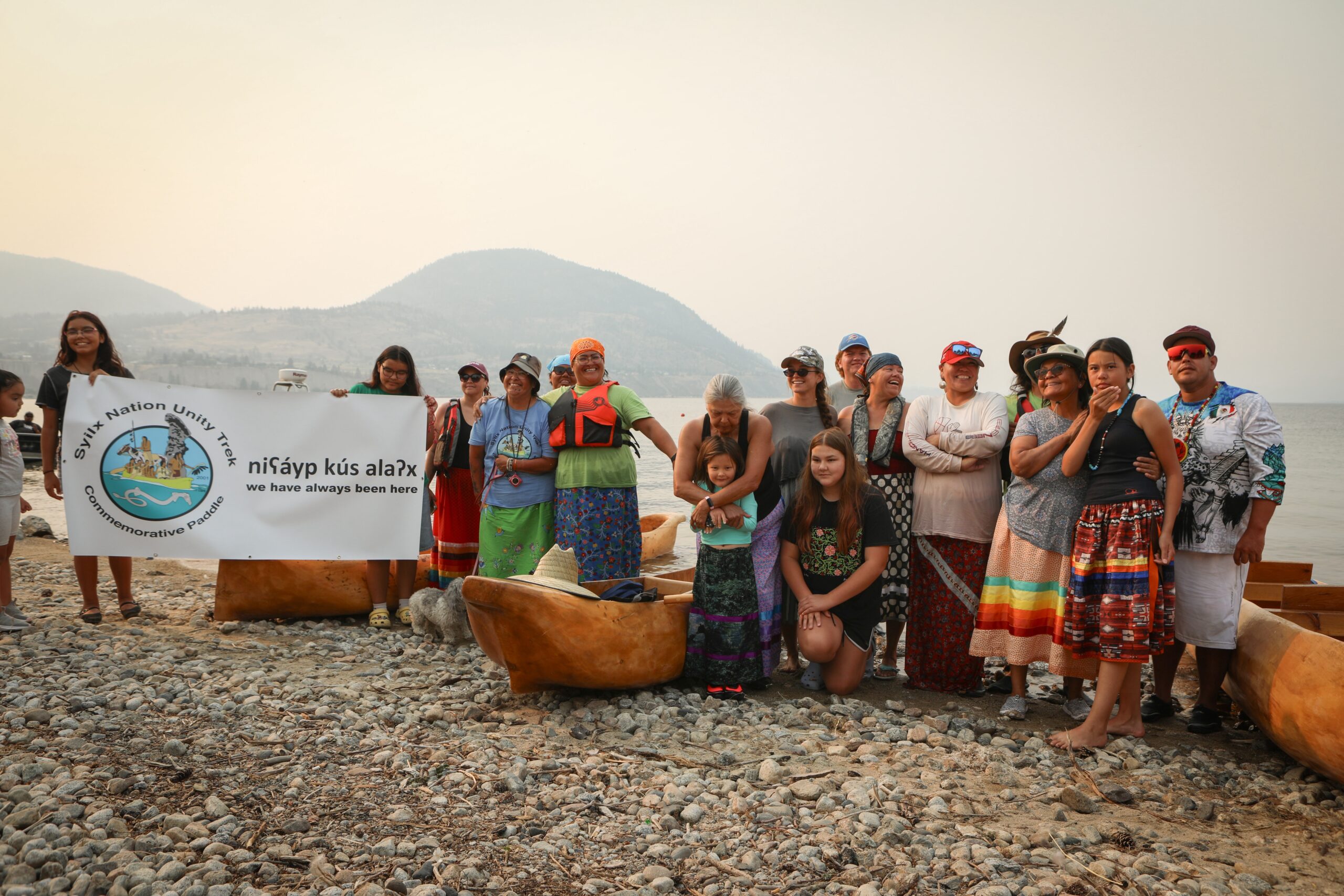
Travelling in dugout canoes, syilx Okanagan paddlers complete weeklong Unity Trek
‘Unity is connecting the people to each other, and connecting ourselves to the land,’ said one participant about the commemorative journey that wrapped up on Aug. 1
-

In the Okanagan desert, snakes offer lessons on protecting a fragile ecosystem
For two decades, researchers at the Nk’Mip Desert Cultural Centre have tracked snakes across syilx homelands — while helping people appreciate the often-feared creatures