WLFN remembers lost children, uplifts Youth at annual rodeo
Opening ceremonies feature moving display of remembrance and cultural resurgence as event kicks off on Secwépemc homelands

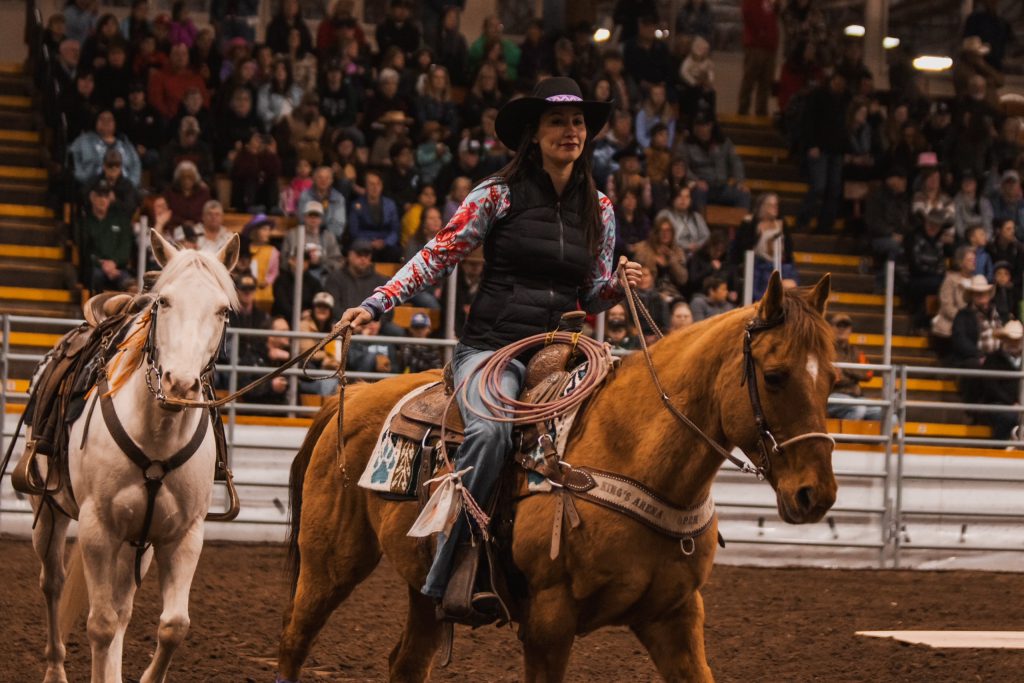
An annual rodeo in Secwépemc homelands opened this year with a moving memorial for all of the children who never made it home from residential “schools” — as a riderless horse entered the arena to symbolize the loss that’s taken place.
With orange material braided into its mane, the lone horse was escorted around the indoor arena as a chilling reminder of all those who never had a chance to grow up.
The display reminded of the trauma that Indigenous people have had to go through — but then led into a show involving Youth and the possibilities they now have in a world where they are respected and held up by their people.
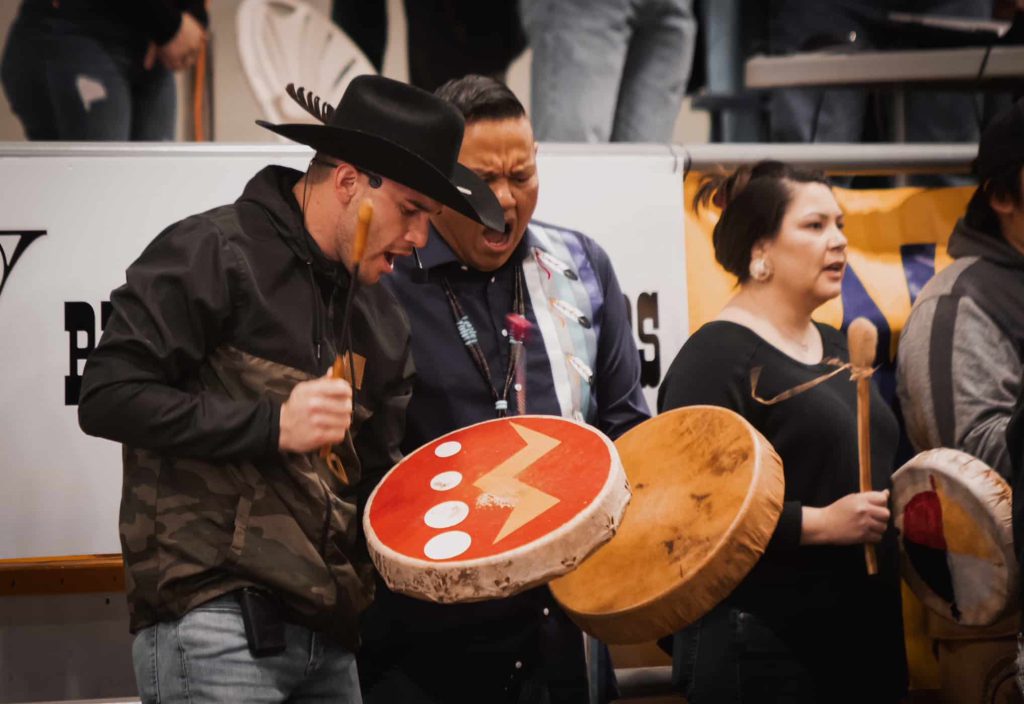
Kúkpi7 (Chief) Willie Sellars of the Williams Lake First Nation (WLFN) led the opening ceremony, which began with the singing and drumming of the Women’s Warrior Song.
“When we go on this path of reconciliation, we have to acknowledge the educational piece of that journey,” said Kúkpi7 Sellars on April 14.
“That onus that we have as community to hold each other up, the onus that we have as Indigenous people to also participate in that education journey by showcasing and … really holding up our traditional peoples, our language, our ceremonies.”
The annual indoor rodeo took place at the Cariboo Memorial Recreation Complex in Williams Lake over three days in mid-April. It included various events including junior steer riding, barrel racing and bull riding.
Ceremony a strong beginning to rodeo
The event was organized by the Interior Rodeo Event Association, and each day began with an opening ceremony from the WLFN.
“The people of Williams Lake First Nation would like to welcome you to the land of their ancestors. Since the beginning of time, the Secwepemc have been living with the land as its caretakers,” said rodeo announcer Tyson Pietsch.
“As we live and work towards a common goal of providing the best for our family, support that our neighbours have the same. May you and your family live your best and reach all of your dreams.”
Pietsch spoke about hardships that the First Nations communities of the Cariboo Chilcotin Coast have endured over the past 150 years, and warned the crowd about the possibility of upcoming triggering material.
The National Indian Residential School Crisis line number was also read aloud and displayed on the video screen — the number is 1-866-925-4419 and crisis support is available 24 hours a day.
“Children were legislated by the Canadian government to attend Indian residential schools, like the one on the traditional land of the Williams Lake First Nation,” he said.
“Children at the school were robbed of their childhood, language and identity. Even worse than the abuse they suffered, many of the children never returned home.”
Pietsch repeated a statement made by Kúkpi7 Sellars, who said that “There can be no reconciliation before there is truth.”
“As we recognize this truth, we wish to demonstrate and pay tribute to those of our neighbours, friends and loved ones that belong to the Williams Lake and surrounding First Nations,” said Pietsch.
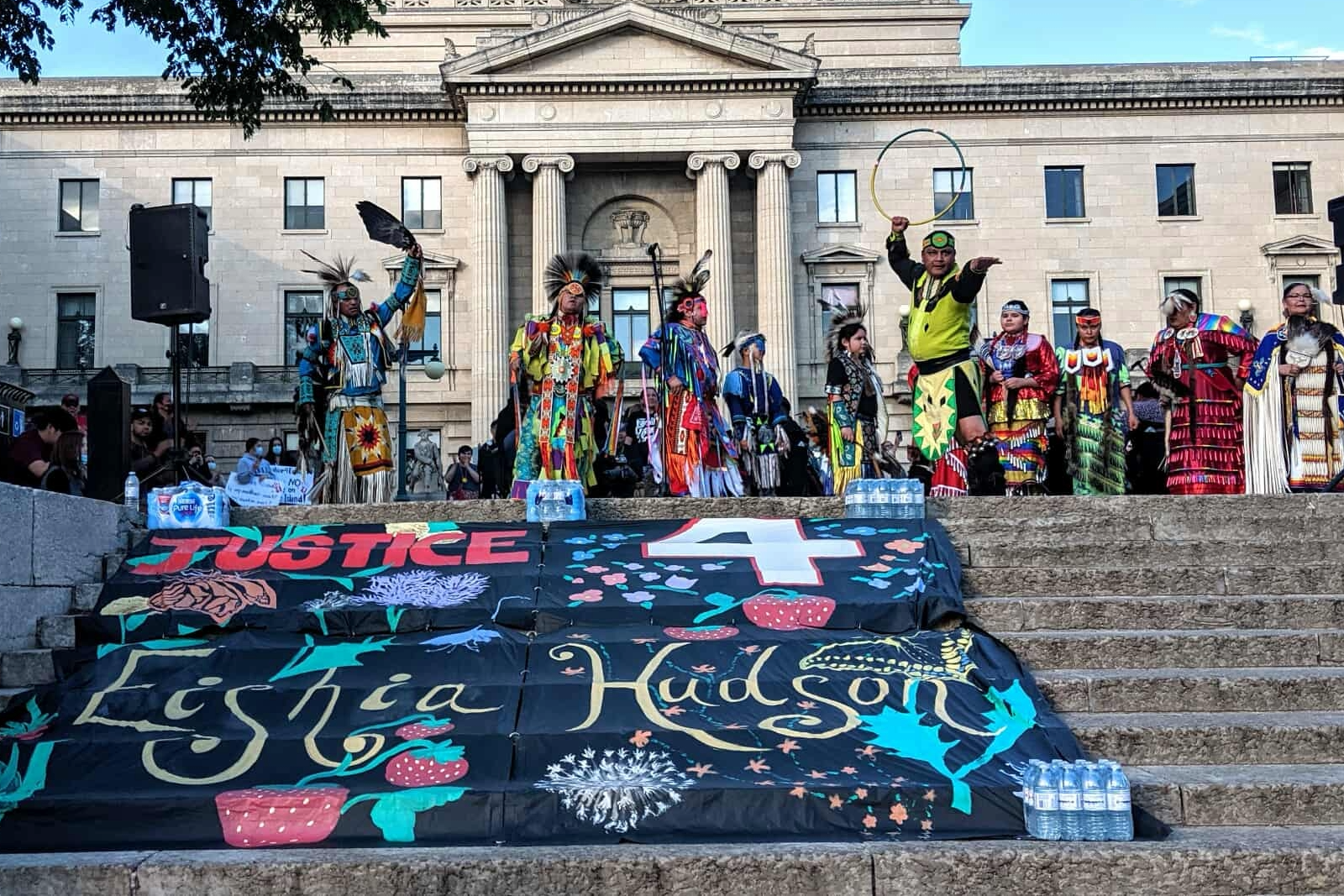
In a show of the current thriving culture, traditional dances were showcased, including the men’s fancy dance, women’s traditional, men’s traditional, and boy’s grass. The dancers had platforms in the middle of the arena and another up in the stands so the entire audience had a view of the performances.
Following the dances, the riderless horse was escorted around the arena as a reminder of the children that never made it home.
Pietsch announced that this represented, “The child that never had a chance to become an adult, to become a mother or a father, the child that was never able to see their family.”
He continued by dedicating the ride, “To the child that didn’t experience their dreams, to the child that had so much to offer their community, only to face an early departure at the hands of others. Unimaginable to all of us, this is a child we will never forget and who has prepared a place for us with the Creator.”
After the riderless horse made its rounds, a small child mounted it and Pietsch said that this display represented the wounded child that did make it home to their loved ones — the one that faced overwhelming cruelty and neglect.
“Silent and with a bleeding heart, cried a thousand tears for those left behind,” Pietsch said. “This warrior will have the strength to go through life facing all his challenges and the courage to breathe new life into their culture and identity.”
The child was met with applause and cheers ringing out from the crowd as they made their way through the arena.
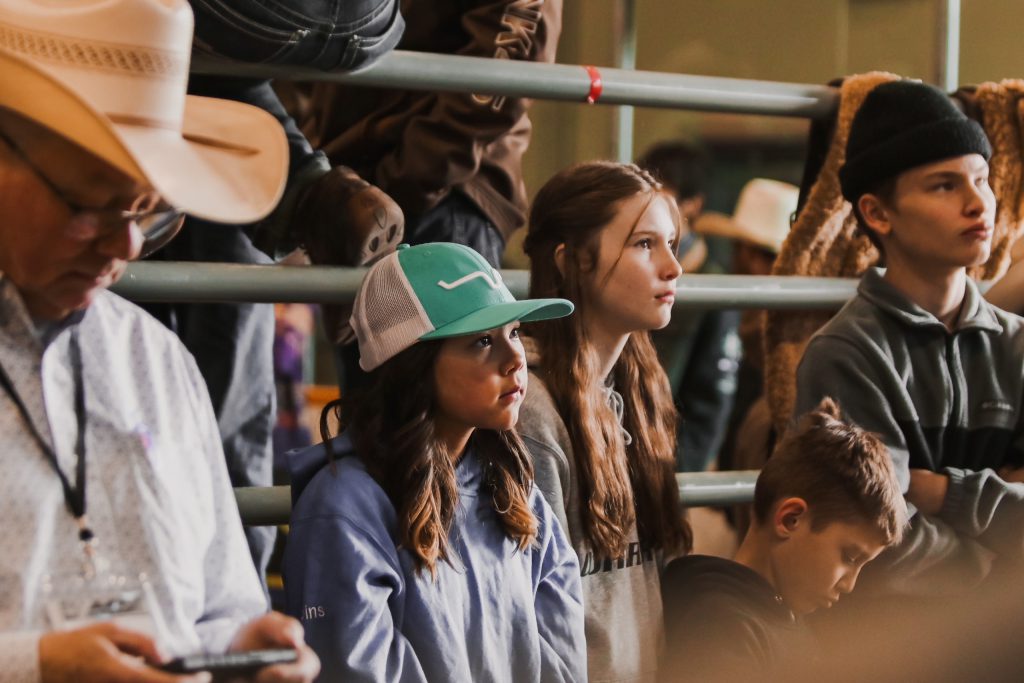
The cheers erupted further as a group of Youth came into the arena, who were said to be the second generation of those who were taken from their families.
This group of Youth represented the “new generation that will move forward to begin a new time of healing, a time of respect, of empathy, of a consoling heart, and most of all, will never forget the challenges and the sacrifices of their ancestors,” said Peitsch.
“These are the children that will set the new path, that will have the freedom to decide their own journey, filled with the respect of their rightful traditions, language and ceremonies. We are all present here today as a gift from the Creator and it is up to all of us to help each other fulfill that path whatever they choose it to be.”
Conclusion by Kúkpi7 Sellars
At the end of the ceremony, the Chief’s Song was played to help “bless the competitors, bless the fans, and bless the livestock.”
Kúkpi7 Sellars said that he felt truly honoured for the opportunity to kick off the rodeo in a way that welcomed guests to the lands of the Secwépemc people.
Williams Lake is surrounded by many Indigenous communities, and this ceremony helped to set a precedent for other events in and around these communities to showcase the Indigenous people and honour the land that is being used.
“Hold up our dancers and our Elders and our survivors and really honour those that couldn’t be here, that are here and that want to be here,” he said.
He also invited the public to attend all the events put on by the WLFN, including their Father’s Day powwow, competition powwow, and any other events hosted in the area.
“We welcome you to participate and stand with us and stand beside us,” he said. “That is a very important part of this healing journey that we’re on.”
Author
We live in a media ecosystem that thrives on misinformation. Big Tech and AI companies are consuming the work of real human beings and Canadian news has been banned on Facebook and Instagram.
And yet, I have hope for journalism because of the work we’re doing at IndigiNews.
At IndigiNews, we embody tâpwêwin — the Cree value of integrity and responsibility in truth-telling. We are committed to our independent, Indigenous-led newsroom rooted in community, accountability, and relationality. We believe storytelling is a sacred fire that connects our pasts, presents, and futures through the storytellers in our Storytelling Lodge. IndigiNews creates space for Indigenous journalists, storytellers, Knowledge Keepers, and communities to gather, learn, and share stories that matter.
As a registered charity, we are building a fire that allows our work not just to ignite but to thrive. Rather than relying on advertising or corporate acquisition, IndigiNews is sustained by people like you who believe Indigenous stories are important for the future of our communities.
Your support is making a real difference.
Our community of supporters, our Firekeepers, make it possible to grow our newsroom, publish award-winning journalism, train emerging Indigenous journalists through initiatives like the ReFocus Photojournalism Fellowship, and publish trustworthy stories that serve our communities across the country. Every story we publish helps fill in gaps left by mainstream media and ensures Indigenous perspectives are represented with care, accuracy and respect.
But there is still more work to do.
As the media landscape becomes more and more uncertain, community support is as necessary and essential as it’s ever been. Every new Firekeeper helps protect the independence of our newsroom and strengthens journalism that is accountable to our many and varied communities over corporations.
That’s why we’re inviting you to become a Firekeeper.
Firekeepers tend to and protect the sacred fire. Your monthly contributions directly support IndigiNews’s Storytelling Lodge, helps sustain our independent, Indigenous-led newsroom, and ensures future generations of Indigenous storytellers have the resources they need to do the work.
As a registered Canadian charity, all eligible donations receive a charitable tax receipt.
If you believe Indigenous stories matter, if you value independent journalism, and if you want to help build a strong future for Indigenous media, we invite you to join our circle of Firekeepers today.
Together, we can keep the fire burning.
— Eden Fineday, Publisher, IndigiNews
Support us nowLatest Stories
-
Indigenous leaders give the UN a roadmap for protecting their peoples
Amidst prayers and vows of solidarity, UN Expert Mechanism on the Rights of Indigenous Peoples ends annual meetings with demands for ‘action we’re not seeing globally’
-
Indigenous people demand more say at the UN, as new crises hit their homelands
Indigenous nations live ‘on the frontlines’ of climate, conflict and new tech. But their voices remain sidelined in the global halls of power.