An offering of love in a time of collective grief
‘I wish I could stand beside you, hold your hand, bring you tea, and just be there,’ writes author Helen Knott

This article contains content about residential school that may be triggering. IndigiNews is committed to trauma-informed ethical reporting, which involves taking time and care, self-location, transparency and creating safety plans for those who come forward with stories to share.
Helen Knott, the author of In My Own Moccasins, wants those who are struggling in the wake of last week’s devastating news to know that they are not alone.
“The grief and sadness has been thick in the air, like an invisible cloud that sticks to your body, slows your movements,” she writes in a Facebook post on June 2.
“People are scattered, unable to focus, hurt, angry, mourning, frustrated. Some of us are processing for the very first time. This is hard, it’s been hard for a very long long time. I’ve been feeling it, too.”
On May 27, Kúkpi7 (Chief) Rosanne Casimir of the Tk’emlúps te Secwe̓pemc announced that ground-penetrating radar had revealed the remains of 215 children on the former grounds of a church-run institution known as Kamloops Indian Residential School (KIRS).
The institution was in operation between 1890 and 1978, according to the Indian Residential School History and Dialogue Centre at the University of British Columbia.
Helen is a Dane Zaa, Cree and Métis woman and second-generation survivor of Canada’s Residential institutions, living on her matrilineal traditional homelands in Northeastern B.C., in Treaty 8 Territory.
“What you are experiencing comes not just from you, but from family, from generations, from your community, from everyone across turtle island — it is so real right now that we pick it up everywhere (including social media). You can even pause and see where you feel it in your body and ask, who does this all belong to?,” she writes in her post.
She advises people to “mindfully release” the things they have picked up that aren’t serving them.
“Tell it that you can’t carry it with you, that it isn’t allowed to stay on you. Smudge it out if you have access to medicines.
“If you don’t want to cry or any of the above — then don’t. That’s okay, too. No one is allowed to tell you how to move through this. There is no wrong answer. Just stay with us. We love you. We need you,” she concludes.
After seeing her post about self-care, IndigiNews reached out for a Q & A. The following has been edited for length:
Let’s start off with how you want to be introduced, pronouns, nations, and how you occupy your space, not just in an occupational sense, but in a spiritual sense.
I am “actively learning” to hold space as a Matriarch as the eldest granddaughter and daughter in my family. Both my mother and my grandmother are no longer in this physical world so I am doing my best to keep up to the teachings I have been learning. Occupying space in this way means that I do my best to treat everyone like my relation, try to “see” them in a real way, and give doses of hard love when needed just like my Asu (grandma) and Mama did.
How do you place or locate yourself in the wake of the [news breaking about the] secret grave at the Kamloops Indian Residential School? And what role do you find yourself taking up right now?
I am a second-generation residential school survivor. My Kohkum, my father’s mom, went to residential school and our family has been healing from the damage of those institutions ever since. Currently, I am trying to sort out the grief of not having a close relationship with my Kohkum, as my Dad was raised by his Grandma, whom I am named after.
I hold grief for my Kohkum and for the alternate lives she couldn’t live because of the trauma and for the hugs and kisses she wasn’t able to give due to her experiences.
My heart is continually breaking for the travesties our people have faced, and continue to face. As a mom, I weep for these 215 children who never made it home. As a mom, I cry for the parents who had to live their lives missing their children.
As an Indigenous woman, my whole body responds and I can feel the grief reverberate through my entire being.
I primarily work with families of MMIWG2S with the Indian Residential School Survivor Society, and I am used to holding space and sitting with the grief of our people. I have been trying to hold informal space with others who are trying to navigate their own feelings and responses to this horrific and hard discovery. I say discovery, but these things have always been known by people who attended these schools.
Right at this very moment, I am helping make ribbon skirts that will be gifted at the vigil for the 215 children we have been planning for this Friday in Fort St. John, B.C.
Why was it important for you to write the post on Facebook? And how do you hope it can help others?
I know that not everyone is able to make sense of what they are feeling. I wanted to give a little insight and some small tools for individuals to pick up if they need to. I think that it is really important to check in with our body and be mindful of our spiritual space.
When we get such hard news we can disconnect from the body as a trauma response.
I don’t even mean trauma from a western understanding either, but from an Indigenous understanding, that trauma can cause you to leave a piece of your Spirit behind. Parts of our Spirit can disconnect from us during times like these. There is so much going on right now and we can feel it even if we aren’t aware of all that is happening. I just want all of our relatives to be gentle with themselves.
What do you want to see come out of all of this?
I would like for the Government of Canada to act on the calls to action from the TRC and MMIWG Inquiry. Even though apologies are abundant and can be empty, I also believe that the federal and provincial governments owe an apology for not taking action sooner in regards to bringing these children home, and all the others that undoubtedly exist in unmarked graves across Canada. These babies are still waiting to go home and for ceremony.
Beyond an apology, actual action needs to be taken and this looks like clean drinking water, adequate and long-term investment in healing and language, increased support for residential school survivors and the generational survivors. There are pages of recommendations for them to enact, and that’s what we need — not additional planning, or more engagements, and increased barriers for funding to be released to Indigenous organizations and communities.
As the search for more of our lost children takes place, there will be more need for proper support across Canada for those of all ages, and planning and funding for this needs to happen immediately.
What is your message to survivors and impacted families at this time?
I only have love.
Love is my offering. As a writer, I feel like words fail, and sometimes we only need someone to stand beside us as we feel our way through these things and nothing more. I wish I could stand beside you, hold your hand, bring you tea, and just be there. We will be standing in vigil here this Friday with songs and prayer.
_________________________________________________________________________________________
A National Indian Residential School Crisis Line has been set up to provide support for former students and those affected. Access emotional and crisis referral services by calling the 24-hour national crisis line: 1-866 925-4419.
Within B.C., the KUU-US Crisis Line Society aims to provide a “non-judgmental approach to listening and problem-solving.” The crisis line is open 24 hours a day, seven days a week. Call 1-800-588-8717 or go to kuu-uscrisisline.com. KUU-US means “people” in Nuu-chah-nulth.
Author
We live in a media ecosystem that thrives on misinformation. Big Tech and AI companies are consuming the work of real human beings and Canadian news has been banned on Facebook and Instagram.
And yet, I have hope for journalism because of the work we’re doing at IndigiNews.
At IndigiNews, we embody tâpwêwin — the Cree value of integrity and responsibility in truth-telling. We are committed to our independent, Indigenous-led newsroom rooted in community, accountability, and relationality. We believe storytelling is a sacred fire that connects our pasts, presents, and futures through the storytellers in our Storytelling Lodge. IndigiNews creates space for Indigenous journalists, storytellers, Knowledge Keepers, and communities to gather, learn, and share stories that matter.
As a registered charity, we are building a fire that allows our work not just to ignite but to thrive. Rather than relying on advertising or corporate acquisition, IndigiNews is sustained by people like you who believe Indigenous stories are important for the future of our communities.
Your support is making a real difference.
Our community of supporters, our Firekeepers, make it possible to grow our newsroom, publish award-winning journalism, train emerging Indigenous journalists through initiatives like the ReFocus Photojournalism Fellowship, and publish trustworthy stories that serve our communities across the country. Every story we publish helps fill in gaps left by mainstream media and ensures Indigenous perspectives are represented with care, accuracy and respect.
But there is still more work to do.
As the media landscape becomes more and more uncertain, community support is as necessary and essential as it’s ever been. Every new Firekeeper helps protect the independence of our newsroom and strengthens journalism that is accountable to our many and varied communities over corporations.
That’s why we’re inviting you to become a Firekeeper.
Firekeepers tend to and protect the sacred fire. Your monthly contributions directly support IndigiNews’s Storytelling Lodge, helps sustain our independent, Indigenous-led newsroom, and ensures future generations of Indigenous storytellers have the resources they need to do the work.
As a registered Canadian charity, all eligible donations receive a charitable tax receipt.
If you believe Indigenous stories matter, if you value independent journalism, and if you want to help build a strong future for Indigenous media, we invite you to join our circle of Firekeepers today.
Together, we can keep the fire burning.
— Eden Fineday, Publisher, IndigiNews
Support us nowLatest Stories
-
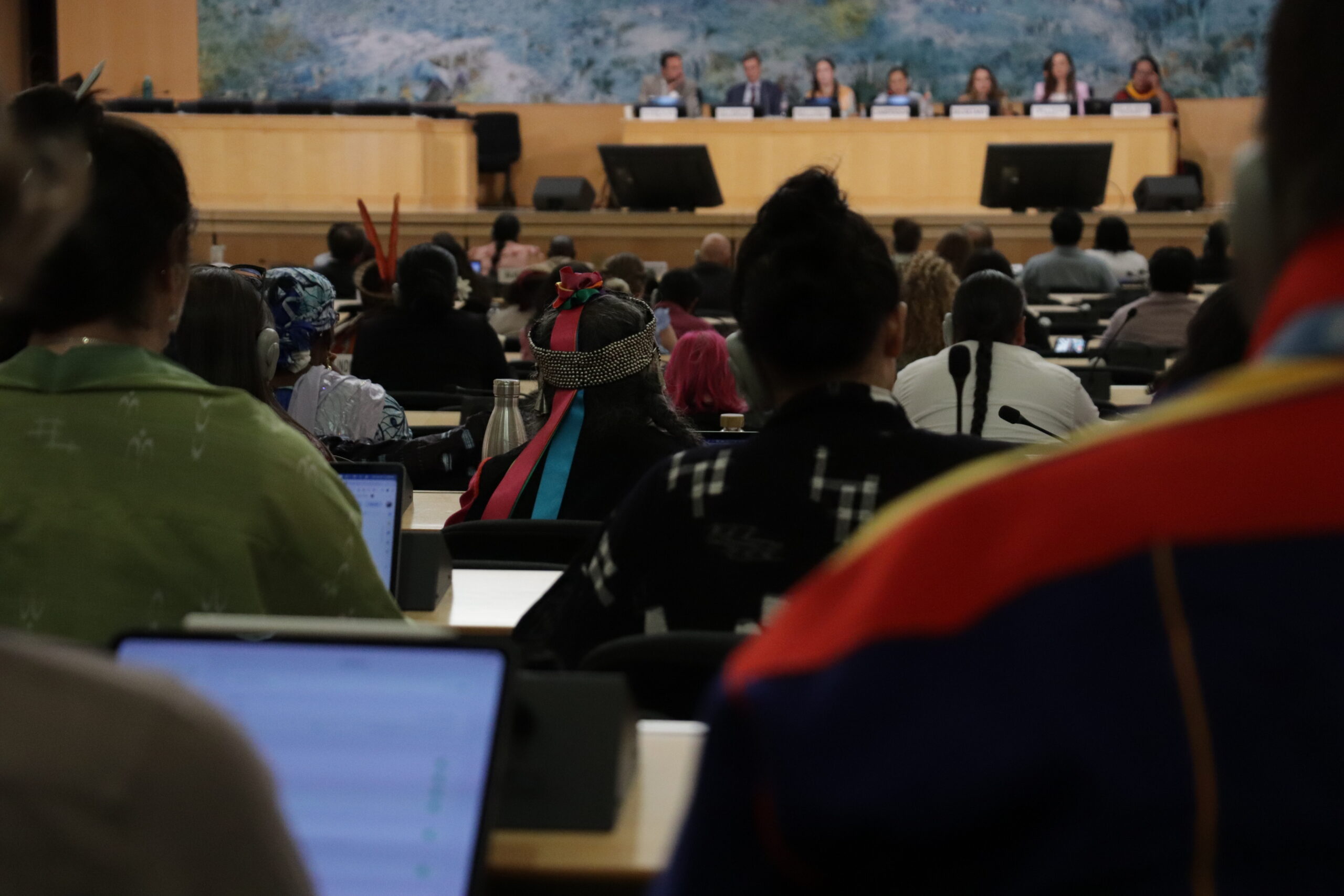
Indigenous leaders give the UN a roadmap for protecting their peoples
Amidst prayers and vows of solidarity, UN Expert Mechanism on the Rights of Indigenous Peoples ends annual meetings with demands for ‘action we’re not seeing globally’
-
Indigenous people demand more say at the UN, as new crises hit their homelands
Indigenous nations live ‘on the frontlines’ of climate, conflict and new tech. But their voices remain sidelined in the global halls of power.