Healing through story: sqilx’w author unveils harrowing-but-hopeful memoir
Jenelle Brewer’s book ‘RELEASING JEZEBEL: Embracing the Lioness Within’ will be released on April 1 — she hopes sharing her truth will make others feel less alone
Content warning: This story contains content about human trafficking, living in kinship with addictions, and violence against sqilx’w (Indigenous) women and children. Please read with deep care for your well-being.
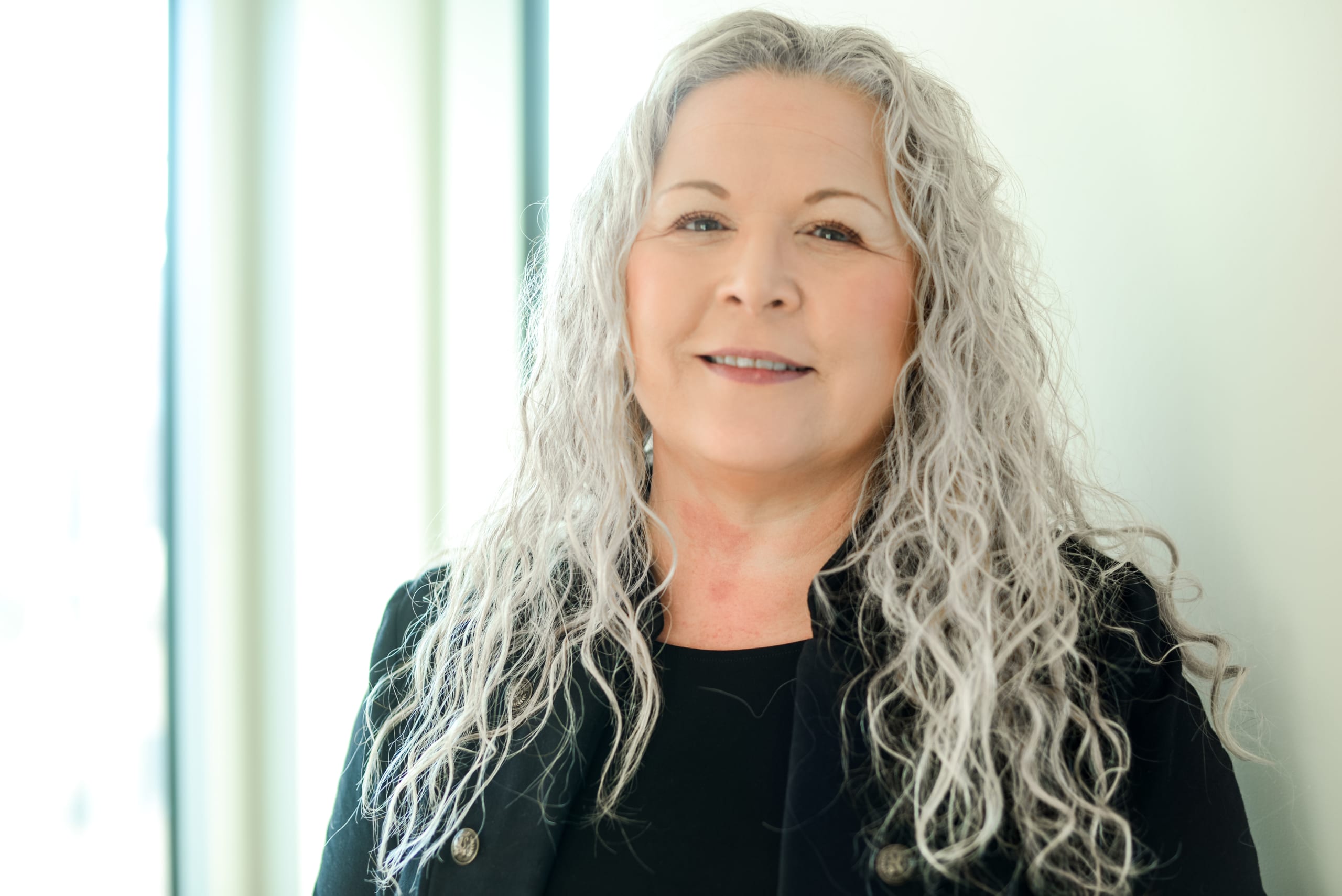
Sunlight fills a frigid winter sky over nq’maplqs as Jenelle Brewer sits down and begins talking about her life story, as detailed in her new book.
The syilx sqilx’w author — also a successful businesswoman and devoted mother — is preparing to release a memoir titled RELEASING JEZEBEL: Embracing the Lioness Within.
The book, Jenelle’s first, vulnerably delves into trauma she’s experienced in her life with an undercurrent of courage, hope and healing.
“I grew up with a pretty picture-perfect life. I grew up on a ranch with my dog. I had a lot of opportunities with figure skating and all kinds of sports,” says Jenelle.
“But I was also living in this dark side.”
RELEASING JEZEBEL: Embracing the Lioness Within is set to be released on April 1 during a launch event in “Vernon.” For the title, she was inspired by a nickname she was given in high school — Jezebel — which empowered her and gave her confidence.
That confidence boost was needed during the writing process, as she says this book was one of the most difficult things she’s worked on in her adult life.
“It’s really hard to be vulnerable and expose myself,” she says.
“My life experiences have kept me from being vulnerable. So doing this was a big step in my healing journey, being able to overcome that fear.”
But Jenelle shares that she is ready and has garnered the courage to speak out for the love and protection of women and children.
“I think that comes from that feeling of being helpless as a child, where I just grew up, and I didn’t want to be helpless anymore,” says Jenelle.
“The common thread throughout my story is about how I tried to protect others. So even while writing my book, I tried to think of ways to protect people.”
Sharing hard truths
For sqilx’w kin, the impacts of Canada’s residential “schools” can look different from family to family. While beautiful work is happening in communities to reawaken and live culture loudly, colonial disruptions still carry shame.
As a child, Jenelle endured years of violence and abuse in the aftermath of the so-called residential “schools.” In her later childhood, she was exploited by a gang and forced into human trafficking.
Jenelle delves into this story within her memoir. She shares that growing up and experiencing abuse really impacted her self-worth, which is where her kinship with addictions took form.
“My friends who knew me would always talk about how confident I was as a teenager, but really I had this underlying monster chewing away at my self-worth, and people couldn’t see that from the outside. I hid my abuse from everybody,” she says.
“I don’t know if it was fear or what it was, but I just hid it. And I started drinking at 14, and that progressed to my cocaine addiction and eventually to heroin addiction.”
Jenelle says when she was in that space of low self-worth, she ended up with a boyfriend who was so abusive that she had to escape by fleeing to a new city.
Although it was supposed to be a new start — still living with addiction and unresolved pain — Jenelle started dating a much older man who then began to exploit her, forcing her into prostitution. The man was eventually imprisoned, but the exploitation continued when she was taken in by a gang who continued to traffic her.
She says it wasn’t until she found herself at rock bottom, in a state of near-death, that she decided to make the decision that would save her life.
The courage to walk through the door of hope
“So, for some addicts like myself, you come to a point where you’re either going to die or live. And I noticed I was at death’s door, laying in city cells,” she says.
As Jenelle lay in city cells, her mind began to turn; she had spent an unknown amount of days not eating, sleeping, or drinking. Her health was quickly deteriorating.
“I laid there and just imagined this door. I knew I either had to walk through it or walk away from it. And I knew if I didn’t walk through it, I was going to die,” she says, and after a few other events occurred in the following week, she knew it was time to seek treatment.
“I was at the walk-in clinic, and none of the doctors would see me except this one, he was like, ‘I’ll deal with her,’ so he came in and saw me, and he got me on the path to recovery. Now he’s in my book’s dedications,” she says with a smile on her face.
“It’s just that human touch; it just reached me. And it was just like that piece of humanity in a world where people don’t treat you like you’re human.”
Her doctor then put her on a medical plan to support her recovery. Four years ago, Jenelle was sitting in that doctor’s office, thanking him and asking him if he ever thought she’d be where she is now: a successful businesswoman, mother, and rising public figure.
“He laughed and was like, ‘no,’ and that’s what I appreciate about him — he’s very straightforward, and we had a good laugh about it,” she says.
The process
While writing her book, Jenelle said it was incredibly important to be mindful of her mental health and wellness. And her process took form with the support of her coach, mentors and family.
“I have a family that has supported me and accepted me, even after all my trials and tribulations and disappointments and everything that I’ve put them through, they’ve stood by me,” she says.
“And I appreciate all the trust my community has in me, from being elected to band council to all the positions I’ve had, it’s all because of the trust that people have given me and my progression.”
And for aspiring writers, Jenelle says to keep in touch with your ‘tops,’ meaning the limit of your mental and emotional wellness capacity, particularly for trauma survivors.
“I think for trauma survivors recognizing when you’re hitting your tops because there’s a lot of times when I was writing where I hit that top, and either the trauma was so great, or just the outside pressures of the world were,” she shares.
“I had to go into almost a trance where I had to go back in time, like in a meditative state, and I had to relive those memories. And it was so painful. And there were just times when I’d just be crying.”
And Jenelle welcomed the tears.
“And I’m so thankful because I didn’t cry a lot when I was living on the streets and addicted. And I decided to let myself cry about two years ago. And, it’s still hard, it’s still uncomfortable,” she says.
It was only a few years ago Jenelle decided to sink into her vulnerability and allow herself to feel her way through her emotions.
“Being able to cry when I wrote my book was so healing. Letting myself feel sad, or feel that loss and grieving,” she says.
“What I lost is childhood, a loss of teenage life, you know, you see other kids live how they live, and you’re not living that life because you have a secret. So it was just, it was a loss. And for the first time in my life, I really grieved those losses.”
But her story is far from over. Jenelle plans to write more books in the coming years and continue to pour out hope and love for her people and all those who can find parts of themselves in her story.
“A big part of the healing process is letting people know they’re not alone,” says Jenelle.
You can download the first chapter of Jenelle’s book RELEASING JEZEBEL: Embracing the Lioness Within now and also pre-order your book here.
If you need support around trafficking or abuse please reach out to The Canadian Human Trafficking Hotline, which operates 24/7, at 1-833-900-1010 or use the chat function on the website. If you are feeling distressed you may also reach out to the Hope for Wellness Help Line at 1-855-242-3310 or connect to the online chat at www.hopeforwellness.ca.
Author
We live in a media ecosystem that thrives on misinformation. Big Tech and AI companies are consuming the work of real human beings and Canadian news has been banned on Facebook and Instagram.
And yet, I have hope for journalism because of the work we’re doing at IndigiNews.
At IndigiNews, we embody tâpwêwin — the Cree value of integrity and responsibility in truth-telling. We are committed to our independent, Indigenous-led newsroom rooted in community, accountability, and relationality. We believe storytelling is a sacred fire that connects our pasts, presents, and futures through the storytellers in our Storytelling Lodge. IndigiNews creates space for Indigenous journalists, storytellers, Knowledge Keepers, and communities to gather, learn, and share stories that matter.
As a registered charity, we are building a fire that allows our work not just to ignite but to thrive. Rather than relying on advertising or corporate acquisition, IndigiNews is sustained by people like you who believe Indigenous stories are important for the future of our communities.
Your support is making a real difference.
Our community of supporters, our Firekeepers, make it possible to grow our newsroom, publish award-winning journalism, train emerging Indigenous journalists through initiatives like the ReFocus Photojournalism Fellowship, and publish trustworthy stories that serve our communities across the country. Every story we publish helps fill in gaps left by mainstream media and ensures Indigenous perspectives are represented with care, accuracy and respect.
But there is still more work to do.
As the media landscape becomes more and more uncertain, community support is as necessary and essential as it’s ever been. Every new Firekeeper helps protect the independence of our newsroom and strengthens journalism that is accountable to our many and varied communities over corporations.
That’s why we’re inviting you to become a Firekeeper.
Firekeepers tend to and protect the sacred fire. Your monthly contributions directly support IndigiNews’s Storytelling Lodge, helps sustain our independent, Indigenous-led newsroom, and ensures future generations of Indigenous storytellers have the resources they need to do the work.
As a registered Canadian charity, all eligible donations receive a charitable tax receipt.
If you believe Indigenous stories matter, if you value independent journalism, and if you want to help build a strong future for Indigenous media, we invite you to join our circle of Firekeepers today.
Together, we can keep the fire burning.
— Eden Fineday, Publisher, IndigiNews
Support us nowLatest Stories
-
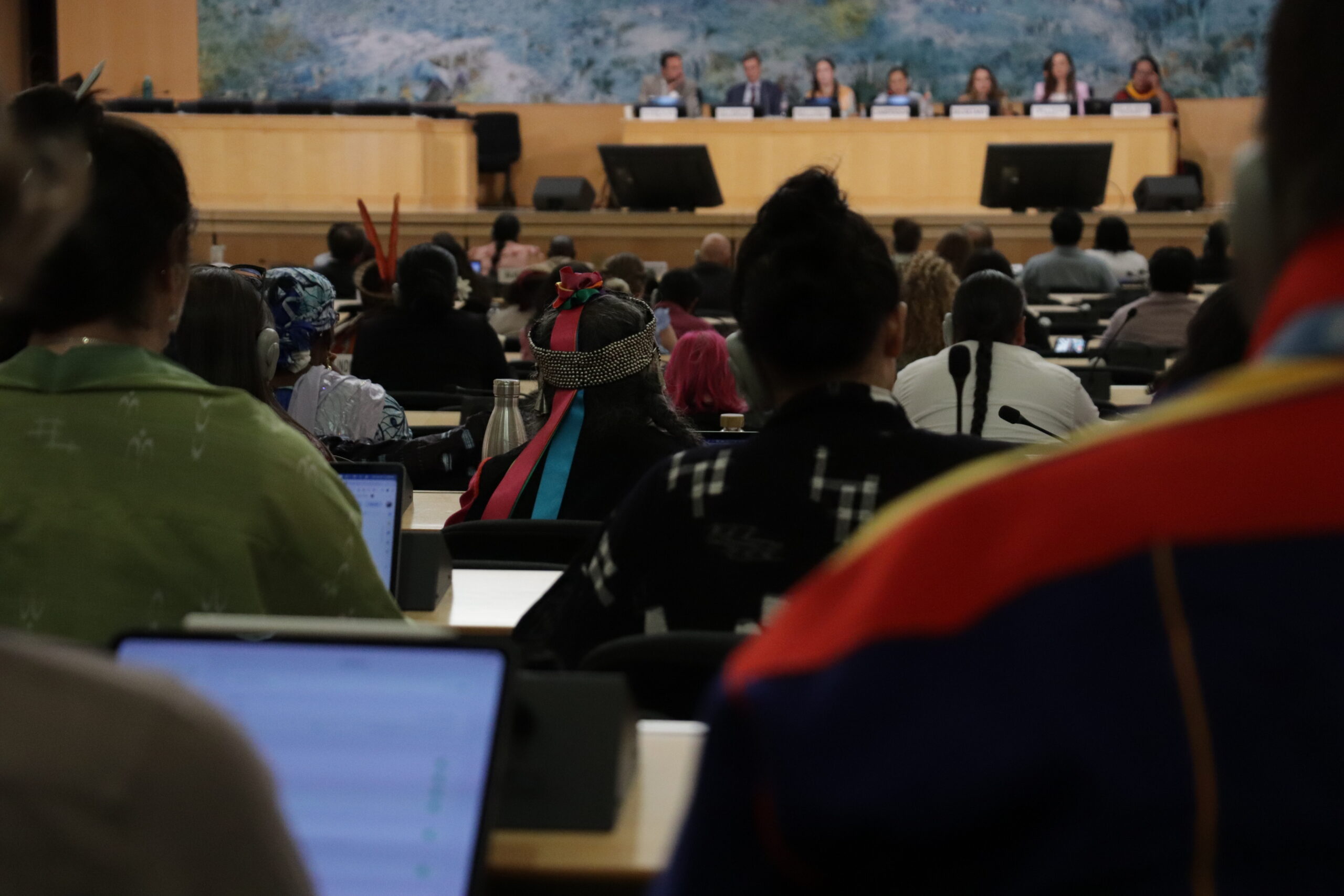
Indigenous leaders give the UN a roadmap for protecting their peoples
Amidst prayers and vows of solidarity, UN Expert Mechanism on the Rights of Indigenous Peoples ends annual meetings with demands for ‘action we’re not seeing globally’
-
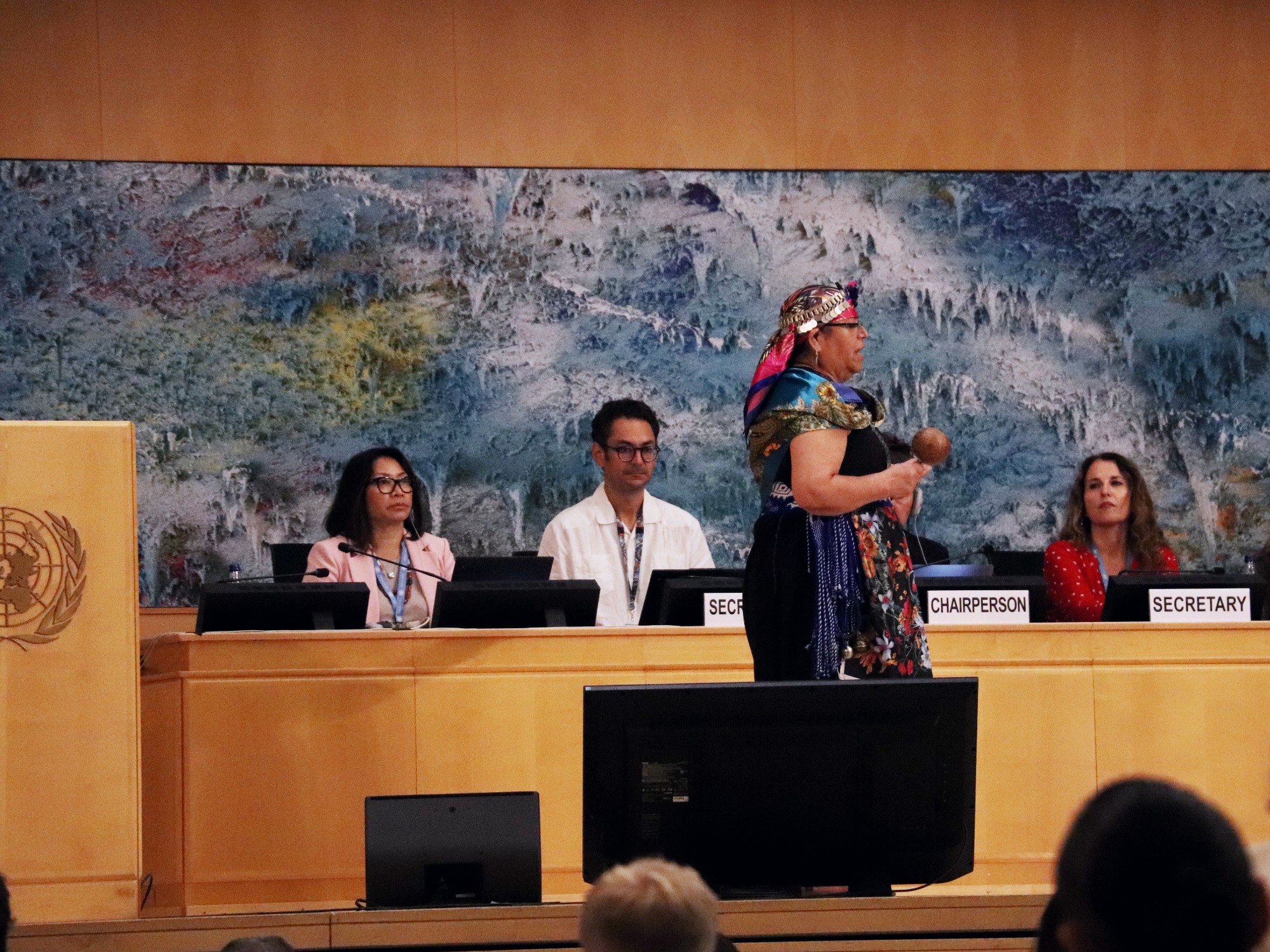
Indigenous people demand more say at the UN, as new crises hit their homelands
Indigenous nations live ‘on the frontlines’ of climate, conflict and new tech. But their voices remain sidelined in the global halls of power.