‘Humour is part of our healing,’ says Cree Nakoda Sioux comedian Conway Kootenay
After performing in Okanagan territory, Kootenay explains why entertainers are needed now, in pandemic times, more than ever.

Drive south on Hwy. 97 in the traditional territory of the Syilx of the Okanagan Nation in southern B.C. and you’ll come across Nk’Mip (pronounced “in-ka-meep”) campgrounds on the sacred homelands of the Osoyoos Indian Band (OIB).
That’s where Cree Nakoda Sioux comedian Conway Kootenay spent a recent weekend in August, while performing his first show in months in Westbank First Nation territory. He pulls up a chair next to his RV and talks about one of his greatest passions: comedy.
Kootenay, who is from the Alexander First Nation, is also known as Smudge Pan, for his online hockey character. Most of his scheduled shows this year were cancelled due to the COVID-19 pandemic, making his WFN stand-up show one of the rare gigs he’s been able to perform.
Asked how he got into comedy, he says, erupting into laughter, “Well, I was trying to be a male stripper and that didn’t work out.”
“Just kidding,” he continues, still laughing. “It was actually, it’s a funny story. I was doing stunt work on a movie called The Revenant.”
In 2014, Kootenay was working as a stunt actor on the Oscar-winning movie, starring Leonardo DiCaprio. He says that experience gave him “the acting bug.” Not long after, he started creating content for social media.
“I just started doing sketches,” he says. “I just started doing, just recording videos of just different scenarios and different things like that. And just to practice comedy, and I started posting them on Facebook. People started liking the videos, and that kind of just snowballed from there.”
Kootenay explains that the comedy started back in 2009, with a song he released called “What’s really rez?” It featured his cousin Don Burnstick and the Red Power Squad. To date, it has reached almost 1.5-million views.
Then, he says, he started doing stand-up shows.
“First, [each set] was about 20 minutes, and then it kind of evolved into an hour. Now I have like, I dunno, six or seven different hour sets. And hundreds of sketch comedy videos.”
During his show in WFN territory, he brought up rez humour, which has been consistent throughout his comedy.
“Basically, rez comedy is kind of like, I guess Kevin Hart put it best, you know, ‘laugh at my pain.’”
Humour is healing
“Humour is part of our healing as First Nations People, as Indigenous people, you know. And even in our ceremonies, we laugh even, you know, ‘cause it’s a part of it,” says Kootenay.
Humour is interwoven throughout Indigenous Nations and communities, and as Kootenay points out, “It makes you feel good. You know, it’s really good energy. It’s positive energy.”
“We laugh at everything and that’s what I love about our people…we could find humour in anything,” he explains, even in serious circumstances.
“Somebody falls off their bike, you know, when you’re kids, what’s the first thing we do? We laugh at them. And then we ask if they’re okay after that. … Like Don Burnstick says, laughter is good medicine.”

Persevering in a pandemic
When the pandemic hit B.C. in March, Kootenay says it forced him to rethink how he was approaching his career.
“The last show I did was March 9 or 10,” he says. “And then right after that, you know, everything got shut down and right up to November, all my shows got cancelled.”
Despite this, he adds, “I think that was the time to be an artist. Right now during the pandemic, because that’s when people really need our artists, need our people, our entertainers to come out.”
Without the ability to perform at venues in front of a live audience, he says he’s turned to social media, including Facebook Live, to perform comedy shows, post funny status updates and upload new content.
Kootenay explains that while he isn’t making money off his videos, he’s continued to perform online for the enjoyment of others.
“It’s just part of being an artist,” he says. “Just people messaging me, you know, ‘thank you for what you’re doing.’… It’s really getting me through this tough time and that’s, to me, that’s the payday, that’s why you do it.”
On his performance in WFN territory, at a friend’s family home, he says, “It was so cool. I loved it.”
Following pandemic guidelines, the crowd was less than 10 people and the event was held outside in a backyard.
Although it was a small group, he says, “It was good because you need the crowd to interact. And it’s kind of weird when you don’t have that, but you know, you kind of make do, but it was just, it was refreshing to me actually to be able to do that.”
Bringing our people together
When it comes to comedy, Kootenay explains that it’s similar across our communities and Nations.
“It’s what kind of brings our people together. So many different Nations…you know, but we laugh at the same things,” he says, following up with a joke he tells across Turtle Island.
“I talk about the bogeyman and the bogeyman being under a kid’s bed, and then, you know, the punchline is, well, how could the bogeyman be under my bed when my bed’s on the floor?”
“Everybody laughs at that because we all had beds on the floor when we were kids, right? It doesn’t matter if you’re Ojibwe, Blackfoot, Mohawk. … The blanket for the door. That’s another thing that we do right on the reserve,” he says, bursting into laughter. “It’s all similar stuff, man. And it’s hilarious.”
For anyone who aspires to also do comedy, Kootenay’s advice is simple: “Just be yourself.”
“You really gotta find out who you are because, you know, you could do just general jokes, but once you find out who you are, then, you know, and healing is a big part of it.”
Kootenay continues, explaining the interconnectedness between healing and identity.
“Once you heal, you learn not to take things so seriously and you learn to find the positivity in anything. And then that’s something you can draw from when you’re doing comedy.”
“So just be yourself,” he concludes. “Because people want to know who you are, they really want to know who you are, and you can express that through your comedy.”
Author
We live in a media ecosystem that thrives on misinformation. Big Tech and AI companies are consuming the work of real human beings and Canadian news has been banned on Facebook and Instagram.
And yet, I have hope for journalism because of the work we’re doing at IndigiNews.
At IndigiNews, we embody tâpwêwin — the Cree value of integrity and responsibility in truth-telling. We are committed to our independent, Indigenous-led newsroom rooted in community, accountability, and relationality. We believe storytelling is a sacred fire that connects our pasts, presents, and futures through the storytellers in our Storytelling Lodge. IndigiNews creates space for Indigenous journalists, storytellers, Knowledge Keepers, and communities to gather, learn, and share stories that matter.
As a registered charity, we are building a fire that allows our work not just to ignite but to thrive. Rather than relying on advertising or corporate acquisition, IndigiNews is sustained by people like you who believe Indigenous stories are important for the future of our communities.
Your support is making a real difference.
Our community of supporters, our Firekeepers, make it possible to grow our newsroom, publish award-winning journalism, train emerging Indigenous journalists through initiatives like the ReFocus Photojournalism Fellowship, and publish trustworthy stories that serve our communities across the country. Every story we publish helps fill in gaps left by mainstream media and ensures Indigenous perspectives are represented with care, accuracy and respect.
But there is still more work to do.
As the media landscape becomes more and more uncertain, community support is as necessary and essential as it’s ever been. Every new Firekeeper helps protect the independence of our newsroom and strengthens journalism that is accountable to our many and varied communities over corporations.
That’s why we’re inviting you to become a Firekeeper.
Firekeepers tend to and protect the sacred fire. Your monthly contributions directly support IndigiNews’s Storytelling Lodge, helps sustain our independent, Indigenous-led newsroom, and ensures future generations of Indigenous storytellers have the resources they need to do the work.
As a registered Canadian charity, all eligible donations receive a charitable tax receipt.
If you believe Indigenous stories matter, if you value independent journalism, and if you want to help build a strong future for Indigenous media, we invite you to join our circle of Firekeepers today.
Together, we can keep the fire burning.
— Eden Fineday, Publisher, IndigiNews
Support us nowLatest Stories
-
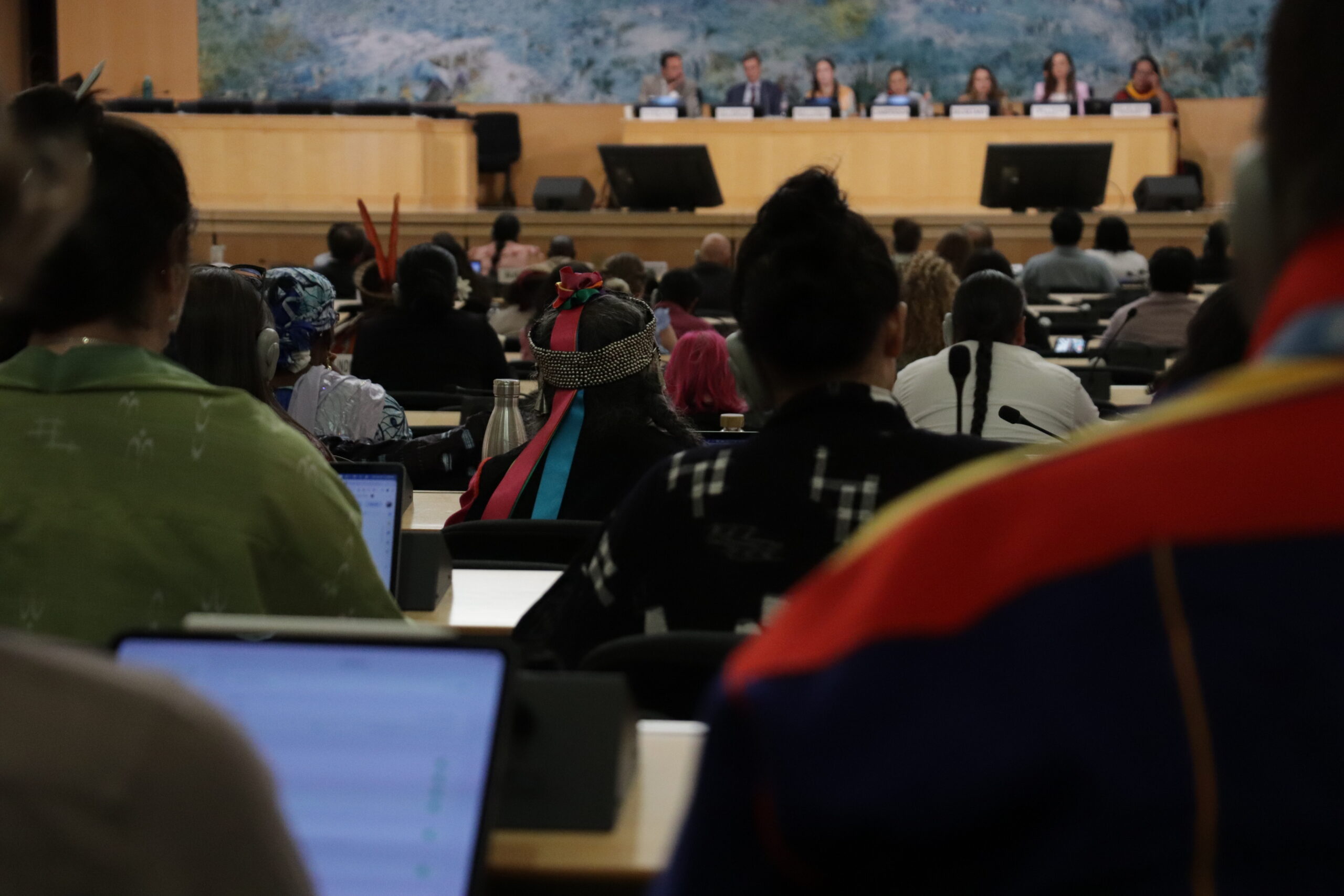
Indigenous leaders give the UN a roadmap for protecting their peoples
Amidst prayers and vows of solidarity, UN Expert Mechanism on the Rights of Indigenous Peoples ends annual meetings with demands for ‘action we’re not seeing globally’
-
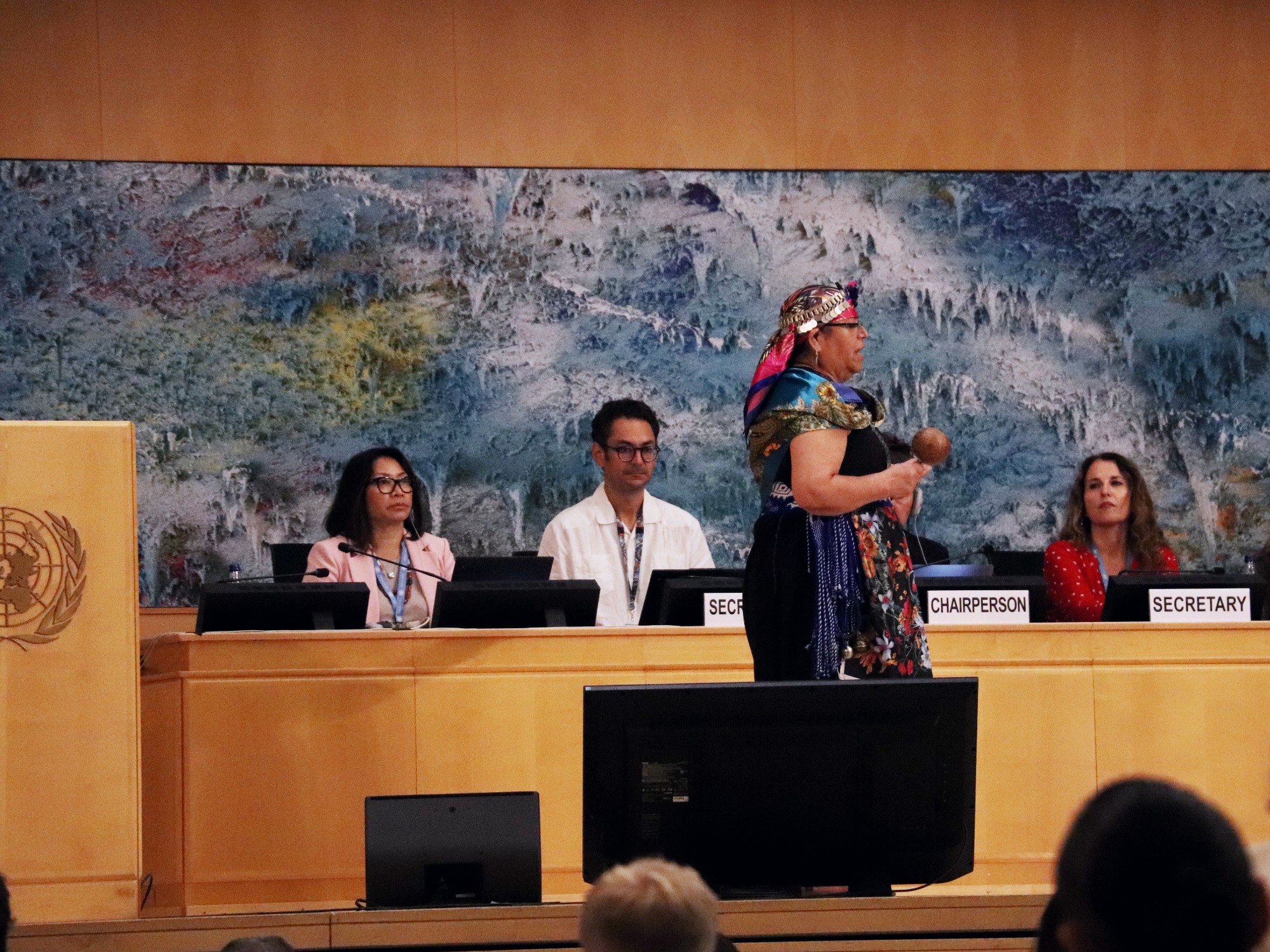
Indigenous people demand more say at the UN, as new crises hit their homelands
Indigenous nations live ‘on the frontlines’ of climate, conflict and new tech. But their voices remain sidelined in the global halls of power.