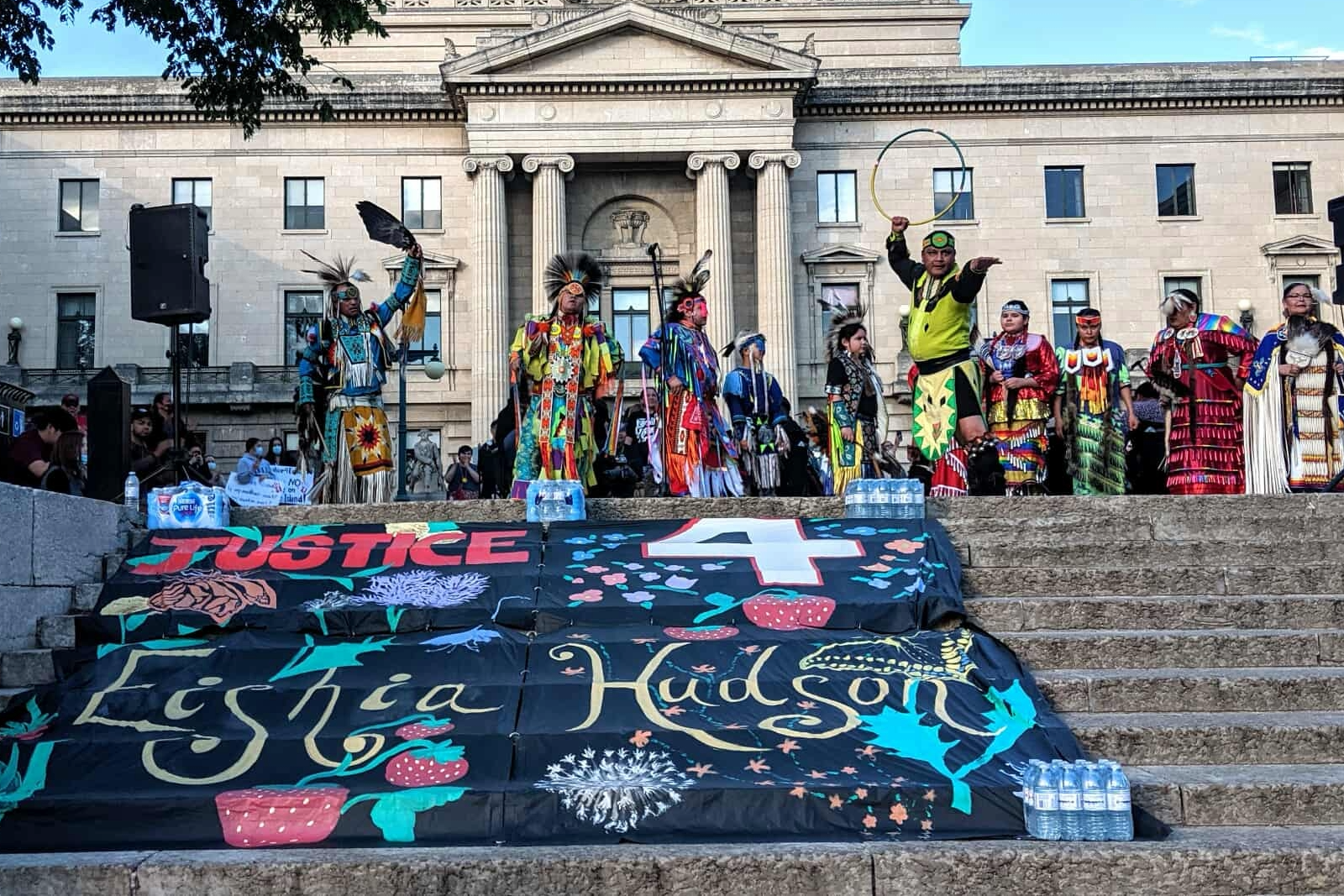
IndigiNews of the week: Let’s talk about resistance
Your weekly roundup of news and information about what’s happening across the Okanagan.

This week, let’s talk about resistance. Thirty years ago this past Saturday marked the start of the Siege of Kanehsatà:ke stand-off between the Mohawk of Kanehsatà:ke, the Quebec police and the Canadian military over a land dispute in Oka, Quebec. It is also commonly known as the Oka Crisis.
As Kanehsatà:ke remembered and honoured the women and men who fought for their land and rights during a commemoration of the Siege this past Saturday, later this week we will also take a look at the Okanagan runners who ran across Turtle Island from the Okanagan to Kanehsatà:ke in support of the Kanien’kehá:ka during the 1990s.
Amid Canada’s dark history of genocide, assimilation practices and colonization, we delayed our weekly roundup to include the most relevant articles and resources that are changing our country’s historical narrative.
Worth your time
- APTN’s latest, Mohawk land dispute unresolved three decades after Siege of Kanehsatà:ke, follows the 30-year commemoration of the Siege of Kanehsatà:ke. APTN explains, “Most know it as the Oka Crisis, but for Kanien’kehà:ka here, it’s called the ‘Siege of Kanehsatà:ke.’ Technically, it ended three decades ago. But for many who lived it, it’s never been resolved.” In a joint statement from the Kanehsatà:ke and Kahnawake longhouses, Ellen Gabriel, a spokesperson at the Kanehsatà:ke barricade in 1990, read, “Our ancestral lands still face theft and dispossession, our traditional governments delegitimized by the governments of Canada and Quebec.”
- Journalist Jessica Deer’s latest article with CBC News, Oka Crisis: The legacy of the warrior flag, talks about the creation of the warrior flag, how it rose in prominence during the 1990 Siege of Kanehsatà:ke and how it is often misrepresented. “The way we see it represented, it’s immediately associated with a violence, the English term ‘warrior,’ which has completely different connotations than what we describe our men and their role as, which is Rotisken’rakéhte, he carries the burden of peace,” said Kahente Horn-Miller, an associate professor at Carleton University in Ottawa and the school’s assistant vice-president of Indigenous initiatives.
- Check out the #MohawkUprising webpage, which shares Kanien’kehá:ka stories of the Mohawk Uprising, the ongoing community response to the Siege.
- Montreal Gazette’s Oka Crisis, 30 years later: Kanesatake’s long struggle for land rights, which shows a timeline of events leading up to the Siege of Kanehsatà:ke.
News of the week
- In Canada’s largest Indigenous police force has never shot anyone dead, Canadian Press reporter Colin Perkel writes, “NAPS [Nishnawbe Aski Police Service] is responsible for policing more than 38,000 people in 34 communities, many beyond remote, across a vast, largely untamed swath of northern Ontario. Currently the service has 203 officers, about 60 per cent of them Indigenous.” According to lawyer Julian Falconer, “Mainstream policing has a lot to learn from Indigenous policing. The relationship between community and policing is so dramatically different.”
- The Tyee explores How Indigenous Women Are Conquering TikTok, featuring five Indigenous women’s TikTok accounts, including Sherry McKay, an Oji-Cree woman based in Winnipeg.
- Vogue interviews a popular Edmonton-based Cree dancer and creator in James Jones Is Bringing Indigenous Style and Dancing to TikTok. Jones has over 713,000 followers on TikTok. “I started my TikTok account when the COVID-19 lockdown went into effect,” he says. “I wanted to be a comedian on the platform. I started making funny Indigenous humor videos at first, but soon realized people engaged much more with educational and cultural dance content from me.” According to Vogue, “His page spreads awareness and education around his culture, and his dancing is especially positive and popular.”
Okanagan latest
-
In my latest, Thirty years after Siege of Kanehsatà:ke, peace runner says ‘we’re still fighting’, I speak with Anna Tonasket, a Sqilxw woman who participated in the Run for Peace during the Siege. “The Okanagan to Oka Run for Peace was a way for us to support our Mohawk brothers and sisters,” she explains. Tonasket also talks about the resiliency and strength that came from running: “It was a very powerful time, I think in our people’s history, it really brought out people’s compassion and empathy. And it also, I think, was a huge display of the resilience that our people have when we stand up and we stand up together.”
- Lower Similkameen Indian Band closes beach near Cawston to non-band members, according to Keremeos Review, which states, “The beach, they explained, is known to draw many from outside the community during summer months and often becomes overcrowded.” According to a statement released by LSIB, “The upcoming summer months combined with many outside visitors coming into our region and area presents a major concern for our community.” It goes on to say, “Our decision is based on our elected responsibility for keeping our community members safe.”
- In Kelsie Kilawna’s latest, Small steps toward reconciliation in Vernon, B.C., she explores the relationship between Okanagan Indian Band (OKIB) and the City of Vernon. According to Kilawna, “OKIB Chief Byron Louis and Vernon Mayor Victor Cumming say they are working on building a stronger relationship between OKIB and the city. The two began regular meetings on June 18, 2020 and hope to continue them on a monthly basis in order to stay in communications about what is happening for both communities.” She explains that Mayor Victor Cumming “hopes Okanagan Nation members ‘feel free to show leadership, show guidance, show direction, and it’s welcomed.’” OKIB Chief Byron Louis “hopes that his community continues to feel safe and valued within their traditional territories.”
That’s it for this week! If you have news or information that you want to share, email me: chehala@indiginews.com.
Author
We live in a media ecosystem that thrives on misinformation. Big Tech and AI companies are consuming the work of real human beings and Canadian news has been banned on Facebook and Instagram.
And yet, I have hope for journalism because of the work we’re doing at IndigiNews.
At IndigiNews, we embody tâpwêwin — the Cree value of integrity and responsibility in truth-telling. We are committed to our independent, Indigenous-led newsroom rooted in community, accountability, and relationality. We believe storytelling is a sacred fire that connects our pasts, presents, and futures through the storytellers in our Storytelling Lodge. IndigiNews creates space for Indigenous journalists, storytellers, Knowledge Keepers, and communities to gather, learn, and share stories that matter.
As a registered charity, we are building a fire that allows our work not just to ignite but to thrive. Rather than relying on advertising or corporate acquisition, IndigiNews is sustained by people like you who believe Indigenous stories are important for the future of our communities.
Your support is making a real difference.
Our community of supporters, our Firekeepers, make it possible to grow our newsroom, publish award-winning journalism, train emerging Indigenous journalists through initiatives like the ReFocus Photojournalism Fellowship, and publish trustworthy stories that serve our communities across the country. Every story we publish helps fill in gaps left by mainstream media and ensures Indigenous perspectives are represented with care, accuracy and respect.
But there is still more work to do.
As the media landscape becomes more and more uncertain, community support is as necessary and essential as it’s ever been. Every new Firekeeper helps protect the independence of our newsroom and strengthens journalism that is accountable to our many and varied communities over corporations.
That’s why we’re inviting you to become a Firekeeper.
Firekeepers tend to and protect the sacred fire. Your monthly contributions directly support IndigiNews’s Storytelling Lodge, helps sustain our independent, Indigenous-led newsroom, and ensures future generations of Indigenous storytellers have the resources they need to do the work.
As a registered Canadian charity, all eligible donations receive a charitable tax receipt.
If you believe Indigenous stories matter, if you value independent journalism, and if you want to help build a strong future for Indigenous media, we invite you to join our circle of Firekeepers today.
Together, we can keep the fire burning.
— Eden Fineday, Publisher, IndigiNews
Support us nowLatest Stories
-
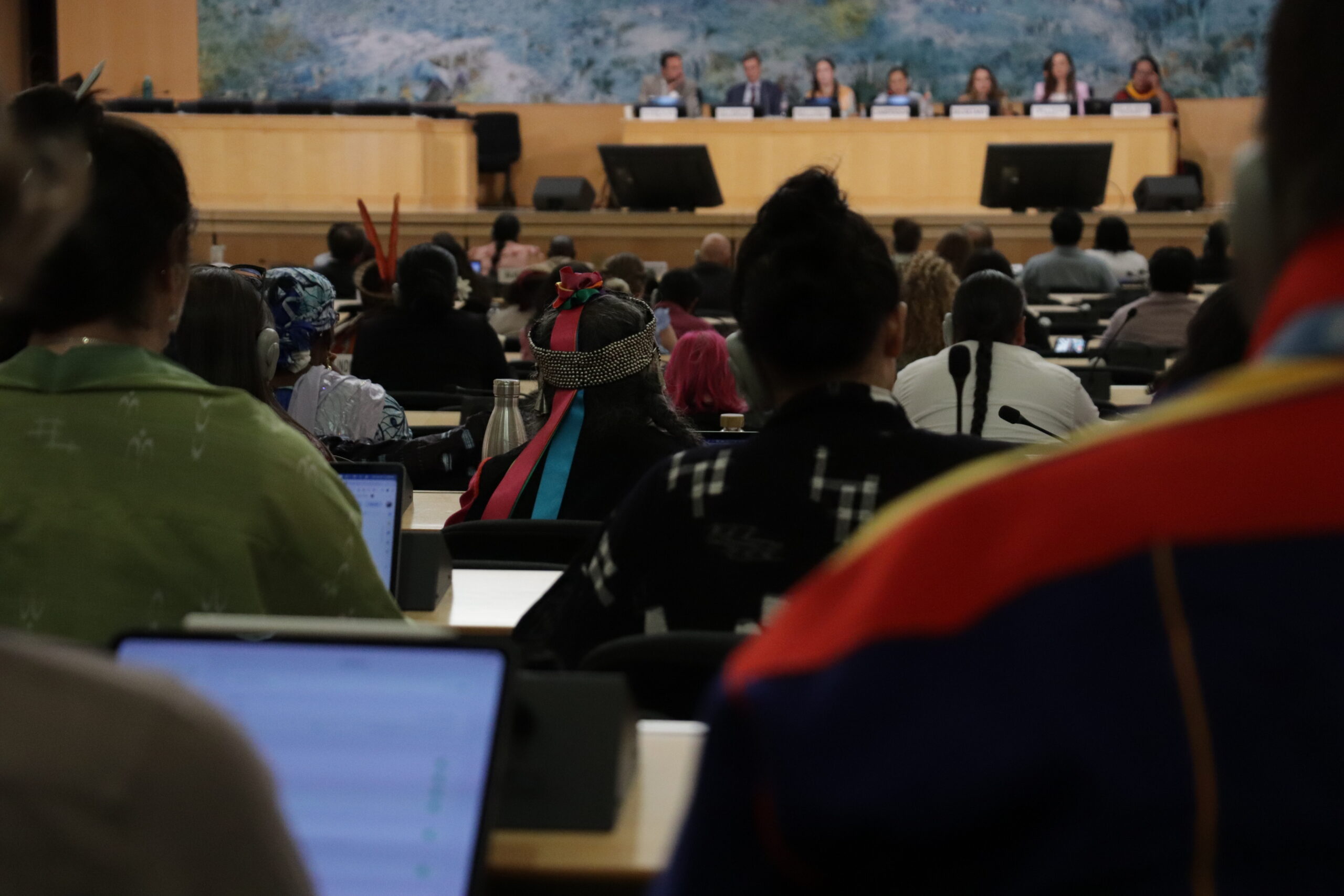
Indigenous leaders give the UN a roadmap for protecting their peoples
Amidst prayers and vows of solidarity, UN Expert Mechanism on the Rights of Indigenous Peoples ends annual meetings with demands for ‘action we’re not seeing globally’
-
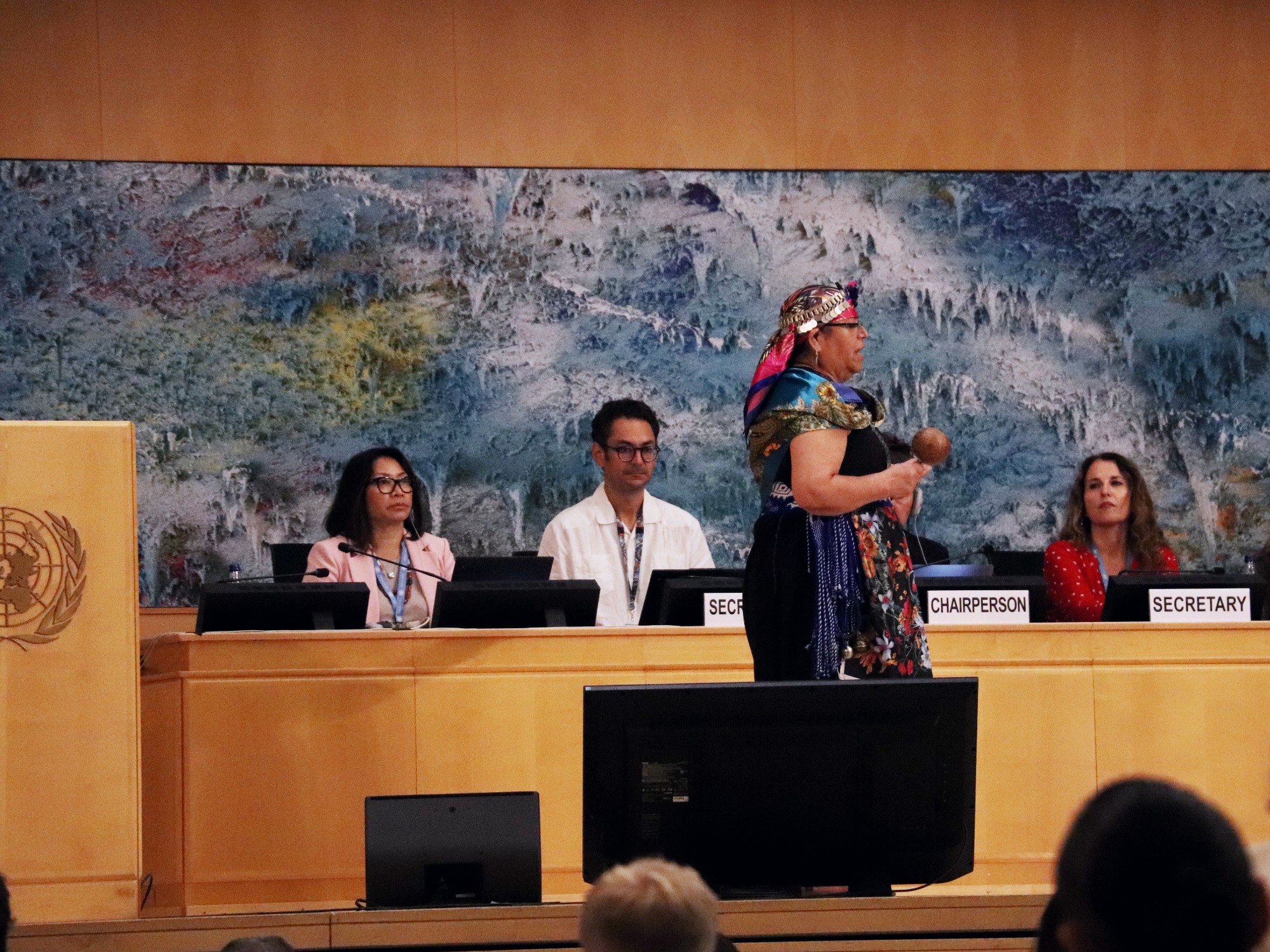
Indigenous people demand more say at the UN, as new crises hit their homelands
Indigenous nations live ‘on the frontlines’ of climate, conflict and new tech. But their voices remain sidelined in the global halls of power.