My career as a journalist is helping reconnect my family — and my community too
A family once separated from the land by colonialism reconnects through the teachings and knowledge gained through my interviews.
This story was published to mark World News Day. At a time when credible journalism has the power to save lives, build trust, and inform the public’s understanding of an increasingly complex and uncertain world, World News Day is a powerful reminder that journalism can be a force for good — a message that 150 news organizations from around the world intend to celebrate on Monday, September 28. World News Day is presented by The Canadian Journalism Foundation (CJF) and the World Editors Forum (WEF) — with support from the Google News Initiative.
Being a journalist reporting on Indigenous stories in Canada is difficult to do, but being Indigenous and reporting on your own community is even more difficult — and also extremely rare.
It’s uncommon to find an outlet, aside from a handful in so-called Canada, that bother to report on my people. That’s because oftentimes, it’s difficult to get it right.
It requires special care, attention, honesty, time and trust.
The time and trust piece of writing stories about Indigenous Peoples is of the most importance. It also means being willing to check your privilege and be understanding of the colonial practices of media in the past that have hurt our people — and has contributed to the genocide of my people.
I am a Syilx mother from the Okanagan territory who began working as a journalist this year.
I wanted to do this work because I was tired of seeing headlines that make our people seem deserving of violence against us, perpetuating, for example, the disproportionate rates of our Missing and Murdered Indigenous Women and Girls (MMIWG). The same headlines enabled the killing of our Indigenous men, and allowed our children to continue to be taken from their families to live within the country’s child welfare system — where again, they die at disproportionately high rates.
Mainstream media has often listened to the voice of our colonizer and the narratives twisted about us because they simply didn’t include us.
When any journalist enters our communities, they’re often met with instant distaste and a lack of trust. It takes someone special to gain trust to begin breaking down barriers, it takes someone with time to decolonize their own practices and accept their privilege.
With all of that work ahead of most journalists, paired with tight deadlines and the need for what we call a “quick-turnaround” story, it leaves little room for kinship building.
When I first got hired on to be a journalist for IndigiNews, a new Indigenous news outlet meant to make way for the voices of my own people, by the voices of our people, I was hesitant at first. I didn’t want to be in the middle of backlashes that involved my own Nation. I didn’t want to perpetuate stereotypes or exploit my people, and I didn’t know how this would be different from any other mainstream publication out there.
It was hard even for myself as an Indigenous woman to trust this career offer.
But in the first few weeks with this new, all-women team, we discussed what our intentions would be as an outlet. I was nervous because I had no previous experience in journalism. I didn’t know if I could do it until my editor told us we were hired based on our ability to connect — writing would come later.
That gave me great trust, hope and confidence that I took on the right position. All I wanted was to do justice by my people, to give them a voice where we have always been safer to remain voiceless.
We began getting feedback from all over so-called Canada, sharing and expressing the gratitude for this team we created and the stories we shared. People said that they felt seen for the first time, that they felt celebrated and that our outlet was one of the few doing all of the work.
“It’s so incredibly uplifting to see beautiful hard working Indig[enous] women represent their community, their spirit, and their passion on a national platform! Badass Indigenous women who inspire, are women I want my daughter to know,” wrote one of our readers.
Other readers have also thanked us for writing in such a way that they have actually relived good moments, rather than the bad, which is something we usually feel with mainstream media.
That is collective healing, and it’s happening here, through our outlet.
After conducting several interviews, I was able to get to know more of my own people — people I never met before because I wasn’t in the position previously to do so. It meant the world to me to get this opportunity to connect with my own people and celebrate them.
As an Indigenous woman living in so-called Canada, I am an intergenerational survivor of many colonial impacts. I often call myself a surviving daughter of genocide.
When I became a reporter at IndigiNews, I got the opportunity to connect with incredibly powerful knowledge keepers. I was able to interview them and strengthen my kinship with them. Through the journalism work I’ve done, and through keeping my siblings and father updated, we all got to learn so much about teachings, titles, rights, sovereignty and so much more.
We all became so engaged in my work that we reconnected with the responsibilities that we share together — not only to the land, but for the land and on the land.
Being Sqilxw (an Indigenous person of and on your land) it is our responsibility to keep our land healthy and keep the spirit of our land alive by visiting it. It’s also beneficial, in these days of colonialism, to actively utilize our sovereignty.
During the third week of July this year, my family and I went out to the land to pick xusem (soapberries) together for the first time ever. We have never been on the land, or even off-reserve, to harvest anything together, my family has been programmed by the colonial mindsets of staying on reserve.
Through my work in interviewing these knowledge keepers, we learned that we must utilize all of our traditional territory. It’s important not only for our sovereignty, but for our connection to the land that will love us as we love it.
We spent the whole day on the land. My little sister and I taught my father, my step-mother, older sister and all seven of the grandchildren about the proper way to harvest, sharing teachings along the way — something we learned from interviewing Elders.
My nephew found a large eagle feather, his first one, and my parents got on a strong roll when picking, utilizing our traditional methods. We harvested all we needed for the year, then went to the creek that gives life to the area and ate together, laughed and reflected on the day.
I think this is a tradition that we will continue to do every year, with all of the knowledge that we gained through connecting with the knowledge keepers of our Nation, through my work for IndigiNews, to whom I’m forever indebted.
As an Elder once shared with me: “Knowledge is not power, it is a responsibility, if you know better you do better.” This is what I live by. Being given this knowledge means it’s my responsibility to now share it.
When we live by our teachings and we take responsibility for the land as we were always meant to, we are actively giving back to our future generations everything that colonialism has taken.
Author
We live in a media ecosystem that thrives on misinformation. Big Tech and AI companies are consuming the work of real human beings and Canadian news has been banned on Facebook and Instagram.
And yet, I have hope for journalism because of the work we’re doing at IndigiNews.
At IndigiNews, we embody tâpwêwin — the Cree value of integrity and responsibility in truth-telling. We are committed to our independent, Indigenous-led newsroom rooted in community, accountability, and relationality. We believe storytelling is a sacred fire that connects our pasts, presents, and futures through the storytellers in our Storytelling Lodge. IndigiNews creates space for Indigenous journalists, storytellers, Knowledge Keepers, and communities to gather, learn, and share stories that matter.
As a registered charity, we are building a fire that allows our work not just to ignite but to thrive. Rather than relying on advertising or corporate acquisition, IndigiNews is sustained by people like you who believe Indigenous stories are important for the future of our communities.
Your support is making a real difference.
Our community of supporters, our Firekeepers, make it possible to grow our newsroom, publish award-winning journalism, train emerging Indigenous journalists through initiatives like the ReFocus Photojournalism Fellowship, and publish trustworthy stories that serve our communities across the country. Every story we publish helps fill in gaps left by mainstream media and ensures Indigenous perspectives are represented with care, accuracy and respect.
But there is still more work to do.
As the media landscape becomes more and more uncertain, community support is as necessary and essential as it’s ever been. Every new Firekeeper helps protect the independence of our newsroom and strengthens journalism that is accountable to our many and varied communities over corporations.
That’s why we’re inviting you to become a Firekeeper.
Firekeepers tend to and protect the sacred fire. Your monthly contributions directly support IndigiNews’s Storytelling Lodge, helps sustain our independent, Indigenous-led newsroom, and ensures future generations of Indigenous storytellers have the resources they need to do the work.
As a registered Canadian charity, all eligible donations receive a charitable tax receipt.
If you believe Indigenous stories matter, if you value independent journalism, and if you want to help build a strong future for Indigenous media, we invite you to join our circle of Firekeepers today.
Together, we can keep the fire burning.
— Eden Fineday, Publisher, IndigiNews
Support us nowLatest Stories
-
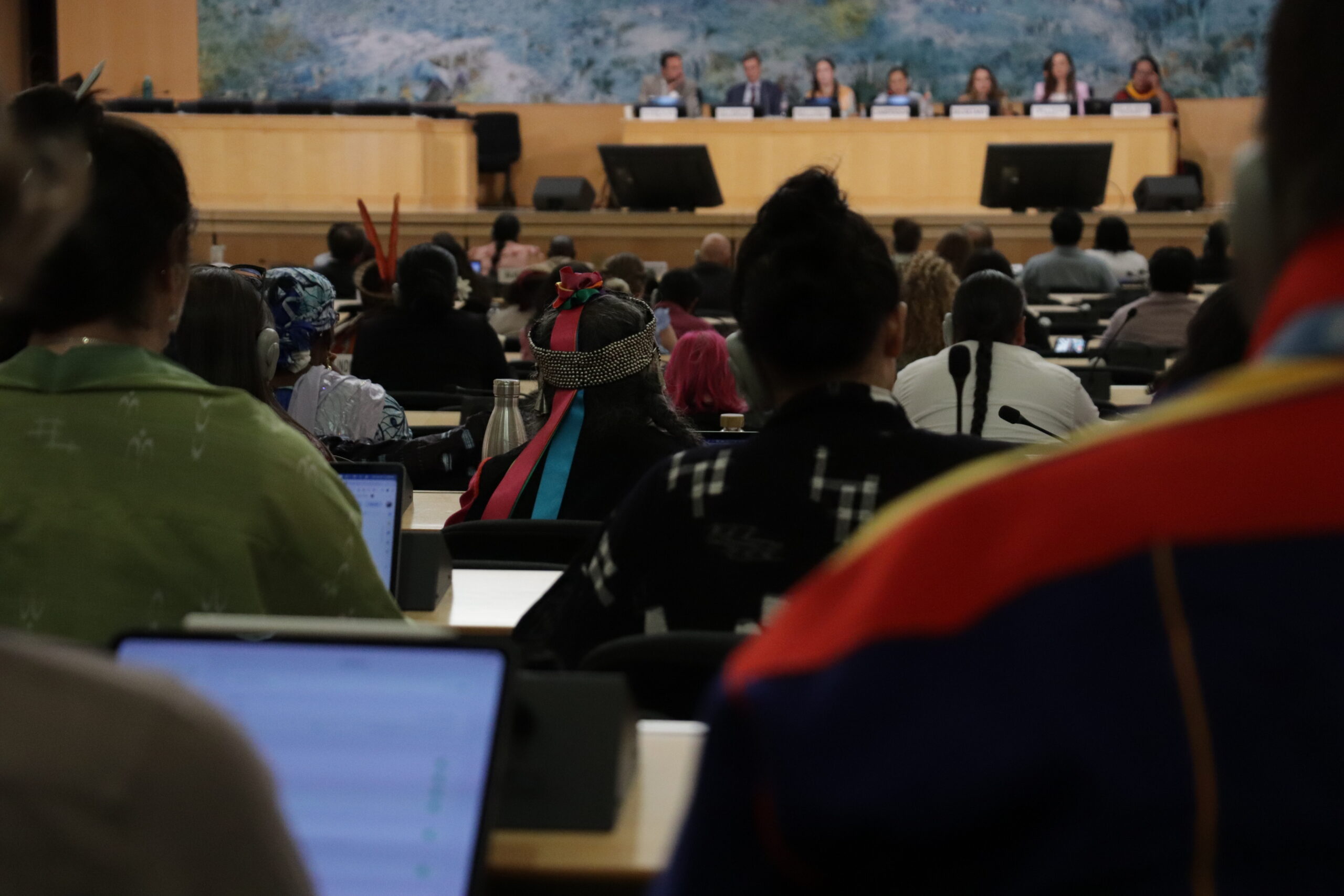
Indigenous leaders give the UN a roadmap for protecting their peoples
Amidst prayers and vows of solidarity, UN Expert Mechanism on the Rights of Indigenous Peoples ends annual meetings with demands for ‘action we’re not seeing globally’
-
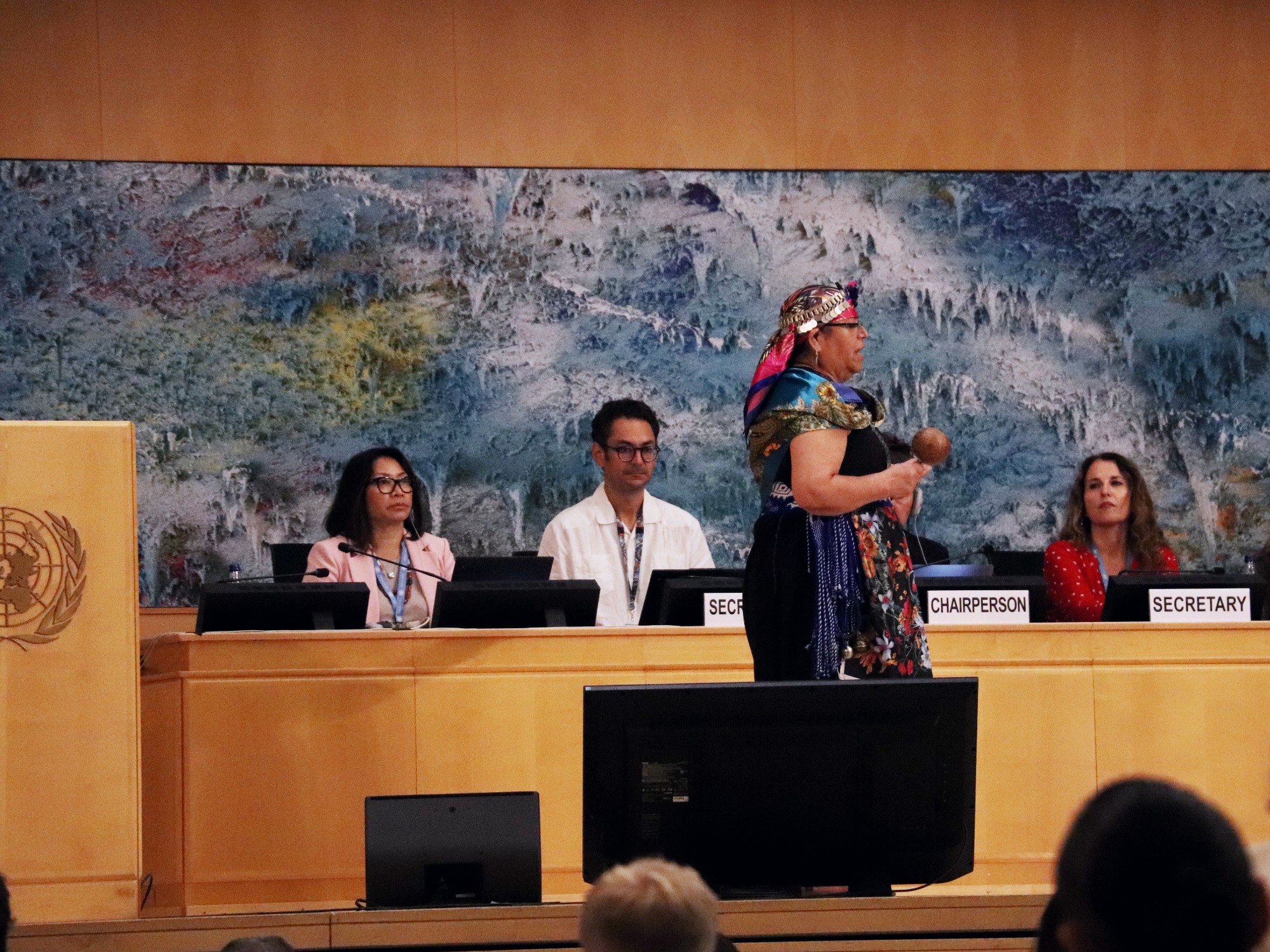
Indigenous people demand more say at the UN, as new crises hit their homelands
Indigenous nations live ‘on the frontlines’ of climate, conflict and new tech. But their voices remain sidelined in the global halls of power.