On syilx homelands, 13 Moons program unites Indigenous women and gender-diverse kin
‘We’ve been so ingrained in individualistic thinking. I think it’s so important to bring us together because colonization has suppressed us’


A seven-month-long leadership program for Indigenous women and gender-diverse kin wrapped up with a retreat on syilx homelands, where participants described their time together as transformational and empowering.
After gathering in a circle on the final day, more than 20 participants of this year’s 13 Moons program hugged, laughed and cried together before departing for home. The event in citxʷs paqəlqyn (Naramata) on May 7 wrapped up the second annual free leadership program hosted by IndigenEYEZ.
Over the course of 10 Zoom workshops that began last fall and ended with a three-day in-person gathering, participants engaged in improv games, movement, singing, storytelling, poetry writing and more. The program uses the arts as a way to liberate the voices of participants.
Kelly Terbasket, the program director of IndigenEYEZ and lead facilitator of 13 Moons, said the play-based learning activities are meant to help people step out of their comfort zones.
“We get people doing little baby steps. And pretty soon, they might be actually performing or acting in front of the group,” said Terbasket.
“When you stretch your comfort zone, over time, you’re more confident.”
Along with those who gathered for the in-person retreat, there were more than 100 registered participants this year — including Indigenous women, trans and Two-Spirit people — who were encouraged to drop into virtual programming at their own convenience, said Terbasket.
“We really foster connection and create a safe space,” said Terbasket. “It’s really about humanizing. So we do a lot of that connection, we do strength-based communication, which is validating — lifting each other up and seeing strengths.”

As a syilx facilitator, Terbasket said that she draws on elements of the Four Food Chiefs in her facilitation model — honouring tradition with Skəmixst (Black Bear) and tapping into siyaʔ (Saskatoon Berry) for creativity.
“You don’t have to be an official leader to be a leader, to be having influence on change and decisions that are made,” said Terbasket.
“But what you need is to have conviction, you need to have a voice, you need to value yourself and your own inner wisdom before you can share it.”
Participants in the program described leaving te experience with a lifelong sisterhood and a newfound sense of confidence.
Through improvisation and activities that used her imagination, program participant Ntucumthuq Crystal Spahan of the Nlaka’pamux Nation said that she experienced a full transformation in her identity, one that’s not afraid to share her true colours.
“The effect that it had on me was being able to get in touch with that little girl inside. She had been wanting to play,” said Spahan.
“Colonialism and society’s standards of going to work, being quiet and doing your job — you’re not allowed to play, have fun, talk. And this was definitely playing and opening new doors that we thought were shut long ago.”
For second-year participant Stephanie Mason of Fisher River Cree Nation and Tsleil-Waututh First Nation, she said that the program has enabled her to step into her personal strength, use her own voice in a good way and engage in her healing processes.
“It allowed me to feel safe in a space of women who I know are doing the same things; the same kind of struggles in our lives and have experienced the same things. It created that sense of trust for me to be able to share bits and pieces of my story,” said Mason.
“We’ve been so ingrained in individualistic thinking. I think it’s so important to bring us together because colonization has suppressed us as Indigenous women-plus.”
In her second year participating in the program, Hasaqsuł Meagan Curley — who is Nuu-chah-nulth — said that having space held for her to share her voice allowed her to feel a new sense of safety.
“There’s something different about safety with other women-plus that not a lot of people get to really experience,” said Curley. “I think that it just really provided me with the opportunity to show up as my authentic self, because there wasn’t going to be any part of me that was rejected.”
As a result, she said that she now unapologetically takes space, her communication and listening has improved, and her relationship with her children has shifted.
“I think that there’s nowhere else in the world that I would’ve been able to get this,” she said. “There’s nowhere else in the world where I can feel held, heard, seen, supported and cared for in this way.”
For Terbasket, she said that workshops are intentionally structured to cultivate hope.
“If you don’t shift from hopelessness to hope, then all the activities that you’re doing, they’re not going to make substantial change that’s needed,” she said.
“Because hope mobilizes — if you have hope, you can take action.”
She noted that her dream is to see more Indigenous women-plus in leadership roles, where they can bring their voices and wellness into different spaces.
“You read about how the first wave of settlers were shocked at how much power [Indigenous] women had in communities — knowing that colonization has tried to eradicate those roles, so lifting up those important roles and contributions to decisions and leadership in our communities,” she said.
Spahan, Mason and Curley all agreed that they would enroll in the program again this coming fall, and encouraged other Indigenous women-plus to do the same.
“Hopefully, we remain connected, because I think that’s the end goal to this process, is to continue to make a ripple effect and bring the Indigenous women-plus together in a stronger bond,” said Mason.

Curley said that the spirits of participants will walk together for the rest of their lives.
“Whether we see each other in real life or not again, I feel very connected. I think that all of these are lifelong friendships and connections,” she said.
“They’re my sisters, not my friends. This is something that is magical that I could never ever find anywhere else.”
Author
We live in a media ecosystem that thrives on misinformation. Big Tech and AI companies are consuming the work of real human beings and Canadian news has been banned on Facebook and Instagram.
And yet, I have hope for journalism because of the work we’re doing at IndigiNews.
At IndigiNews, we embody tâpwêwin — the Cree value of integrity and responsibility in truth-telling. We are committed to our independent, Indigenous-led newsroom rooted in community, accountability, and relationality. We believe storytelling is a sacred fire that connects our pasts, presents, and futures through the storytellers in our Storytelling Lodge. IndigiNews creates space for Indigenous journalists, storytellers, Knowledge Keepers, and communities to gather, learn, and share stories that matter.
As a registered charity, we are building a fire that allows our work not just to ignite but to thrive. Rather than relying on advertising or corporate acquisition, IndigiNews is sustained by people like you who believe Indigenous stories are important for the future of our communities.
Your support is making a real difference.
Our community of supporters, our Firekeepers, make it possible to grow our newsroom, publish award-winning journalism, train emerging Indigenous journalists through initiatives like the ReFocus Photojournalism Fellowship, and publish trustworthy stories that serve our communities across the country. Every story we publish helps fill in gaps left by mainstream media and ensures Indigenous perspectives are represented with care, accuracy and respect.
But there is still more work to do.
As the media landscape becomes more and more uncertain, community support is as necessary and essential as it’s ever been. Every new Firekeeper helps protect the independence of our newsroom and strengthens journalism that is accountable to our many and varied communities over corporations.
That’s why we’re inviting you to become a Firekeeper.
Firekeepers tend to and protect the sacred fire. Your monthly contributions directly support IndigiNews’s Storytelling Lodge, helps sustain our independent, Indigenous-led newsroom, and ensures future generations of Indigenous storytellers have the resources they need to do the work.
As a registered Canadian charity, all eligible donations receive a charitable tax receipt.
If you believe Indigenous stories matter, if you value independent journalism, and if you want to help build a strong future for Indigenous media, we invite you to join our circle of Firekeepers today.
Together, we can keep the fire burning.
— Eden Fineday, Publisher, IndigiNews
Support us nowLatest Stories
-
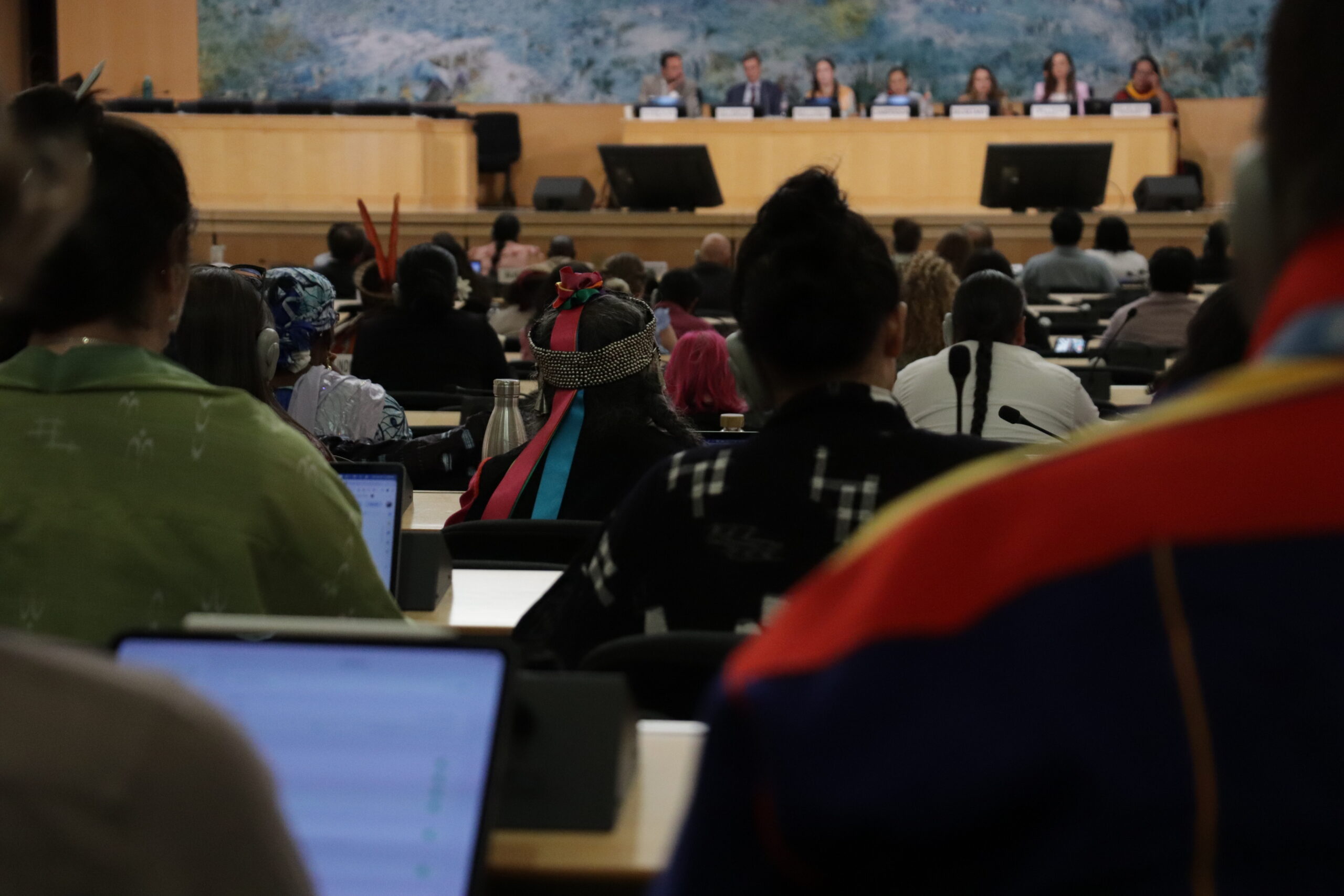
Indigenous leaders give the UN a roadmap for protecting their peoples
Amidst prayers and vows of solidarity, UN Expert Mechanism on the Rights of Indigenous Peoples ends annual meetings with demands for ‘action we’re not seeing globally’
-
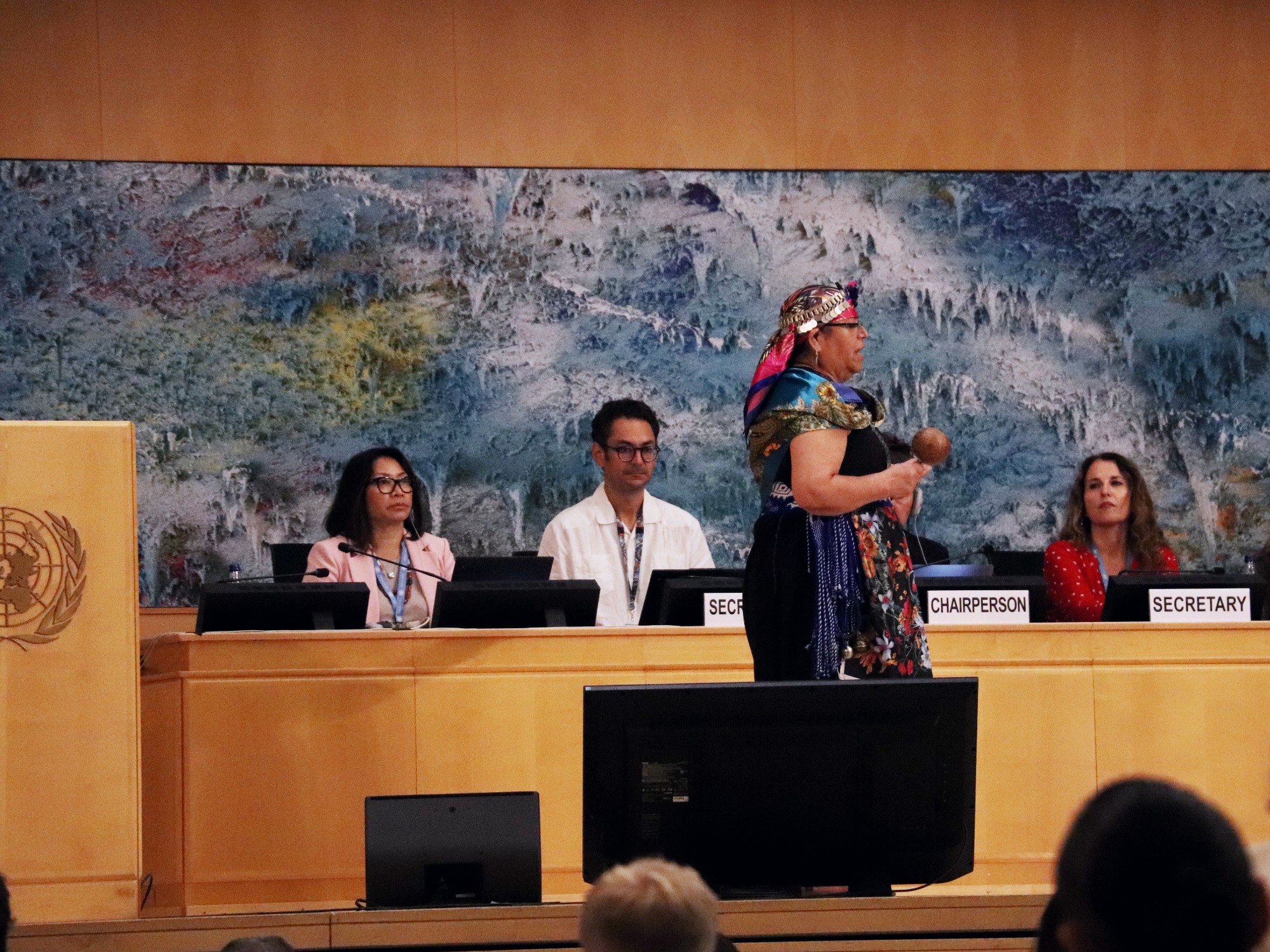
Indigenous people demand more say at the UN, as new crises hit their homelands
Indigenous nations live ‘on the frontlines’ of climate, conflict and new tech. But their voices remain sidelined in the global halls of power.