Similkameen artist carves pictographs into outdoor class to ‘indigenize’ the school
‘I want Indigenous students to recognize their identity and culture is values, so they can feel comfortable,’ says Míwlnaʔ, teacher at Similkameen Elementary School.

Similkameen artist and teacher Míwlnaʔ (Les Louis) is carving pictographs into an outdoor classroom at Similkameen Elementary School as a way of Indigenizing the school grounds.
Míwlnaʔ (which means “in the middle of it all” in nsyilxcən, the syilx language) is the nsyilxcən language teacher at the school.
“I want my Indigenous students to be able to recognize that their identity and their culture is being recognized and valued so they can relate to that in a way to feel comfortable coming to school,” says Míwlnaʔ, who is from the Lower Similkameen Indian Band.
He’s carving pictographs of the Four Food Chiefs — Black Bear, King Salmon, Bitterroot and Saskatoon — into 10-ft poles, which support an outdoor log classroom installed in front of the school last year.
“The Four Food Chiefs comes from our captikwł (oral history). That’s how our knowledge was passed on from generation to generation,” he says.
The Four Food Chiefs are the cultural keystone species for the Okanagan/Syilx people, says Míwlnaʔ. If they collapse, that means their whole ecosystem will collapse.
Míwlnaʔ says that according to syilx captikwł, the Four Food Chiefs were on this land before people and they sacrificed themselves for the people they knew were coming.
“I’ll lay to lay my life down and give all of my parts for the people to be to use,” they decided, as told in the stories, and their expectation was that people would “give thanks and make offerings” in return for this sacrifice, he says.
“I wanted to put the Four Food Chiefs on each pole because I think [it’s] pretty significant to have that here in an educational place of learning, to represent that everything we need is right here.”
Míwlnaʔ says his artwork is inspired by his culture, traditions, and captikwł. He’s also influenced by his art teacher, Mr. Carelse — who still works as the art teacher at Similkameen Elementary School.
‘Be an artist’
“I still remember what he wrote in my yearbook. It was really simple, but it was just: ’Be an artist.’ That’s always in the back of my head … whatever creative thing that I’m working on, I’m always working to be an artist,” he says.
Naryn Searcy is the school’s principal.
“Louis is a very well-known and respected artist,” says Searcy.
“It just made sense to ask him if he would be willing to do some of his carvings on the school … He’s only just begun, but we just think it’s going to add a wonderful element to the space that our students use every day.”
It’s all part of Similkameen Elementary’s efforts to “decolonize the school and Indigenize their curriculum,” says Searcy.
While she hopes “all of society is trying to work towards reconciliation,” she says educators have a specific role to play in acknowledging “the traumatic history that Canada has imposed on Indigenous Peoples.”
In December 2015, The Truth and Reconciliation Commission of Canada (TRC) spoke to the responsibility to turn things around in its final report and 94 calls to action.
The TRC called upon “the federal, provincial, and territorial governments, in consultation and collaboration with Survivors, Aboriginal peoples, and educators” to “provide the necessary funding to Aboriginal schools to utilize Indigenous knowledge and teaching methods in classrooms.”
More broadly, they called on the federal government to draft new Aboriginal education legislation with the full participation and informed consent of Aboriginal people,” and to back this legislation with funding to support (among other things) the development of “culturally appropriate curricula.”
Searcy says schools need to be more reflective of Indigenous cultures and ways of knowing and being.
“So students see themselves and their culture and feel valued and like they belong in our school environment,” she says.
These carvings can also prompt non-Indigenous students to learn more, she says.
Míwlnaʔ says he’s carving in his free time after school, and he hopes to complete two of six poles within the next couple of weeks.
“I want to get this complete before the snow flies, and I’m excited to get this done because this will be my first time having something permanent in the school for my children to see,” he says.
Author
We live in a media ecosystem that thrives on misinformation. Big Tech and AI companies are consuming the work of real human beings and Canadian news has been banned on Facebook and Instagram.
And yet, I have hope for journalism because of the work we’re doing at IndigiNews.
At IndigiNews, we embody tâpwêwin — the Cree value of integrity and responsibility in truth-telling. We are committed to our independent, Indigenous-led newsroom rooted in community, accountability, and relationality. We believe storytelling is a sacred fire that connects our pasts, presents, and futures through the storytellers in our Storytelling Lodge. IndigiNews creates space for Indigenous journalists, storytellers, Knowledge Keepers, and communities to gather, learn, and share stories that matter.
As a registered charity, we are building a fire that allows our work not just to ignite but to thrive. Rather than relying on advertising or corporate acquisition, IndigiNews is sustained by people like you who believe Indigenous stories are important for the future of our communities.
Your support is making a real difference.
Our community of supporters, our Firekeepers, make it possible to grow our newsroom, publish award-winning journalism, train emerging Indigenous journalists through initiatives like the ReFocus Photojournalism Fellowship, and publish trustworthy stories that serve our communities across the country. Every story we publish helps fill in gaps left by mainstream media and ensures Indigenous perspectives are represented with care, accuracy and respect.
But there is still more work to do.
As the media landscape becomes more and more uncertain, community support is as necessary and essential as it’s ever been. Every new Firekeeper helps protect the independence of our newsroom and strengthens journalism that is accountable to our many and varied communities over corporations.
That’s why we’re inviting you to become a Firekeeper.
Firekeepers tend to and protect the sacred fire. Your monthly contributions directly support IndigiNews’s Storytelling Lodge, helps sustain our independent, Indigenous-led newsroom, and ensures future generations of Indigenous storytellers have the resources they need to do the work.
As a registered Canadian charity, all eligible donations receive a charitable tax receipt.
If you believe Indigenous stories matter, if you value independent journalism, and if you want to help build a strong future for Indigenous media, we invite you to join our circle of Firekeepers today.
Together, we can keep the fire burning.
— Eden Fineday, Publisher, IndigiNews
Support us nowLatest Stories
-
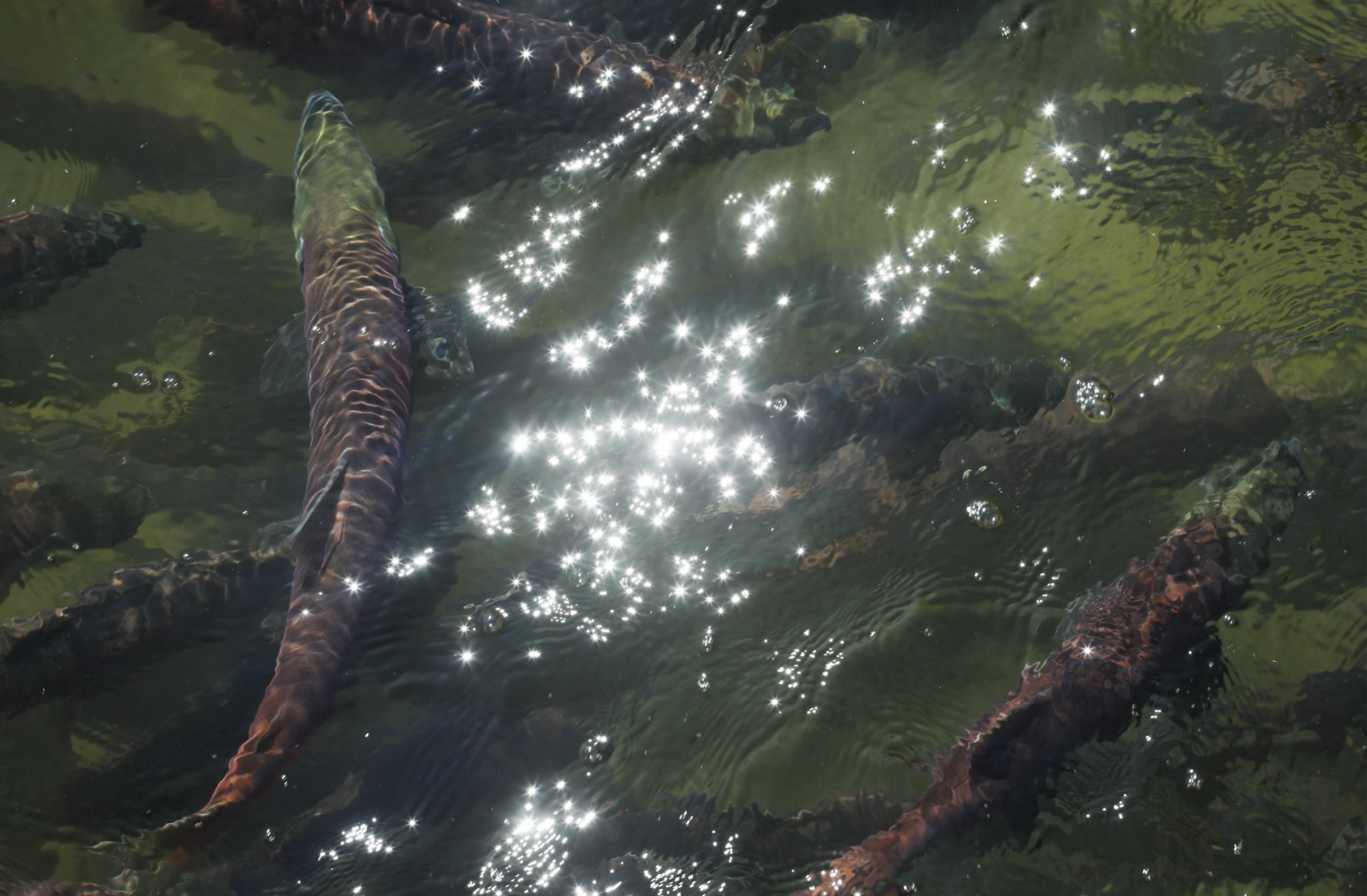
Low sockeye salmon numbers expected in the Okanagan as waters warm: ONA
syilx Nation members are being asked to ‘take only what they need’ as ‘difficult’ environmental conditions create challenges for the important fish
-

Olympic bobsledder Eden Wilson aims to ‘help open doors’ for aspiring Indigenous athletes
Recently inducted into the North American Indigenous Athletics Hall of Fame, the ‘Calgary’-based Métis athlete is working to break barriers for the next generation