We don’t need another ally
Will you be our accomplice?

This piece of writing originally appeared in IndigiNews’s newsletter. Each week members of our team share thoughts, reflections, teachings and calls to action, which we send to our subscribers. You can sign up for our newsletter here.
At IndigiNews we often have an ongoing conversation around the responsibility each person holds in the work of decolonizing. We are also now discussing the roles of allies and what we call accomplices, and what we are hearing from our communities on these important conversations. all
For me, the act of decolonization is not just a $5 woke word. It’s a call to responsibility.
Decolonizing has nothing to do with maintaining settler futurity but has to do with upholding and honouring Indigenous self-determination and sovereignty. If the work you are doing is to maintain power and control for your comfort as a non-Indigenous guest then you’re more likely doing the work of Indigenizing, which is a surface level acknowledgement of Indigenous Peoples, where the structures and systems of power remain at play, or some other form of performative allyship.
Often I have heard, “you can’t decolonize something that is inherently colonial,” such as media, but what I say to that is that storytelling is inherently Indigenous. Our Indigenous storytelling laws remind people that they are honoured and seen, that their journey brings lessons, value and teachings. Storytellers know what it means to hold space for the sacredness of another. Storytelling is different from traditional media because we are responsible to our communities.
So that brings us to what is the difference between being an ally, and being an accomplice? And how does it relate back to decolonizing the media?
Black communities have been having the conversation around, #Nomoreallies for decades, and that’s because of the harm that allies have caused to not only the Black communities, but also to Indigenous communities, or any equity-deserving groups of folks.
How can allies cause harm? Well, allies are usually well-intentioned, but very quickly that can turn into taking up space in conversations and silencing those they claim to ally with. And because so many are now self-proclaiming themselves as allies it’s become more concerning for the safety of Indigenous peoples, leaving us to ask ourselves often, ‘Well, who really has my back?’
It’s almost a form of mental and emotional abuse, no different than when missionaries claimed to be people of God yet were abusive to our people in his name.
Often we are dehumanized, objectified, or tokenized in the eyes of an ally. We are people that need ‘saving.’
Time and time again, allies have proven to be unsafe and willing to use the systems of their privilege (justice systems, etc) to their advantage when our people have called them out on something publicly.
So, for many reasons, allyship can be problematic, and self-proclaimed allies are dangerous.
This is why at IndigiNews we choose to work with accomplices.
An accomplice acts quietly. They don’t look for gloat or glory in the work they do. We trust that they will stand in the fight for liberation with us because decolonizing means work far beyond performance. It means walking the talk.
And although the word, ‘accomplice,’ might feel jarring because of its connotation of criminality, it’s a good moment to remember that for Indigenous folks, our movement on our lands is always criminalized. It’s just been part of being politically objectified through a status number. So I see why it might be uncomfortable to feel that way.
For an accomplice, there is also a level of reclamation of your own identity, both as guests on Indigenous lands, and reclaiming your own space as a sacred human.
Anything that violates someone’s sacredness is something an accomplice would stand against. To me, that’s upholding Natural Law and Indigenous sovereignty, because we value life over capitalism.
An accomplice is not motivated by guilt and shame, they are motivated by their own understanding that they are the beneficiaries of stolen land. They are the beneficiaries of oppression. In that understanding, they quietly move to dismantle colonial systems and structures that continue to oppress through violence, or through inciting violence, something traditional media often does. They work instead to uphold Indigenous self-determination and Natural Law as they have been self-educated to do so. They honour land-based protocols and uphold them. They understand true unity.
Allies may say they have your back, but an accomplice is the one by your side.
You cannot decolonize and be an ally, you can only decolonize if you stand as an accomplice. An ally’s very identity in the fight for decolonization relies on our oppression, so my question is will they still be there when they have their privileges stripped, and we see our day of liberation? Because for so many, allyship has become an identity–– not a duty.
And as an accomplice, you attack and dismantle any notion that puts colonization over Indigenous Natural Law.
This is why we say an accomplice answers the call to responsibility, and allies only answer the call to action.
So when we share that we have three accomplices working for us, please know we put our full trust and faith in our accomplices and that to acquire true unity we must work together to dismantle what’s been harming the Indigenous Peoples of these lands.
These are the hard conversations that need to be had though and this will bring us into true unity and alignment, but that doesn’t come without discomfort.
Author
We live in a media ecosystem that thrives on misinformation. Big Tech and AI companies are consuming the work of real human beings and Canadian news has been banned on Facebook and Instagram.
And yet, I have hope for journalism because of the work we’re doing at IndigiNews.
At IndigiNews, we embody tâpwêwin — the Cree value of integrity and responsibility in truth-telling. We are committed to our independent, Indigenous-led newsroom rooted in community, accountability, and relationality. We believe storytelling is a sacred fire that connects our pasts, presents, and futures through the storytellers in our Storytelling Lodge. IndigiNews creates space for Indigenous journalists, storytellers, Knowledge Keepers, and communities to gather, learn, and share stories that matter.
As a registered charity, we are building a fire that allows our work not just to ignite but to thrive. Rather than relying on advertising or corporate acquisition, IndigiNews is sustained by people like you who believe Indigenous stories are important for the future of our communities.
Your support is making a real difference.
Our community of supporters, our Firekeepers, make it possible to grow our newsroom, publish award-winning journalism, train emerging Indigenous journalists through initiatives like the ReFocus Photojournalism Fellowship, and publish trustworthy stories that serve our communities across the country. Every story we publish helps fill in gaps left by mainstream media and ensures Indigenous perspectives are represented with care, accuracy and respect.
But there is still more work to do.
As the media landscape becomes more and more uncertain, community support is as necessary and essential as it’s ever been. Every new Firekeeper helps protect the independence of our newsroom and strengthens journalism that is accountable to our many and varied communities over corporations.
That’s why we’re inviting you to become a Firekeeper.
Firekeepers tend to and protect the sacred fire. Your monthly contributions directly support IndigiNews’s Storytelling Lodge, helps sustain our independent, Indigenous-led newsroom, and ensures future generations of Indigenous storytellers have the resources they need to do the work.
As a registered Canadian charity, all eligible donations receive a charitable tax receipt.
If you believe Indigenous stories matter, if you value independent journalism, and if you want to help build a strong future for Indigenous media, we invite you to join our circle of Firekeepers today.
Together, we can keep the fire burning.
— Eden Fineday, Publisher, IndigiNews
Support us nowLatest Stories
-
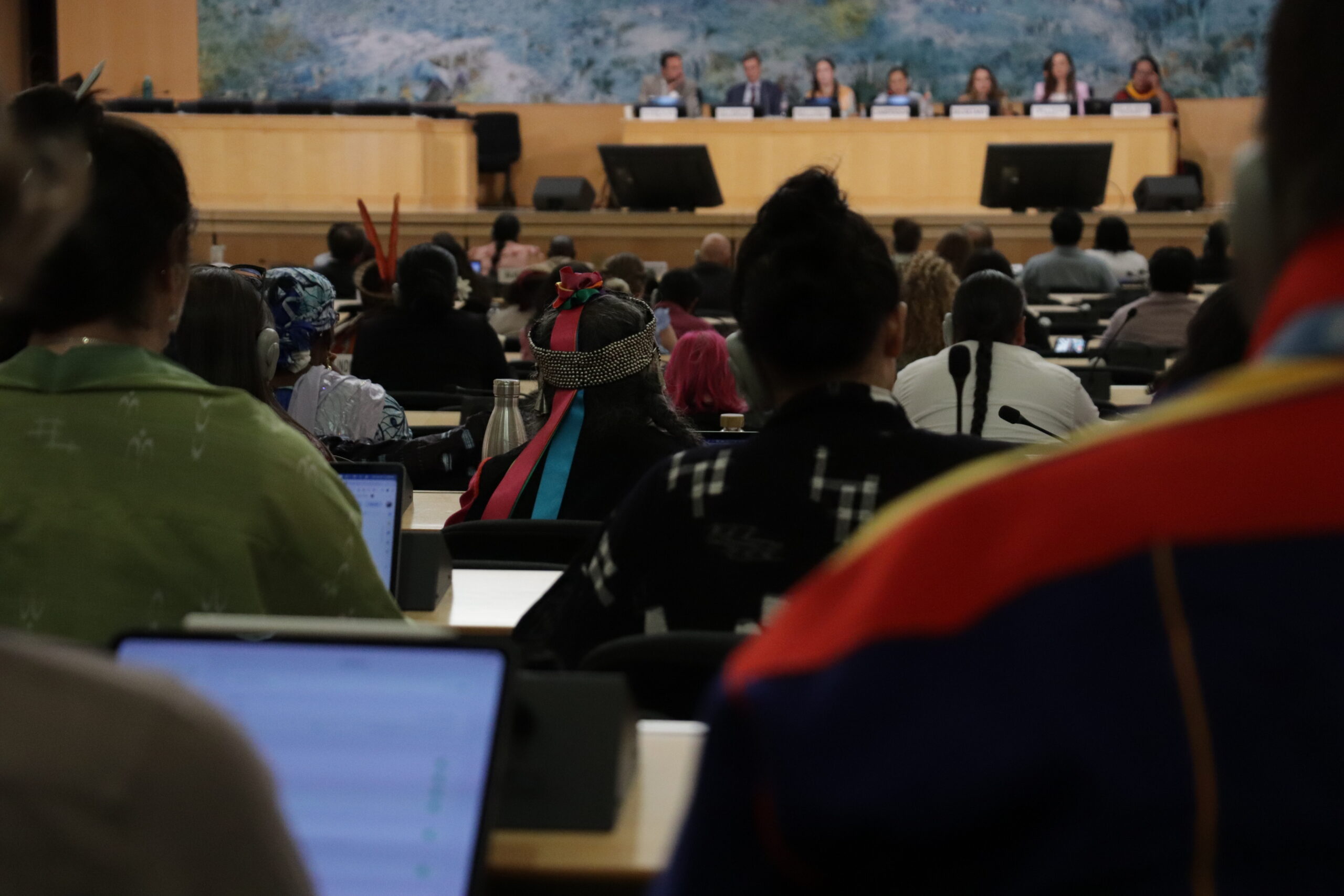
Indigenous leaders give the UN a roadmap for protecting their peoples
Amidst prayers and vows of solidarity, UN Expert Mechanism on the Rights of Indigenous Peoples ends annual meetings with demands for ‘action we’re not seeing globally’
-
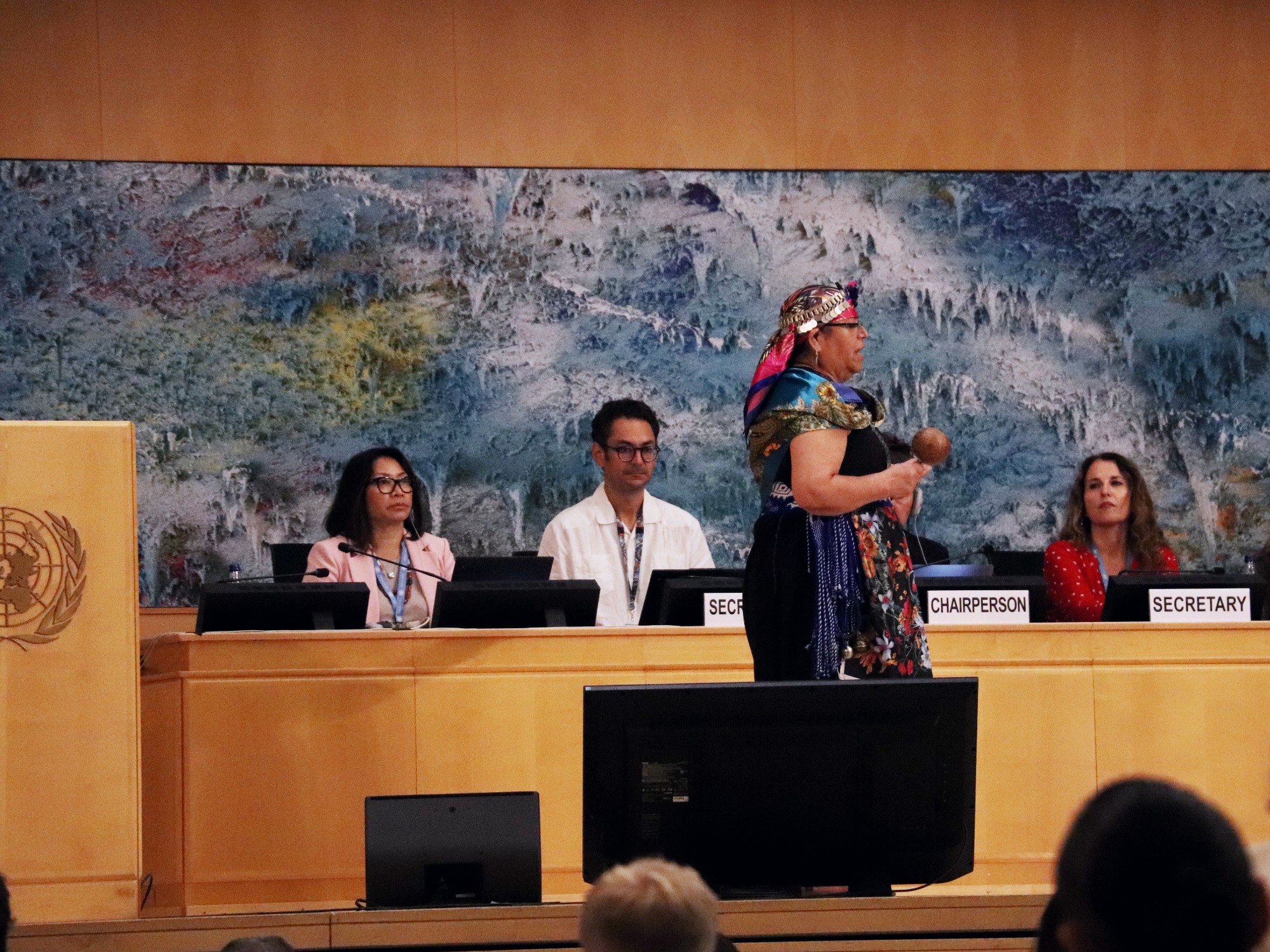
Indigenous people demand more say at the UN, as new crises hit their homelands
Indigenous nations live ‘on the frontlines’ of climate, conflict and new tech. But their voices remain sidelined in the global halls of power.