How do you put a price on sacred foods?
I set out to tally the cost of a smoked salmon — its value is beyond measure


How much does a traditional smoked salmon cost?
Well, last I heard, on the rez it goes for about $40 a side, so $80 for a full fish. But what’s it really worth?
The Elders talk about how our food is sacred. This sacredness makes it hard to put a price on the death of sentient beings, or on the teachings from our ancestors.
But we walk in these two worlds, and as a chef, I spend more time than I’d like putting a price on food. So with my feet in both kitchens I feel confident I can break down this food cost, while also recognizing the sacredness of traditional Indigenous foods.
First, in this modern capitalist framework, there are basic startup costs. Things like building the smokehouse. My little smokehouse, about four square metres in size, cost about $1,000. To theoretically pay that off over five years is $200 a year. This smokehouse can smoke up to 20 to 30 fish at a time. So we can say the annual output is around 100 to 200 fish, and estimate $1.50 per fish in costs to the smokehouse. While we’re here, let’s add another $1.50 each for supplies like salt, soap, hot water and refrigeration. Then add another $1 for vacuum sealing and a final dollar for overheads like transport and keeping the lights on. Then we’re at a base of $5 per fish just to keep the system functioning.
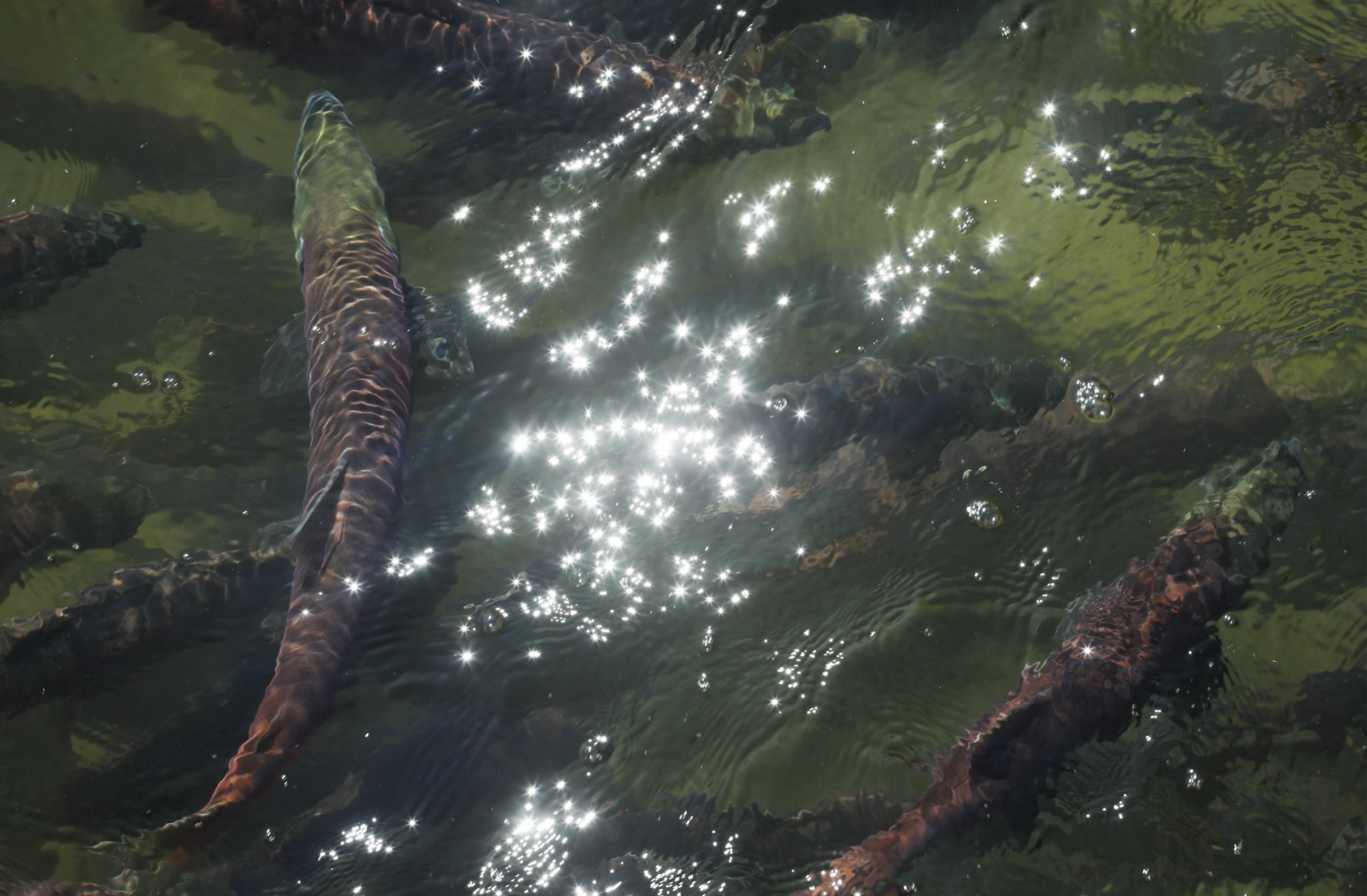
Now we need to get our hands on some salmon. The current mainstream market for salmon puts a whole wild sockeye at around 70 bucks, and sockeye is what most people want. But if you ask me, smoked chum is much better than smoked sockeye. Even then, go buy some chum eggs and see what they’re worth. With the cost of fish, and the overhead, we’re now looking at $75 per salmon.
Then there’s wood — each batch needs special wood that’s dried in a certain way. With experience I’d say you can get four good full smokes out of a single cord of wood. A cord of dried maple goes for $350+. So that’d make each smoke worth $87.50. At 20 salmon in a smoke, that’s worth $4.38 per fish. With that, our smoked salmon is now up to $79.38.


A mixture of ocean sockeye and river chinook smoked until dry in strips my Elders call lhiput
Now we get into labor and wages. While we are here, I hope we can all agree that a worthy wage for a skilled Indigenous cook would be at least $40 an hour, because a big part of smoking salmon is knowing how to cut the fish properly. Cleaning, cutting and prepping the salmon takes a tremendous amount of skill and shouldn’t be rushed either. Personally, I can do 20 fish in about four hours, from start to finish. Sure, I could technically butterfly a fish in 70 seconds. But four hours includes a lot more than just fileting. It should be noted that it does include a regimented cleaning of the tools and workspace both before and afterwards.
After being cut, the salmon will sit in a salt cure for 24 hours. Then, all the fish will have to be hung on cedar sticks or laid on clean racks in the smokehouse. Carving new cedar sticks, putting sticks in the fish, and putting the fish all on racks also takes time. Hanging 20 fish in a smokehouse requires 60 sticks. Then add to that the cleaning of all the racks, sticks, and smokehouse — which all take time when the main task is done. All said and done, this hanging and cleaning part takes another three hours.
During the smoking process, the main bulk of the work is lighting and monitoring the fire. When the smokehouse is burning, it should be checked at least every two hours and each check takes between 15 to 30 minutes. That adds up to about four hours per day of monitoring and — since this is a four-day process — that multiplies up to 16 hours total. Then, in the end we have another two hours to get everything vacuum sealed. That’s 25 hours per batch of salmon for a cost of $50 per salmon. Add that to the $79 outlined above and we’re now at $129 per fish.
Since we’re already deep into capitalism here — commodifying a sacred and traditional food — let’s be true to this same worldview and say that all food systems operate on profit margins. That considered, all the money I’ve indicated above would turn the wheels of our theoretical business but wouldn’t pay a profit to any owners or investors. In reality they would demand a profit margin of five to 20 per cent. If we split the difference and put aside 10 per cent, that’s an additional $12.90 per smoked fish. Bringing up our total to $142 per fish.
So with all things considered, in a modern free market world a traditional smoked salmon is worth almost double what it currently fetches. This is primarily because of the fact that wild-caught traditional Salish smoked salmon is considered to come from an unapproved source by the food premises regulation. As well as the fact that traditional smokehouses are not considered an approved production method by provincial environmental health standards.
Basically — our food is devalued because it’s illegal. It’s sold primarily on the black market and cannot be served in restaurants or commercial kitchens. So we must enjoy it in secret. But I can hear the Elders and community members rejoicing because they know that if the western world could access our traditional foods and see their true value, that we’d never get our foods again.
Our foods are our medicine and when we were able to subsist only on our Indigenous diets, our Elders lived to be well over a hundred years old.

So it’s a balance. We need to be able to get traditional foods like smoked salmon into hospitals, schools, and detention centres. We need to be able to get our food to our people wherever they are. And we need to be able to support our producers adequately. All while ensuring that we only take what we need and we don’t forget our place in the food system. Because if we aren’t careful the cost of a smoked fish could be the remaining salmon stocks, and the Elders know this. This can be said with all our foods. Camas, moose, butter clams, soopolallie — all superfoods that contain vital nutrients. All things that are already in a precarious balance.
I guess this is why I mostly give smoked fish away to my community. Smoked fish costs me more than money, it is a connection to the land and the river which are struggling. Smoked fish reminds me of my childhood and the hundreds of fish we’d catch and my uncles would smoke. How the Elders would talk of so many fish you could walk across the river on the backs of fish and I would laugh because the thought was so unreal. But now my children laugh at me when I say I used to catch hundreds: “sure you did dad.”
Smoked fish is a direct line to my ancestors and I can see their story played out in a series of seasons and feasts. Smoked fish shows me that our people once had a great abundance of food and food security, while so many on my own reserve now struggle to keep enough food in their cupboards.
To me the cost of a smoked fish is nothing and it’s everything. It’s free, I give it away. It costs me time and effort and money for a smokehouse and wood. The value of the smoked fish isn’t in its sale. It’s in the teachings I can share with my son while he’s fishing. It’s in the way the Elders’ eyes light up when you give them a fish. It’s in the hope I get every time the salmon returns.
But to the Western market it’s worth $142 bucks a fish, or $71 a side. So remember that when one of my uncles sells you a side for $40 — you’re lucky he’s not charging more.
Author
We live in a media ecosystem that thrives on misinformation. Big Tech and AI companies are consuming the work of real human beings and Canadian news has been banned on Facebook and Instagram.

And yet, I have hope for journalism because of the work we’re doing at IndigiNews.
At IndigiNews, we embody tâpwêwin — the Cree value of integrity and responsibility in truth-telling. We are committed to our independent, Indigenous-led newsroom rooted in community, accountability, and relationality. We believe storytelling is a sacred fire that connects our pasts, presents, and futures through the storytellers in our Storytelling Lodge. IndigiNews creates space for Indigenous journalists, storytellers, Knowledge Keepers, and communities to gather, learn, and share stories that matter.
As a registered charity, we are building a fire that allows our work not just to ignite but to thrive. Rather than relying on advertising or corporate acquisition, IndigiNews is sustained by people like you who believe Indigenous stories are important for the future of our communities.
Your support is making a real difference.
Our community of supporters, our Firekeepers, make it possible to grow our newsroom, publish award-winning journalism, train emerging Indigenous journalists through initiatives like the ReFocus Photojournalism Fellowship, and publish trustworthy stories that serve our communities across the country. Every story we publish helps fill in gaps left by mainstream media and ensures Indigenous perspectives are represented with care, accuracy and respect.
But there is still more work to do.
As the media landscape becomes more and more uncertain, community support is as necessary and essential as it’s ever been. Every new Firekeeper helps protect the independence of our newsroom and strengthens journalism that is accountable to our many and varied communities over corporations.
That’s why we’re inviting you to become a Firekeeper.
Firekeepers tend to and protect the sacred fire. Your monthly contributions directly support IndigiNews’s Storytelling Lodge, helps sustain our independent, Indigenous-led newsroom, and ensures future generations of Indigenous storytellers have the resources they need to do the work.
As a registered Canadian charity, all eligible donations receive a charitable tax receipt.
If you believe Indigenous stories matter, if you value independent journalism, and if you want to help build a strong future for Indigenous media, we invite you to join our circle of Firekeepers today.
Together, we can keep the fire burning.
— Eden Fineday, Publisher, IndigiNews
Support us nowLatest Stories
-
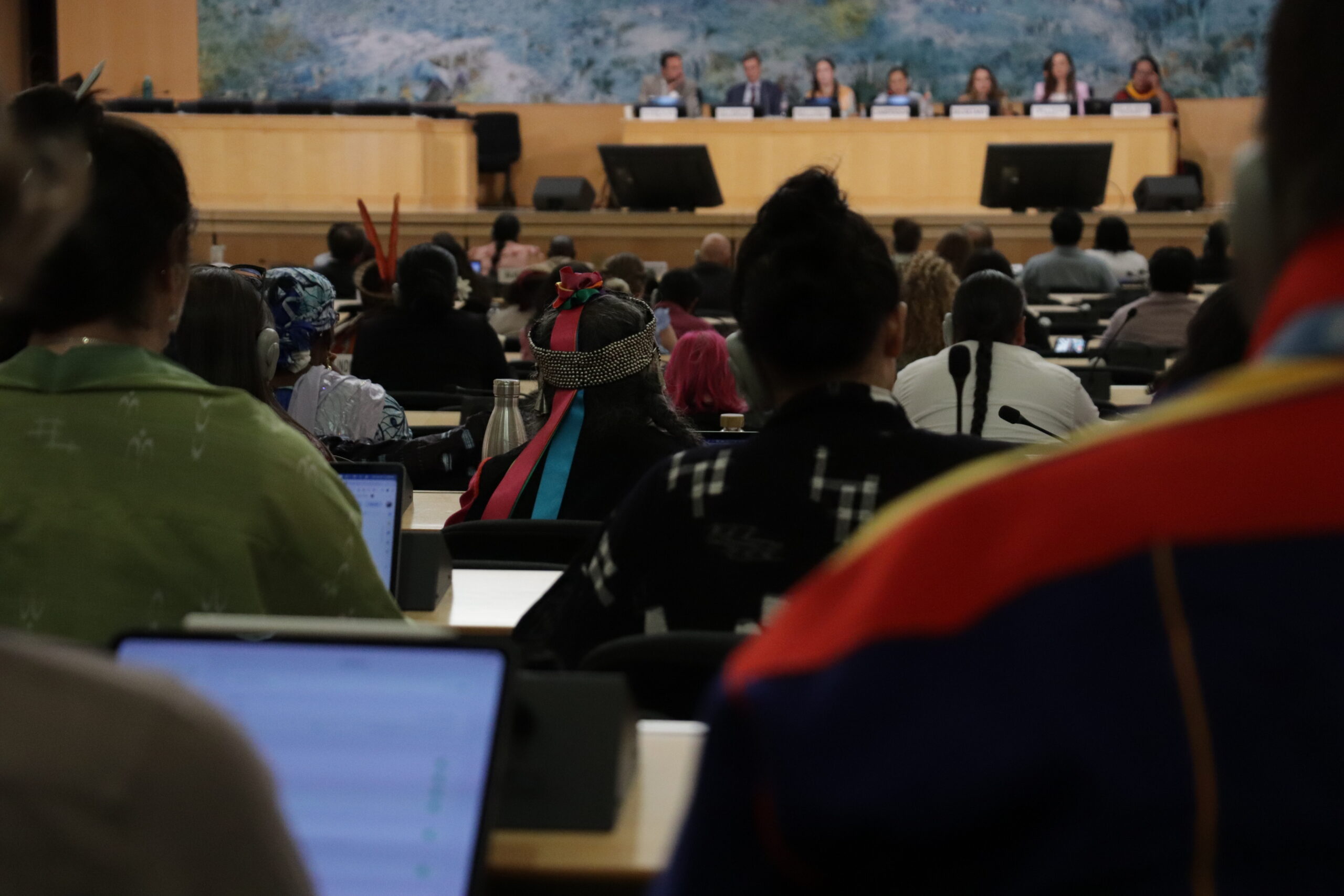
Indigenous leaders give the UN a roadmap for protecting their peoples
Amidst prayers and vows of solidarity, UN Expert Mechanism on the Rights of Indigenous Peoples ends annual meetings with demands for ‘action we’re not seeing globally’
-
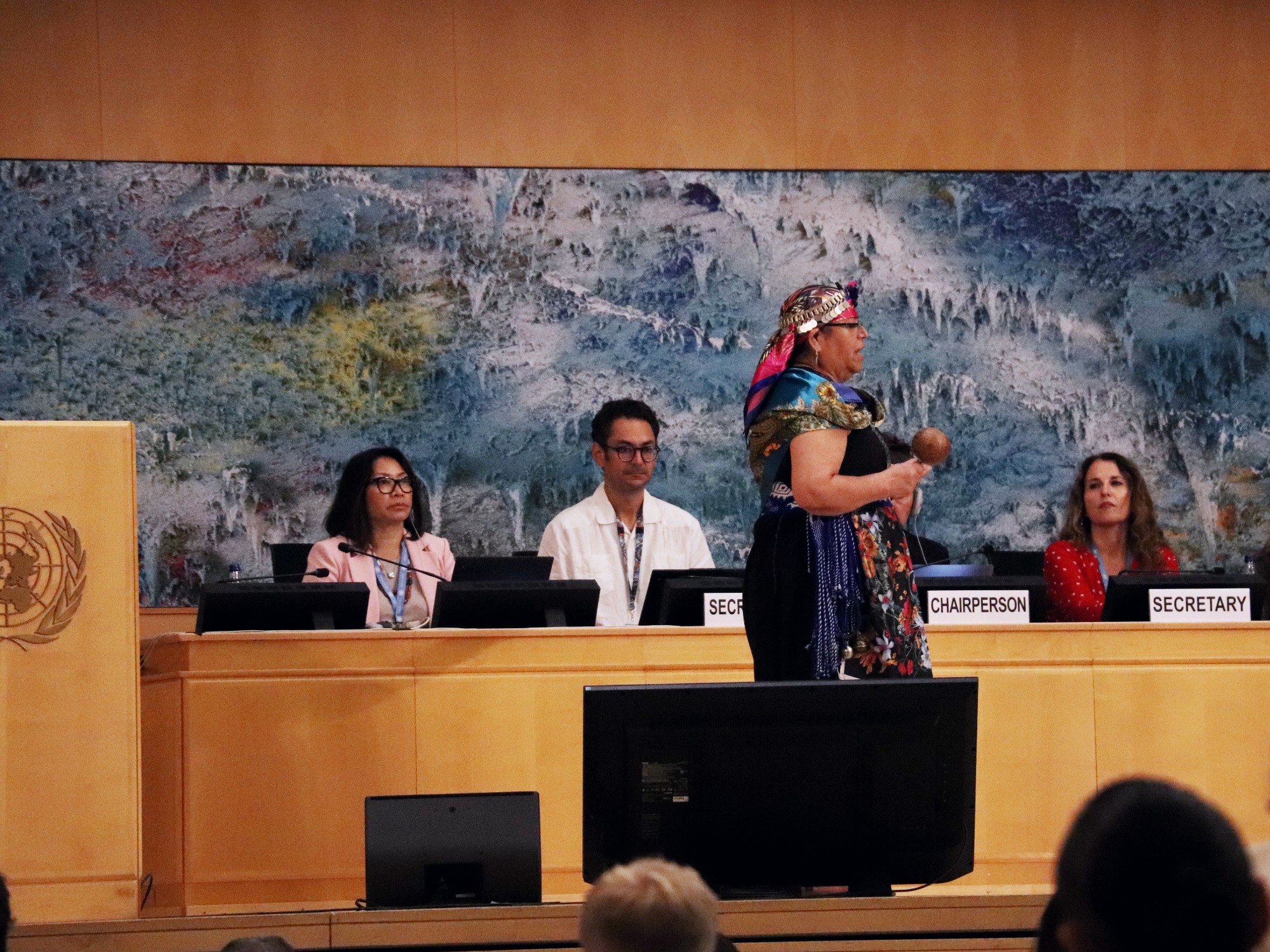
Indigenous people demand more say at the UN, as new crises hit their homelands
Indigenous nations live ‘on the frontlines’ of climate, conflict and new tech. But their voices remain sidelined in the global halls of power.