Aboriginal Back to School Picnic offers free school supplies for students in need
Ron Rice, executive director at the Victoria Native Friendship Centre, says the picnic’s founding principle has always been “no questions asked.”

The Aboriginal Back to School Picnic (BTSP), was held on Sept. 1 at the Victoria Native Friendship Centre (VNFC) and Surrounded by Cedar Child and Family Services (SCCFS). It’s a grassroots initiative that has brought local communities together since 2003, when the annual program first began.
In the early days of the initiative, the idea was to host a celebration for children as they prepared for back to school, says Ron Rice, executive director of the VNFC. SCCFS took the lead and called on VNFC, M’akola Housing Society, Indigenous Education Division at School District 61 and the BC Association of Aboriginal Friendship Centres to help begin planning the first BTSP.
LaVatta Frank, the woman who initially gave birth to the idea and who now works as a family support worker at VNFC, shares how she came up with the initiative during her time working with Surrounded by Cedar.
She says it started from her asking, “Why don’t we just do something for our own children, for the Aboriginal children?”
The organizations not only put activities together for students who attend BTSP, but provide free kits containing assorted school supplies, including everything from binders, pencils and scissors to glue, calculators and rulers.
Rice says that the BTSP means a great deal to him. Because of this, he has offered much of his time to the cause.
He says, back in 2002, it started off as a “good idea and a simple solution for a handful of families in Victoria.”
The plan was simple, says Rice: “Surround our children with love and joy and give them the tools they need to go back to school prepared, no questions asked.”
Together, at the very first BTSP, the partnered organizations were able to provide for up to 45 children and their families. They had a barbecue, old-fashioned potato sack races and gathered in a circle to honour the children, with a commitment to do it again the following year.
Today, they help up to approximately 1300 students in Victoria alone, says Rice.

Rice was raised by a single mother. He says he knows what it’s like when a parent has to make sacrifices, and recalls the pain she felt when she couldn’t do it all.
“Maybe that’s why I’ve stayed with the Back to School Picnic all these years,” says Rice. “I knew it was important to all the children and their parents. A moment of relief from the poverty so many of our families face each day of the year.”
By the fall of 2008, Rice says the annual program was growing so fast that it was hard to keep up, but it didn’t slow down the team. By 2009, Rice says extra kits were sent to other friendship centres on Vancouver Island, making it a regional program with additional funding approvals.
In 2010, the Aboriginal Back to School Picnic Tour was born, says Rice. It involves the team travelling across Vancouver Island in a packed 2 tonne moving truck, hosting picnics and dropping off kits as they go. Stops are often made at partner organizations and friendship centres.
“Each year, we try to grow the program by 10 to 15 per cent,” says Rice. “Some of the smaller communities [where we visit] have stayed close to the same. Victoria, Duncan, Port Alberni and Prince George have always seen growth.”

Today, VNFC partners, funders and sponsors have raised more than $500,000 and the BTSP Tour hosts picnics throughout Vancouver Island, says Rice. The team has also added mainland events, in Mission, Prince Rupert, Terrace and Prince George.
In 2018, in total, the BTSP supported over 3500 students from pre-school to post-secondary with kits. Across the 10 communities that were covered that year, 757 families gathered together to say “when our children go back to school, our hearts go with them” says Rice.
At this year’s BTSP, Narrene Williams, a grandmother from Pauquachin First Nation in North Saanich, says the program has been helping her granddaughter Tiara Williams since she began school.
Not only has it helped with supplies, she says, “but having a fun place to go and celebrate and create good energy around returning back to school. We look forward to it every year.”
Tiara, who is in Grade 4, says that she’s also “happy” to be able to get school supplies from the BTSP.
Amelia Garcia, also a Grade 4 student and Tiara’s cousin, expressed a similar joy and says her favourite thing in her kit this year was some bracelets.
This year, the kits will not look any different despite new COVID-19 regulations at schools across the province, and will not include protective gear, such as masks.
Rice explains, “Different children are different sizes and that was really something that had to be personal.”
Despite the inability to gather in large numbers due to the pandemic, the BTSP was still well attended this year, says Rice.

Sarah Leggeat, a volunteer and cultural continuity worker at Surrounded by Cedar, says she takes part in the BTSP because she was raised by a single mother with six children. She had registered for the BTSP, which made a significant difference for Leggeat and her siblings growing up.

“It’s not a shameful thing,” Leggeat says. “Growing up in poverty, you kind of get used to that feeling of shame and internalize that, but the events are so much fun and that’s not a feeling you get here.”
Author
We live in a media ecosystem that thrives on misinformation. Big Tech and AI companies are consuming the work of real human beings and Canadian news has been banned on Facebook and Instagram.
And yet, I have hope for journalism because of the work we’re doing at IndigiNews.
At IndigiNews, we embody tâpwêwin — the Cree value of integrity and responsibility in truth-telling. We are committed to our independent, Indigenous-led newsroom rooted in community, accountability, and relationality. We believe storytelling is a sacred fire that connects our pasts, presents, and futures through the storytellers in our Storytelling Lodge. IndigiNews creates space for Indigenous journalists, storytellers, Knowledge Keepers, and communities to gather, learn, and share stories that matter.
As a registered charity, we are building a fire that allows our work not just to ignite but to thrive. Rather than relying on advertising or corporate acquisition, IndigiNews is sustained by people like you who believe Indigenous stories are important for the future of our communities.
Your support is making a real difference.
Our community of supporters, our Firekeepers, make it possible to grow our newsroom, publish award-winning journalism, train emerging Indigenous journalists through initiatives like the ReFocus Photojournalism Fellowship, and publish trustworthy stories that serve our communities across the country. Every story we publish helps fill in gaps left by mainstream media and ensures Indigenous perspectives are represented with care, accuracy and respect.
But there is still more work to do.
As the media landscape becomes more and more uncertain, community support is as necessary and essential as it’s ever been. Every new Firekeeper helps protect the independence of our newsroom and strengthens journalism that is accountable to our many and varied communities over corporations.
That’s why we’re inviting you to become a Firekeeper.
Firekeepers tend to and protect the sacred fire. Your monthly contributions directly support IndigiNews’s Storytelling Lodge, helps sustain our independent, Indigenous-led newsroom, and ensures future generations of Indigenous storytellers have the resources they need to do the work.
As a registered Canadian charity, all eligible donations receive a charitable tax receipt.
If you believe Indigenous stories matter, if you value independent journalism, and if you want to help build a strong future for Indigenous media, we invite you to join our circle of Firekeepers today.
Together, we can keep the fire burning.
— Eden Fineday, Publisher, IndigiNews
Support us nowLatest Stories
-
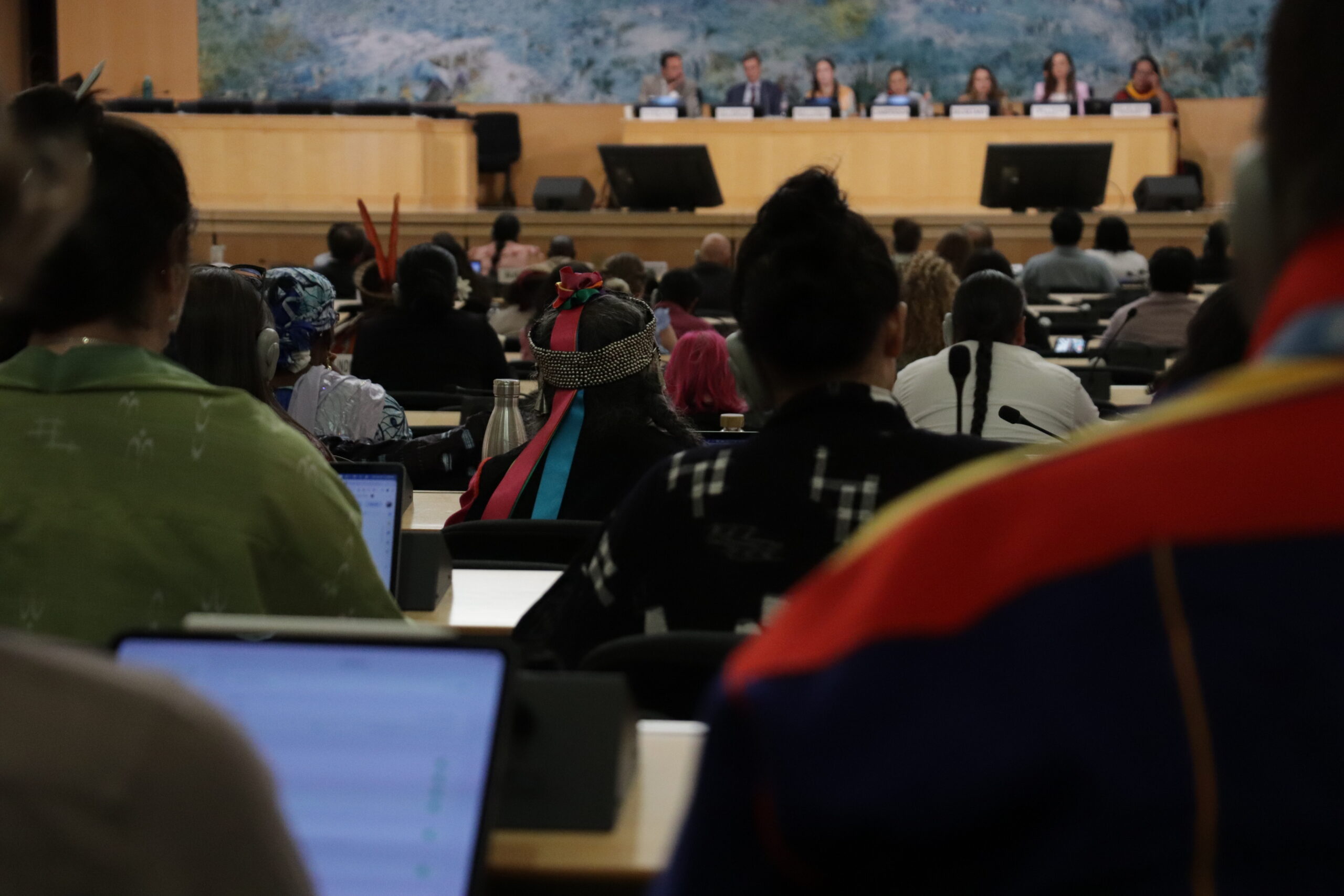
Indigenous leaders give the UN a roadmap for protecting their peoples
Amidst prayers and vows of solidarity, UN Expert Mechanism on the Rights of Indigenous Peoples ends annual meetings with demands for ‘action we’re not seeing globally’
-
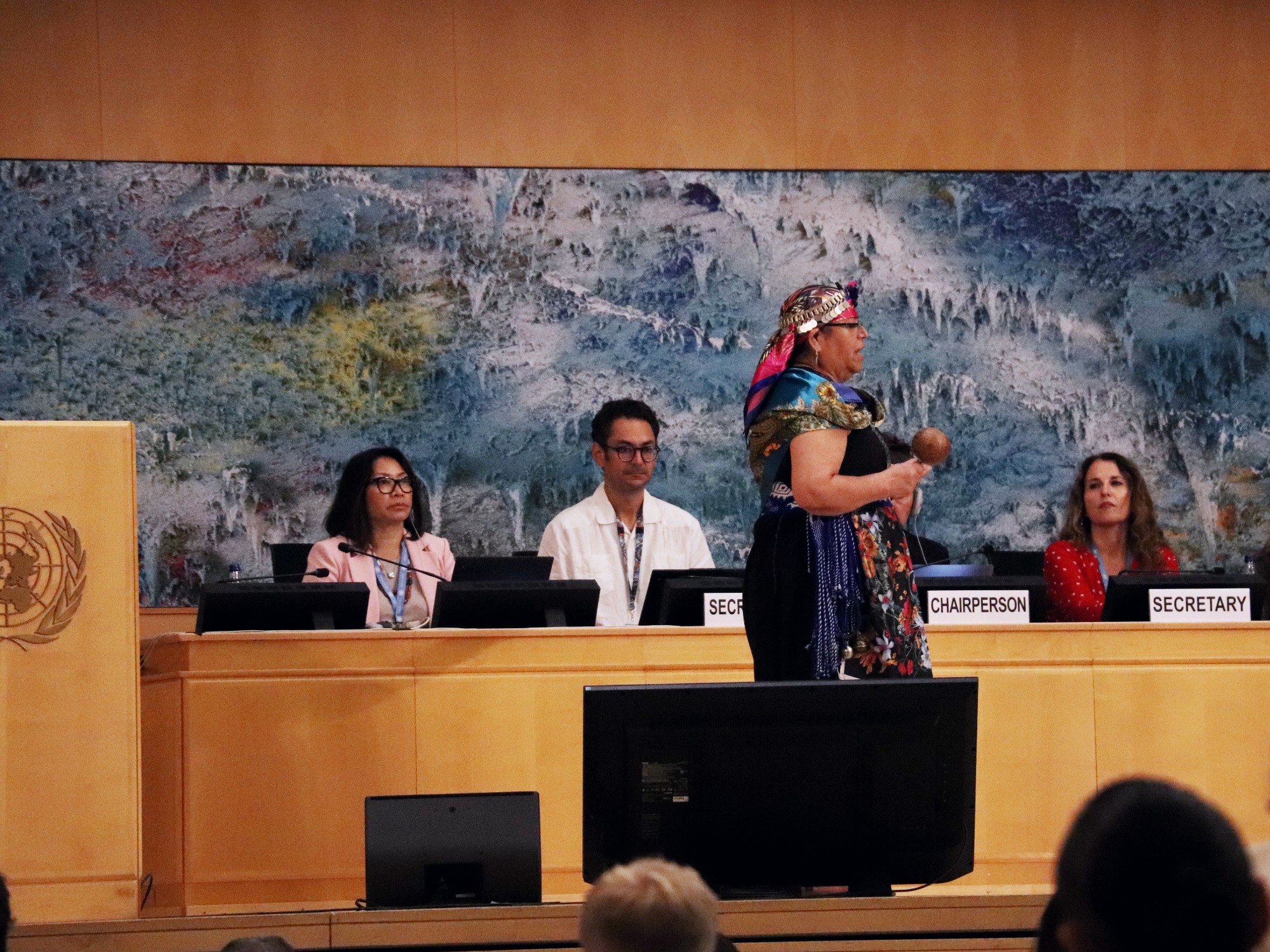
Indigenous people demand more say at the UN, as new crises hit their homelands
Indigenous nations live ‘on the frontlines’ of climate, conflict and new tech. But their voices remain sidelined in the global halls of power.