syilx children vow to ‘save the world,’ one seedling at a time
Elementary students in sn’pink’tn plant native shrubs and trees as part of an effort to help migrating salmon
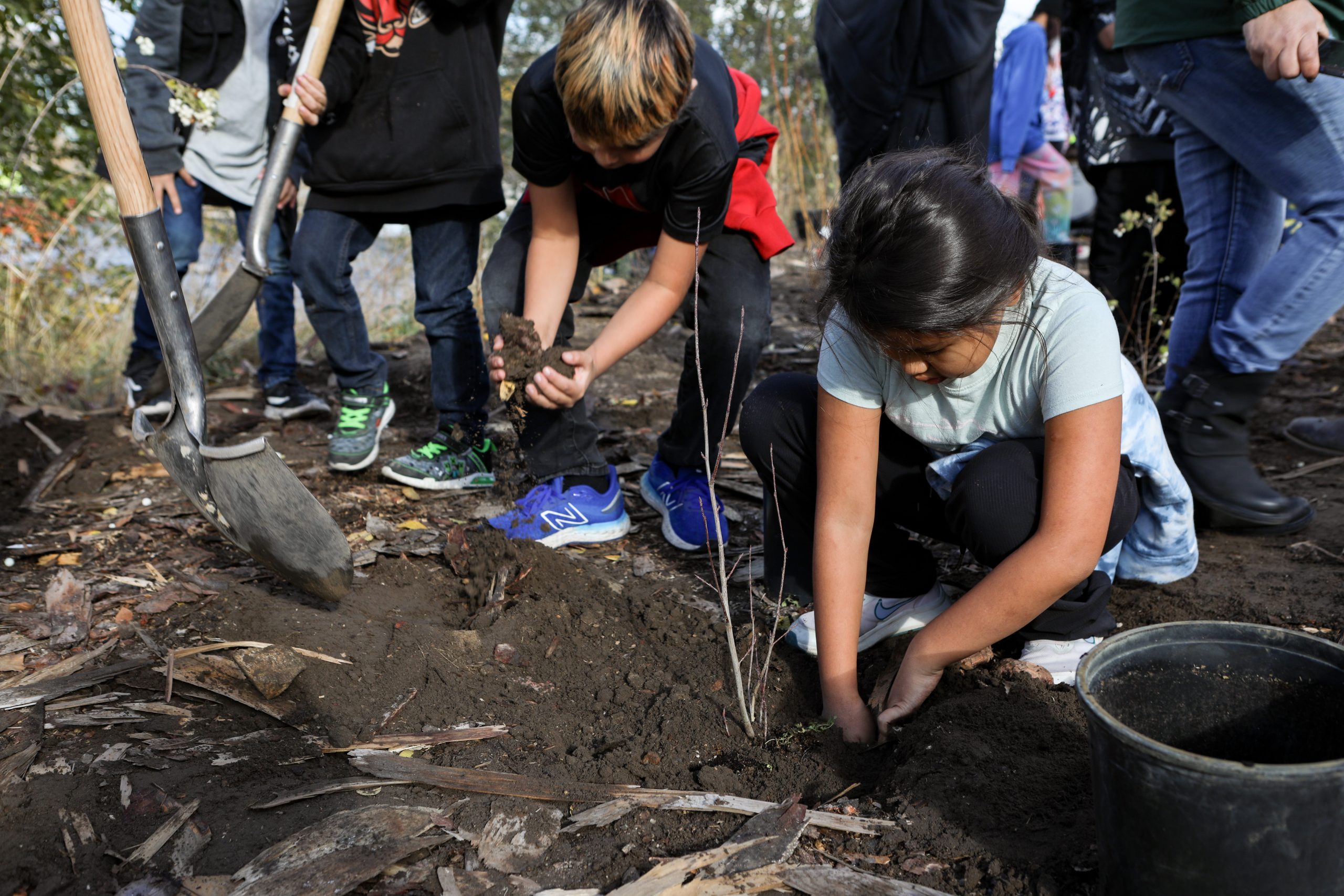
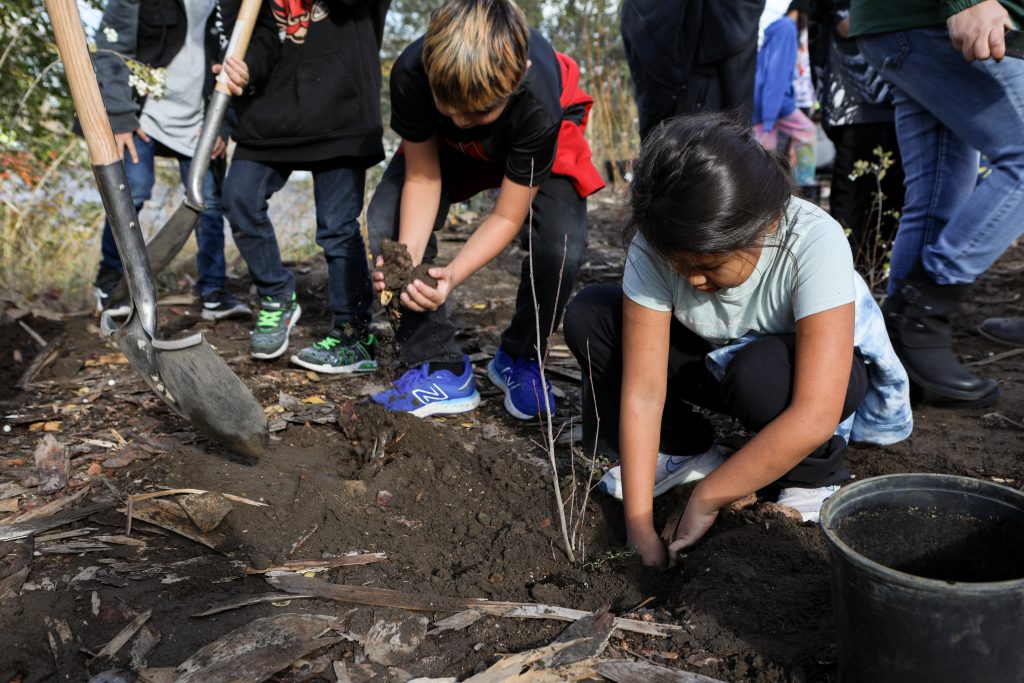
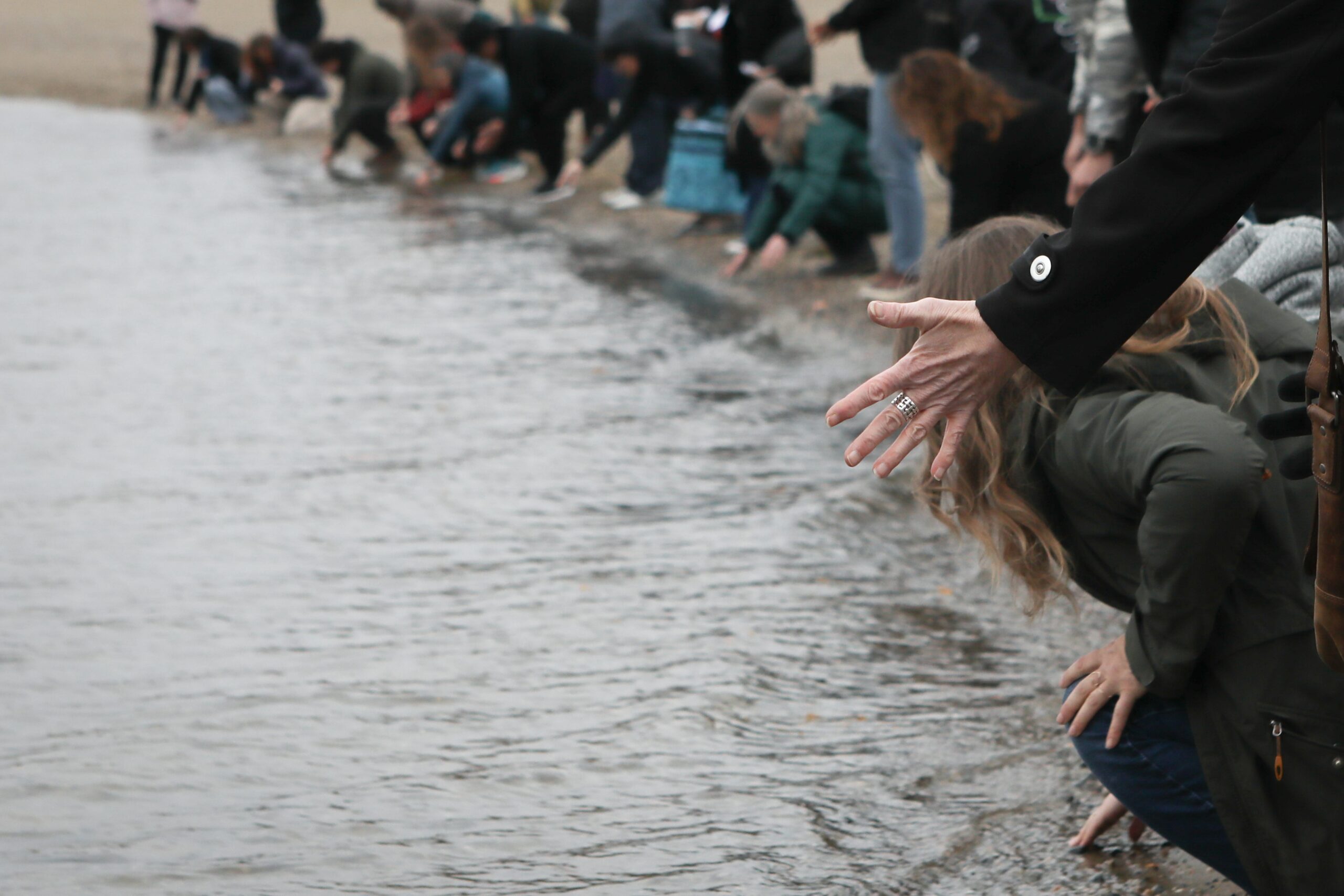
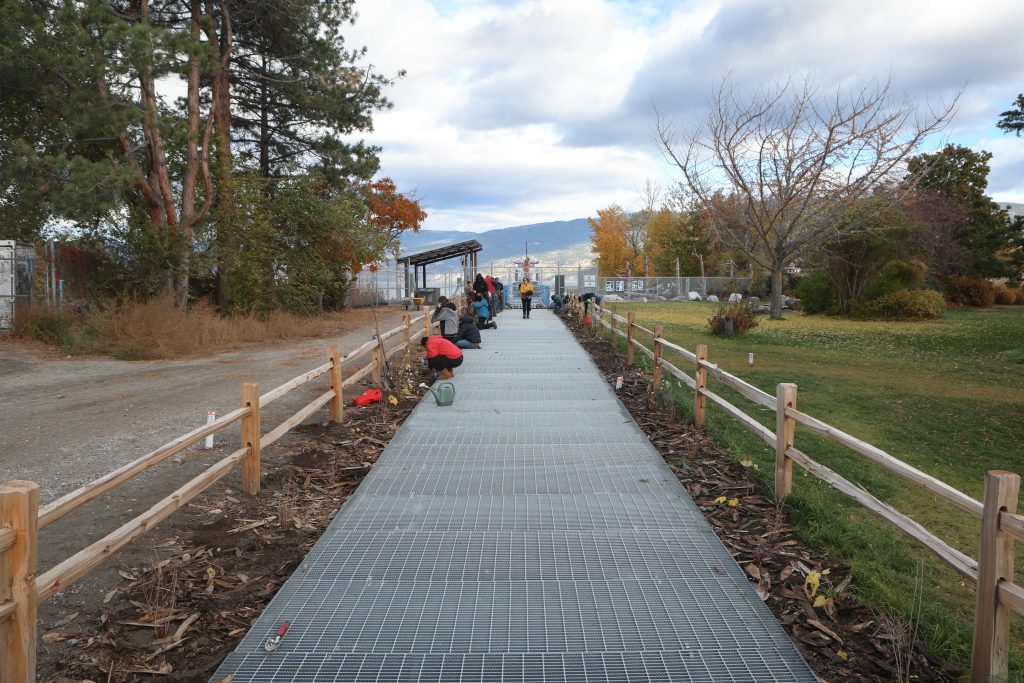
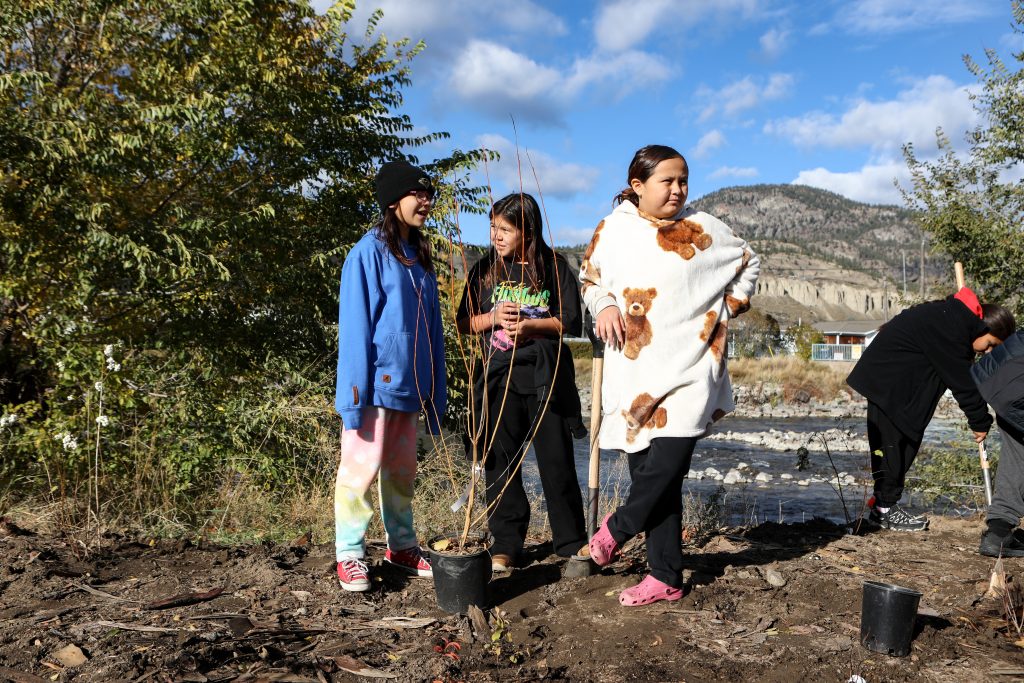
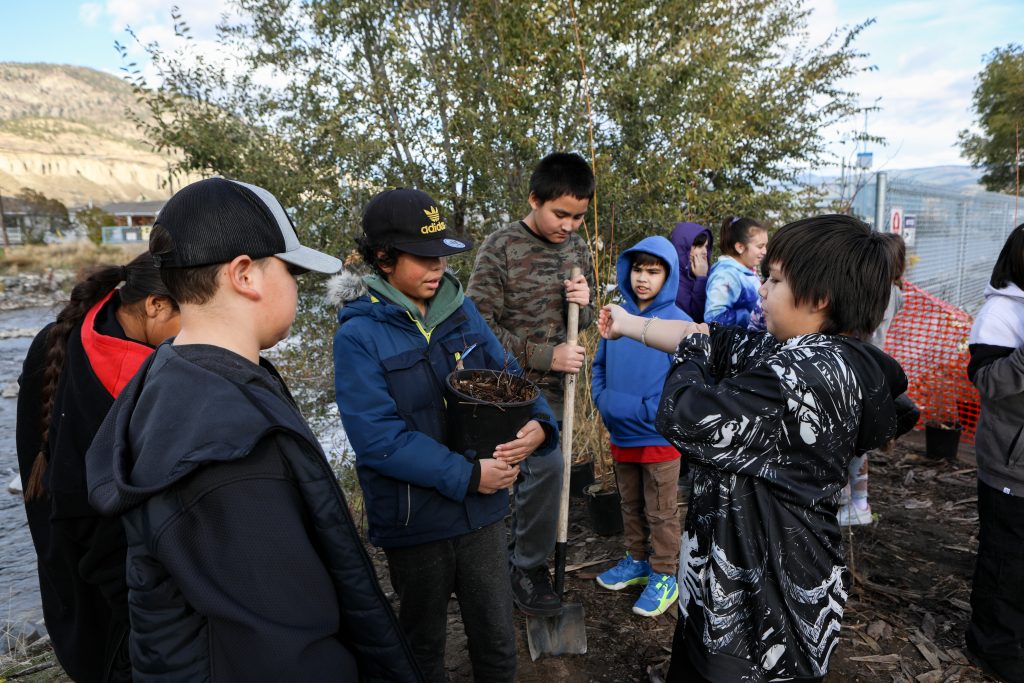
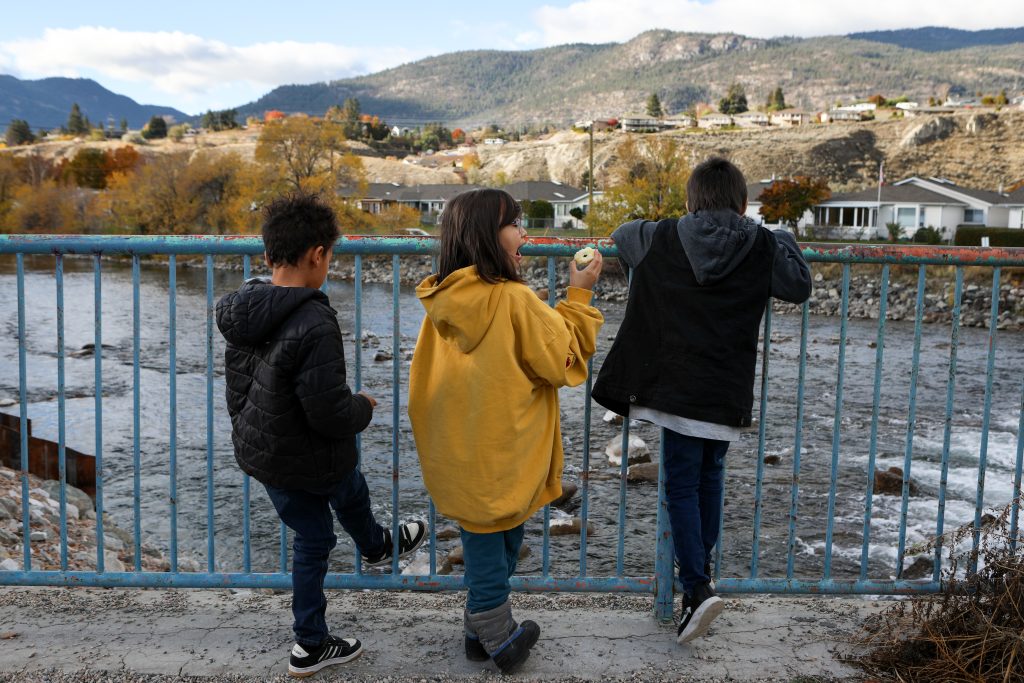
As the morning sun beams down upon them, dozens of elementary students eagerly make their way from their bus to a large garden plot of soil by the banks of sq’awsitkʷ (the Okanagan River).
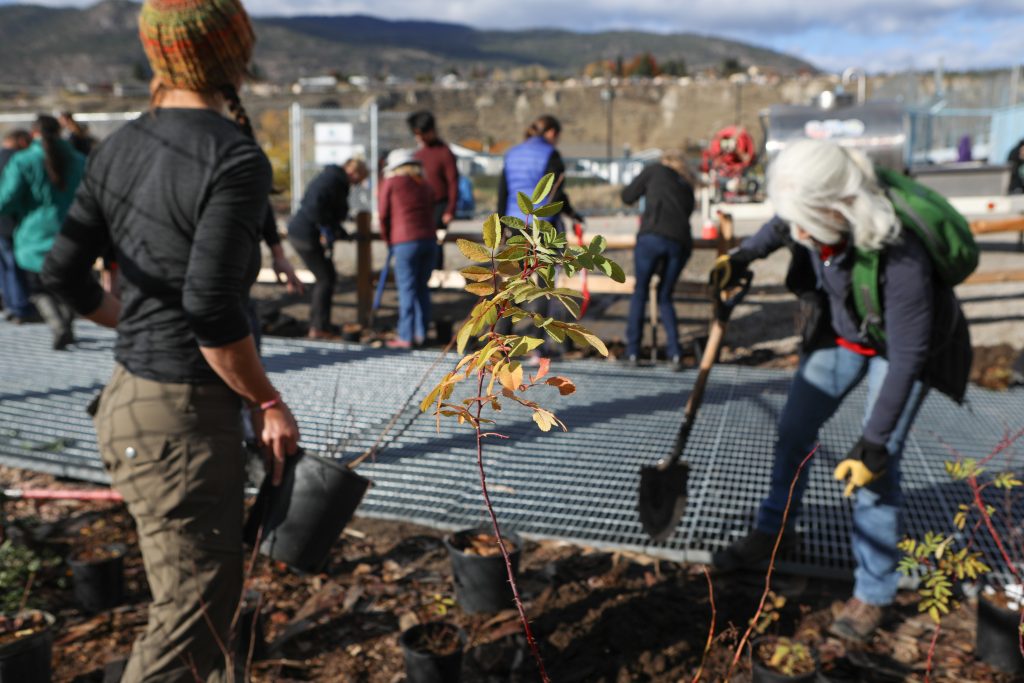
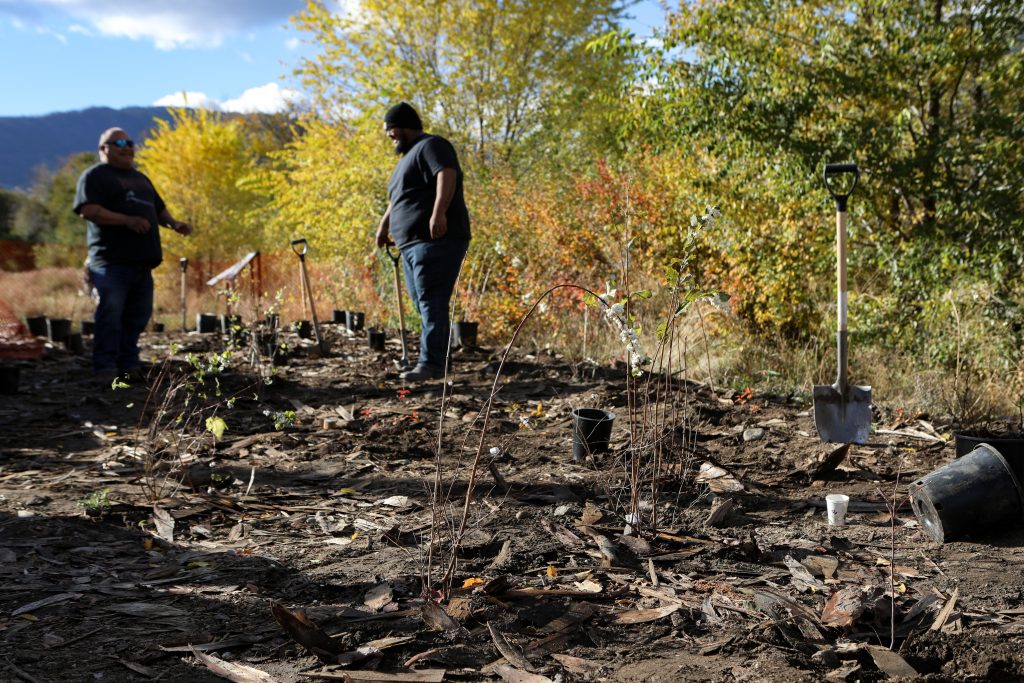
Waiting for the group from Outma Sqilx’w Cultural School are shrubs native to syilx homelands — snowberry, chokecherry, saskatoon berry, and wild roses — and trees including willow.
The seedlings, still in their infancy, are ready to be planted with the help of the children’s hands and enthusiasm.
“We’re going to save the world! We’re going to save the world!” one student enthusiastically proclaims as they stride along.
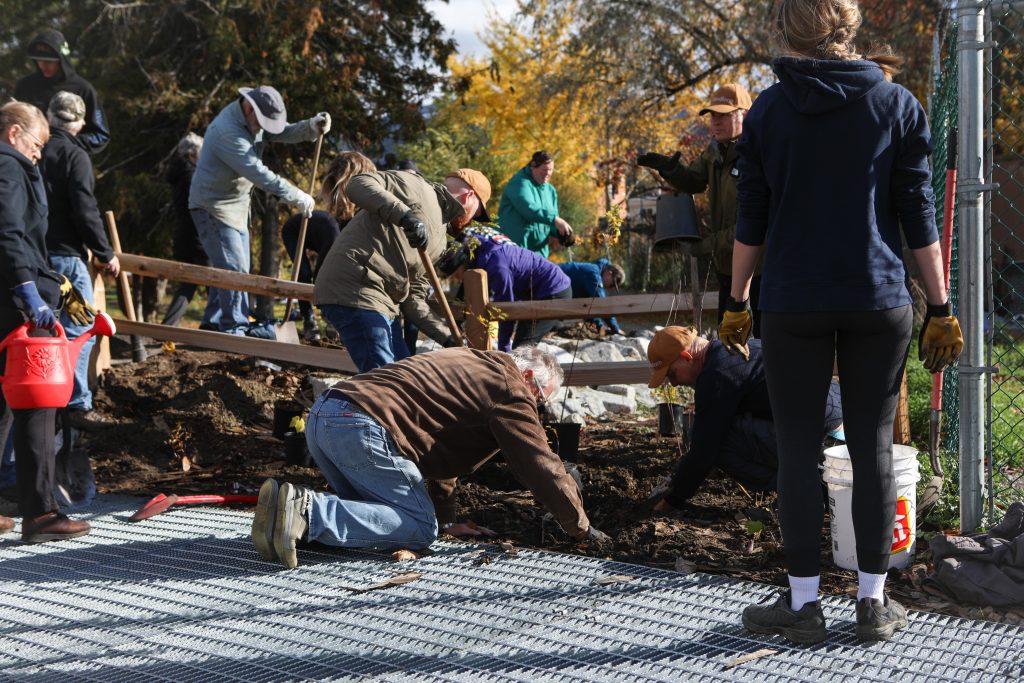
And with the guidance of adults — who had brushed the seedlings’ roots with mycorrhizal fungi or bone meal fertilizer to help support their growth — the students get to digging and planting. Just steps away, the river roars past.
The vegetation will not only grow to provide shade and help keep the water cool for future salmon migrating through the passage site, but it’ll also create habitat for different animals, too — birds, rodents and bugs, to name a few.
Changed landscape, restored ecosystem
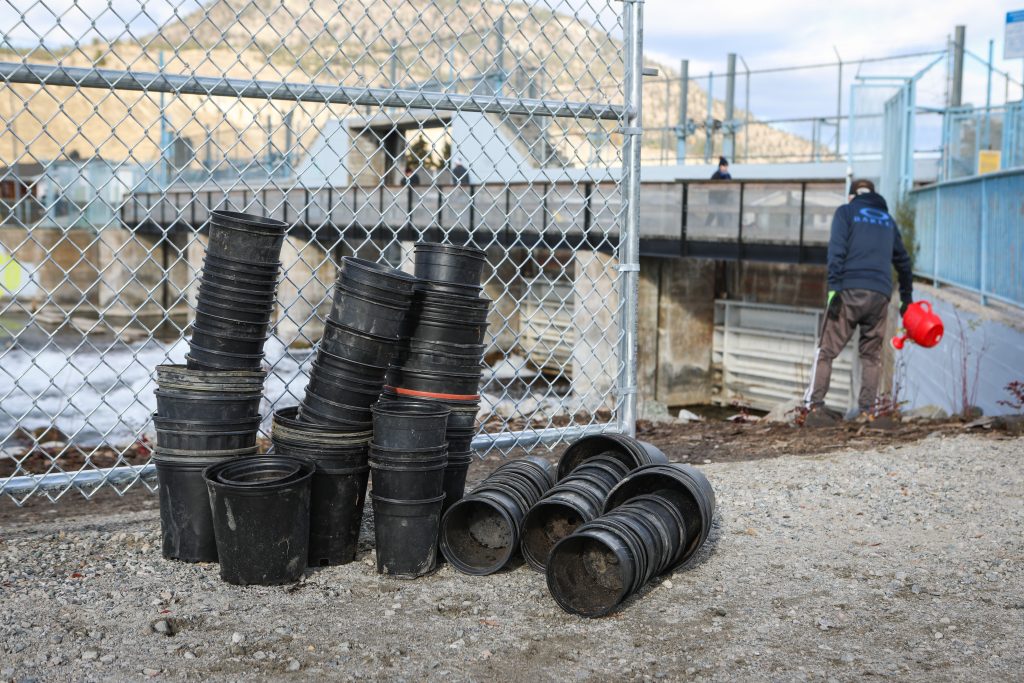
The community-planting event was a day-two effort that began on Nov. 7. Participants planted roughly 500 native species into the land around the dam’s fish passage channel, which opened in August.
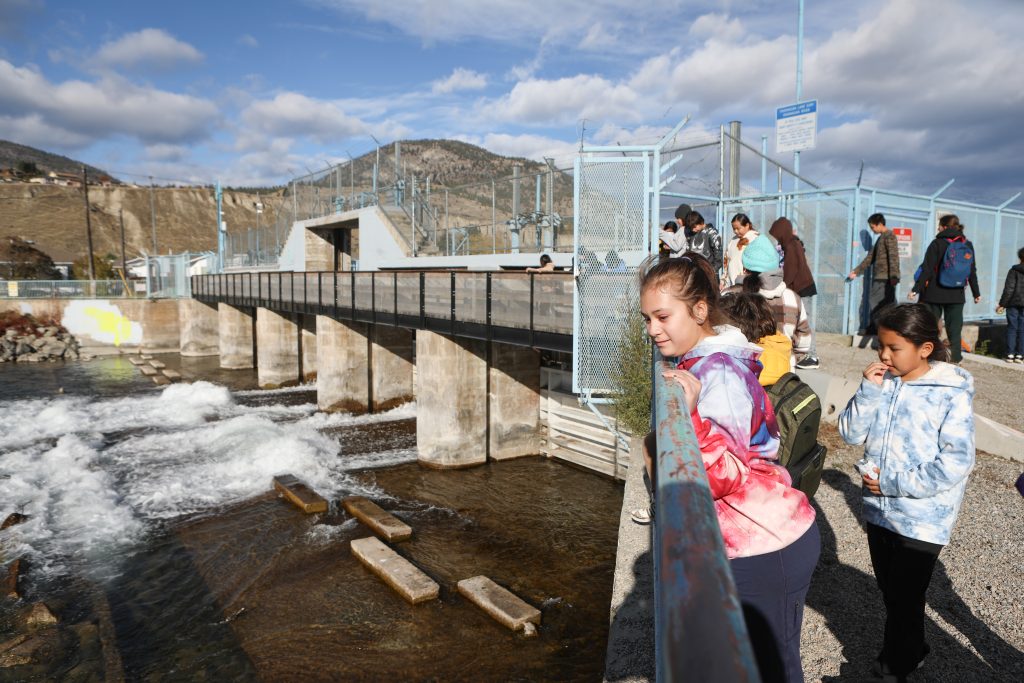
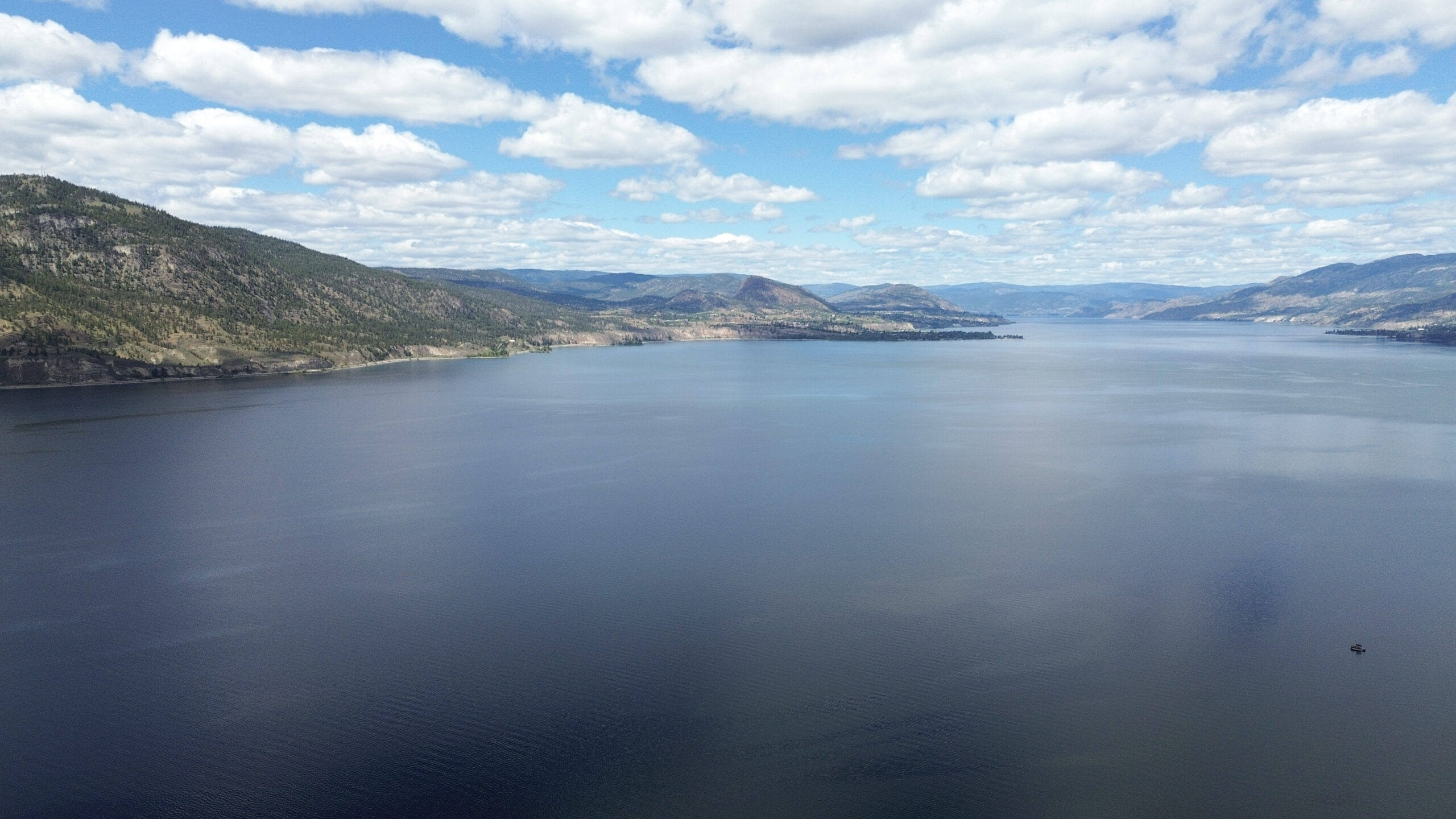
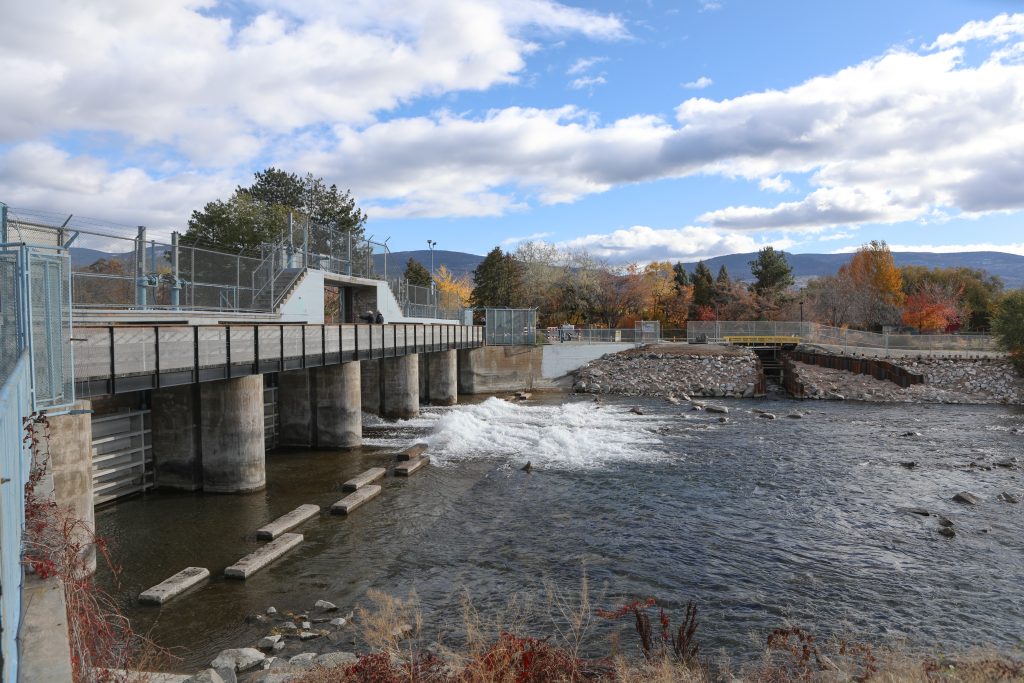
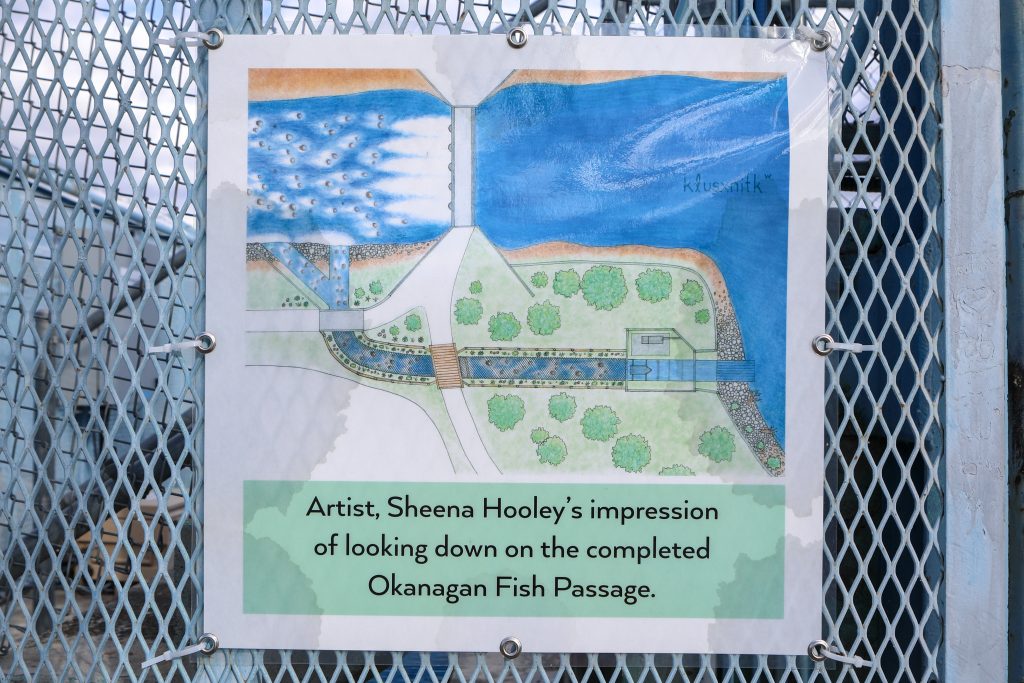
At this point the waterway diverts into two channels — the main vein going straight through the Okanagan Lake Dam in sn’pink’tn (Penticton), and a smaller flow bypassing the dam into kɬúsx̌nítkʷ (Okanagan Lake) through the fish passage.
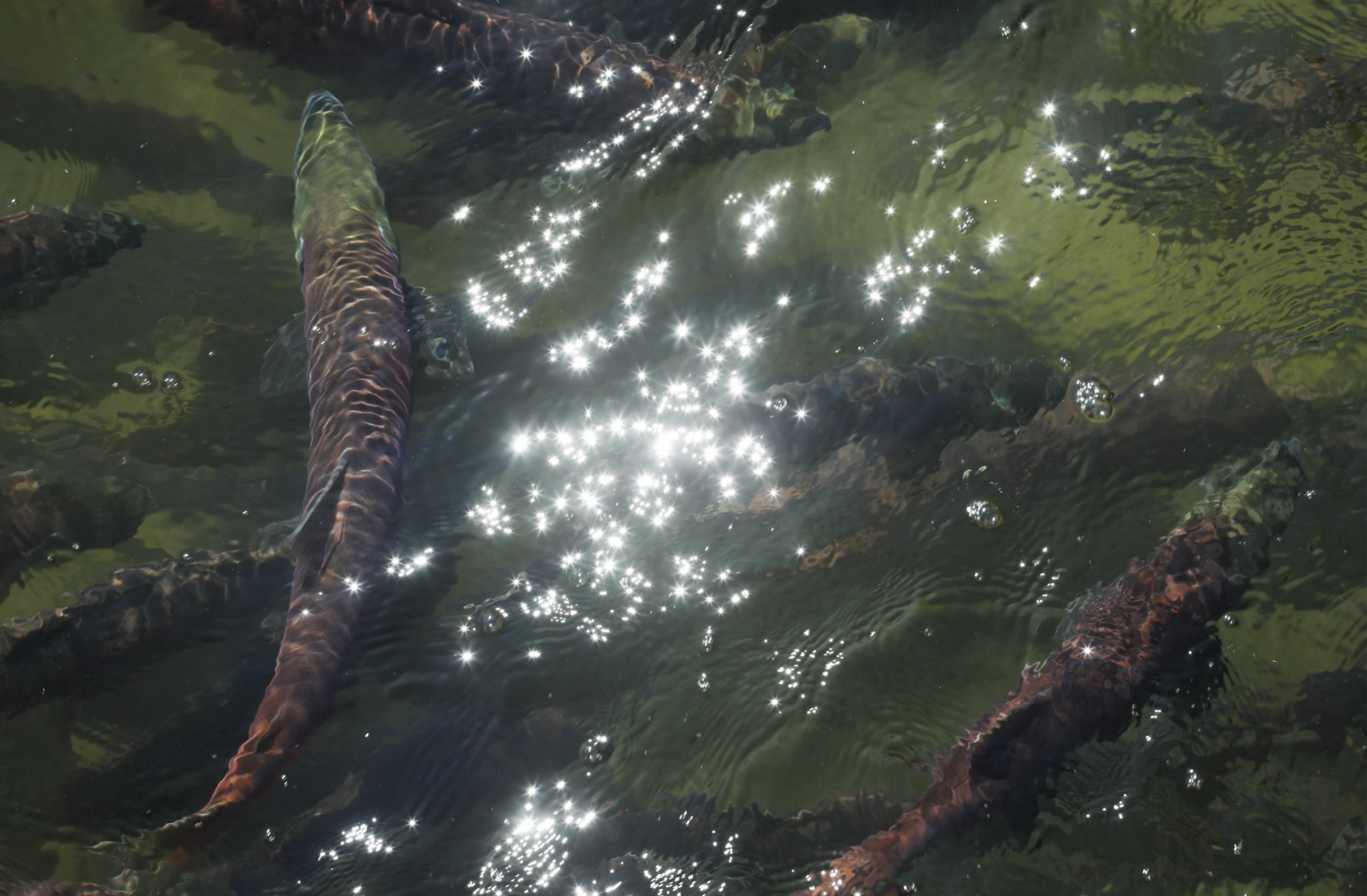
The Okanagan Nation Alliance (ONA) and several partners built the fish passage around the dam earlier this year to support returning salmon as they migrate to the upstream side of the dam, hoping to spawn in waterways connected to the lake.
“In 10 years, it’ll be an absolutely changed landscape,” said Lee McFadyen, an environmental advocate who helped organize the event with ONA’s fisheries team.
“It will have a changed feel to it — it will become an ecosystem unto itself.”
For decades, salmon were blocked from moving upriver into the lake because of the dam and channelization — an engineering process to straighten a winding waterway. For thousands of years before settler colonialism, the fish swam freely into kɬúsx̌nítkʷ and its creeks.
McFadyen said this fall season’s salmon run saw the first sockeye in decades return to the lake.
“The first time since the 1920s,” she said, proudly.
To build the fish passage channel, some trees had to be removed, disturbing soil in the area. McFadyen said part of ONA’s philosophy is to plant native species when soil is disturbed by a project.
‘Food for the future for so many species’
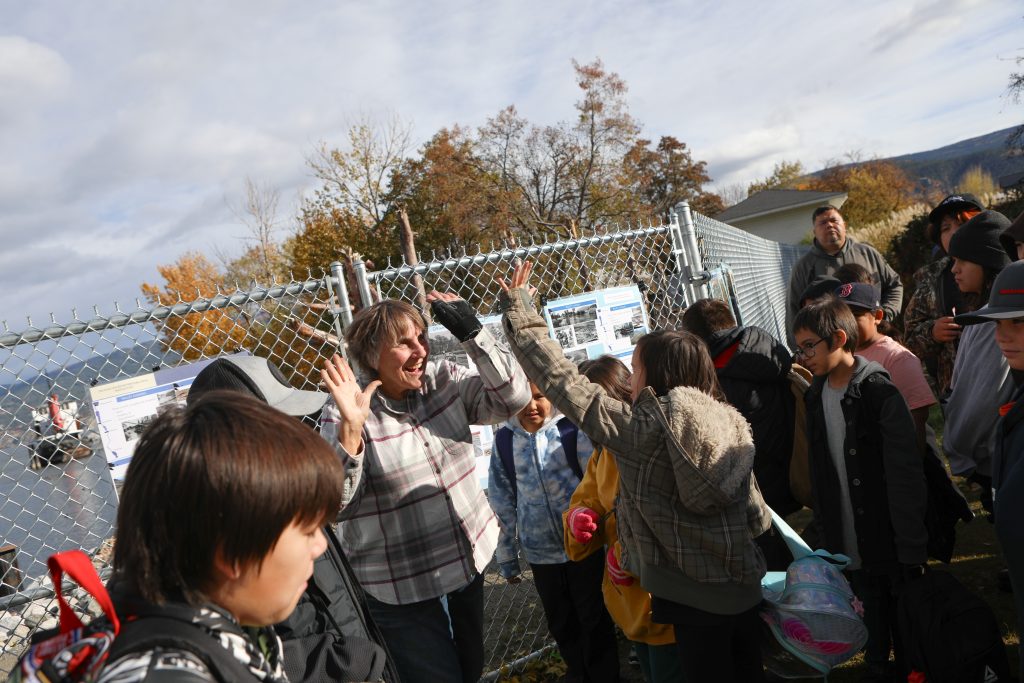
The group from Outma Sqilx’w Cultural School were among the 115 other students across four schools in the region who took part in the planting event’s first day.
Additionally, roughly 100 adults joined the planting, too, as well as community youth groups including Penticton Scouts and Venturers.
“What I really love about it is the collaborative effort — the coming together of communities. That is so important,” said McFadyen.
“If we all don’t work together, we’re not going to make it.”
She said it was wonderful to have syilx kids there, whose ancestral relationship with salmon “has been so much part of their history.”
Being out on the land and learning gives the children “a sense of place, a sense of time, a sense of pride and a sense of belonging,” she added.
“One of the things that they might take away — and I hope that they do — is a pride of place, and a reconnection with their past. But moving forward with it.”
She called the planting event “a historical moment” for everyone involved.
“It is righting a wrong,” she said. “It is food for the future for so many species and communities.”
‘Authentic to who we are as a people‘
nx̌əx̌sítatkʷ Shayla Allison, a culture and language teacher at Outma Sqilx’w Cultural School, accompanied three of her grade school classes to the planting event.
She said that the land-based learning activities that her classrooms engage in — from planting and harvesting, to visiting hunting camps — are “authentic to who we are as a people.”
“Before there were Western systems, schools and classrooms, our children have always learned … by being, connecting, learning and being intimate with the connections around you, like life and land,” Allison said.
“That’s how we survived and lived. We knew about the science of plants; ecosystems; habitat — everything. The ways that we learned came from those ways of connecting with people and places.”
Every week, she said, they go out on the land and learn.
“Just connecting with the land. Also making sure that we’re respectful to the land, and leaving it better than it was when we got here,” she said.
“The way I always try to look at it, is wanting these kids to not learn from a book. Or learn that science is from a Western construct, or done and taught in Western old school ways of sitting in a class.”
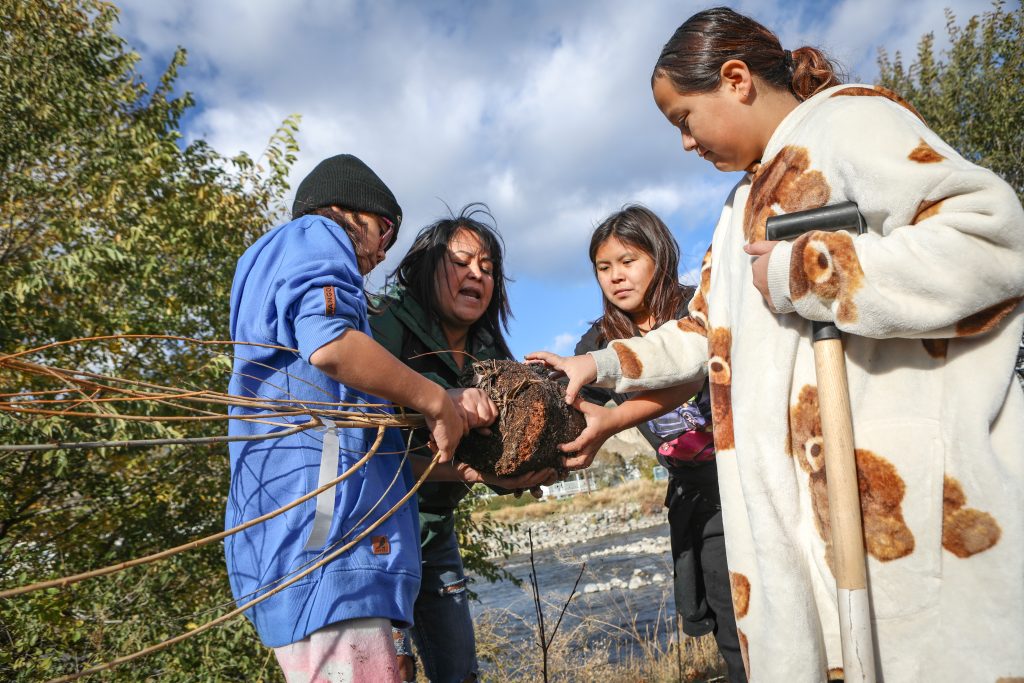
The beauty is seeing young people with learning or social challenges “thrive in that outdoor environment” and become “whole new kids.”
“They get out, they’re the ones that are digging in the land — they’re smiling and they’re helpful. You see a new person,” she said.
“You see the value of taking them out, and seeing them be less sensored and scared or afraid of being wrong. There is no wrong.”
Whatever teachings they learn on the land are then brought back to the classroom, where they then “solidify what they learned and how they learned it,” Allison said.
“Everyday, they learn how — one, they’re sacred as being children — but also, they can do good things and be helpful, even with learning. Your energy, your prayers and your thoughts go into everything that you do,” she said.
“They learn, each time, about coming with good intentions and good feelings, being helpful.”
Coming in with good intentions enables them to be mindful of where they are and who they’re with, she said.
“We’re all here to learn. We may make mistakes, but we make sure to come with good intentions and heart,” she said.
“It teaches them to be more observant and seeing — seeing the natural world and the people.”
There’s no better place to educate children “than getting out and doing things” through experiential learning, she concluded — “finding a way to connect everything to what we’ve already always known — to be authentic in sqilx’w and Indigenous teachings wherever you can.”
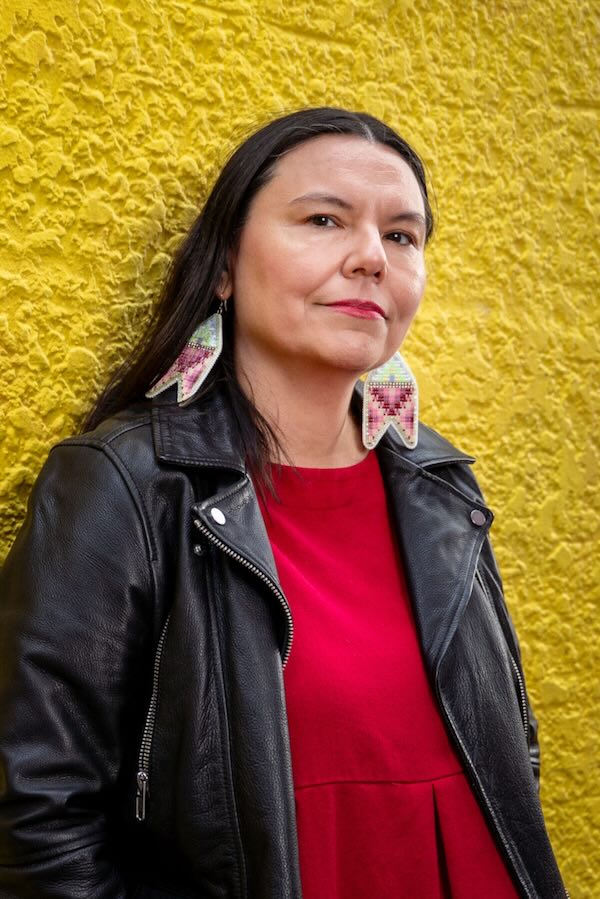
Author
We live in a media ecosystem that thrives on misinformation. Big Tech and AI companies are consuming the work of real human beings and Canadian news has been banned on Facebook and Instagram.
And yet, I have hope for journalism because of the work we’re doing at IndigiNews.
At IndigiNews, we embody tâpwêwin — the Cree value of integrity and responsibility in truth-telling. We are committed to our independent, Indigenous-led newsroom rooted in community, accountability, and relationality. We believe storytelling is a sacred fire that connects our pasts, presents, and futures through the storytellers in our Storytelling Lodge. IndigiNews creates space for Indigenous journalists, storytellers, Knowledge Keepers, and communities to gather, learn, and share stories that matter.
As a registered charity, we are building a fire that allows our work not just to ignite but to thrive. Rather than relying on advertising or corporate acquisition, IndigiNews is sustained by people like you who believe Indigenous stories are important for the future of our communities.
Your support is making a real difference.
Our community of supporters, our Firekeepers, make it possible to grow our newsroom, publish award-winning journalism, train emerging Indigenous journalists through initiatives like the ReFocus Photojournalism Fellowship, and publish trustworthy stories that serve our communities across the country. Every story we publish helps fill in gaps left by mainstream media and ensures Indigenous perspectives are represented with care, accuracy and respect.
But there is still more work to do.
As the media landscape becomes more and more uncertain, community support is as necessary and essential as it’s ever been. Every new Firekeeper helps protect the independence of our newsroom and strengthens journalism that is accountable to our many and varied communities over corporations.
That’s why we’re inviting you to become a Firekeeper.
Firekeepers tend to and protect the sacred fire. Your monthly contributions directly support IndigiNews’s Storytelling Lodge, helps sustain our independent, Indigenous-led newsroom, and ensures future generations of Indigenous storytellers have the resources they need to do the work.
As a registered Canadian charity, all eligible donations receive a charitable tax receipt.
If you believe Indigenous stories matter, if you value independent journalism, and if you want to help build a strong future for Indigenous media, we invite you to join our circle of Firekeepers today.
Together, we can keep the fire burning.
— Eden Fineday, Publisher, IndigiNews
Support us nowLatest Stories
-
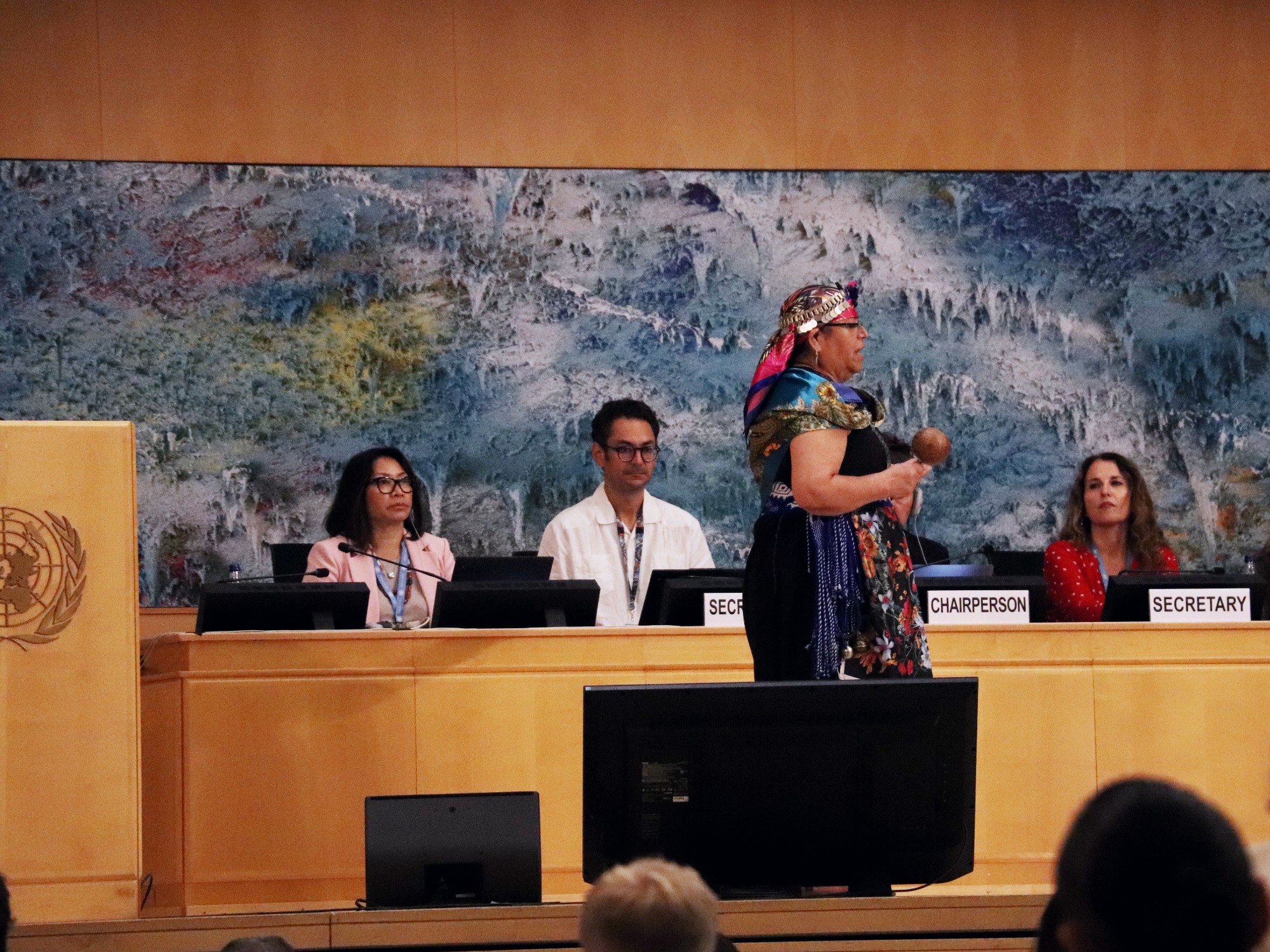
Indigenous people demand more say at the UN, as new crises hit their homelands
Indigenous nations live ‘on the frontlines’ of climate, conflict and new tech. But their voices remain sidelined in the global halls of power.
-
Through their lenses: Showcasing the work of our 2026 ReFocus fellows
Get to know our photojournalism training cohort through a series of portraits shot during a week in Kjipuktuk (Halifax)