How Welhqi:um became Snake Island
Snuneymuxw author and knowledge holder Celestine Aleck (Sahiltiniye) shares a story about one of the places in her nation’s territory on ‘Vancouver Island’

This telling of the Snake Island story was written by Celestine Aleck (Sahiltiniye) of Snuneymuxw First Nation. She recognizes Spencer Point for this version of the story, which has been told in different ways. A written version of this story previously appeared here.
Long ago, and still today, our grandparents would take the first grandchild that was born and raise them with all our snuw’uy’ulh (all our teachings).
Well, there was once a set of grandparents who were raising their granddaughter. Each morning, the granddaughter would wake up, have breakfast, do her chores, receive teachings, and then go out on her town and play for the rest of the day.
Day after day, the grandmother used to walk through the village looking for her granddaughter, but she never knew where she went. One day, the grandmother decided to get an older girl to follow the granddaughter to see where she was going.
So that morning, the granddaughter woke up and had her breakfast, received her teachings, finished her chores and went out to play. Two longhouses away the older girl had been waiting to follow the granddaughter. She saw her come out of her longhouse and snuck behind her to see where she was going.
The girl saw the granddaughter had walked all the way up to the mouth of the river and had jumped into the water. Just as she had jumped into the water, many snakes came out and began to play with the girl, wrapping themselves around her. The older girl saw this happening and rushed all the way back to the grandmother.
“Your granddaughter is at the mouth of the river playing with snakes,” she said.
The grandmother became worried and upset. When the granddaughter got home the grandmother scolded her.
“What are you doing?” she asked.
“You must play with your own kind, you cannot play with snakes, that’s wrong, that’s bad! No more.”
The granddaughter said: “No grandma, please, they are my friends, I love them and they love me.”
The grandmother replied: “No, you cannot play with them.”
But the granddaughter didn’t listen. She would still sneak away to the mouth of the river each day and play with the snakes. As time went by and she became a bit older, the granddaughter began dreaming of a tall dark figure with red eyes. At the same time, the granddaughter’s stomach began to grow.
Her grandfather asked her: “What happened? Who did you sleep with?”
The grandfather thought she was pregnant, but the granddaughter was too young to understand what he was asking. Because she wasn’t married at that time, she had to leave the village.
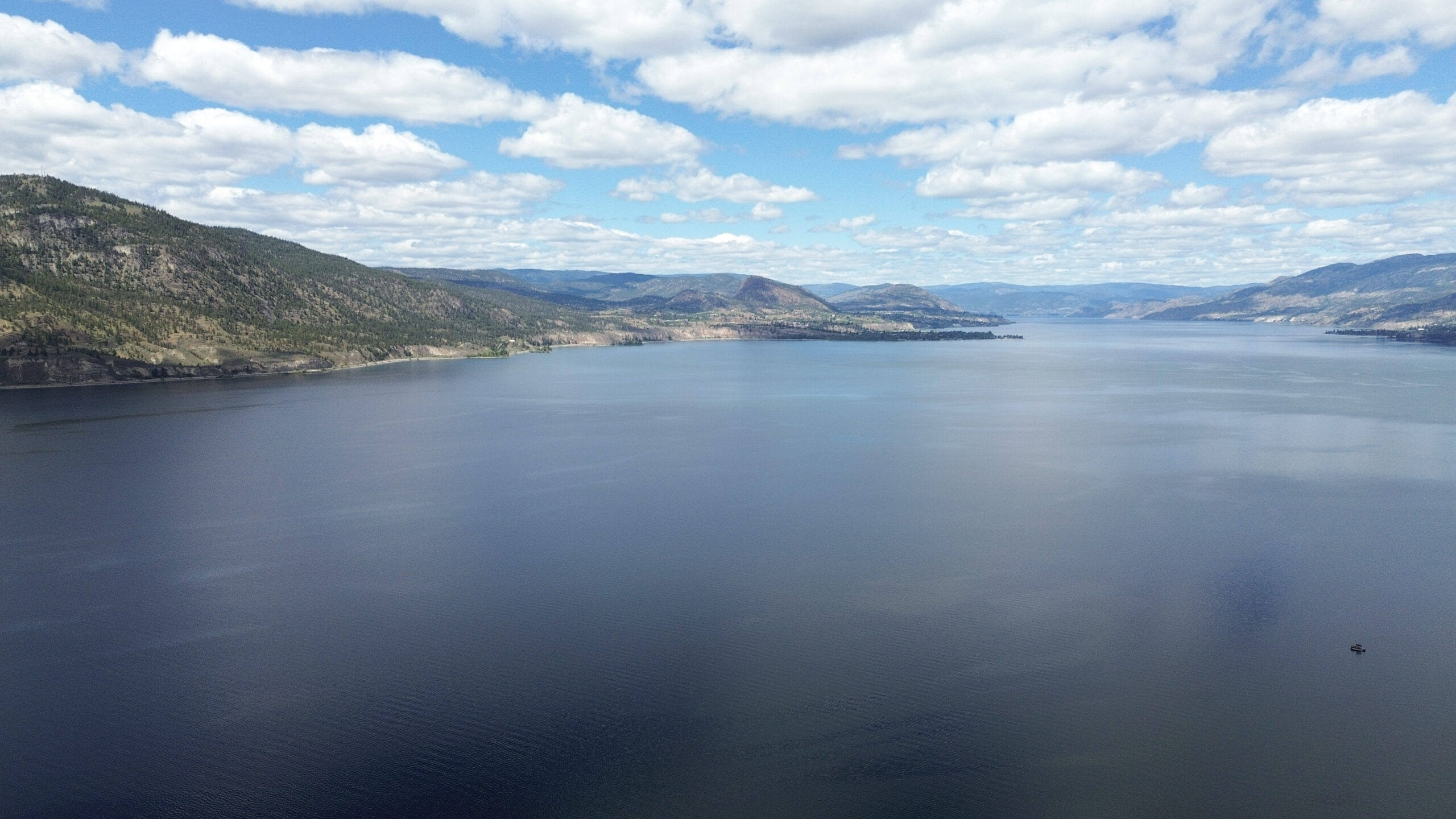
So the grandfather took her onto the canoe. They went out past Saysutshun and he left her on the island that is called Welhqi:um. He went back home and the grandmother kept asking where he took their granddaughter, but the grandfather wouldn’t tell her.

The grandmother became upset, and when he finally told her, the grandmother got onto her canoe and went up to Welhqi:um. She saw her granddaughter and told her to come down to the canoe. But the granddaughter’s big tummy was gone and the island was covered in snakes. The granddaughter couldn’t get past them.
Since she couldn’t reach her granddaughter, the grandmother rushed home and told grandfather about what had happened.
Grandfather came up with a plan. He told all the men in the village to go home and get their knives — they were going to save granddaughter. All the men got into their canoes and went to Welhqi:um and jumped out their canoes and began to cut the snakes.
There were so many snakes that the men couldn’t keep up, so grandfather told them to build a fire on the island and to tell granddaughter to jump over. So they did, and she jumped over.
Granddaughter was OK, but to this day, if anyone ever goes to Welhqi:um, the snakes look like they are cut in half and have no tails.
Our Snuneymuxw First Nations had once fished for blue backs, lingcod and even seal back in the day on Welhqi:um — but once it became Snake Island our people could no longer fish there, for anything caught near the island is bound to have snakes in its tummy.
Author
We live in a media ecosystem that thrives on misinformation. Big Tech and AI companies are consuming the work of real human beings and Canadian news has been banned on Facebook and Instagram.
And yet, I have hope for journalism because of the work we’re doing at IndigiNews.
At IndigiNews, we embody tâpwêwin — the Cree value of integrity and responsibility in truth-telling. We are committed to our independent, Indigenous-led newsroom rooted in community, accountability, and relationality. We believe storytelling is a sacred fire that connects our pasts, presents, and futures through the storytellers in our Storytelling Lodge. IndigiNews creates space for Indigenous journalists, storytellers, Knowledge Keepers, and communities to gather, learn, and share stories that matter.
As a registered charity, we are building a fire that allows our work not just to ignite but to thrive. Rather than relying on advertising or corporate acquisition, IndigiNews is sustained by people like you who believe Indigenous stories are important for the future of our communities.
Your support is making a real difference.
Our community of supporters, our Firekeepers, make it possible to grow our newsroom, publish award-winning journalism, train emerging Indigenous journalists through initiatives like the ReFocus Photojournalism Fellowship, and publish trustworthy stories that serve our communities across the country. Every story we publish helps fill in gaps left by mainstream media and ensures Indigenous perspectives are represented with care, accuracy and respect.
But there is still more work to do.
As the media landscape becomes more and more uncertain, community support is as necessary and essential as it’s ever been. Every new Firekeeper helps protect the independence of our newsroom and strengthens journalism that is accountable to our many and varied communities over corporations.
That’s why we’re inviting you to become a Firekeeper.
Firekeepers tend to and protect the sacred fire. Your monthly contributions directly support IndigiNews’s Storytelling Lodge, helps sustain our independent, Indigenous-led newsroom, and ensures future generations of Indigenous storytellers have the resources they need to do the work.
As a registered Canadian charity, all eligible donations receive a charitable tax receipt.
If you believe Indigenous stories matter, if you value independent journalism, and if you want to help build a strong future for Indigenous media, we invite you to join our circle of Firekeepers today.
Together, we can keep the fire burning.
— Eden Fineday, Publisher, IndigiNews
Support us nowLatest Stories
-
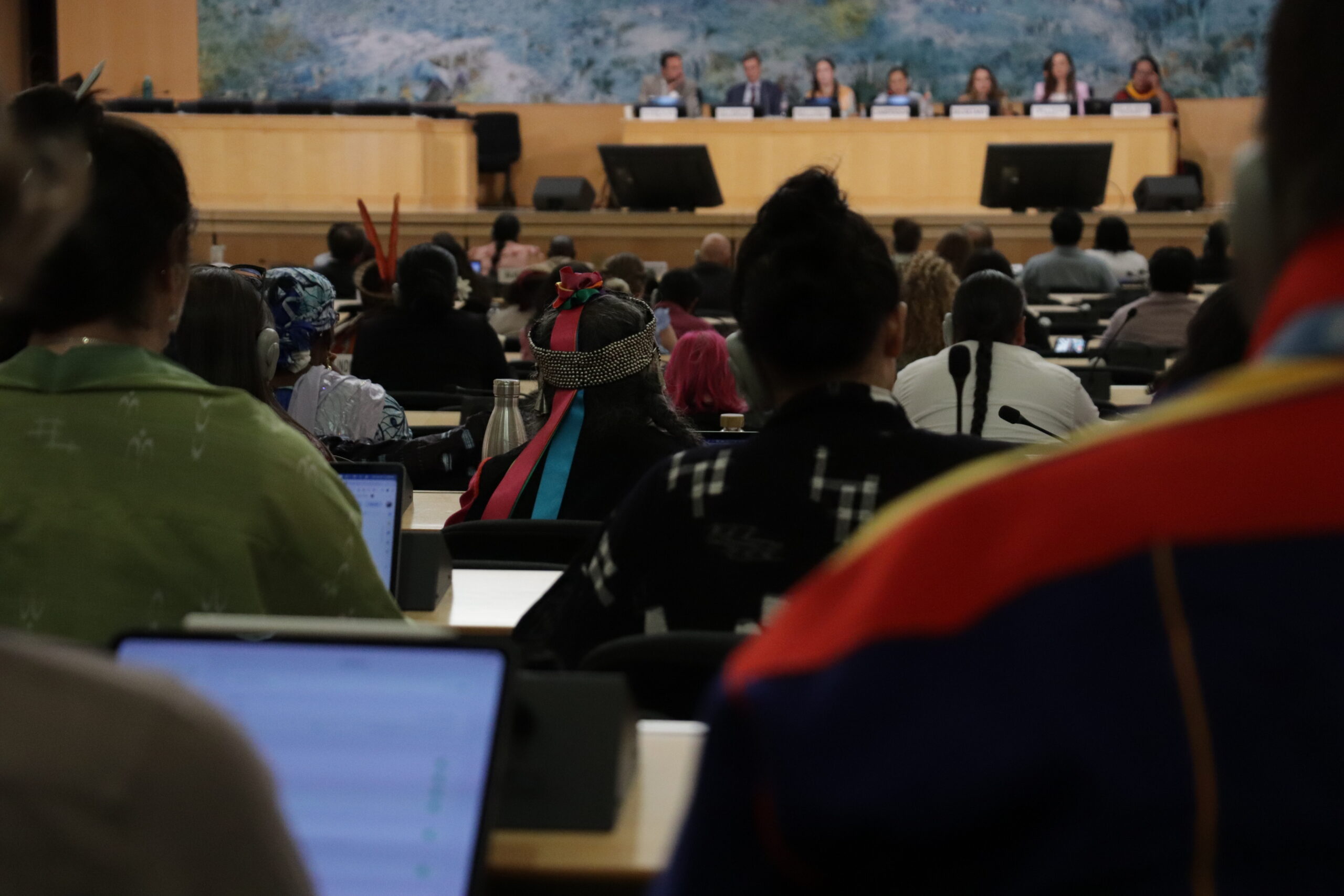
Indigenous leaders give the UN a roadmap for protecting their peoples
Amidst prayers and vows of solidarity, UN Expert Mechanism on the Rights of Indigenous Peoples ends annual meetings with demands for ‘action we’re not seeing globally’
-
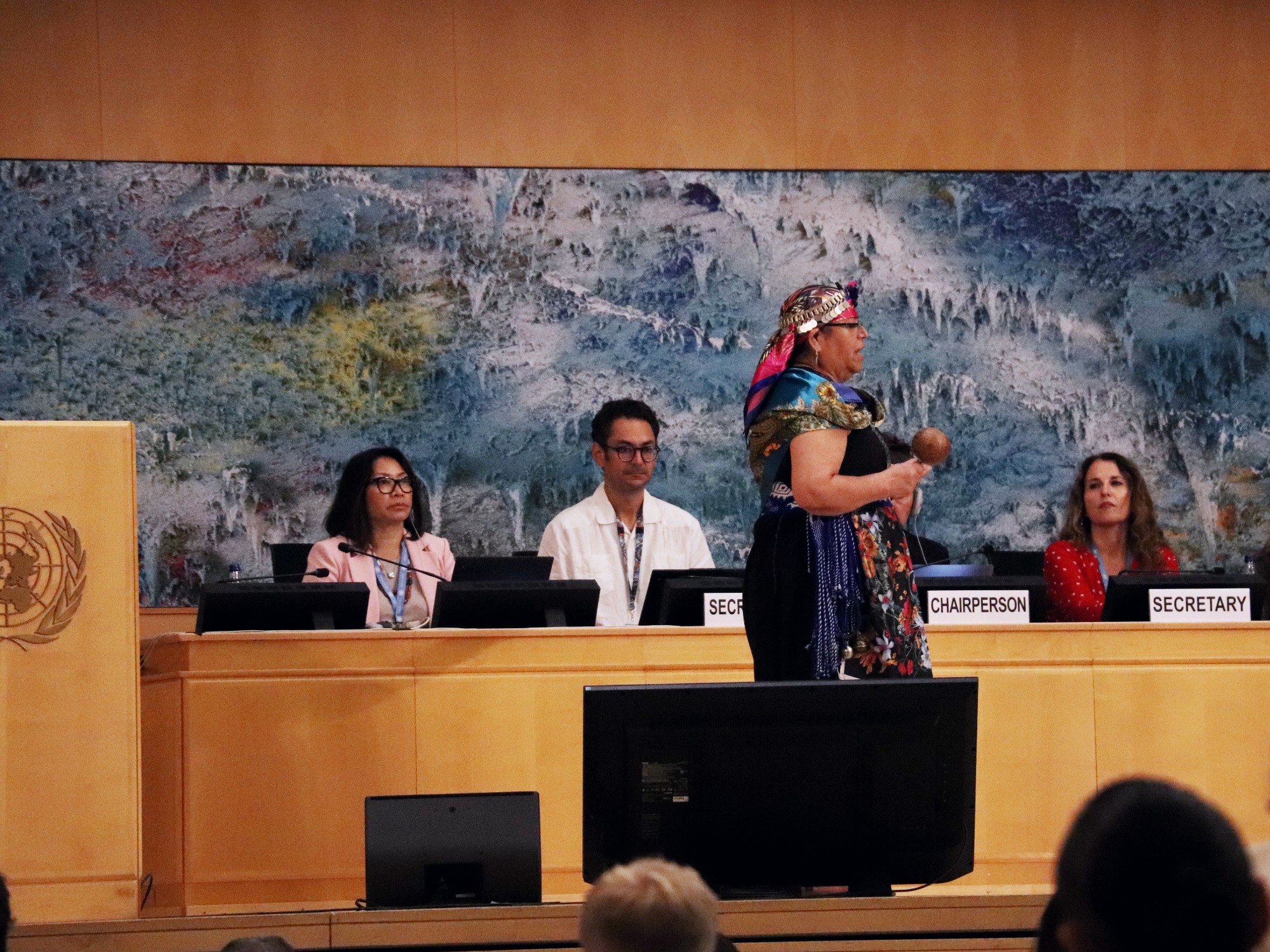
Indigenous people demand more say at the UN, as new crises hit their homelands
Indigenous nations live ‘on the frontlines’ of climate, conflict and new tech. But their voices remain sidelined in the global halls of power.