Indigenous and Western forest education find harmony at the Wildwood ecoforest
Educators at the Wildwood ecoforest have partnered with Indigenous Knowledge Keepers in an effort to blend Indigenous teachings with Western science.
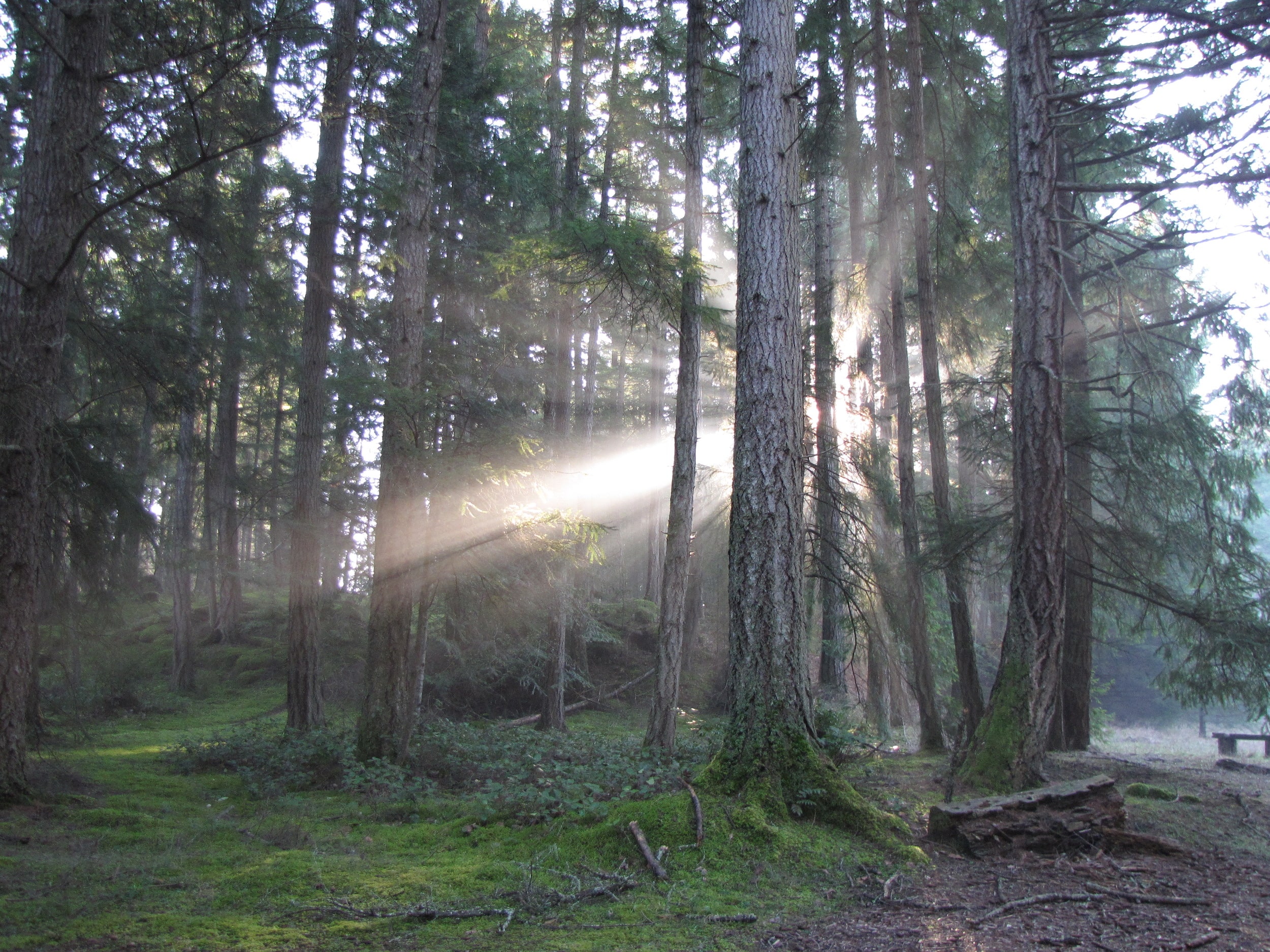
What happens when you bring together Indigenous wisdom and Western science from the forest? Maybe, something like magic. That’s what educators are learning at the Wildwood ecoforest, on Stz’uminus and Snuneymuxw territory.
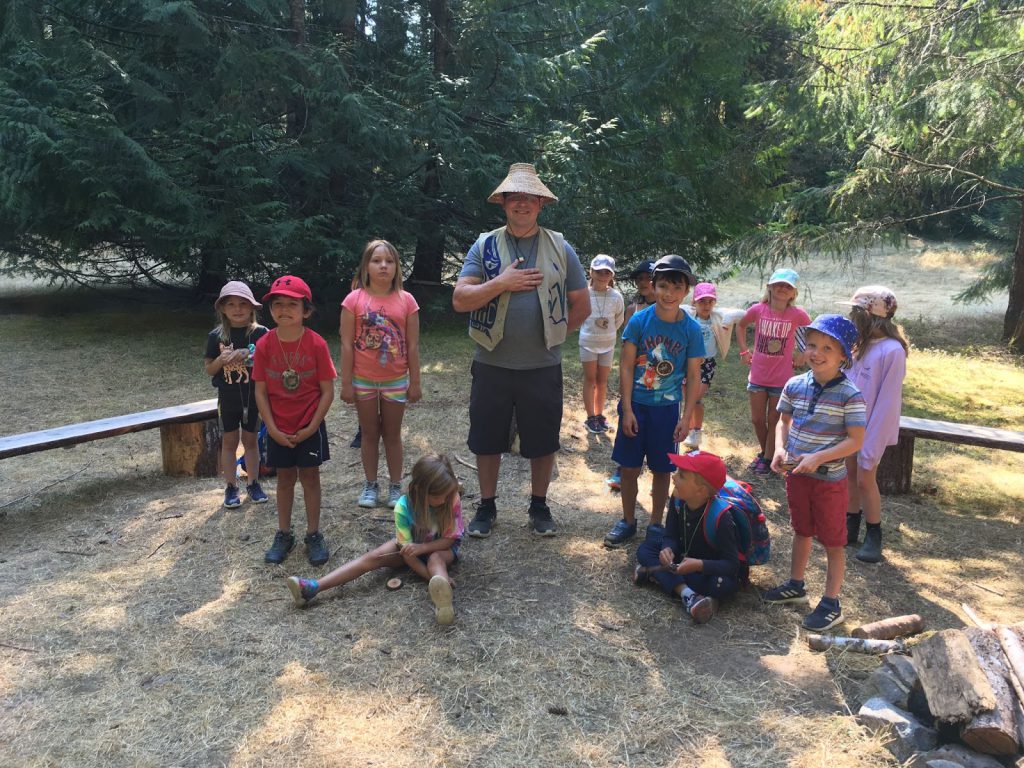
Beau Wagner is an artist of mixed Indigenous and settler heritage, trained as a Coast Salish carver by a Stz’uminus Master. For the past years, he has offered an educational program called Cedar and Me, which enlivens the stories, cultural significance and uses of the cedar tree.
Bringing that program to Wildwood and collaborating with Western-trained educators there brought new depth to the teachings, Wagner says. Wildwood is a 77-acre forest that has been selectively harvested since 1945 with the goal of respecting the needs of plants and animals and preserving the health of the ecosystem.
The Ecoforestry Institute Society (EIS) is the trustee of the Wildwood ecoforest. The society runs educational activities that teach the skills needed to understand and take care of the forest, including programs for school groups. In the last year or so, educators there have partnered with Indigenous Knowledge Keepers in an effort to blend Indigenous teachings with Western science.
Wagner says partnering with educators with different backgrounds and perspectives makes a big difference. When teaching culture to children in other settings, “they have a hard time relating to it,” he says. But at Wildwood, when the Indigenous knowledge is taught next to the Western knowledge in unison, “the kids really absorb what we’re talking about.”
“It really is walking in two worlds because [the education staff at EIS] have just a vast knowledge of the forest and the names and what to harvest, and all this knowledge is just profound. And so to be able to teach culture in that kind of a setting has so much meaning to it.”
Towards decolonized forest education
Collaborating with the Knowledge Keepers has been a learning journey for everyone involved, says Pam Murray, a naturalist and educator at Wildwood. The idea came about through conversations with Stephanie Johnson, one of the board members with the Ecoforestry Institute Society. Johnson then helped find Knowledge Keepers to bring into EIS’s programs.
The Knowledge Keepers work with EIS staff to blend their teachings together, Murray says. “It’s important to show the kids and the teachers who attend that both worldviews are just as valid and important as each other.”
The result has been transformative, Murray says. Now, the educational programs at Wildwood ecoforest are infused with Indigenous wisdom, even when the Knowledge Keepers aren’t there.
“I’ve been learning some Hul’q’umi’num, which is super cool — learning some of the names for some of the plants and some other words. I’m somebody who was always nervous learning language. And so being able to learn little bits of it, and being given permission to use it, has been really kind of cool.”
Murray says she’s learning how much is left out of Western science and nature curriculums.
“I’m a settler being given an opportunity to learn a bunch of stuff that Indigenous people have been denied the chance to learn. And so I see the enormous privilege of that and I feel a responsibility that comes with it. And I’m just really incredibly grateful to get to do this.”
For Murray, part of the goal is, “if I’m going to teach about nature, to be able to do that in a way that is understanding and respectful of the culture that that nature is connected to.”
She adds, “I need to understand that a cedar tree is not just a tree but a sacred being.”
It’s all connected
“My teachings are that cedar is full of magic from the stars. It’s connected to all living things,” says Wagner. “It’s the foundation of our Coast Salish culture, used for carving traditional tools, mats, rattles, flappers, canoes. It’s a very powerful, very powerful tree.”
Whether you’re talking about cedar from an Indigenous or a Western perspective, it’s all about relationships. It’s a tree that lives in community, in kinship with other plants and animals.
“The information about what certain plants need, or the nature of certain plants — the Western science and the Indigenous knowledge point to the same thing,” says Murray. “It’s cool to see that and understand that.”
Wagner agrees. The knowledge that EIS’s Western-trained educators find in textbooks is just the same as what Wagner learned from his teacher, in the years they spent walking through the woods, he says.
“He had explained the plants and the water and the trees, and that connection with the animals and how the animals are sharing lifeforce with the trees, and those trees are sharing the lifeforce with the plants — They have their scientific names for things, but it’s the same. The same thing. It’s so cool. I love it,” Wagner says. “If I could just do that full time, that would be awesome.”
Author
We live in a media ecosystem that thrives on misinformation. Big Tech and AI companies are consuming the work of real human beings and Canadian news has been banned on Facebook and Instagram.
And yet, I have hope for journalism because of the work we’re doing at IndigiNews.
At IndigiNews, we embody tâpwêwin — the Cree value of integrity and responsibility in truth-telling. We are committed to our independent, Indigenous-led newsroom rooted in community, accountability, and relationality. We believe storytelling is a sacred fire that connects our pasts, presents, and futures through the storytellers in our Storytelling Lodge. IndigiNews creates space for Indigenous journalists, storytellers, Knowledge Keepers, and communities to gather, learn, and share stories that matter.
As a registered charity, we are building a fire that allows our work not just to ignite but to thrive. Rather than relying on advertising or corporate acquisition, IndigiNews is sustained by people like you who believe Indigenous stories are important for the future of our communities.
Your support is making a real difference.
Our community of supporters, our Firekeepers, make it possible to grow our newsroom, publish award-winning journalism, train emerging Indigenous journalists through initiatives like the ReFocus Photojournalism Fellowship, and publish trustworthy stories that serve our communities across the country. Every story we publish helps fill in gaps left by mainstream media and ensures Indigenous perspectives are represented with care, accuracy and respect.
But there is still more work to do.
As the media landscape becomes more and more uncertain, community support is as necessary and essential as it’s ever been. Every new Firekeeper helps protect the independence of our newsroom and strengthens journalism that is accountable to our many and varied communities over corporations.
That’s why we’re inviting you to become a Firekeeper.
Firekeepers tend to and protect the sacred fire. Your monthly contributions directly support IndigiNews’s Storytelling Lodge, helps sustain our independent, Indigenous-led newsroom, and ensures future generations of Indigenous storytellers have the resources they need to do the work.
As a registered Canadian charity, all eligible donations receive a charitable tax receipt.
If you believe Indigenous stories matter, if you value independent journalism, and if you want to help build a strong future for Indigenous media, we invite you to join our circle of Firekeepers today.
Together, we can keep the fire burning.
— Eden Fineday, Publisher, IndigiNews
Support us nowLatest Stories
-
Indigenous leaders give the UN a roadmap for protecting their peoples
Amidst prayers and vows of solidarity, UN Expert Mechanism on the Rights of Indigenous Peoples ends annual meetings with demands for ‘action we’re not seeing globally’
-
Indigenous people demand more say at the UN, as new crises hit their homelands
Indigenous nations live ‘on the frontlines’ of climate, conflict and new tech. But their voices remain sidelined in the global halls of power.