Indigenous youth launch podcast tackling COVID myths and exploring current events
In Friendship is produced by Ally Reeder, Sherwin Strong and Kaleb Gambler out of the Wachiay Friendship Centre.
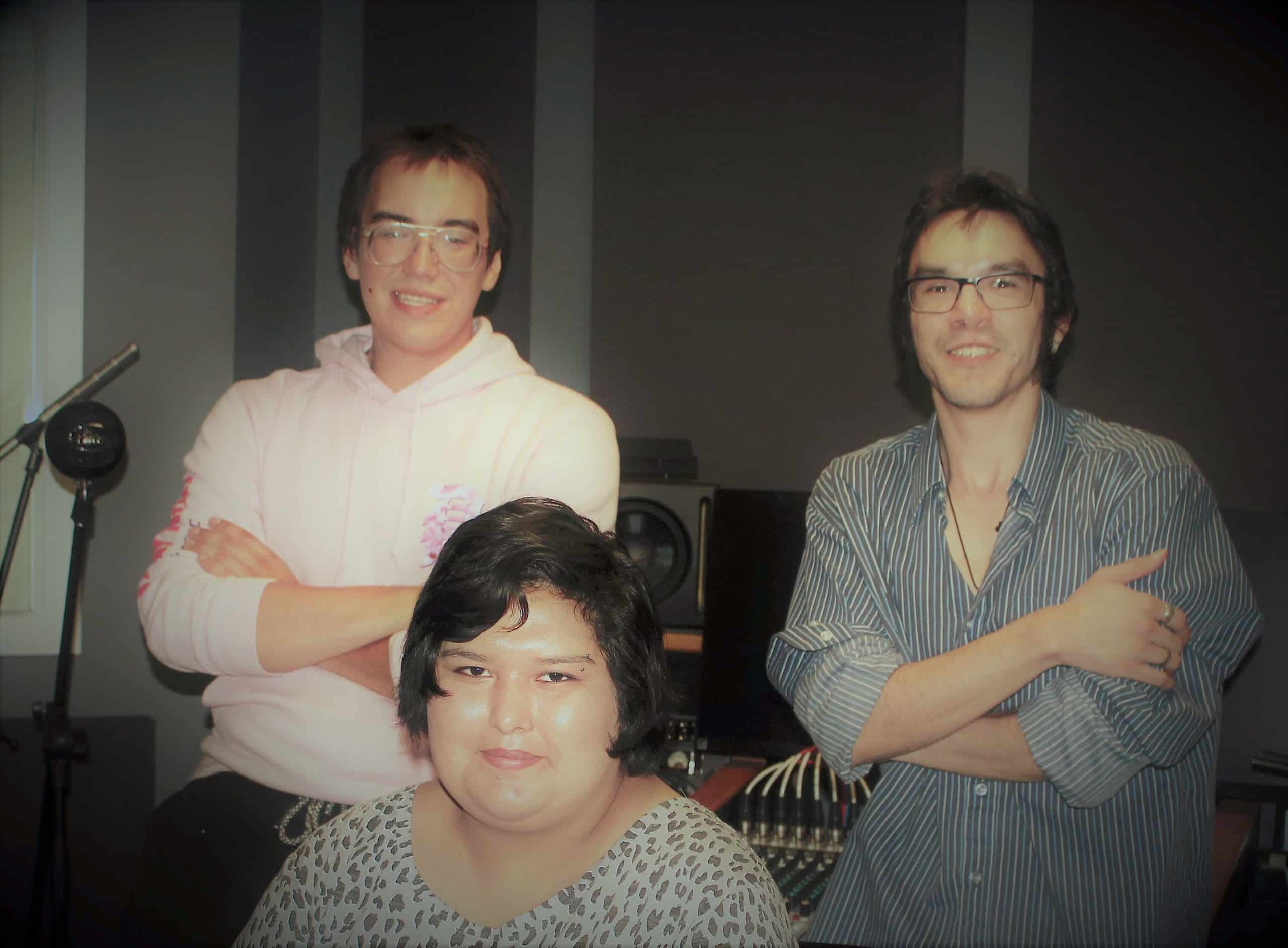
A new podcast by three Indigenous students tackles COVID-19 myths, explores current events and shares information about friendship centres — according to host Sherwin Strong.
Launched in June, the In Friendship podcast is produced by Strong, Kaleb Gambler and Ally Reeder as part of the Wachiay Aboriginal Multimedia (WaMM) program at the Wachiay Friendship Centre in Courtenay, B.C.
“Podcasts are one of the hottest platforms,” says Strong, who hosts the first two segments of the podcast.
Strong is Carrier and Nuu-chah-nulth, and he says when he first joined the group in June, he had been on a path to exploring his own Indigenous identity.
Through podcasts, “we can connect with events or just monumental ideas around Indigenous life and wellbeing and their history,” he says.
“That was the primary focus that drew me.”
‘Our voices are heard’
Through the podcast, these youth say they are learning new skills and having a good time in the process.
“We’ve been learning [how] to connect with so many different variations of life in the medical field,” Strong says.
He says he’s also learning about Indigenous Peoples’ “resiliency and ability to just be there for one another.”
Gambler hosts In Friendship’s third segment. He’s Cree/Métis from the plains of Alberta.
As a self-described “junior journalist,” he says he saw the podcast as a “real opportunity … to go out to the field and get some of the skills … like being able to talk to people [and] have a formal interview.”
Reeder, the third team member, works on the production side.
“I’m really loving working with these two and to get my voice out there,” she says. “And focusing on the good news story has really helped me bring my own mental health up.”
Reeder is Kwaquitl from Alert Bay, and she says she has previous experience in videography, photography and audio production.
Prior to joining the group she says she was doing production work in Victoria B.C., and it helped her realize she had a knack for telling stories.
“We [get to] do good news stories across Canada about COVID-19,” Reeder says, “It is really fun!”
The trio just released their fourth episode, “Staying Safe.” In it, Gambler discusses new restrictions and mandates that will be implemented in the coming weeks for British Columbians. He also interviews Canadian physician Noni MacDonald about COVID-19 awareness and safety concerns.
“I sit on the Strategic Advisory Group of Experts on Immunization for the World Health Organization and that is the 15 people who provide advice to WHO on how to use vaccines best,” says MacDonald in her interview.
“I think that getting the right COVID message out is critically important if we are really going to make a difference,” she says. “Having a local friendship centre organization like yours speak out on this topic and showcase it is incredibly important.”
‘We have had a lot of support’
The National Association of Friendship Centres is one of the WaMM program sponsors, according to Strong.
“They reached out to us to formulate the idea for a show. They came up with the title itself, In Friendship, with that perception of encompassing all walks of life, different ages, different backgrounds, different journeys.”
To ensure interviews are done in a good way, the group follows their own protocol and receives guidance from their mentor, Rob Crowston, the Friendship Centre’s WAMM program director.
“We sit down and we’ll talk it out … how are we going to approach this … who we want to interview, so we make sure that we feel comfortable with our decisions as a team,” says Gambler.
“Rob has [been a] tremendous help to us. He’s knowledgeable in this field. We wouldn’t be here without him.”
Crowston is one of the co-founders of the WaMM program. He says he’s been teaching youth how to create multimedia using professional gear for the past six years.
“The three kids in the internship podcast are wonderful. They run the show themselves, about 12 hours a week or so. I’m used as a foil — this is a student-driven project,” Crowston says.
“It is spectacularly positive and a wonderful situation for learning, and it’s neat for confidence and a certain self-gratification in new skillsets being undertaken and all the rest of it. It’s a very positive kind of push.”
The group says their long-term goal is for their podcast to become an independent platform and they hope to inspire other Indigenous youth to join the WaMM program.
“We’re hoping to get other youth to come in and try to do the podcast with us and show them the way,” says Gambler.
Author
We live in a media ecosystem that thrives on misinformation. Big Tech and AI companies are consuming the work of real human beings and Canadian news has been banned on Facebook and Instagram.
And yet, I have hope for journalism because of the work we’re doing at IndigiNews.
At IndigiNews, we embody tâpwêwin — the Cree value of integrity and responsibility in truth-telling. We are committed to our independent, Indigenous-led newsroom rooted in community, accountability, and relationality. We believe storytelling is a sacred fire that connects our pasts, presents, and futures through the storytellers in our Storytelling Lodge. IndigiNews creates space for Indigenous journalists, storytellers, Knowledge Keepers, and communities to gather, learn, and share stories that matter.
As a registered charity, we are building a fire that allows our work not just to ignite but to thrive. Rather than relying on advertising or corporate acquisition, IndigiNews is sustained by people like you who believe Indigenous stories are important for the future of our communities.
Your support is making a real difference.
Our community of supporters, our Firekeepers, make it possible to grow our newsroom, publish award-winning journalism, train emerging Indigenous journalists through initiatives like the ReFocus Photojournalism Fellowship, and publish trustworthy stories that serve our communities across the country. Every story we publish helps fill in gaps left by mainstream media and ensures Indigenous perspectives are represented with care, accuracy and respect.
But there is still more work to do.
As the media landscape becomes more and more uncertain, community support is as necessary and essential as it’s ever been. Every new Firekeeper helps protect the independence of our newsroom and strengthens journalism that is accountable to our many and varied communities over corporations.
That’s why we’re inviting you to become a Firekeeper.
Firekeepers tend to and protect the sacred fire. Your monthly contributions directly support IndigiNews’s Storytelling Lodge, helps sustain our independent, Indigenous-led newsroom, and ensures future generations of Indigenous storytellers have the resources they need to do the work.
As a registered Canadian charity, all eligible donations receive a charitable tax receipt.
If you believe Indigenous stories matter, if you value independent journalism, and if you want to help build a strong future for Indigenous media, we invite you to join our circle of Firekeepers today.
Together, we can keep the fire burning.
— Eden Fineday, Publisher, IndigiNews
Support us nowLatest Stories
-
Beloved on the powwow circuit, young boy’s connection to the drum inspires
Now four, Waseskwan Redcrow was dancing ‘before he could even fully walk’ — his family says participating in powwows has brought them joy and belonging
-
Indigenous leaders give the UN a roadmap for protecting their peoples
Amidst prayers and vows of solidarity, UN Expert Mechanism on the Rights of Indigenous Peoples ends annual meetings with demands for ‘action we’re not seeing globally’