Kwakwa̱ka̱’wakw designs colour the streets of ‘Victoria’ with city’s latest banner project
With five new contemporary designs, Lou-ann Neel wanted to show appreciation for tiny beings such as ladybugs, dragonflies and bumblebees
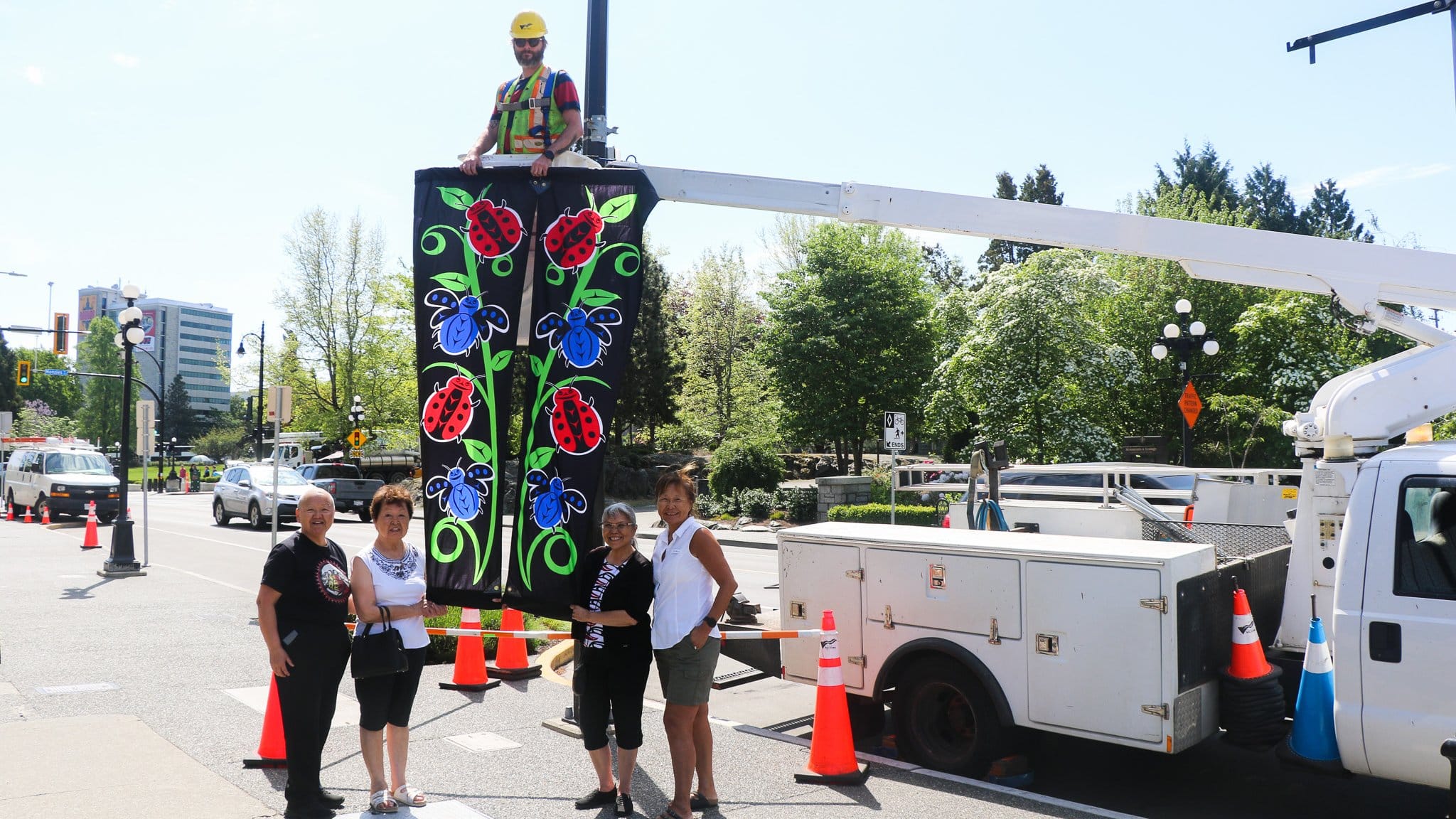

Colourful Kwakwaka’wakw designs featuring plants, hummingbirds and insects are adorning the streets of “Victoria,” as 400 banners with work by artist Lou-ann Neel are installed around the city.
Neel has created five new pieces of art as part of the city’s summer banner program, which has been running since 1970 and commissions new banner designs for the downtown core and James Bay every two years.
Neel descends from the Mamalillikulla, Da’nax’daxw, Ma’amtagila, ‘Namgis and Kwagiulth tribes of the Kwakwaka’wakw (Kwak’wala-speaking people) and is originally from Alert Bay.
Spending so much time in the “Garden City” where she now resides, Neel wanted to show appreciation for the natural plants and animals that make up the local ecosystems.
The designs are also contemporary and whimsical, with smiling faces on the insects happily going about their work.
“People always look at Native art, and it’s very immersed in tradition and comes from traditional stories,” Neel said in an interview with IndigiNews.
“We are a living culture, and we create fun things too.”
The animals featured on the five banners are ladybugs, bumblebees, hummingbirds, dragonflies and a “crystal garden” design which brings various creatures together.
In a statement for each design, Neel shows appreciation and gratitude for each of these beings.
“I wanted to acknowledge dragonflies for the great work they do feeding on mosquitoes and gnats — something gardeners appreciate a great deal,” she says in the artist statement for her dragonfly banner.
“Their beautiful array of colour complements any floral environment. In many Indigenous cultures, the dragonfly is often recognized as a symbol of positive change, as it contributes to positive growth and change each and every day.”
Now that the banners are complete, Neel said she is looking forward to focusing more on carving as a medium, something that’s entrenched in the history of her family’s artistic process.
Carving holds a special place for Neel as she wishes to challenge the narrative that carving was something only men did. In her travels along the coast, Neel has confirmed that women carved in many communities along the coast.
“Amongst our people, we know that women carved,” she said.
Neel believes that carving is important to her not just because of family tradition, but also to serve as a positive role model for upcoming generations and to challenge patriarchal narratives.
“I don’t want young people to have that kind of messaging,” she said. “I want them to have encouraging messaging.”
Living culture, not artifacts
Along with encouraging the next generation of artists, Neel is passionate about advancing the narrative for Indigenous art, and bringing art traditions into the present moment.
As a repatriation specialist at the Royal BC Museum, she said it’s important to trouble the term “artifacts” — which implies that the items are central to the past rather than being utilized in ceremony and culture to this day.
“I got really concerned about that, because it was part of erasure. We have already been so erased in terms of our roles as artists,” she said.
Neel said many museums and other colonial institutions are hesitant to repatriate items for various reasons, mostly because they represent valuable assets and a financial bottom line.
“We’re talking about truth and reconciliation. To me repatriation [is] reconciliation in motion”
Pressure in recent times has led to many beginning the complicated repatriation process, including the Vatican after Pope Francis recently spoke about the importance of returning stolen “artifacts.”
“I think that they’re starting to see that there’s a larger moral issue, but also a legal one,” Neel said. “If you don’t have the receipt, you shouldn’t be holding it”
Neel said there’s still a lot of exploitation of Indigenous artists, which is why she has been a vocal advocate for the United Nations Declaration on the Rights of Indigenous People (UNDRIP).
“I don’t know what it would take to get the political will to make the changes that are necessary. There is no shortage of really sharp people that could make this happen if the politicians would just line up behind it,” she said.
One example of what she is hoping to see would be the creation of Indigenous maker spaces in Indigenous communities that would serve as a space for artists to collaborate and create — not necessarily just for commercial artists, but for those who just want to create and continue traditions.
“The last time we came close to having the luxury of that kind of support and that kind of space was … between the ‘70s and ‘80s,” Neel said.
“When we used to have the Indian Arts and Crafts societies, every province in Canada had one and then the funding got yanked out from everyone in the mid ‘80s.”
As Neel nears 60, her encouraging message to young Indigenous artists is to keep learning, as she is still personally excited about all the things she has yet to learn.
“The more I learn, the more I can express, and the more I can manifest my art. There is nothing more exciting than that.”
Author
We live in a media ecosystem that thrives on misinformation. Big Tech and AI companies are consuming the work of real human beings and Canadian news has been banned on Facebook and Instagram.
And yet, I have hope for journalism because of the work we’re doing at IndigiNews.
At IndigiNews, we embody tâpwêwin — the Cree value of integrity and responsibility in truth-telling. We are committed to our independent, Indigenous-led newsroom rooted in community, accountability, and relationality. We believe storytelling is a sacred fire that connects our pasts, presents, and futures through the storytellers in our Storytelling Lodge. IndigiNews creates space for Indigenous journalists, storytellers, Knowledge Keepers, and communities to gather, learn, and share stories that matter.
As a registered charity, we are building a fire that allows our work not just to ignite but to thrive. Rather than relying on advertising or corporate acquisition, IndigiNews is sustained by people like you who believe Indigenous stories are important for the future of our communities.
Your support is making a real difference.
Our community of supporters, our Firekeepers, make it possible to grow our newsroom, publish award-winning journalism, train emerging Indigenous journalists through initiatives like the ReFocus Photojournalism Fellowship, and publish trustworthy stories that serve our communities across the country. Every story we publish helps fill in gaps left by mainstream media and ensures Indigenous perspectives are represented with care, accuracy and respect.
But there is still more work to do.
As the media landscape becomes more and more uncertain, community support is as necessary and essential as it’s ever been. Every new Firekeeper helps protect the independence of our newsroom and strengthens journalism that is accountable to our many and varied communities over corporations.
That’s why we’re inviting you to become a Firekeeper.
Firekeepers tend to and protect the sacred fire. Your monthly contributions directly support IndigiNews’s Storytelling Lodge, helps sustain our independent, Indigenous-led newsroom, and ensures future generations of Indigenous storytellers have the resources they need to do the work.
As a registered Canadian charity, all eligible donations receive a charitable tax receipt.
If you believe Indigenous stories matter, if you value independent journalism, and if you want to help build a strong future for Indigenous media, we invite you to join our circle of Firekeepers today.
Together, we can keep the fire burning.
— Eden Fineday, Publisher, IndigiNews
Support us nowLatest Stories
-
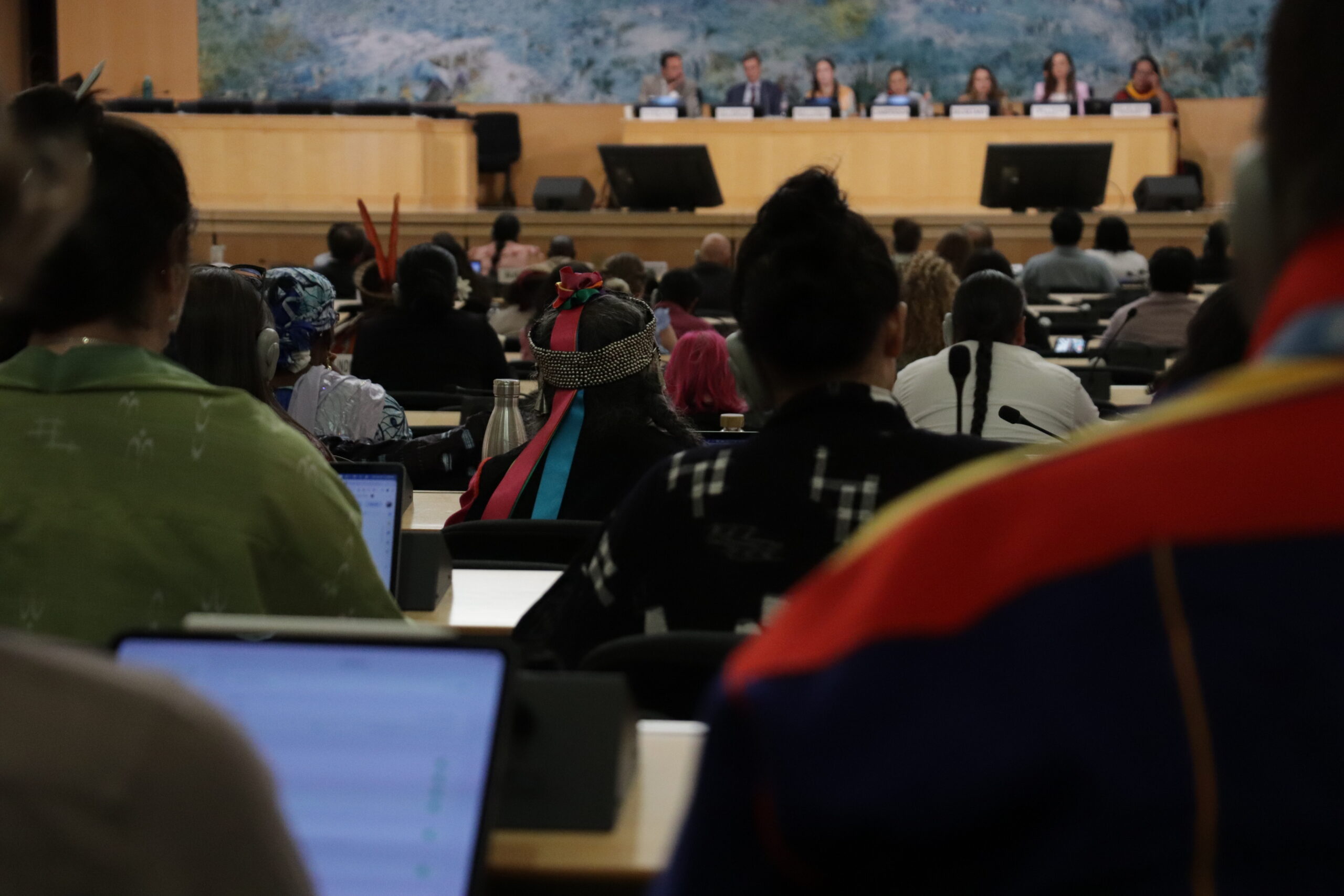
Indigenous leaders give the UN a roadmap for protecting their peoples
Amidst prayers and vows of solidarity, UN Expert Mechanism on the Rights of Indigenous Peoples ends annual meetings with demands for ‘action we’re not seeing globally’
-
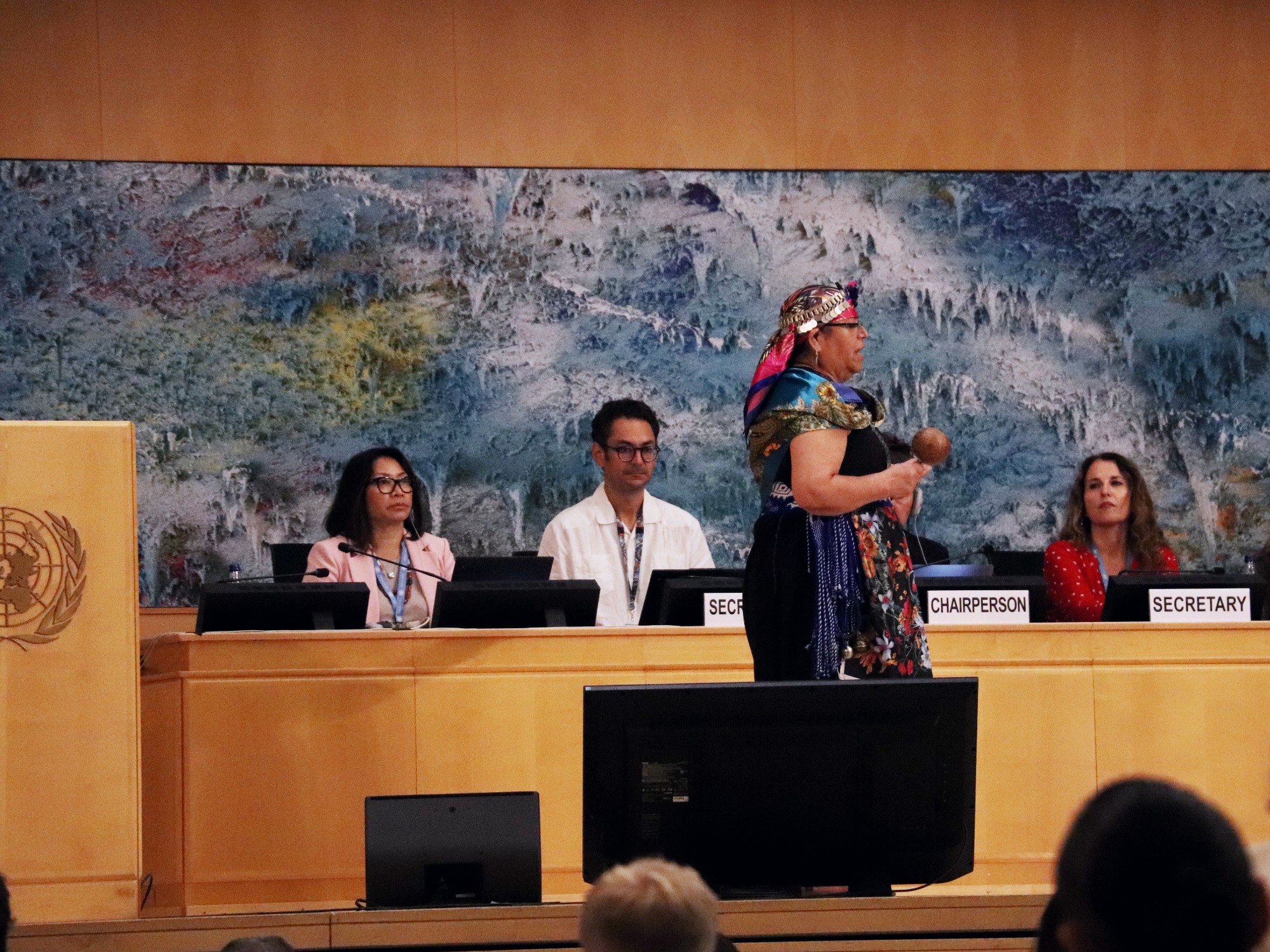
Indigenous people demand more say at the UN, as new crises hit their homelands
Indigenous nations live ‘on the frontlines’ of climate, conflict and new tech. But their voices remain sidelined in the global halls of power.