The resurgence of Indigenous canoes
‘The Sacred Journey exhibit is a physical example of Indigenous Peoples ability to adapt, adopt, and transform,’ says λáλíyasila Frank Brown of a new traveling exhibit just opened at the Campbell River museum.

Sacred Journey, a newly opened exhibit, showcases the resurgence of Indigenous canoe cultures and shares stories of Indigenous Peoples’ ability to adapt, adopt, and transform over time, according to one of the installation’s co-curators.
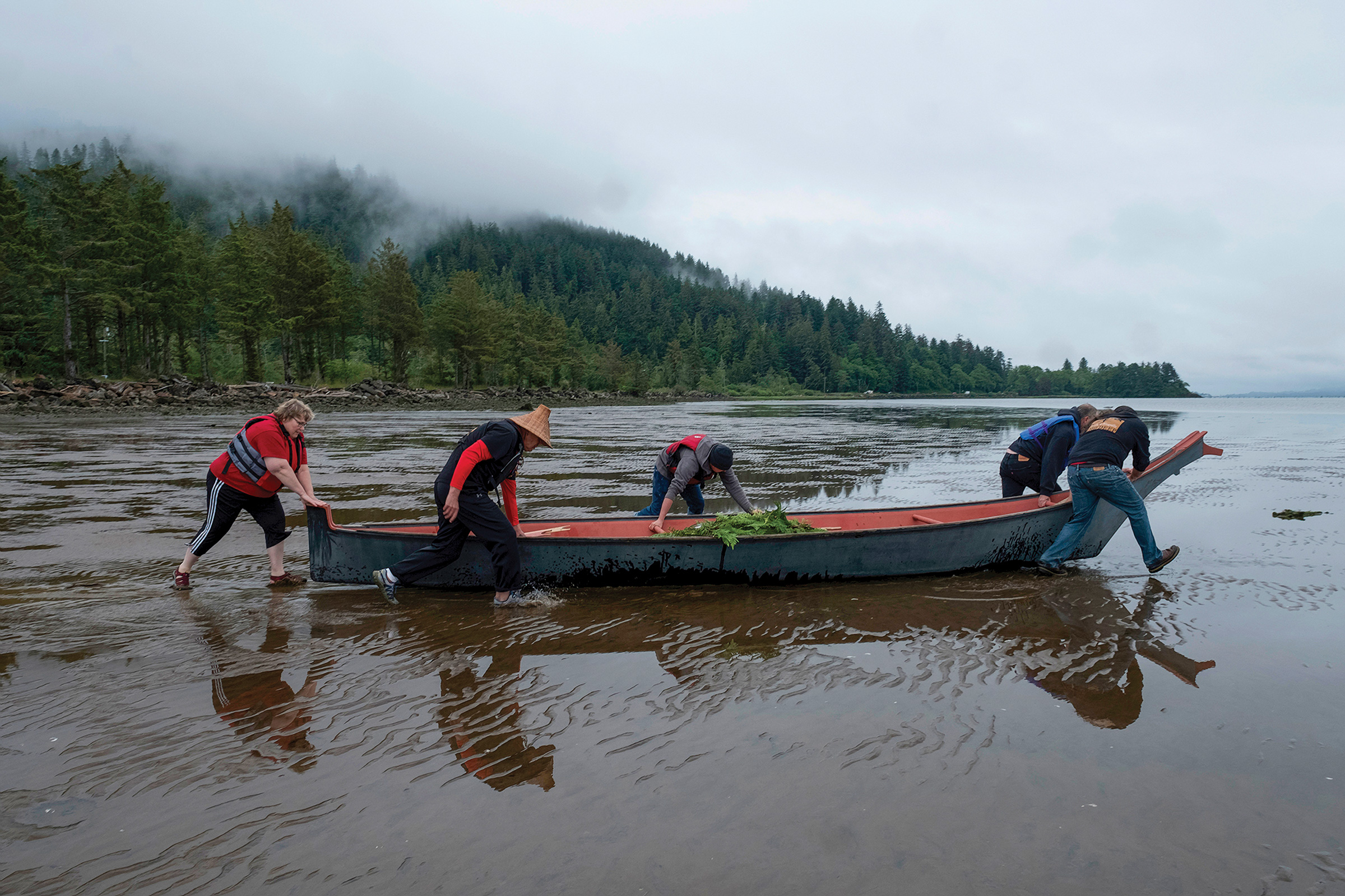
λáλíyasila Frank Brown describes the responsibility that comes with welcoming canoes from many nations to Haíłzaqv (Heiltsuk) shores during annual Tribal Canoe Journeys.
“How we travel and how we participate matters, doing it in the right spirit, for both hosts and guests,” λ.λ.yasila tells IndigiNews. “I’ve heard old people say, when you’re traveling, you’re not only representing yourself, you’re representing us, your family and your community, so you have to carry yourself accordingly.”
The hereditary chief of the Heiltsuk Nation played a key role in organizing the first canoe journey as a part of Expo 86, and the first Qatuwas — ‘people gathering together’ — in 1993, which then became an annual canoe journey which involves over 100 ocean-going canoes.
Λ.λ.yasila speaks about the vulnerability of the guest-host dynamic and how reciprocity is a key part of the celebrated canoe journey for Indigenous Peoples along the Pacific Northwest Coast.
The Sacred Journey exhibit aims to capture and share the spirit of Tribal Canoe Journeys, honour the history and resurgence of the Glwa (the ocean-going canoe), and showcase the revitalization of cultural canoe practices for coastal communities, λáλíyasila says .
‘We’re responsible for our own destiny’
Heiltsuk people have been occupying their remote (accessible today by boat or plane) maritime territory for more than ten thousand years — the ocean-going canoe an essential part of their lives and culture.
“Ultimately we’re responsible for our own destiny and the Tribal Canoe Journeys and the Sacred Journey traveling exhibition is a powerful metaphor and symbol of being able to continue to stay the course to stay alive — to hold on to the teachings that sustained us — long before the coming of the newcomers,” λáλíyasila says.
The exhibit will travel to 20 different venues over the next five years, starting with the Campbell River Museum.
The exhibit itself centres on a stylized canoe painted by KC Hall with the four Heiltsuk clan crests and surrounded by the pillars of a λiác̓i (bighouse). Four cedar paddles line the sides of the canoe and there are interpretive cedar panels around the perimeter of the space.
The exhibit involved collaboration from various Nations, including Liǧʷiɫdax̌ʷ, Homalco, Klahoose and Nuu-chah-nulth, and includes eight touch screens showcasing different canoe journey stories, λáλíyasila explains.
“The Sacred Journey exhibit immerses the audience into the world of Indigenous canoe culture of the Pacific Northwest Coast. Almost lost, the ocean-going canoe has seen a remarkable resurgence over the last three decades,” according to the museum’s website.
Told by leaders and participants of today’s canoe resurgence, for the first time, the Sacred Journey exhibit unveils this amazing story through the Indigenous framework of núyṃ́ (stories) expressed through metaphoric art, immersive audio, and extensive video displays, and interactive experiences.”
There has been a great deal of interest in the exhibit from other organizations, including the Royal BC Museum and Science World, and some larger museums in Ontario, according to Erika Anderson of the Campbell River Museum.
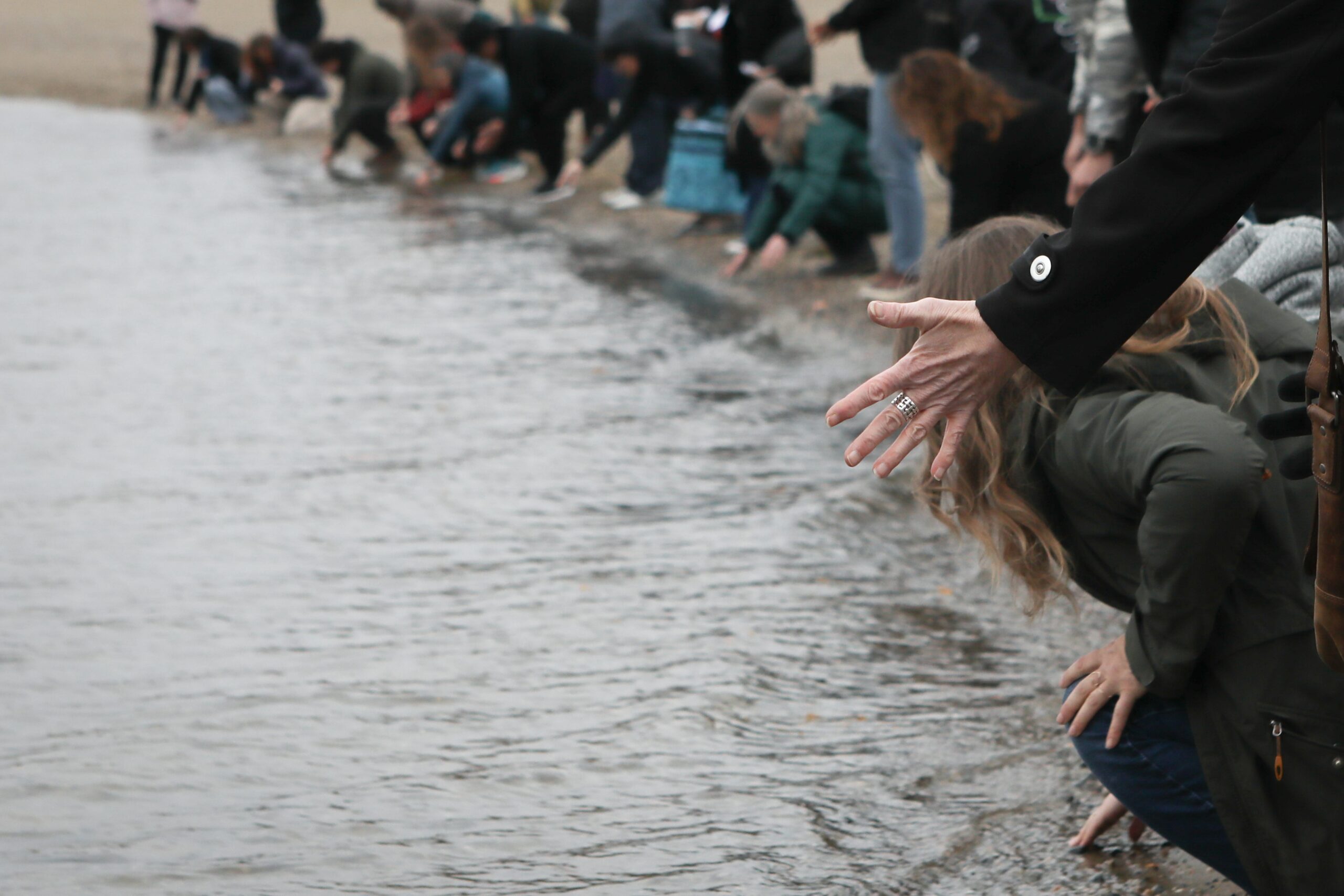
The exhibit opened on July 17, welcomed by the Wei Wai Kum Nation. Children, including λáλíyasila’s grandson, cut cedar bark at the opening, to represent the actions taking place today for future generations, λáλíyasila says.
“That’s who we’re holding up, our children, to support their strength and self-determination,” he says.
Photos by Odette Auger and (cedar bark cutting photo) Damien Gillis


Pulling together
Sacred Journey is a legacy project that has been in the works for the past seven years, since the 2014 Qatuwas Tribal Canoe Journey to Bella Bella, says λáλíyasila.
“The theme of the Qatuwas in 2014 was a celebration of the big houses, potlatches, canoes, and upholding our ancestral laws and connecting to nature,” λáλíyasila says. “Our laws come from our relationship to place, our source of power, and that was basically the inspiration behind this.”
λáλíyasila and his wife and co-executive producer of the project Kathy Brown reached out to “likeminded people” from up and down the whole Pacific coast who were willing to share their perspective about their canoe experience, he says.
“From Southeast Alaska down to Oregon and other places where Indigenous people come from,” λáλíyasila says. “It was a total collaboration, so many people have shared their stories, our artists did the design work on it, it was powerful when we all pulled together.”
λáλíyasila says it’s a crucial time for these stories to be shared in this fusion of Indigenous worldview and cutting edge technology.
“To tell our story at an important time, when we’ve been dealing with so much as Indigenous people, as First Nations people, and this speaks to the resiliency of our people, our societies, our laws and our teachings,” λáλíyasila says.
Even though we have been subjugated by the forces of colonization, we still stand strong and hold onto those teachings that basically there’s a forced simulation policy, but we’re able to retain that. And not only retain it, but adapt, adopt and move forward.”
The Sacred Journey exhibit is a physical example of Indigenous Peoples ability to adapt, adopt, and transform, he adds.
λáλíyasila speaks of the impacts of the ongoing pandemic, and the recent recoveries of children’s graves on the sites of former residential “schools.”
“Finding our missing children has weighed on the hearts, minds and the spirits of our people and emotionally, it’s been really difficult,” he says. “And so it’s very timely to bring forward this message of renewal and empowerment and gain self-determination.”
Author
We live in a media ecosystem that thrives on misinformation. Big Tech and AI companies are consuming the work of real human beings and Canadian news has been banned on Facebook and Instagram.
And yet, I have hope for journalism because of the work we’re doing at IndigiNews.
At IndigiNews, we embody tâpwêwin — the Cree value of integrity and responsibility in truth-telling. We are committed to our independent, Indigenous-led newsroom rooted in community, accountability, and relationality. We believe storytelling is a sacred fire that connects our pasts, presents, and futures through the storytellers in our Storytelling Lodge. IndigiNews creates space for Indigenous journalists, storytellers, Knowledge Keepers, and communities to gather, learn, and share stories that matter.
As a registered charity, we are building a fire that allows our work not just to ignite but to thrive. Rather than relying on advertising or corporate acquisition, IndigiNews is sustained by people like you who believe Indigenous stories are important for the future of our communities.
Your support is making a real difference.
Our community of supporters, our Firekeepers, make it possible to grow our newsroom, publish award-winning journalism, train emerging Indigenous journalists through initiatives like the ReFocus Photojournalism Fellowship, and publish trustworthy stories that serve our communities across the country. Every story we publish helps fill in gaps left by mainstream media and ensures Indigenous perspectives are represented with care, accuracy and respect.
But there is still more work to do.
As the media landscape becomes more and more uncertain, community support is as necessary and essential as it’s ever been. Every new Firekeeper helps protect the independence of our newsroom and strengthens journalism that is accountable to our many and varied communities over corporations.
That’s why we’re inviting you to become a Firekeeper.
Firekeepers tend to and protect the sacred fire. Your monthly contributions directly support IndigiNews’s Storytelling Lodge, helps sustain our independent, Indigenous-led newsroom, and ensures future generations of Indigenous storytellers have the resources they need to do the work.
As a registered Canadian charity, all eligible donations receive a charitable tax receipt.
If you believe Indigenous stories matter, if you value independent journalism, and if you want to help build a strong future for Indigenous media, we invite you to join our circle of Firekeepers today.
Together, we can keep the fire burning.
— Eden Fineday, Publisher, IndigiNews
Support us nowLatest Stories
-
Beloved on the powwow circuit, young boy’s connection to the drum inspires
Now four, Waseskwan Redcrow was dancing ‘before he could even fully walk’ — his family says participating in powwows has brought them joy and belonging
-
Indigenous leaders give the UN a roadmap for protecting their peoples
Amidst prayers and vows of solidarity, UN Expert Mechanism on the Rights of Indigenous Peoples ends annual meetings with demands for ‘action we’re not seeing globally’