Sámi dancers are rebuilding their Indigenous dance culture
Dancer and choreographer Liv Aira is articulating Sámi culture through movement

To dance in the snow is a unique experience, says Sámi dancer Liv Aira.
Not only is it cold, but it is unpredictable.
“You never know when you will be falling or not be able to walk properly,” Aira says.
“But when you’re in the dancing, nothing else exists. It’s just the moment and you adjust with nature, together. And you realize after that, you’re cold.”
Aira is a professional dancer and choreographer from Sápmi, which is an Indigenous territory in arctic Scandinavia.
She recently travelled to so-called Canada as one of several Sámi artists who performed on stage at the 15th annual Coastal Dance Festival in New Westminster, B.C. Artists from Sápmi were invited to perform in the festival as part of the Nordic Bridges program, a year-long multi-disciplinary initiative promoting cultural exchange between northern countries.
In a video recording of her work outdoors in Sápmi, Aira glides and rolls through waist-deep snow, then finds firmer footing where she dances purposefully, her hands moving intricately. All the while a recording of her voice plays, telling the story of why her people were resisting a proposed iron ore mine.
In yet another piece she pirouettes and then drops to the ground while her collaborator sings a Sámi joik. She then moves through the snow on her knees, wearing only leggings and a sweater.
Expressing culture in new ways
Because of colonization, Aira says she can’t know for sure exactly how her ancestors danced — but she and others are creating new dance practices that draw on the ways Sámi people engage with their culture and environment.
“I’ve been really close to the snow since I was a child so I thought ‘Why not dance in it?,’” Aira says.
“There is a word that describes the emotional and the physical movement, and there are several rituals that describe moving in a circular motion, and a lot of falling, actually, but there is no clarification of what this might have looked like exactly.”
The Sápmi territory spans the northern parts of Norway, Sweden, Finland and northeast Russia. Aira is from a town called Jokkmokk.
Today, Aira is the artistic director of the Sápmi-based Invisible People Contemporary Dance Company, which tours around the world. It was around 2018, while completing her masters degree in dance in Barcelona, that she began a strong articulation of Sámi culture through movement and collaboration.
Expressing her culture in new ways meant constantly finding ways to create — drawing inspiration from other creatives such as joik singers, duodji artists and family handcraft artists.
“(At one point) it was forbidden to … speak the language. It’s been so many things that have been forbidden, so many traditions are lost. And I often ask myself, ‘Should we keep on being sad about what we lost? Or should we keep on living and keep on creating?’” she says.
“It’s easy to get stuck in the history, in the traumas, but I think it’s so important to also then move on and enjoy what you have and keep on trying to fight to get whatever you lost back but also to find the joy in the creation.”
Acknowledging colonization
Aira arrived in Vancouver a few days before the Coastal Dance Festival began in late April, and she took some time to visit local attractions and see a live performance. As is now common in many parts of Canada, the presenters gave a land acknowledgement at the beginning of the show.
When the presenter expressed that respect for the local First Nations whose stolen and unceded land the event was taking place upon, Aira says she almost cried.
“(The performance) had nothing to do with the Indigenous culture but they thanked the Indigenous people that are here,” she said.
“The acknowledgement of the Indigenous people of Sweden doesn’t happen in that way, ever. I’ve never heard in my hometown that someone who’s not Sámi would introduce people to the Sámi culture.”
“That was a great showing of respect, and that’s amazing. Sweden has so much to learn,” she said.
Author
We live in a media ecosystem that thrives on misinformation. Big Tech and AI companies are consuming the work of real human beings and Canadian news has been banned on Facebook and Instagram.
And yet, I have hope for journalism because of the work we’re doing at IndigiNews.
At IndigiNews, we embody tâpwêwin — the Cree value of integrity and responsibility in truth-telling. We are committed to our independent, Indigenous-led newsroom rooted in community, accountability, and relationality. We believe storytelling is a sacred fire that connects our pasts, presents, and futures through the storytellers in our Storytelling Lodge. IndigiNews creates space for Indigenous journalists, storytellers, Knowledge Keepers, and communities to gather, learn, and share stories that matter.
As a registered charity, we are building a fire that allows our work not just to ignite but to thrive. Rather than relying on advertising or corporate acquisition, IndigiNews is sustained by people like you who believe Indigenous stories are important for the future of our communities.
Your support is making a real difference.
Our community of supporters, our Firekeepers, make it possible to grow our newsroom, publish award-winning journalism, train emerging Indigenous journalists through initiatives like the ReFocus Photojournalism Fellowship, and publish trustworthy stories that serve our communities across the country. Every story we publish helps fill in gaps left by mainstream media and ensures Indigenous perspectives are represented with care, accuracy and respect.
But there is still more work to do.
As the media landscape becomes more and more uncertain, community support is as necessary and essential as it’s ever been. Every new Firekeeper helps protect the independence of our newsroom and strengthens journalism that is accountable to our many and varied communities over corporations.
That’s why we’re inviting you to become a Firekeeper.
Firekeepers tend to and protect the sacred fire. Your monthly contributions directly support IndigiNews’s Storytelling Lodge, helps sustain our independent, Indigenous-led newsroom, and ensures future generations of Indigenous storytellers have the resources they need to do the work.
As a registered Canadian charity, all eligible donations receive a charitable tax receipt.
If you believe Indigenous stories matter, if you value independent journalism, and if you want to help build a strong future for Indigenous media, we invite you to join our circle of Firekeepers today.
Together, we can keep the fire burning.
— Eden Fineday, Publisher, IndigiNews
Support us nowLatest Stories
-
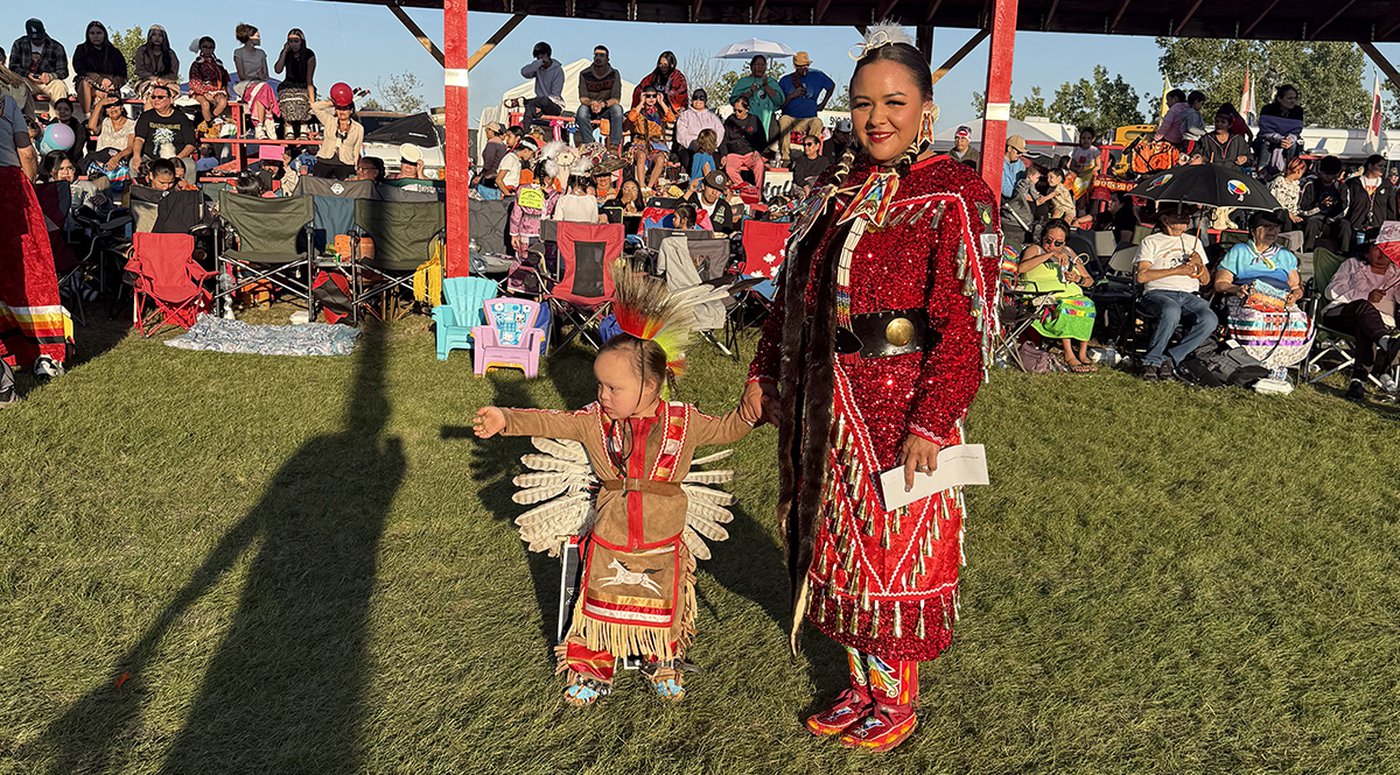
Beloved on the powwow circuit, young boy’s connection to the drum inspires
Now four, Waseskwan Redcrow was dancing ‘before he could even fully walk’ — his family says participating in powwows has brought them joy and belonging
-
Indigenous leaders give the UN a roadmap for protecting their peoples
Amidst prayers and vows of solidarity, UN Expert Mechanism on the Rights of Indigenous Peoples ends annual meetings with demands for ‘action we’re not seeing globally’