Hundreds march in memory of Carsyn Seaweed as community seeks answers
Family and allies gather in ‘Duncan’ for the Na̱mǥis and Quw’utsun’ teen who was loved by many
CONTENT WARNING: This story includes content regarding “Canada’s” ongoing genocidal epidemic of MMIWG2S+. Please look after your spirit and read with care.
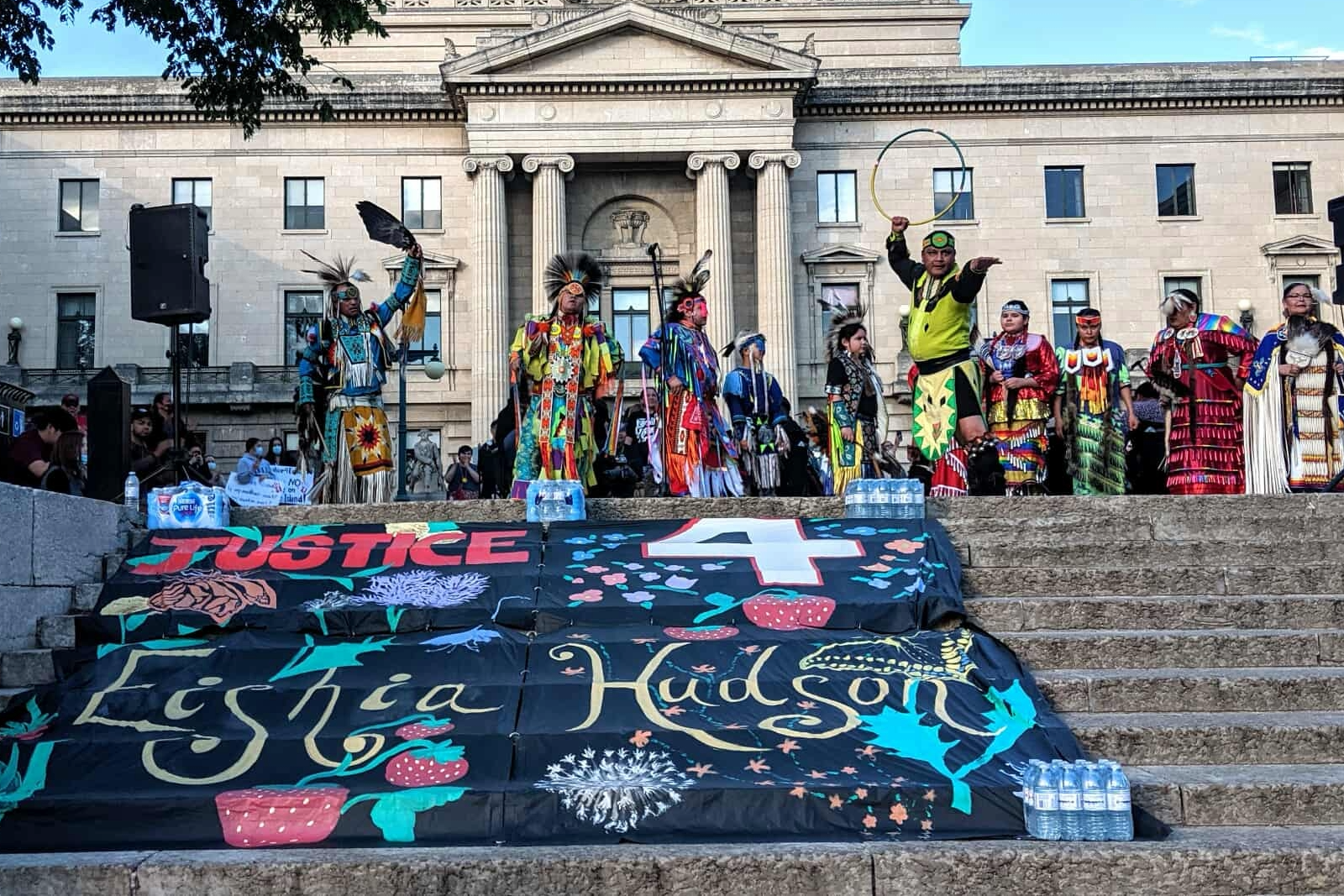
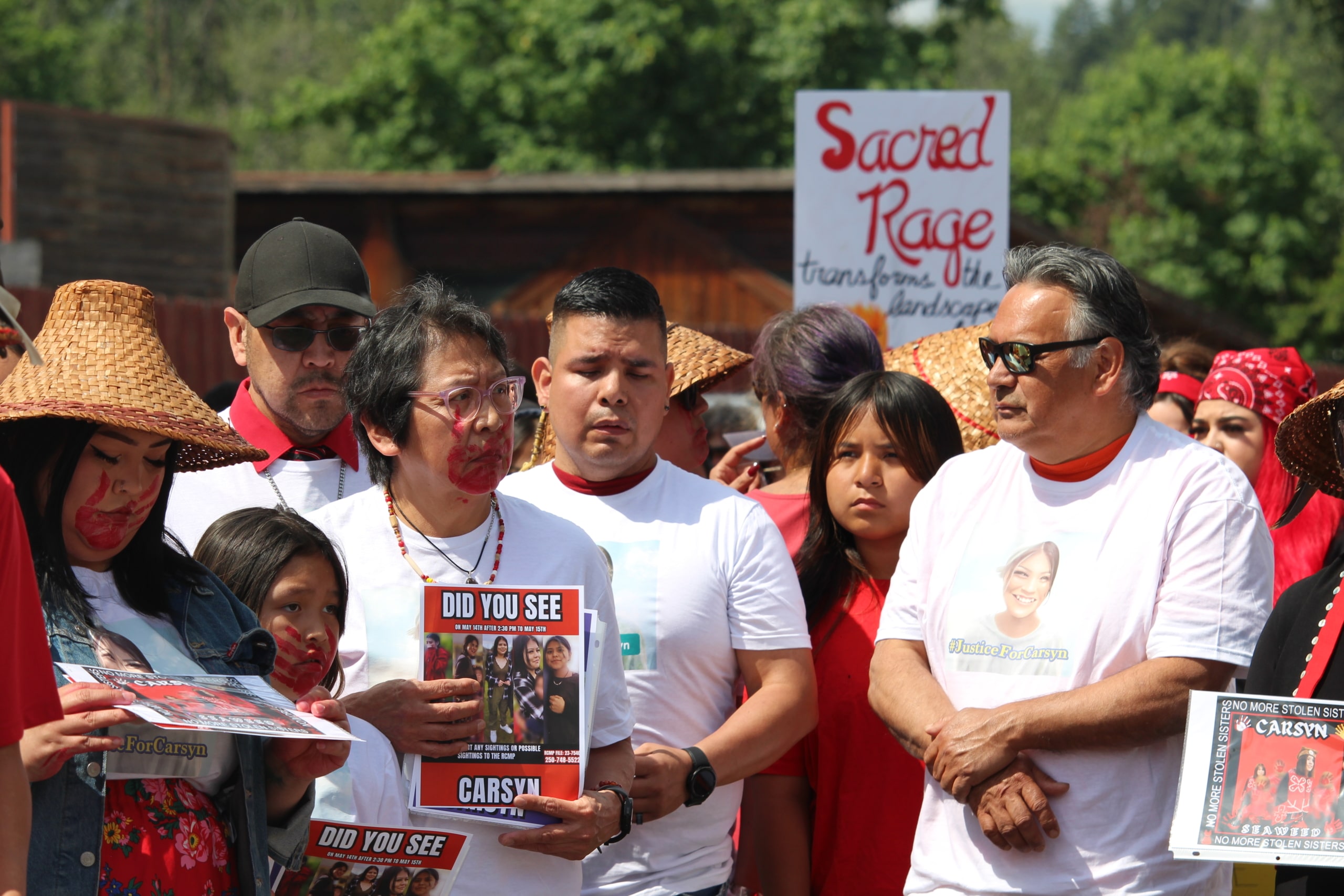
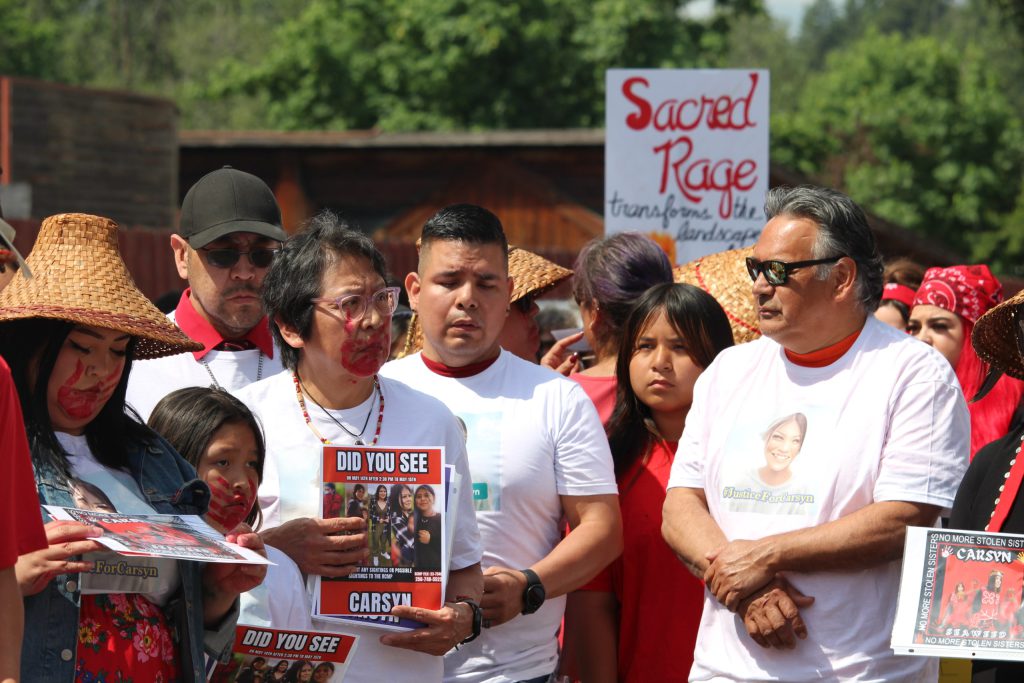
As a dark cloud loomed overhead, hundreds of people took part in a march in Quw’utsun’ territories to show support for the family of Carsyn MacKenzie Seaweed on Wednesday.
The event in “Duncan” was held as a call for justice for the 15-year old Na̱mǥis and Quw’utsun’ girl whose suspicious death is now under investigation.
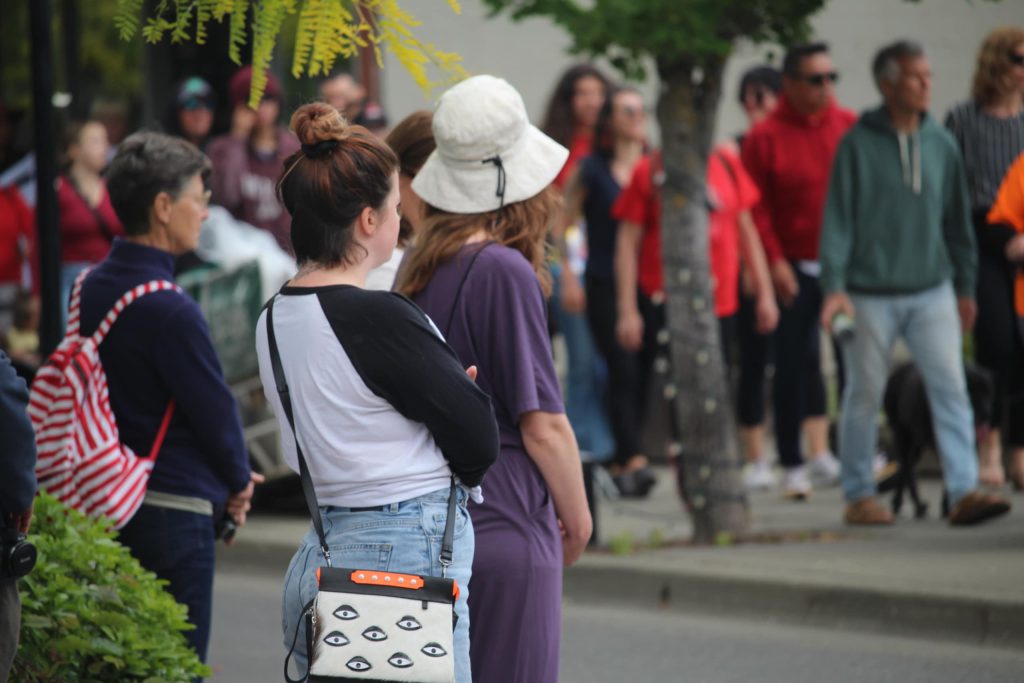
The march began at the Quw’utsun Cultural Centre and made its way through town past city hall. As the march wove through the streets, people stopped on the sidewalk and came out of shops, many with hands on their hearts, in a show of solidarity for Carsyn and her family.
The march ended at the Cowichan Tribes soccer fields where Carsyn’s mom, Marie Seaweed, last saw her daughter.
“I gave my daughter her last hug right over there,” Seaweed said following the march. “I just want people to see Carsyn as the beautiful, happy teenager she was. She deserved to live a long life and she deserves justice.”
Carysn’s dad, Benny George of Cowichan Tribes, also spoke to the crowd after helping to lead the march.
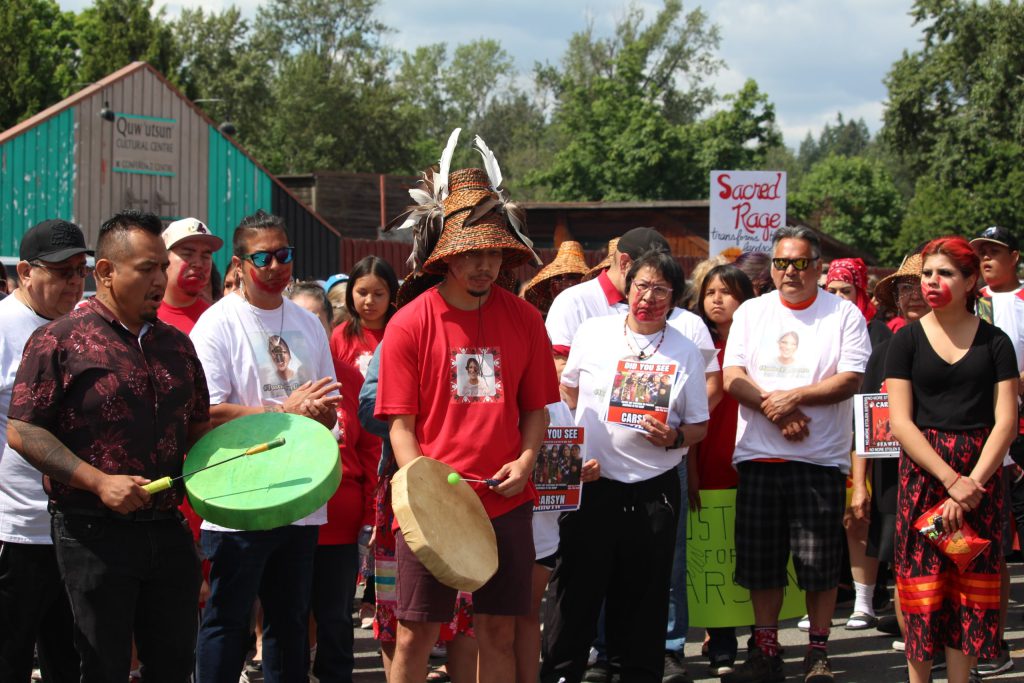
“There’s just no words to express how I feel. I have my family here supporting me and carrying some of that burden,” said George, who added the display of support has been ongoing since he and Marie first received the news.
He thanked those that travelled to be at the march, including chiefs who arrived from “Alert Bay.” Carsyn lived in and had ties in many communities across “Vancouver Island,” and George says her loss has been felt across the Island.
She came from nobility
According to a statement by North Cowichan/Duncan RCMP, Carsyn was found in a “semi-conscious state under suspicious circumstances” on May 15. Family members of Carsyn have said she was found covered under pallets, cardboard and twigs. Tragically, Carsyn died after being found.
As previously reported by IndigiNews and the Discourse, police initially told the Cowichan Valley Citizen there was no criminality suspected in her death. At a rally outside of the North Cowichan/Duncan RCMP headquarters on May 26, Insp. Chris Bear said that this was a “miscommunication”, and apologized to Carsyn’s family.
In an email statement, RCMP said Carsyn’s death is not being investigated as a homicide, but that the circumstances leading up to her discovery are considered “suspicious,” and are being investigated. The BC Coroners Service is also investigating the death.
Carsyn’s family members from both the Cowichan Valley and Alert Bay showed up at the march to support each other and call for justice and answers for Carsyn.
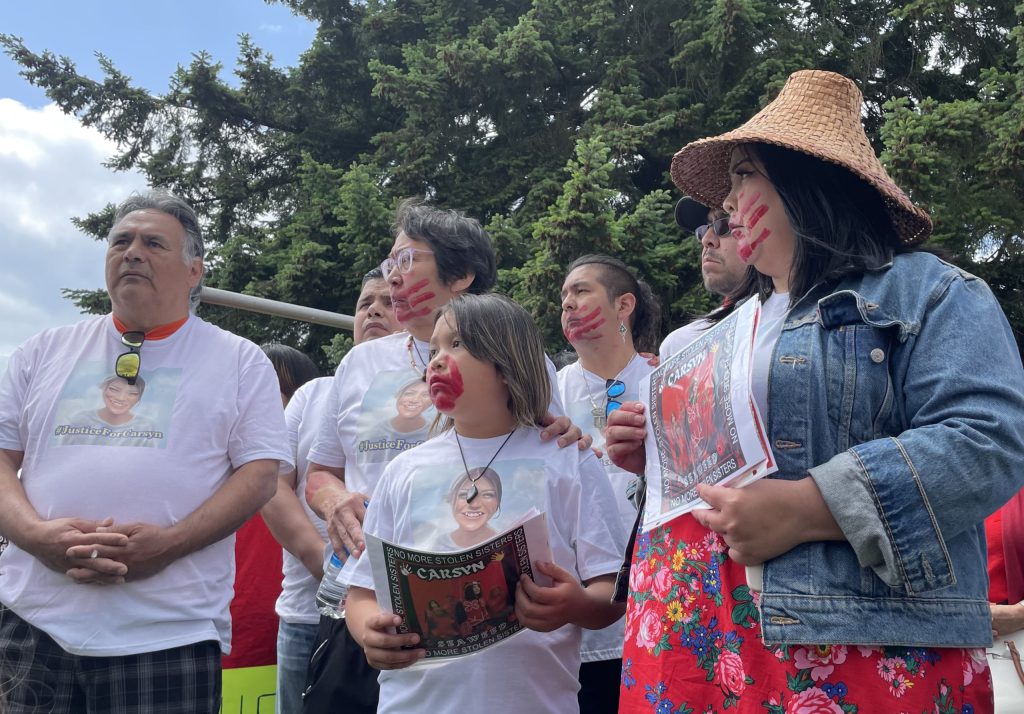
“Carsyn comes from nobility from the four tribes of Kingcome,” said Chief Rick Johnson of the Kwikwasut’inuxw Haxwa’mis First Nation.
Johnson said that on both sides of Carsyn’s family, she came from a long line of chiefs.
“The family wants some answers. Carsyn comes from a really strong family. There needs to be an investigation. We need to find out what happened.”
The family is seeking justice, Johnson said, advocating for First Nations people to have a voice in colonial systems that fund and dictate how investigations are carried out.
“The very basics of reconciliation is for First Nations to have a voice and we’re asking that from the powers that be,” Johnson said. “We’re asking that resources be put forward to the family, to the Cowichan Nation here, so an investigation can happen.”
Calls for justice and safety
Community members spoke before and after the march, including organizers Monica Patsy Jones and Joe “Bingo” Thorne.
“It saddens my heart that we had to come together as one because we lost a loved one,” Jones said.
Jones’ sister, Catherine Joe, was murdered in 1977 and the case is still unsolved. Jones now heads the non-profit Cowichan Missing and Murdered Women, Men, and Children. She and other volunteers follow tips and search areas in the Cowichan Valley to find missing community members and surface answers for families. Jones said she does this advocacy work so that no one has to carry the heavy burden of losing a loved one alone.
Thorne addressed the crowd before the march began, calling for people to work together — including with RCMP — to build a safer community.
“I stand with my grandchildren when I look at all the beautiful kids here, I’m honoured by your presence. We’re not just standing by you. We’re standing for you,” Thorne said.
Cowichan Tribes Chief Lydia Hwitsum noted that the harm that has been caused to Indigenous people — particularly Indigenous women who have been targeted — has been ongoing for generations. She said community members need to support each other to stay safe by looking out for others and following safety tips such as not walking alone or by sharing their locations with friends and family.
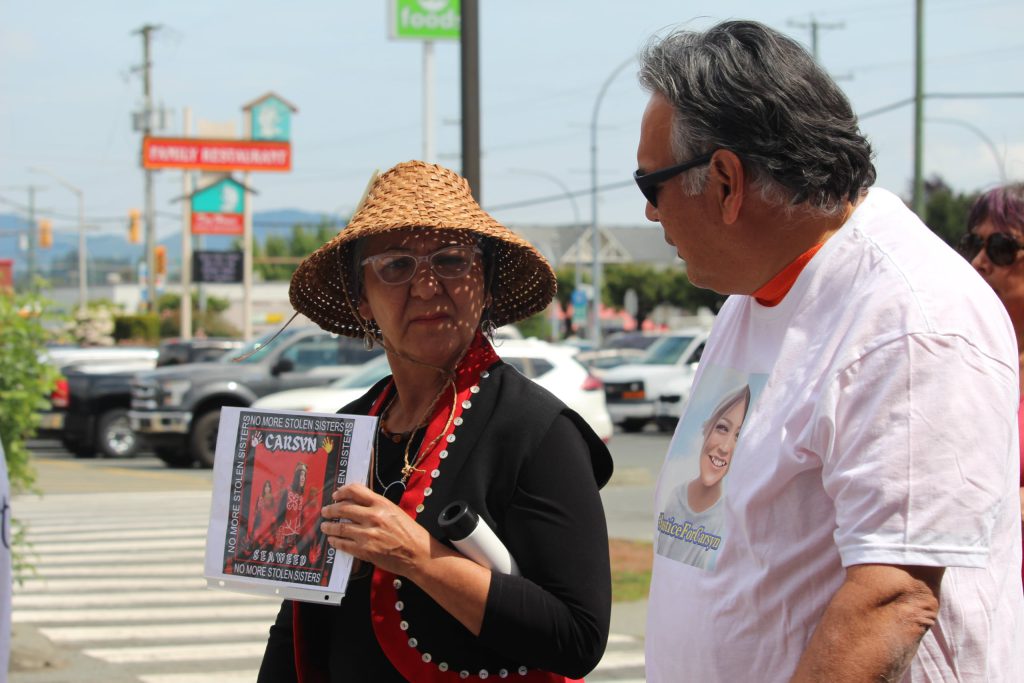
Colonial institutions, such as the RCMP, also need to educate themselves on the history and role they’ve played in causing harm to Indigenous communities, Hwitsum said.
“This is a call for justice,” Hwitsum said as she addressed the crowd after the march, her voice growing louder and stronger as her speech progressed.
“Our people are being targeted. We need to all stand together for the safety of this community and reach out together and lift each other up. Recognize when someone needs help and be that helping hand and heart.”
‘Bigger than a march’
Liza Haldane was at the march as a representative of the Tears to Hope Society. The society supports family members of missing and murdered loved ones. Haldane is from Nisga’a Nation, one of the communities along the Highway of Tears.
Haldane said she was at the march as a mother of two Indigenous girls — two girls who she said will not become statistics.
“I just want to honour everybody here that came to fight for that justice,” Haldane said. “Not just for the injustices of all of the missing and murdered, but for the injustices of just being able to be free on our territories.”
Residential “school” survivor Eddie Charlie and friend Kristin Spray — co-founders of Victoria Orange Shirt Day — were at the march as well. Charlie said he felt compelled to attend after seeing the news about Carsyn online. Charlie and Spray presented Carsyn’s mother and grandmother with blankets.
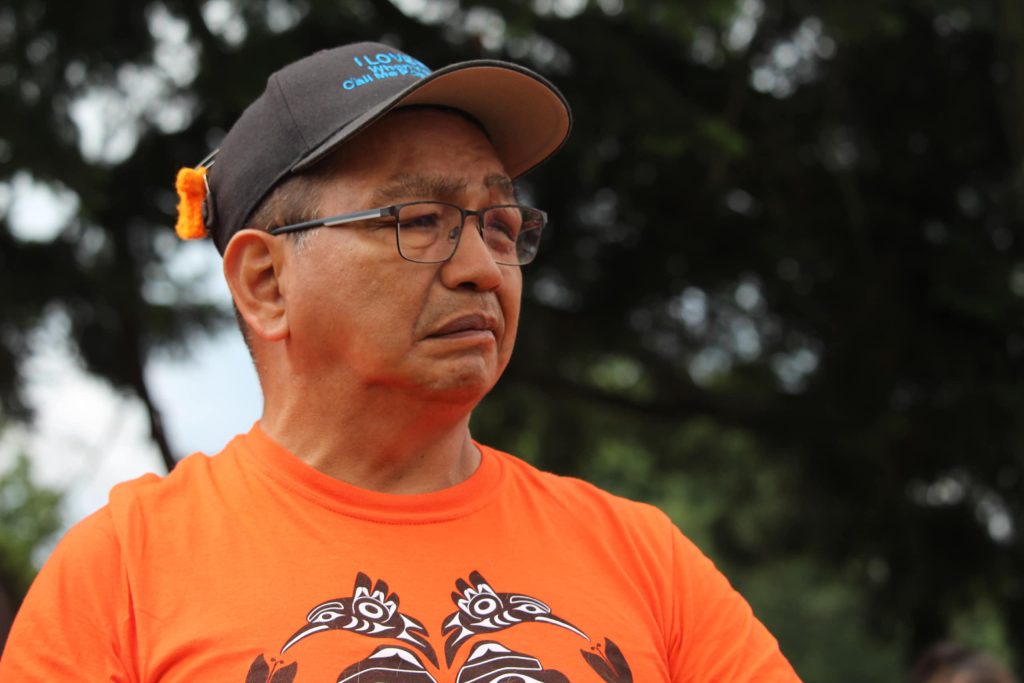
Charlie said one thing he believes everyone needs to do is listen to each other and the stories everyone has. He spoke about the impacts of intergenerational trauma — particularly trauma caused by residential “schools” — and said that in order to heal, people need to talk about it.
“We need to stand up and start talking. We need our people to listen. That’s how we’re going to be able to work together, be strong as a community, be strong as family again,” Charlie said.
After the march, Cowichan Tribes council member Howie George spoke on behalf of Joe Thorne and addressed the crowd. He raised his hands to Carsyn’s family and the Chiefs who travelled to Quw’utsun lands from Alert Bay and said that the community wants to help the family heal.
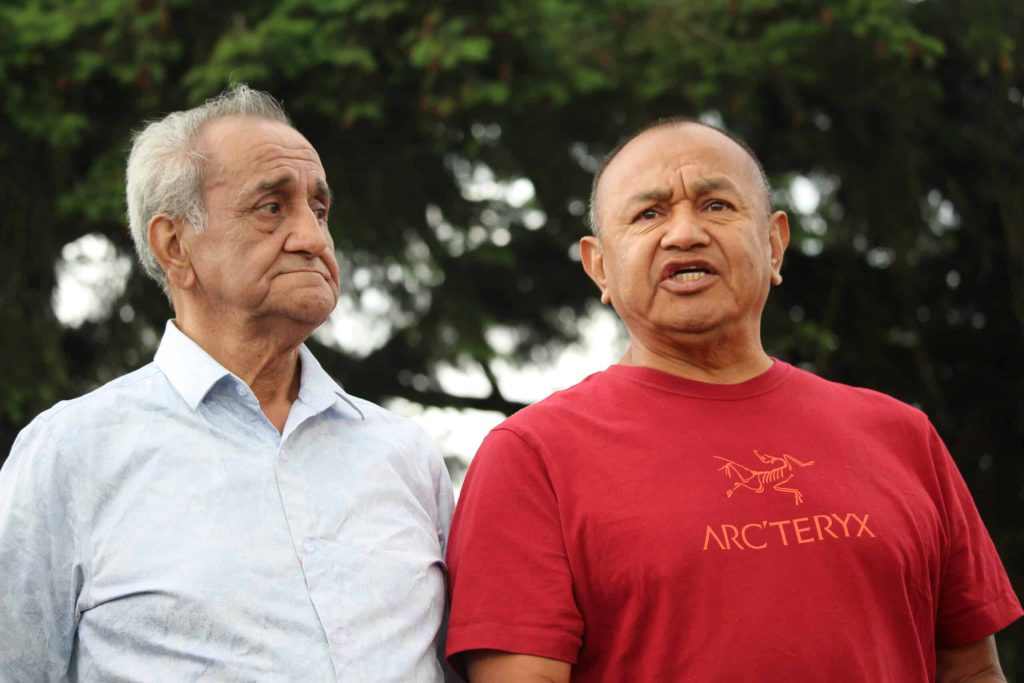
George spoke about how the issue of missing and murdered Indigenous people has touched communities across “Canada” and the “U.S.” for generations. He said he hopes the feeling of love and support felt at the march makes its way to people in power so change can happen. He also called for more funding and support from RCMP to lead investigations into the missing and murdered and said people need to come together to solve this issue.
“This is way bigger than what we can do ourselves. It’s bigger than a march,” George said. “But the march we have is from true love. We can send that. We have the magic to send that feeling straight to the top.”
Family seeks answers
Standing with her youngest daughter, Ella, after the march, Marie Seaweed remembered her daughter Carsyn as a “beautiful 15-year-old girl.” She said Carsyn was a “natural caretaker” who loved her family and siblings and always made people laugh. Carsyn loved soccer, had goals to become a nurse and was excited to get her driver’s licence next year, her mother said.
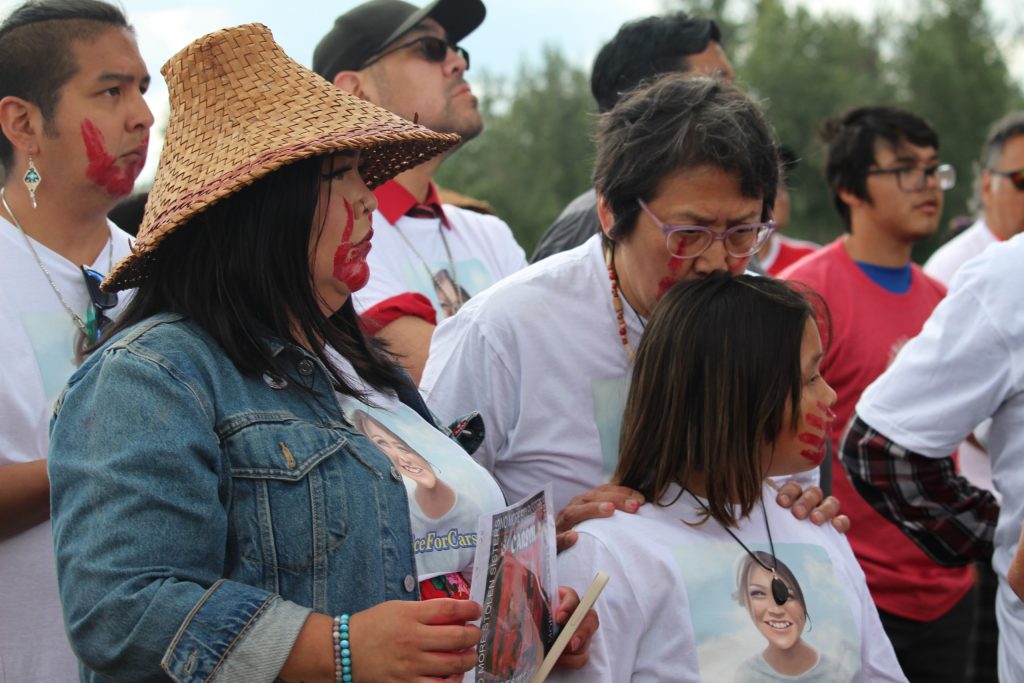
RCMP have been keeping in contact to the extent that they can regarding the investigation into Carsyn’s death, Seaweed said. Seeing so many people spreading the word about Carsyn’s case and sharing posters about it leaves Seaweed feeling hopeful.
“I just want justice for my daughter,” Seaweed said. “I want to find out who did that to her, who left her there, because someone meant for her to be there. I just want to know.”
In a plea for justice, Cowichan Tribes Chief Lydia Hwitsum spoke the crowd after the march and asked anyone with any information regarding Carsyn’s case to “step up, call the police, use the online reporting [and] talk to someone.”
“Share what you know. It might be just that little bit of information that’s going to help us find justice,” Hwitsum said.
Anyone with information regarding Carsyn Mackenzie Seaweed’s case is asked to contact North Cowichan/Duncan RCMP at 250-748-5522. An online reporting tool to share information is also available.
A call to action for community safety, including personal safety recommendations, a list of crisis lines and supports and key safety and reporting contacts has also been shared by Cowichan Tribes on Facebook and the Cowichan Tribes website.
Author
We live in a media ecosystem that thrives on misinformation. Big Tech and AI companies are consuming the work of real human beings and Canadian news has been banned on Facebook and Instagram.
And yet, I have hope for journalism because of the work we’re doing at IndigiNews.
At IndigiNews, we embody tâpwêwin — the Cree value of integrity and responsibility in truth-telling. We are committed to our independent, Indigenous-led newsroom rooted in community, accountability, and relationality. We believe storytelling is a sacred fire that connects our pasts, presents, and futures through the storytellers in our Storytelling Lodge. IndigiNews creates space for Indigenous journalists, storytellers, Knowledge Keepers, and communities to gather, learn, and share stories that matter.
As a registered charity, we are building a fire that allows our work not just to ignite but to thrive. Rather than relying on advertising or corporate acquisition, IndigiNews is sustained by people like you who believe Indigenous stories are important for the future of our communities.
Your support is making a real difference.
Our community of supporters, our Firekeepers, make it possible to grow our newsroom, publish award-winning journalism, train emerging Indigenous journalists through initiatives like the ReFocus Photojournalism Fellowship, and publish trustworthy stories that serve our communities across the country. Every story we publish helps fill in gaps left by mainstream media and ensures Indigenous perspectives are represented with care, accuracy and respect.
But there is still more work to do.
As the media landscape becomes more and more uncertain, community support is as necessary and essential as it’s ever been. Every new Firekeeper helps protect the independence of our newsroom and strengthens journalism that is accountable to our many and varied communities over corporations.
That’s why we’re inviting you to become a Firekeeper.
Firekeepers tend to and protect the sacred fire. Your monthly contributions directly support IndigiNews’s Storytelling Lodge, helps sustain our independent, Indigenous-led newsroom, and ensures future generations of Indigenous storytellers have the resources they need to do the work.
As a registered Canadian charity, all eligible donations receive a charitable tax receipt.
If you believe Indigenous stories matter, if you value independent journalism, and if you want to help build a strong future for Indigenous media, we invite you to join our circle of Firekeepers today.
Together, we can keep the fire burning.
— Eden Fineday, Publisher, IndigiNews
Support us nowLatest Stories
-
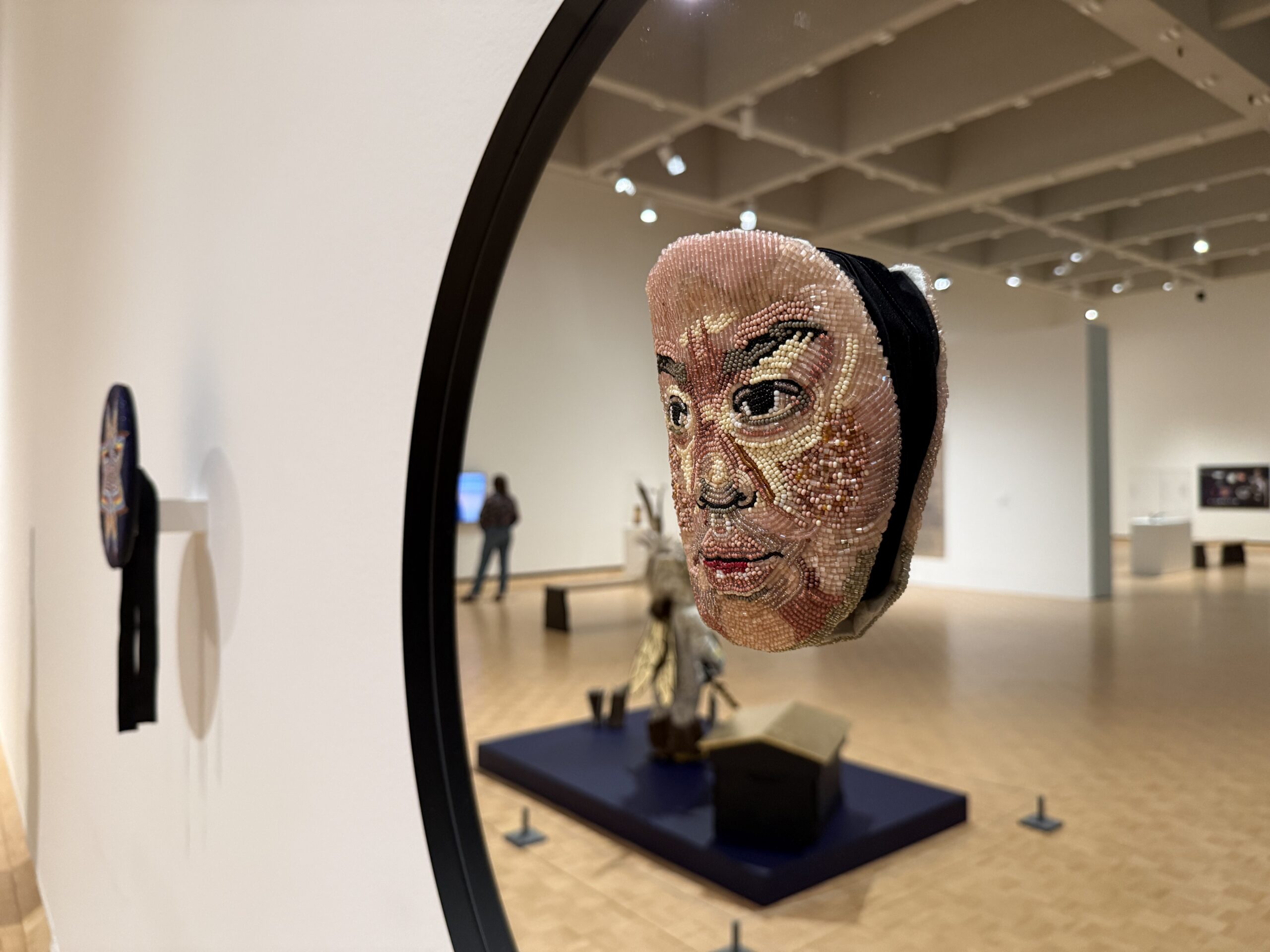
‘Love Medicine’ exhibition celebrates Two Spirit and Indigiqueer artists
Curated by Métis art historian Michelle McGeough, 22 Indigenous 2SLGBTQIA+ artists explore the idea of love as healing, belonging — and resistance — in a Oskana kâ-asastêki (Regina) gallery
-
‘Rhythm crafted for the human voice’: Poet kit-xgwélemc kennedy wins an Indigenous Voices Award
Member of St’uxwtéws Secwépemc Nation recognized in unpublished poetry category — following in his wordsmith mom’s footsteps