Tiny Kwiakah First Nation has big plans for solar-powered science hub on former fish farm
With just 19 members, the ‘Vancouver Island’ community is building a ‘stewardship economy’ based around revitalizing its lands


This story originally appeared in Canada’s National Observer here and is reprinted with minor style edits
The West Coast’s smallest First Nation is taking great strides toward the creation of an innovative stewardship economy that puts sustainability and conservation first.
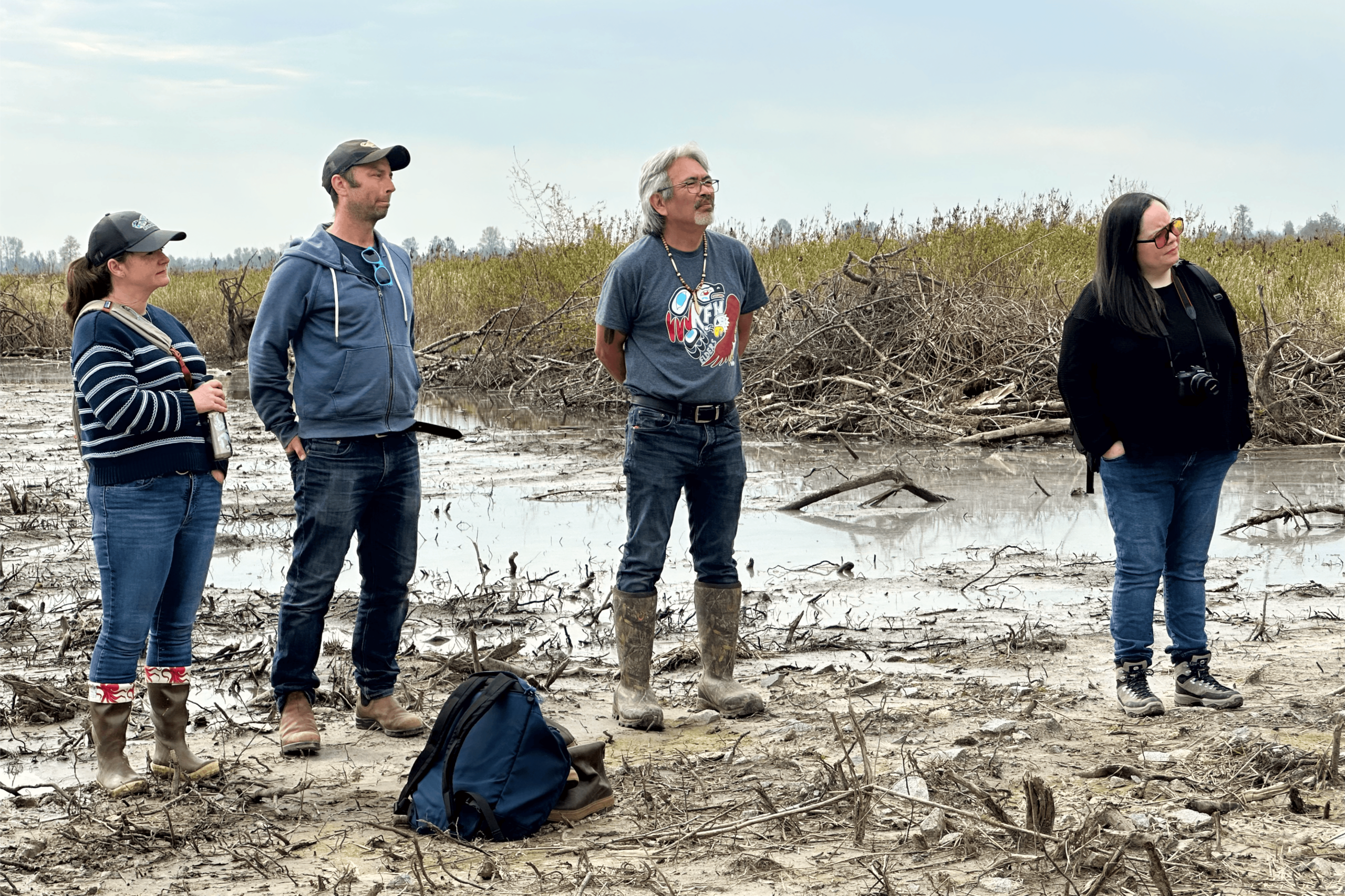
The Kwiakah First Nation has just 19 members mostly based on “Vancouver Island.” Led by munmuntle (Chief Steven Dick), the community is launching what it calls a “return home” by transforming a former open-net salmon farm into a floating, solar-powered scientific hub anchored in their traditional territory along the wild central coast of “B.C.”
Once completed, the Kwiakah Centre of Excellence will be the base for a dedicated research station, an experimental kelp farm, the First Nation’s regenerative forestry operations, and its Forest Keepers territorial guardian program known, said Kwiakah’s manager and economic development officer Frank Voelker.
The centre marks the first time in nearly 100 years that the community will have a permanent presence in “Phillips Arm,” a remote mainland inlet approximately 52 kilometres north of “Campbell River.” Like many First Nations, the community was displaced from its traditional coastal village sites by colonial invasion in the early 20th century.
When renovations are complete this summer, the floating centre will be based near the Nəts’inux village site at the Kwiakah Matsayno reserve, accessible only by boat.
The First Nation intends to revitalize its lands and waters — much of which were badly damaged by logging and other extractive industries. The community is on the path to building a “stewardship economy” that puts the environment first when it comes to economic development, Voelker said.
After years of hard work, the First Nation successfully established the M̓ac̓inuxʷ Special Forest Management Area (SFMA) last May that covers 7,865 hectares of forested land within the Great Bear Rainforest.
The ninth management area within the wider Great Bear Rainforest conservation area, the Kwiakah SFMA bans logging in favour of regenerative operations aimed at bringing the forest back to its pre-industrial state. The First Nation also intends to expand its protected forest area to 56,000 hectares by purchasing other logging licences in its traditional territory, Voelker added.
The aim is to find a variety of ways to “monetize” and diversify the ecosystem services that preserving or regenerating nature can provide to create an economic ripple effect for coastal jobs and services, he said.

‘Creating funds in a different way’
“We want to be stewards of the land and, yes, we have a guardian program,” he said. “But you have to be able to afford to protect your environment, and that can happen by creating funds in a different way.
“Eventually, revenue will be created by protecting the environment, by conserving forests and by not cutting them.”
The centre will be used to deepen the collaborative research Kwiakah have done on sustainable aquaculture, land stewardship and Indigenous studies, with academic institutions such as the University of British Columbia, University of Victoria, and the University of Calgary.
By combining traditional ecological knowledge with modern research in the “Phillips Arm” estuary and surrounding forests, the initiative aims to develop a 100-year management plan integrating research on climate, salmon, kelp, and soil to protect territorial waters and remaining old growth forests. It will also involve recruiting new forest stands by regenerating mature second-growth areas into biodiverse ecosystems.
In addition to revenue generation from things like forest carbon offsets, the First Nation has acquired small woodlots and will research and quantify the ecological and economic benefits of selective logging as a source of forestry revenue, rather than relying on destructive clear-cut tactics, Voelker added.
The new centre of excellence is expected to create an estimated 12 full-time jobs, as well as seasonal work to start.
Island Coastal Economic Trust has invested $200,000 in the project, through its Capital and Innovation Program, to develop the First Nation’s kelp and seaweed farming initiatives.
The trust works to build a sustainable and resilient coastal economy in reciprocal relationships with First Nations, municipalities, and regional districts across “Vancouver Island” and the “Sunshine Coast,” said CEO Brodie Guy.
The organization looks to explore investment and funding opportunities for communities, First Nations, and industry associations that are innovative and will boost smaller coastal economies, Guy said.
The Kwiakah’s goals and efforts to date are inspiring, he added.
“This really feels like a deeper opportunity to partner with the Kwiakah on something that’s first and foremost an economic opportunity,” Guy said. “But it also has many facets to it in terms of establishing their presence, leadership, stewardship and innovation.
“There are a number of threads here that are just so exciting for the North Island economy and certainly for the membership of the nation.”
Author
We live in a media ecosystem that thrives on misinformation. Big Tech and AI companies are consuming the work of real human beings and Canadian news has been banned on Facebook and Instagram.
And yet, I have hope for journalism because of the work we’re doing at IndigiNews.
At IndigiNews, we embody tâpwêwin — the Cree value of integrity and responsibility in truth-telling. We are committed to our independent, Indigenous-led newsroom rooted in community, accountability, and relationality. We believe storytelling is a sacred fire that connects our pasts, presents, and futures through the storytellers in our Storytelling Lodge. IndigiNews creates space for Indigenous journalists, storytellers, Knowledge Keepers, and communities to gather, learn, and share stories that matter.
As a registered charity, we are building a fire that allows our work not just to ignite but to thrive. Rather than relying on advertising or corporate acquisition, IndigiNews is sustained by people like you who believe Indigenous stories are important for the future of our communities.
Your support is making a real difference.
Our community of supporters, our Firekeepers, make it possible to grow our newsroom, publish award-winning journalism, train emerging Indigenous journalists through initiatives like the ReFocus Photojournalism Fellowship, and publish trustworthy stories that serve our communities across the country. Every story we publish helps fill in gaps left by mainstream media and ensures Indigenous perspectives are represented with care, accuracy and respect.
But there is still more work to do.
As the media landscape becomes more and more uncertain, community support is as necessary and essential as it’s ever been. Every new Firekeeper helps protect the independence of our newsroom and strengthens journalism that is accountable to our many and varied communities over corporations.
That’s why we’re inviting you to become a Firekeeper.
Firekeepers tend to and protect the sacred fire. Your monthly contributions directly support IndigiNews’s Storytelling Lodge, helps sustain our independent, Indigenous-led newsroom, and ensures future generations of Indigenous storytellers have the resources they need to do the work.
As a registered Canadian charity, all eligible donations receive a charitable tax receipt.
If you believe Indigenous stories matter, if you value independent journalism, and if you want to help build a strong future for Indigenous media, we invite you to join our circle of Firekeepers today.
Together, we can keep the fire burning.
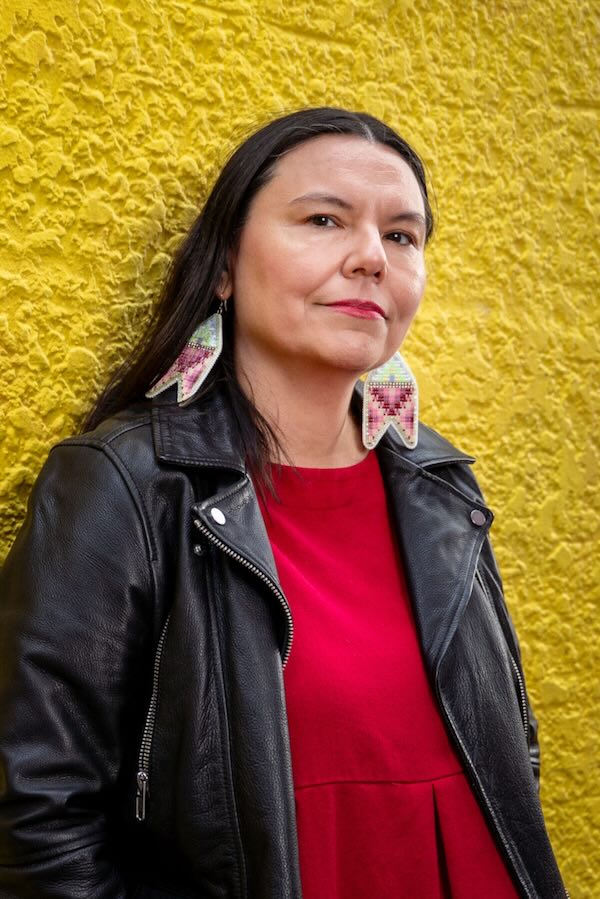
— Eden Fineday, Publisher, IndigiNews
Support us nowLatest Stories
-
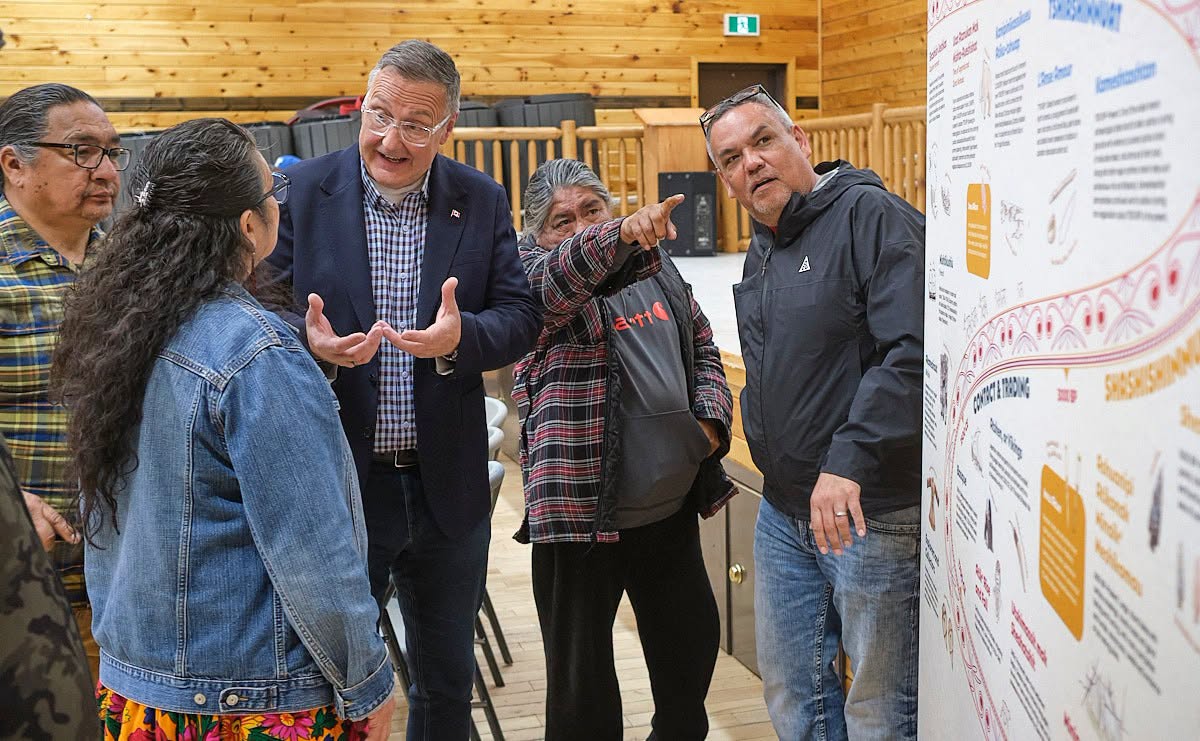
Innu Nation ‘moved to anger, to strength’ after accusing province of censoring history
Solidarity pours in after ‘Labrador’ history exhibition abruptly cancelled after province ordered removal of cultural items and timelines older than 300 years
-
Osoyoos Indian Band set to restore native plants, species in wildfire-ravaged forests
The First Nation plans to clear out burned spaces and restore trees, berries and medicinal plants to the area, encouraging biodiversity and wildlife to return