As politicians fast-track extraction, Coast Salish leaders stress economic vision: ‘We need to be in these rooms’
Leaders from xʷməθkʷəy̓əm, Sḵwx̱wú7mesh, and səl̓ilwətaɬ spoke about the future of their territories — and need for meaningful participation — at Greater Vancouver Board of Trade event


Leaders from “Vancouver’s” top businesses got a lesson on Indigenous economics from three Coast Salish leaders last Thursday.
Amid international tariff threats and colonial governments fast-tracking resource extraction on Indigenous lands, leaders from the xʷməθkʷəy̓əm, Sḵwx̱wú7mesh and səl̓ilwətaɬ First Nations told a Greater Vancouver Board of Trade gathering about their visions for co-operative economic development, the evolving role of industry, and how today’s shifting economic landscape is affecting their communities.
səl̓ilwətaɬ elected Chief Jen Thomas said collaboration between Coast Salish communities has been important, and that over the past five years, xʷməθkʷəy̓əm, Sḵwx̱wú7mesh, and səl̓ilwətaɬ “have come together like brothers and sisters.”
Sḵwx̱wú7mesh councillor Sxwíxwtn (Wilson Williams) told the gathering of business leaders that Indigenous communities “used to be out of sight, out of mind.” Today, he said, “we have a seat at the table.”
“But now, we’re at the forefront of conversations, and we want to share that Indigenous story of being a part of the economy today.”
Association represents biggest industries
Now in its fifth year, the annual Reconciliation in Action event gives a platform to “Vancouver’s” three host nations to share their perspectives with the city’s business leaders.
Led by executives from dozens of the city’s largest industries, the 138-year-old Board of Trade boasts that it is “Western Canada’s leading business association.” It has pledged to work “in partnership with Indigenous communities on economic development projects and initiatives to provide sustainable local economic benefits for all.”
During a lunch at the Fairmont Hotel Vancouver on June 19, the association’s president and CEO Bridgitte Anderson posed audience-submitted questions to leaders from the three First Nations.
Hundreds of business leaders — including tables representing major corporations such as FortisBC, CN Railway, Trans Mountain, the Royal Bank of Canada, and Vancouver International Airport — listened in.
yəχʷyaχʷələq (Wayne Sparrow), who’s served as xʷməθkʷəy̓əm elected chief since 2012, also attended the event.
“Who would have thought that the three of us would be sitting up here?” he said. “It’s our ancestors who need recognition for these achievements.”

‘Turbulent economic climate’
During the session, the Coast Salish leaders touched on many pressing political issues — including the province’s Bill 14, the Renewable Energy Projects (Streamlined Permitting) Act, and Bill 15, the Infrastructure Projects Act.
The bills were criticised for being rushed through the legislature late last month, without consulting First Nations, which Indigenous leaders have said violates requirements set by the Declaration on the Rights of Indigenous Peoples Act (DRIPA).
“I think the government is up to something,” said Thomas, who is in her first term as elected chief. Thomas added that she sees the legislation as “steps backwards.”
Sxwíxwtn agreed, decrying a lack of consultation on the bills.
“Yeah, that hits our heartstrings,” he said. But he remains optimistic.
“There are ways around it,” he said. “We all want to move efficiently with this turbulent economic climate, but we need to be in these rooms,” he said.
Sxwíxwtn is in his third term on council for Sḵwx̱wú7mesh Úxwumixw, and is one of two appointed spokespeople.
Sxwíxwtn added that the day before the Vancouver Board of Trade event, he saw Premier David Eby, who was “very sincere about moving forward in a good way,” he said.
‘We’re in it for the long run’
“U.S.” President Donald Trump’s trade war was also a topic of interest, as Sxwíxwtn spoke of how it’s affected Sḵwx̱wú7mesh’s housing developments.
The Sen̓áḵw housing development is rising quickly on the site of the original village of Sen̓áḵw — a name that roughly translates to “the place inside of False Creek” and known to settlers as “Kitsilano.”
He said the nation is having to adjust housing development timelines based on the economic climate.
“But we’re in it for the long run,” he said.
“We have to think more strategically than just housing developments,” added Sxwíxwtn. He said the nation is looking beyond real estate to advance a wider range of opportunities.
How are we going to be part of the entertainment industry? How are we going to be a part of the tourism industry?” he asked.
Still, the project is on track for residents to move in for winter 2025, said Sxwíxwtn.
“It seems like yesterday we broke ground,” said Sxwíxwtn. “It was a very emotional day and our families are very excited to live back in our community, our village.”
Meanwhile, 90-acres of land on the west side of “Vancouver” are being jointly developed by the xʷməθkʷəy̓əm, Sḵwx̱wú7mesh and sə̓lílwətaʔɬ nations.
Upon completion, the ʔəy̓alməxʷ/Iy̓álmexw/Jericho lands project is expected to include a 13,000 unit community for 24,000 residents with a range of market and affordable housing, as well as community and commercial spaces within 30-acres of park and public space.
When asked about the project, yəχʷyaχʷələq agreed with Sxwíxwtn that xʷməθkʷəy̓əm is “not in a rush to make mistakes,” he said.
“We need the economy to move but we have to make sure we don’t make mistakes because the next generation is counting on us,” said yəχʷyaχʷələq.
“Jericho is huge and we’ve got to take advice from our partners on when we move, and how fast we move.”
“We’re going to be the biggest developers in Canada one day,” added Thomas.

‘We’re going to make things better’
When asked about how colonial governments and First Nations governments can work better together, Thomas responded that nations have always had the tools to govern themselves.
She replied with examples of Indigenous people earning major government positions — in particular MLA Joan Phillip, from səl̓ilwətaɬ Nation, and federal MP Wade Grant, who is xʷməθkʷəy̓əm.
Phillip is “B.C.’s” Parliamentary Secretary for Community Development and Non-Profits, while Grant is Parliamentary Secretary to the federal Minister of Environment and Climate Change.
“We’re in those positions,” Thomas said, “and that’s how we’re going to make things better.”
At the local level, she wants to see the host nations have formal representation at the municipal table.
“We should have a seat at the City of Vancouver, the District of North Vancouver, and the District of West Vancouver,” she said.
A street named after the colony’s first lieutenant governor, Joseph Trutch, in “Kitsilano” neighbourhood is set to be renamed to šxʷməθkʷəy̓əmasəm (Musqueamview Street). Trutch is notorious for his staunch anti-Indigenous policies and openly racist views.
The official renaming has sparked controversy, including from some residents complaining they don’t know how to pronounce words in the hən̓q̓əmin̓əm language — whether ancestral names or place names.
“That’s how it was for our ancestors when we couldn’t speak the language that was being forced on us,” he said.
As the session came to a close, each of the three leaders offered tangible actions for the corporate audience to carry forward.
Thomas encouraged attendees to learn three facts about each of the host nations, share them with someone else, and ask that person to do the same — a simple act of reciprocity and education.yəχʷyaχʷələq emphasized that while young people are eager to be part of the solution, reconciliation must involve all sectors.
“Everybody has a part — industry, politicians, and businesses.”
Author
We live in a media ecosystem that thrives on misinformation. Big Tech and AI companies are consuming the work of real human beings and Canadian news has been banned on Facebook and Instagram.
And yet, I have hope for journalism because of the work we’re doing at IndigiNews.
At IndigiNews, we embody tâpwêwin — the Cree value of integrity and responsibility in truth-telling. We are committed to our independent, Indigenous-led newsroom rooted in community, accountability, and relationality. We believe storytelling is a sacred fire that connects our pasts, presents, and futures through the storytellers in our Storytelling Lodge. IndigiNews creates space for Indigenous journalists, storytellers, Knowledge Keepers, and communities to gather, learn, and share stories that matter.
As a registered charity, we are building a fire that allows our work not just to ignite but to thrive. Rather than relying on advertising or corporate acquisition, IndigiNews is sustained by people like you who believe Indigenous stories are important for the future of our communities.
Your support is making a real difference.
Our community of supporters, our Firekeepers, make it possible to grow our newsroom, publish award-winning journalism, train emerging Indigenous journalists through initiatives like the ReFocus Photojournalism Fellowship, and publish trustworthy stories that serve our communities across the country. Every story we publish helps fill in gaps left by mainstream media and ensures Indigenous perspectives are represented with care, accuracy and respect.
But there is still more work to do.
As the media landscape becomes more and more uncertain, community support is as necessary and essential as it’s ever been. Every new Firekeeper helps protect the independence of our newsroom and strengthens journalism that is accountable to our many and varied communities over corporations.
That’s why we’re inviting you to become a Firekeeper.
Firekeepers tend to and protect the sacred fire. Your monthly contributions directly support IndigiNews’s Storytelling Lodge, helps sustain our independent, Indigenous-led newsroom, and ensures future generations of Indigenous storytellers have the resources they need to do the work.
As a registered Canadian charity, all eligible donations receive a charitable tax receipt.
If you believe Indigenous stories matter, if you value independent journalism, and if you want to help build a strong future for Indigenous media, we invite you to join our circle of Firekeepers today.
Together, we can keep the fire burning.
— Eden Fineday, Publisher, IndigiNews
Support us nowLatest Stories
-
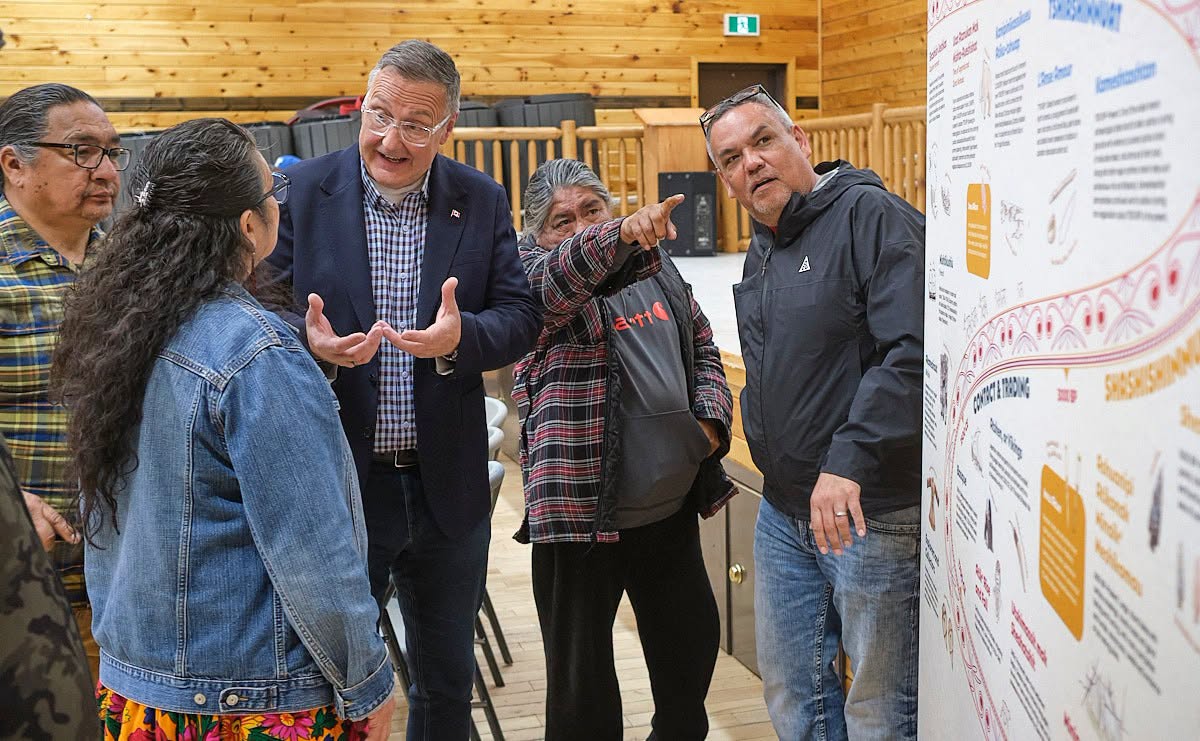
Innu Nation ‘moved to anger, to strength’ after accusing province of censoring history
Solidarity pours in after ‘Labrador’ history exhibition abruptly cancelled after province ordered removal of cultural items and timelines older than 300 years
-
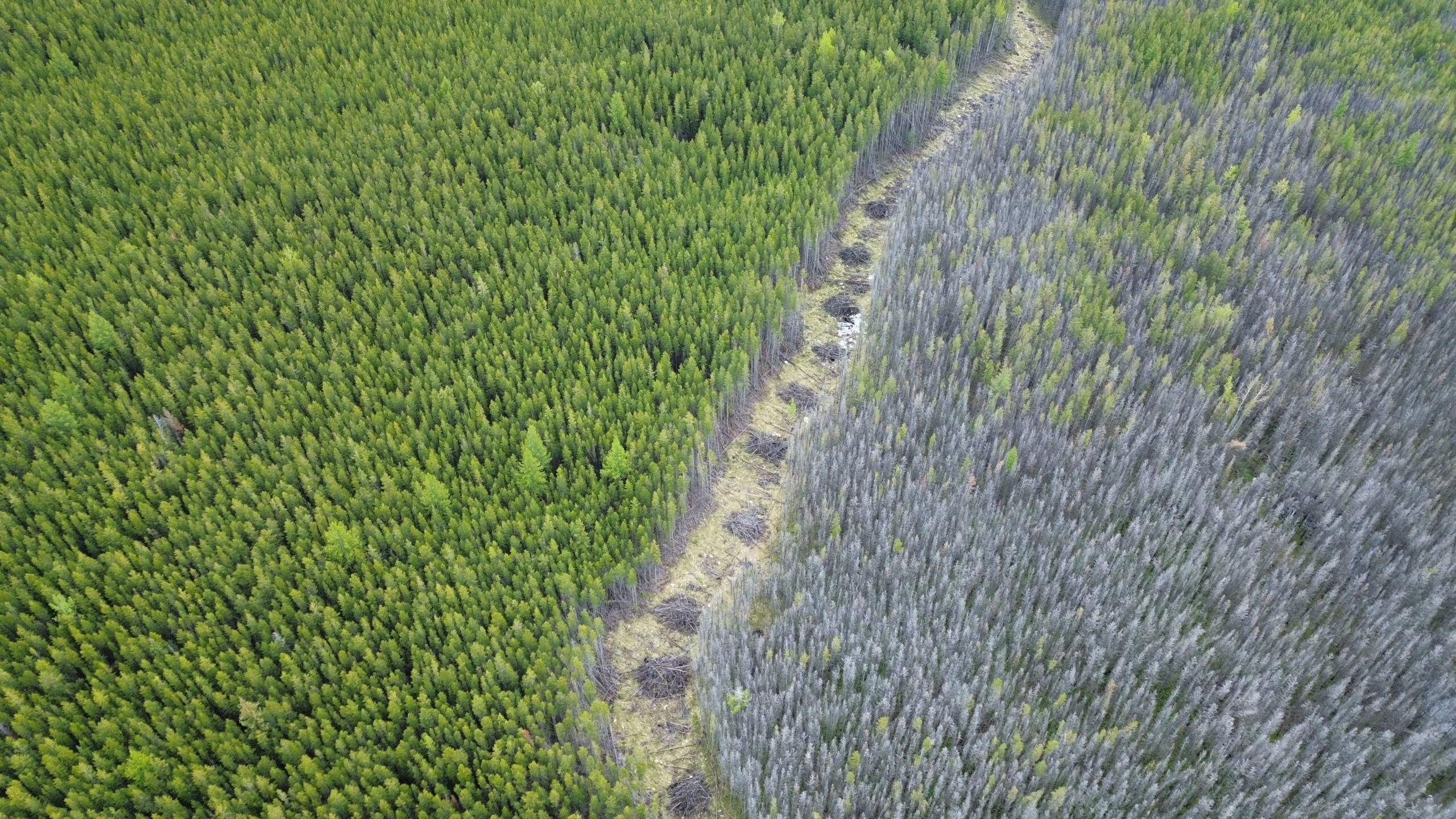
Osoyoos Indian Band set to restore native plants, species in wildfire-ravaged forests
The First Nation plans to clear out burned spaces and restore trees, berries and medicinal plants to the area, encouraging biodiversity and wildlife to return