In ‘Summerland,’ syilx interpretive signs unveiled on ackɬt’pus
Elder and knowledge keeper shares oral stories on the popular trails of mountain known as ‘Giant’s Head’
Thousands of years ago, before humans, there were animal people who stewarded the lands that later became syilx territories.
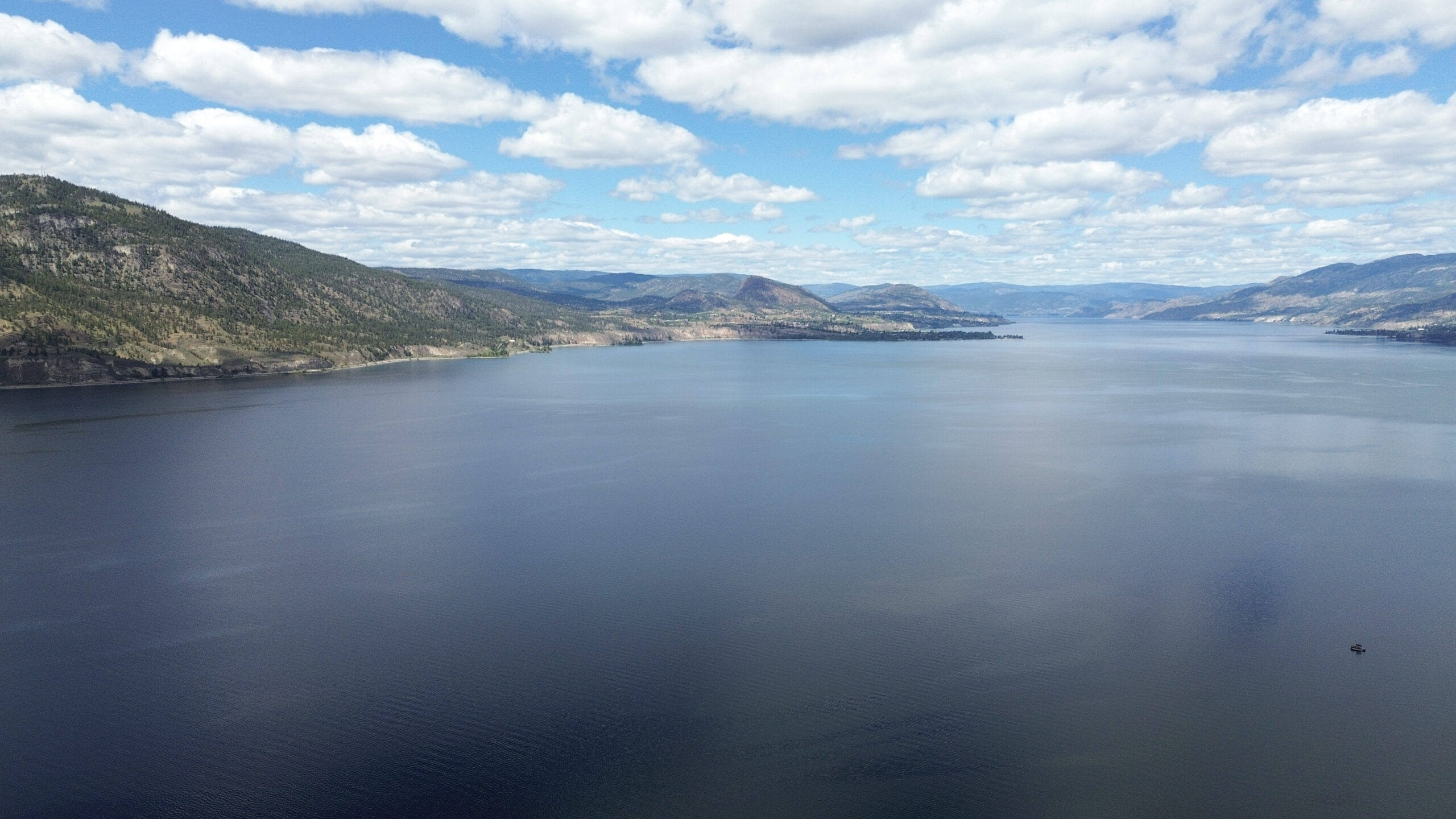
At the bottom of a mountain that overlooks kɬúsx̌nítkʷ (Okanagan Lake), there runs a creek that was once a training ground for the animal people, who also held their sweat lodges here.
According to this captikʷł, a syilx oral story passed down through generations, the animal people learned they were to replaced by two-legged humans, the people-to-be.
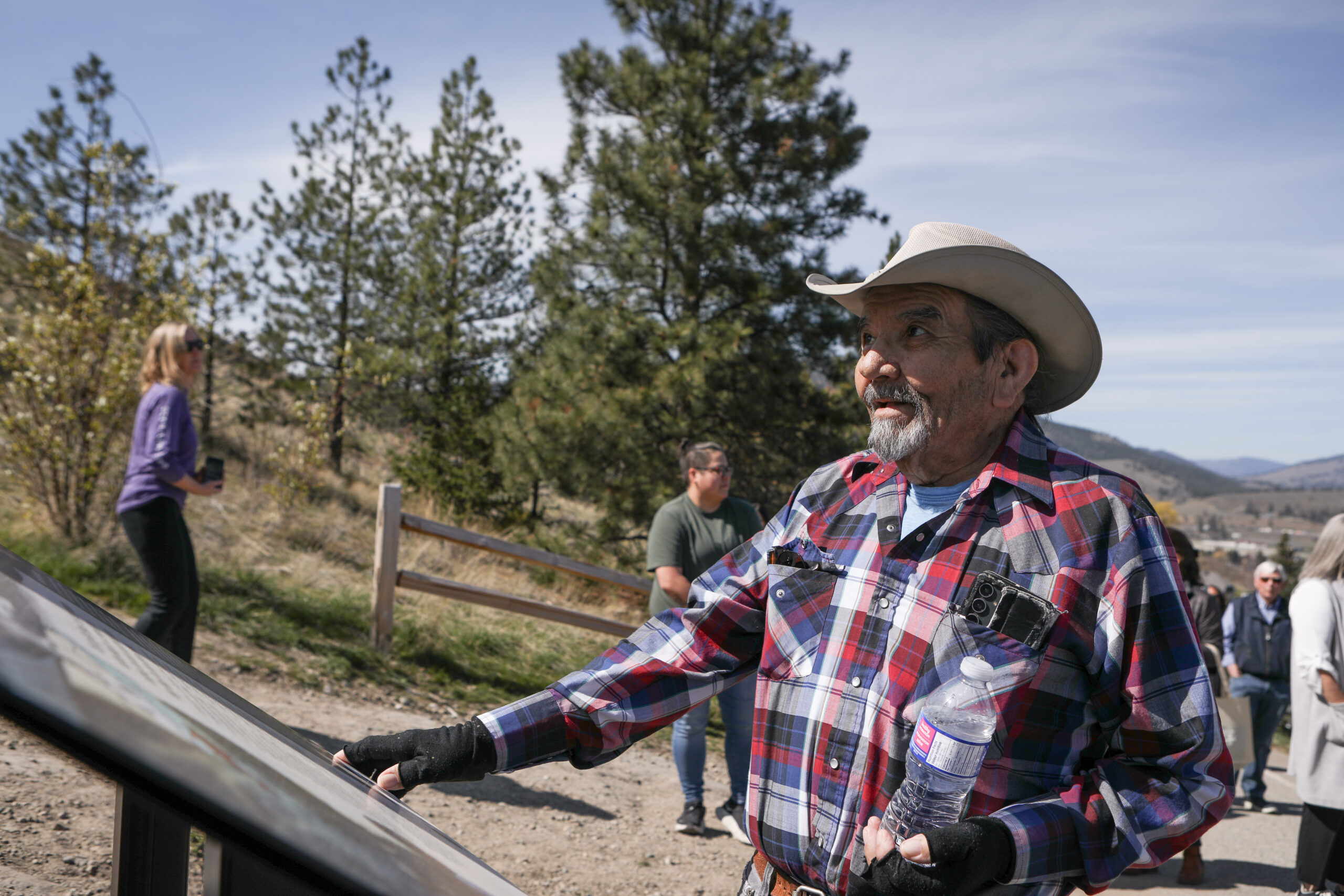
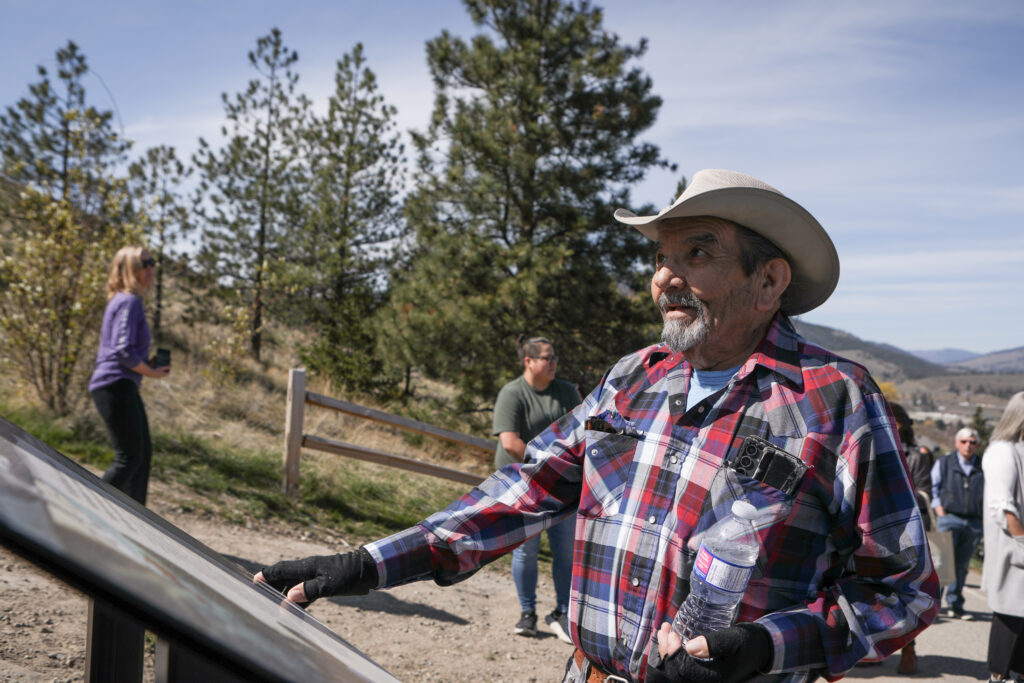
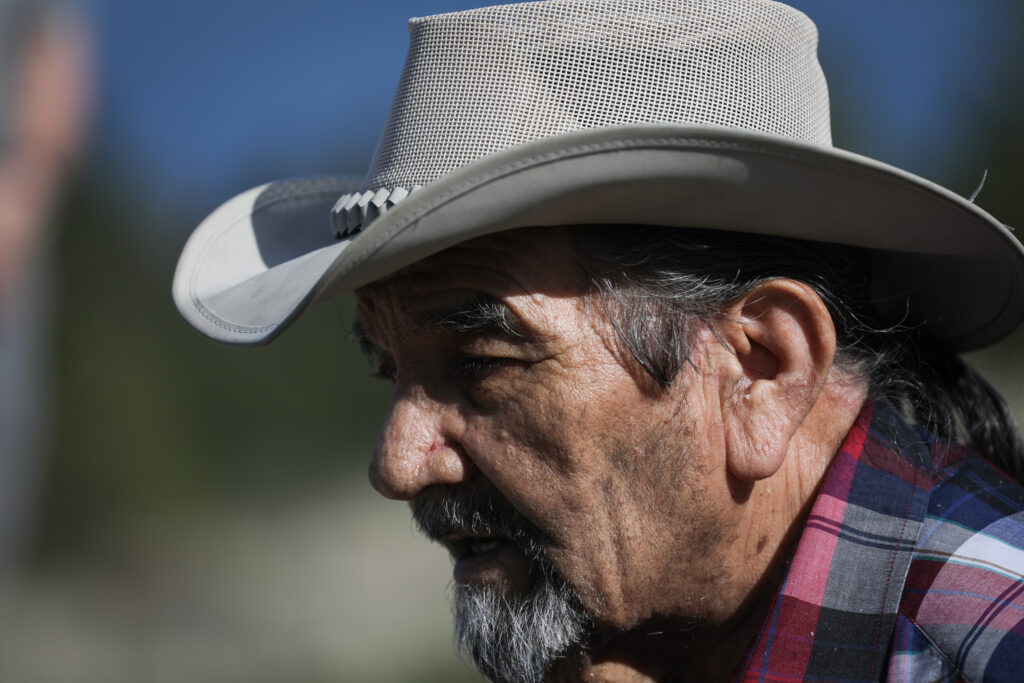
“The elk, the deer, the bear — all the creatures — had given their blessings that we would be the ones to replace them,” said caylx (Richard Armstrong), a syilx Elder and knowledge keeper.
The animal people would later give a language to the humans, one similar to nsyilxcən — the language spoken by syilx people — but “a little different than the animal people’s language,” explained the 80-year-old fluent nsyilxcən-speaker.
“That old language is still remembered by the higher speakers like myself and my grandmother, and the old ones that are passed on.”
And while there’s no direct translation for the animal people from nsyilxcən into English, caylx said they’re described in nsyilxcən as tmixʷ — a term that includes every living thing.
“The two-legged, including every blade of grass, every tree, they’re living beings,” he said. “The water, the creeks, everything.”
Monument to animals’ care for the land and humans
To prepare for the people-to-be, one of the tasks for the animal people was to leave behind a historic marker — one that not only represented their strength, but also reminded humans of the sacrifices they made in giving up their lives for them.
“That the two-legged people are never to forget that the animal people gave us everything we needed,” said caylx.
“A sacred place where our people could teach and tell the younger generation of how important the animal people were to us.”
Because, he added, “without them we would have nothing.”
So, the captikʷł continues, all the strongest and biggest animals — from kilawnaʔ (grizzly bear) to pʕapʕalacʼaʔ (moose) — embarked on a challenge: to take turns carrying a giant rock up the mountain.
Not only did this support their training exercises, but they wanted to leave the rock at the top of the mountain as a reminder “that the animal people were here before.”
With each attempt, different animal people would haul the massive stone as far as they could up the slopes, but none could reach the peak and would have to bring the stone back to the bottom for the next animal to try.
Along came the tiniest creature, sxwuxwiyaʔ (ant), who told them, “You all had your turn.” Crawling under the rock, it managed to slowly carry it up to the summit on its back.
“Not the big grizzly bear, not the moose, not any other big creature,” caylx explained in his telling of the captikʷł. “It was the smallest.”
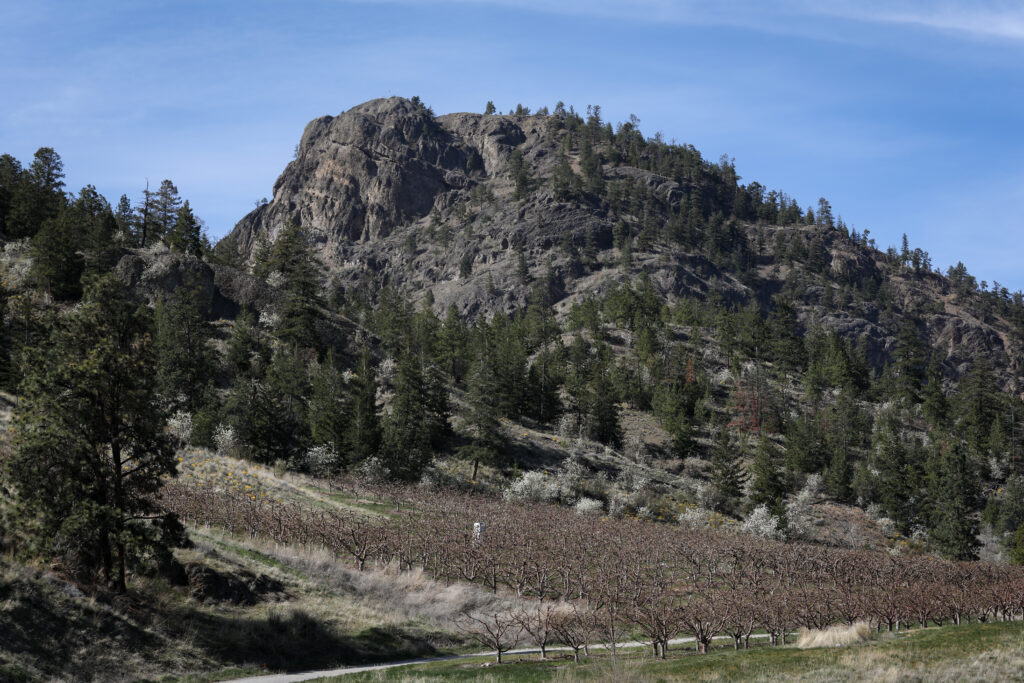
Today, that legendary stone still remains at the mountain’s peak, and is known as kłt’əpus, which in the nsyilxcən language means a “big lump or object on the edge of the bluff.”
Ancient stories ‘part of the land where we all live’: mayor
The mountain itself is known to syilx people as ackɬt’pus.
To settlers, it became known as “Giant’s Head,” and it is today a popular destination for trail walkers in the District of Summerland.
The syilx tale of ackɬt’pus is among those featured on four new interpretive signs installed along the mountain’s walking trails.
Unveiled last Friday, the markers were a collaboration that included municipal governments, the Okanagan Nation Alliance, and Penticton Indian Band, part of trail redevelopment work in Giant’s Head Mountain Park since 2023.
More than 20 people — including District of Summerland staff, councillors and other project partners — attended the April 10 event, where caylx shared the story of the ant.
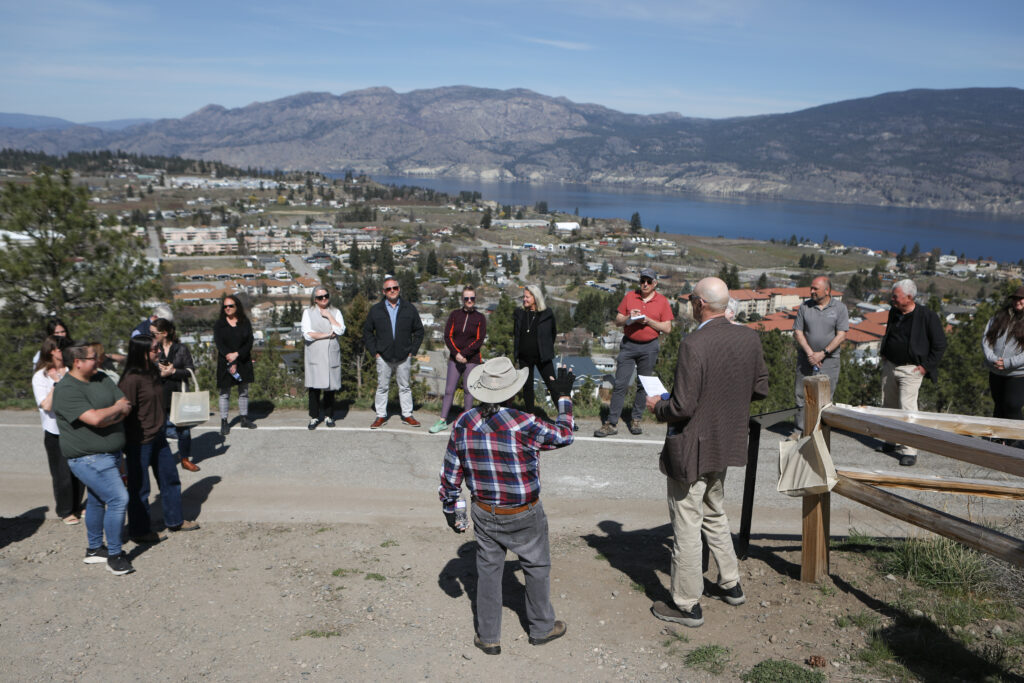
Doug Holmes, Mayor of the District of Summerland, told IndigiNews that it was critical to include the interpretive signs when the local trails were redeveloped.
“We all need to know these stories. They’re part of the land where we all live. We need to know them. This is part of that education,” said Holmes.
“We felt it was the only right thing to do.”
Holmes said the municipality wants to continue work and partner with the syilx community on future restoration projects, such as the restoration of the lower Trout Creek to help support spawning salmon.
Story reminds Youth to believe in their abilities
syilx people still share the story of sxwuxwiyaʔ and kłt’əpus with their Youth today, caylx said.
The story’s message encourages young people to recognize their own gifts and to believe in their strengths as they confront life’s challenges, no matter how difficult it may be.
“When you think about the task that you’re looking at, you don’t look at the size of the rock; you know what you are capable of,” he explained.
“Every one of you have the ability to do something. Every one of you know your ability. The things that you can do … it’s that rock, you carry it and take it to where it needs to be.”
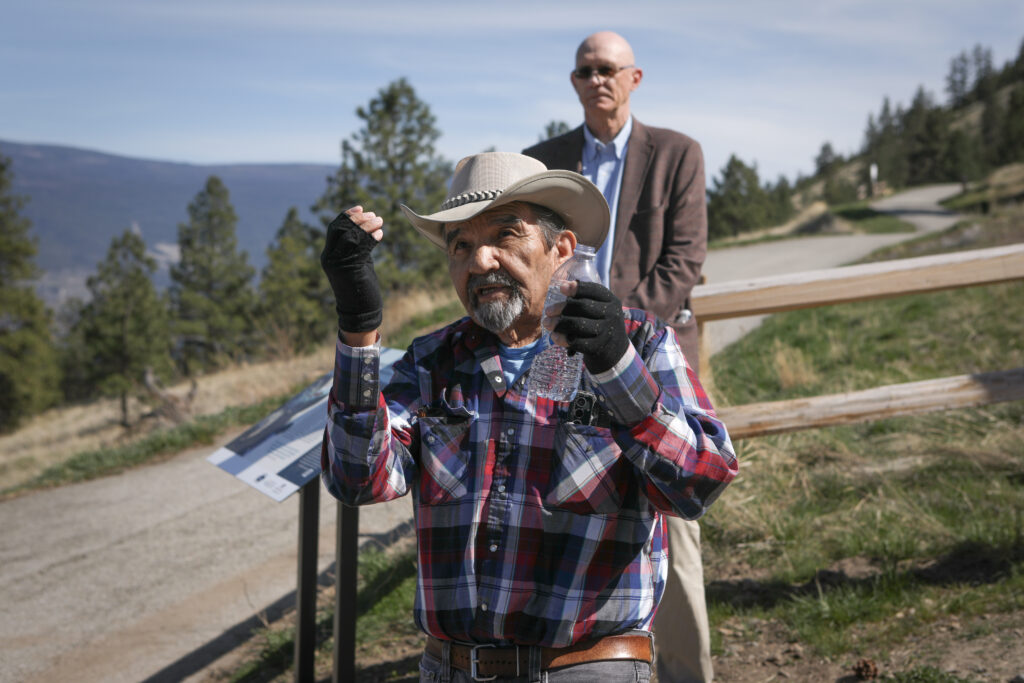
Reflecting on the story from countless generations ago, caylx reminded his audience on the mountain that the place remains a symbol of the sacrifices the animal people made for the future people-to-be — sacrificing their lives so the two-legged could eat and survive.
“Because they gave their own living being for us to survive, the deer, the elk, all of the meat that we eat,” he explained.
“If it wasn’t for them, a lot of things we wouldn’t have,” he noted.
This specific story is featured on one of the new interpretive signs, installed at the mountaintop.
Thanks to the accessible signage for local trail walkers, caylx hopes the lessons of such captikʷł can now benefit people of all nations — and help them better understand and respect the land.
“It has to be something that is passed down from generation to generation, proving that the animals provided everything we needed,” said caylx, “including most of our language, our nsyilxcən.”
Author
We live in a media ecosystem that thrives on misinformation. Big Tech and AI companies are consuming the work of real human beings and Canadian news has been banned on Facebook and Instagram.
And yet, I have hope for journalism because of the work we’re doing at IndigiNews.
At IndigiNews, we embody tâpwêwin — the Cree value of integrity and responsibility in truth-telling. We are committed to our independent, Indigenous-led newsroom rooted in community, accountability, and relationality. We believe storytelling is a sacred fire that connects our pasts, presents, and futures through the storytellers in our Storytelling Lodge. IndigiNews creates space for Indigenous journalists, storytellers, Knowledge Keepers, and communities to gather, learn, and share stories that matter.
As a registered charity, we are building a fire that allows our work not just to ignite but to thrive. Rather than relying on advertising or corporate acquisition, IndigiNews is sustained by people like you who believe Indigenous stories are important for the future of our communities.
Your support is making a real difference.
Our community of supporters, our Firekeepers, make it possible to grow our newsroom, publish award-winning journalism, train emerging Indigenous journalists through initiatives like the ReFocus Photojournalism Fellowship, and publish trustworthy stories that serve our communities across the country. Every story we publish helps fill in gaps left by mainstream media and ensures Indigenous perspectives are represented with care, accuracy and respect.
But there is still more work to do.
As the media landscape becomes more and more uncertain, community support is as necessary and essential as it’s ever been. Every new Firekeeper helps protect the independence of our newsroom and strengthens journalism that is accountable to our many and varied communities over corporations.
That’s why we’re inviting you to become a Firekeeper.
Firekeepers tend to and protect the sacred fire. Your monthly contributions directly support IndigiNews’s Storytelling Lodge, helps sustain our independent, Indigenous-led newsroom, and ensures future generations of Indigenous storytellers have the resources they need to do the work.
As a registered Canadian charity, all eligible donations receive a charitable tax receipt.
If you believe Indigenous stories matter, if you value independent journalism, and if you want to help build a strong future for Indigenous media, we invite you to join our circle of Firekeepers today.
Together, we can keep the fire burning.
— Eden Fineday, Publisher, IndigiNews
Support us nowLatest Stories
-
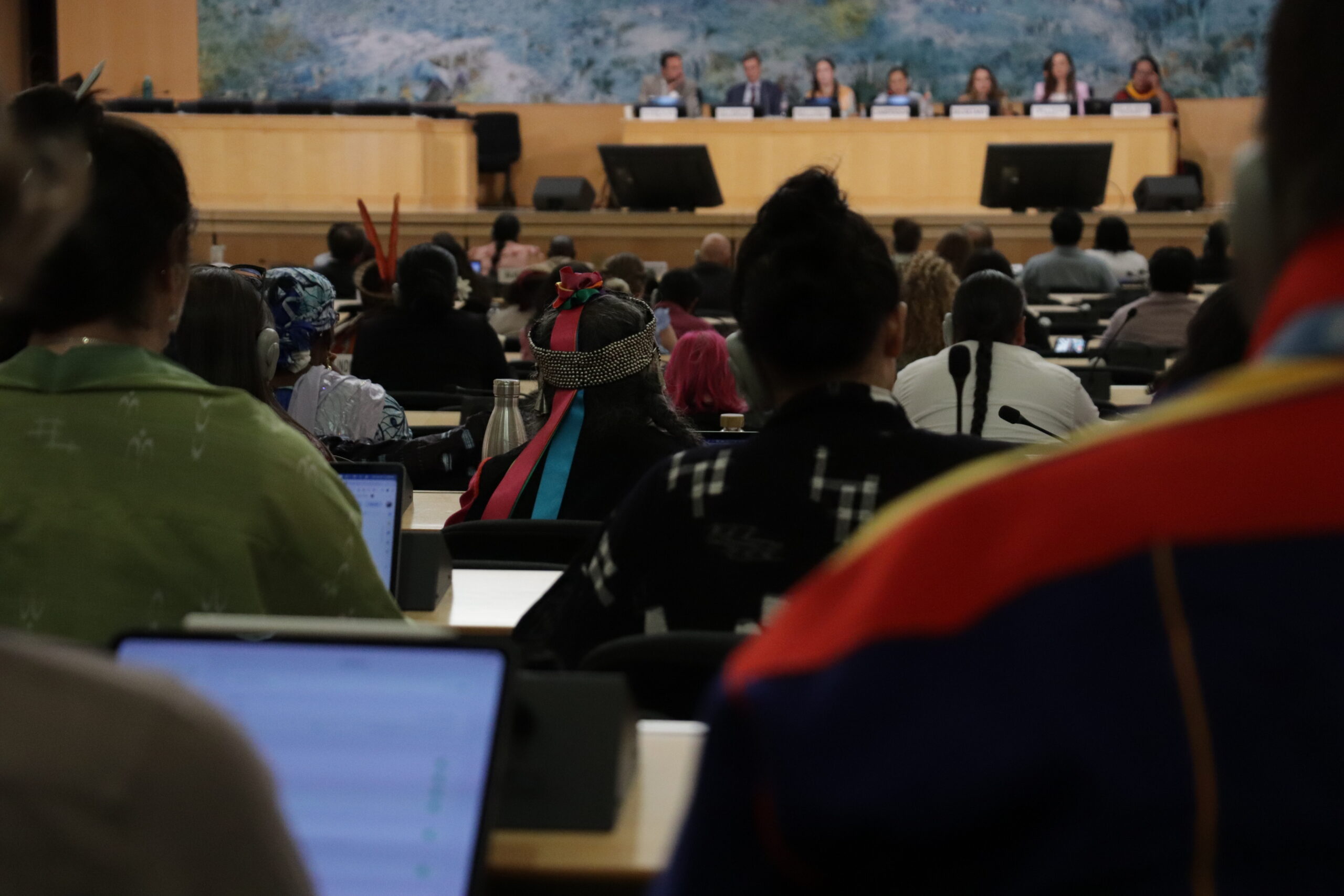
Indigenous leaders give the UN a roadmap for protecting their peoples
Amidst prayers and vows of solidarity, UN Expert Mechanism on the Rights of Indigenous Peoples ends annual meetings with demands for ‘action we’re not seeing globally’
-
Indigenous people demand more say at the UN, as new crises hit their homelands
Indigenous nations live ‘on the frontlines’ of climate, conflict and new tech. But their voices remain sidelined in the global halls of power.