Katzie First Nation guardians and partners celebrate restoration of important ‘B.C.’ marsh
Dikes were installed throughout the ‘Fraser River’ to pursue agriculture — now, reverting Xwíʔləm̓nəc to a wetland is restoring culture and connection
This story was originally published in the Narwhal and appears here with permission and minor style edits.
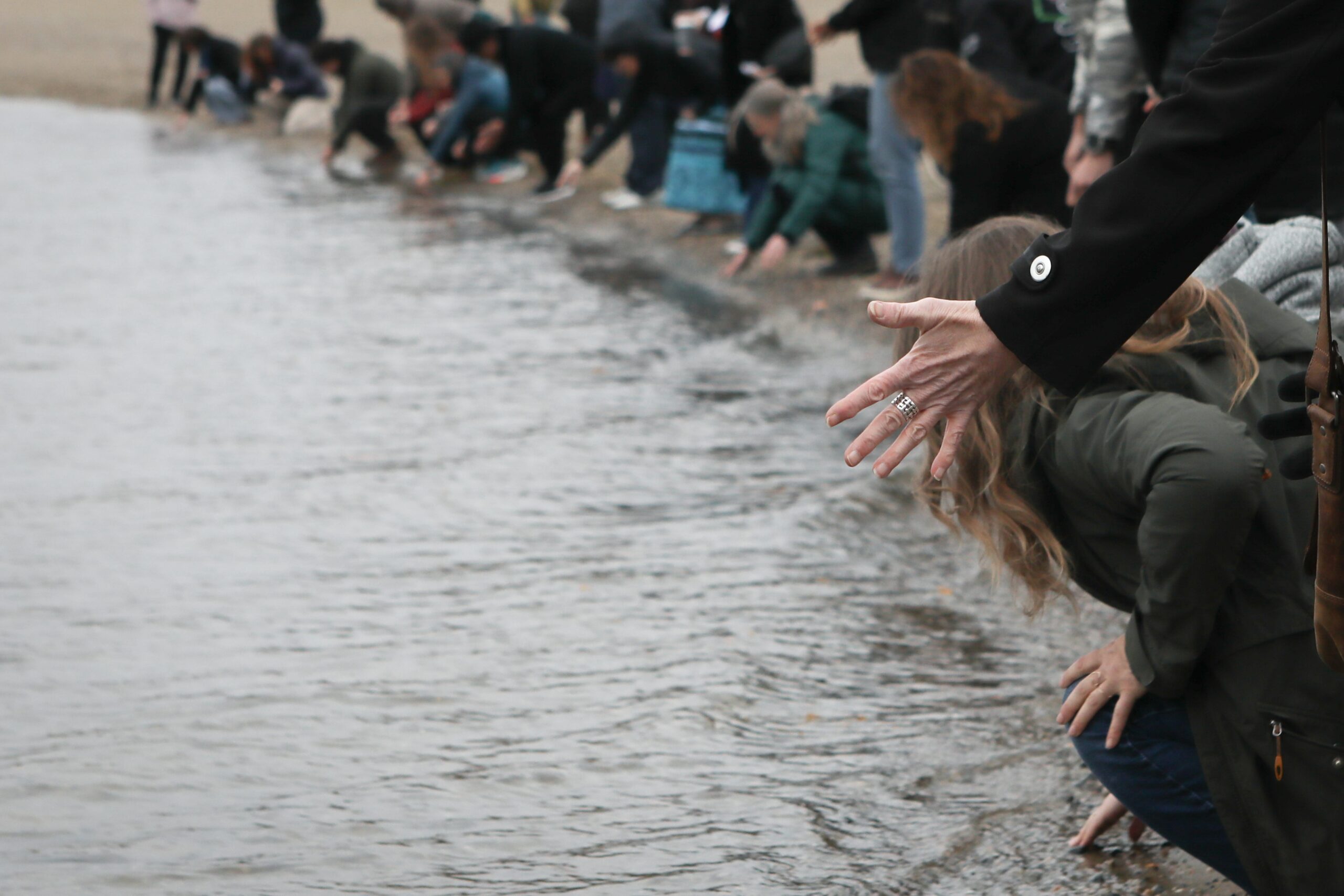
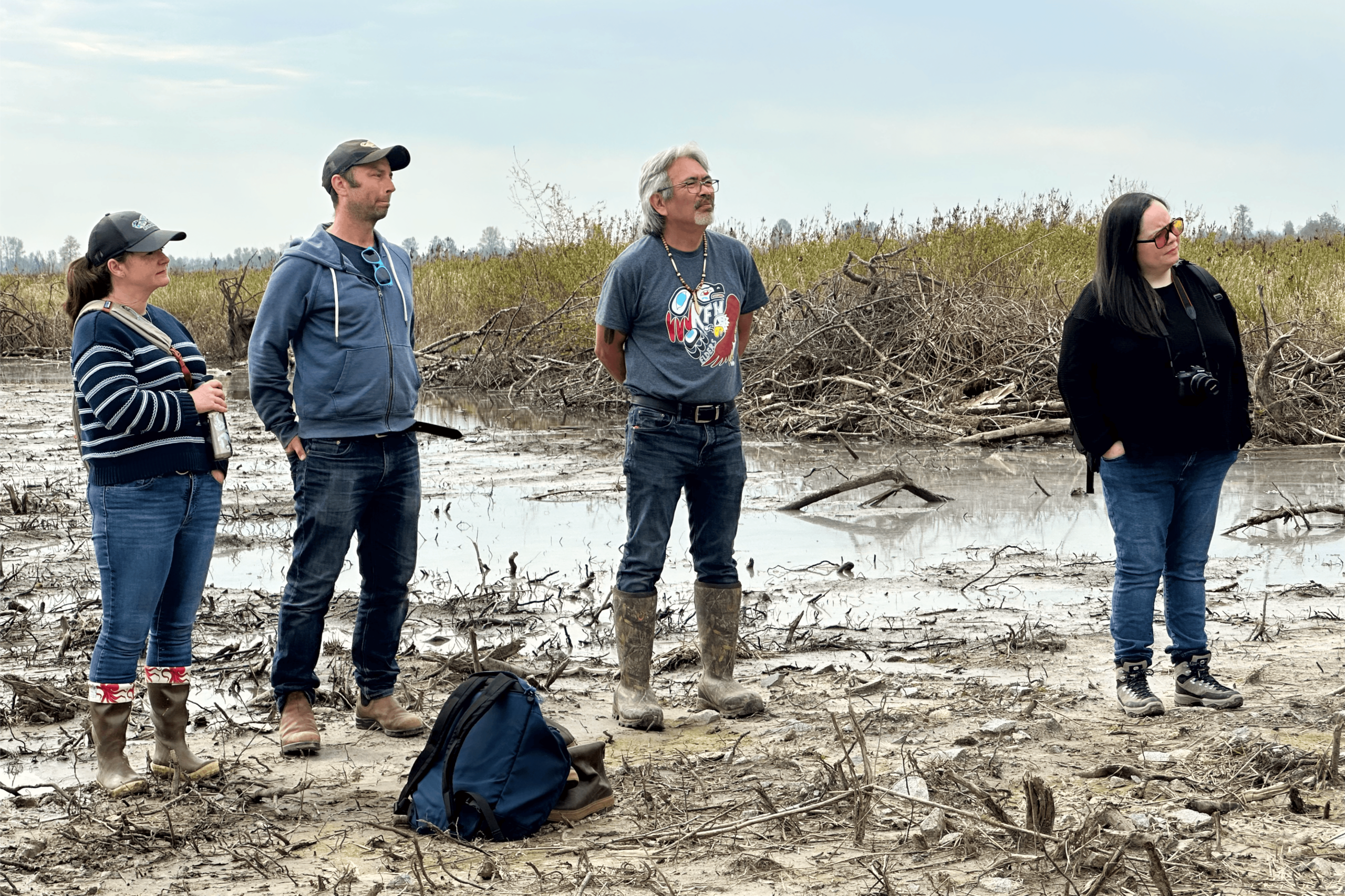
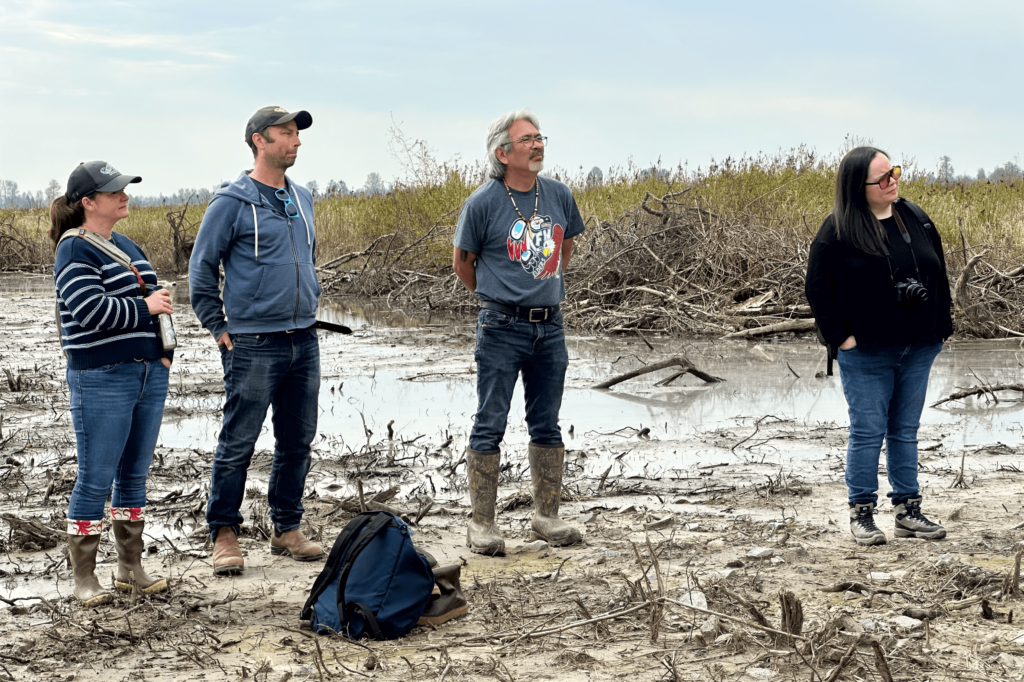
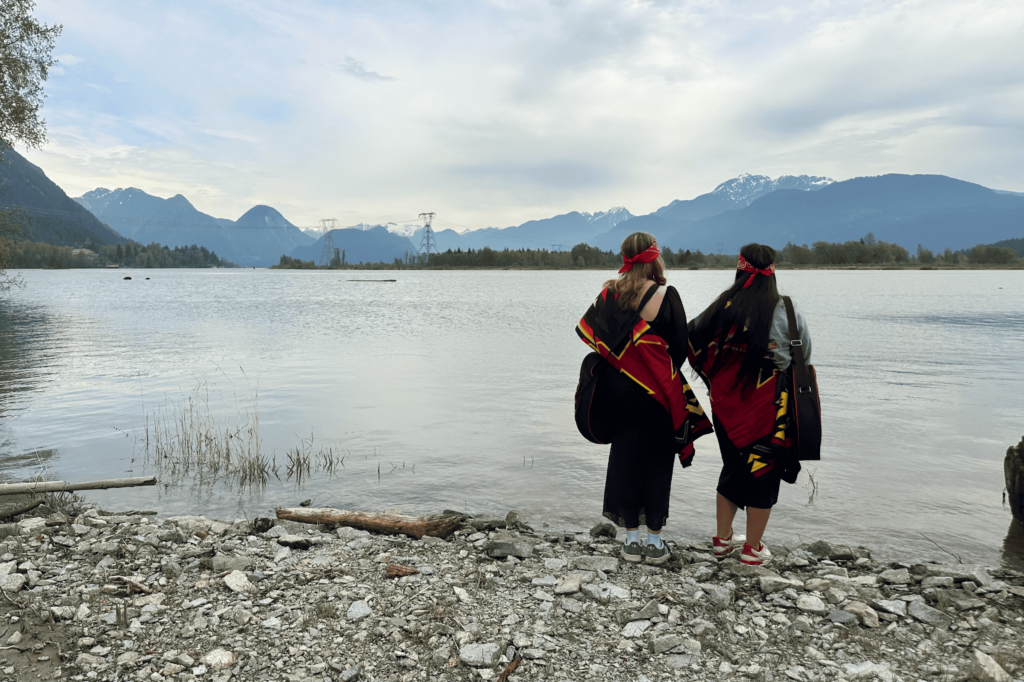
On a late April morning, a group of Katzie First Nation land guardians, conservation workers, government representatives and others trek down to Xwíʔləm̓nəc (Addington Point Marsh).
They gather in the First Nation’s Lower Mainland territory to celebrate the long-awaited completion of a wetland restoration project connecting to the Stó:lō (Fraser River).
Mike Leon leads Katzie’s team of eight guardians, and has been involved with the marsh restoration project from the beginning.
After everyone bypasses a locked gate — there to reduce the risk of bear-human encounters — they stop by the water, and he addresses the group.
“I would really like to raise my hands to all of you, to the hard work and willingness to work with us,” he said, “to be with us, to be with this land.”
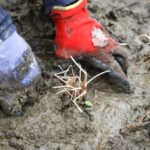
The restoration effort was funded by the provincial government and the federal Department of Fisheries and Oceans.
Katzie First Nation implemented the project with Resilient Waters, Ducks Unlimited Canada, and the Nature Trust of British Columbia, with many helping hands involved.
For three years, the partners worked together to reestablish waterflow in the marsh.
The wetlands connection to the “Pitt River” and south “Fraser River” system was disconnected when early settlers installed a dike, which has since been removed.
“I love doing the work,” added Mackenzie Adams, another Katzie guardian.
“I love being on our territory and helping the environment.”
Adams monitored the site throughout the project, and collected water and bird surveys to compare data before and after restoration.
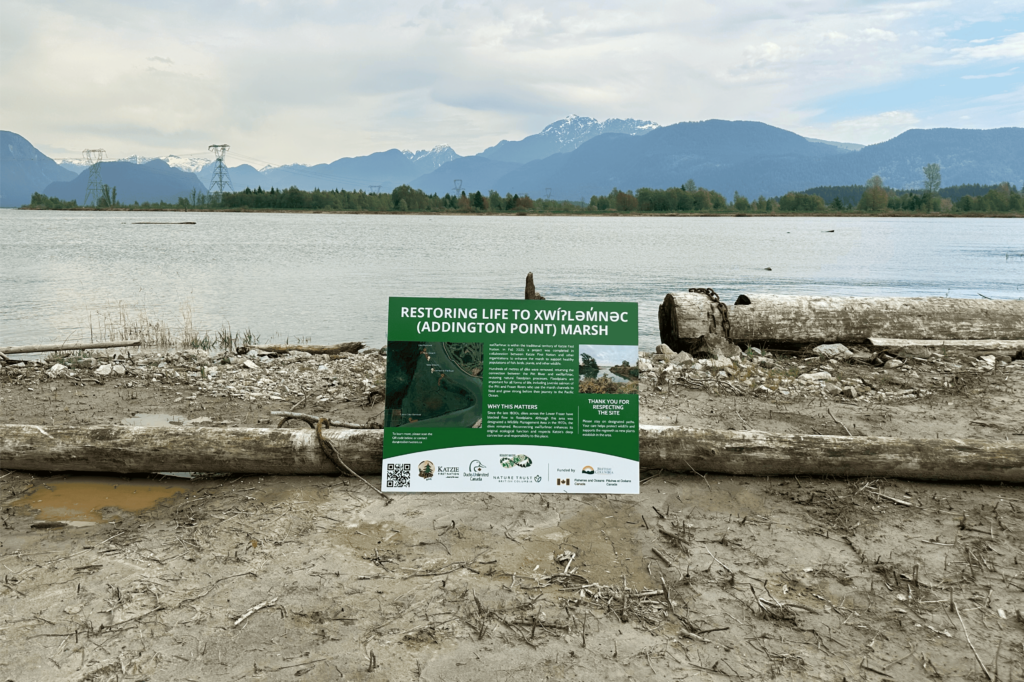
‘You can already see the differences’
Xwíʔləm̓nəc is now letting nature take its course, and with the area being home to one of the country’s largest salmon runs and smallest sandhill crane populations, monitoring the wetland is critical work for Katzie guardians.
“Comparing the first day to the last day was pretty eye opening because you can already see the differences from the river water coming in,” Adams said.
“It will be an awesome habitat for all birds and salmon fry.”
While the exact impact is still unknown, wetland restoration benefits are well-documented.
According to the B.C. Wildlife Federation, wetland monitoring is just as important as the initial restoration during a project.
“Monitoring, maintenance, and data collection help us evaluate the effectiveness of restoration techniques and improve the performance and function of future projects,” it reads on their website.
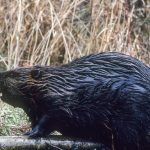
Leon’s team will be on top of that data, working with partners to restore and conserve native plants and animals in the area.
Beyond its environmental impacts, the project has brought people together from all walks of life who want to see salmon and wildlife in and around the Fraser River thrive.
Relationships between Katzie guardians and partners in the project have flourished.
A local property owner who attended the celebration shared their initial concerns after seeing excavation equipment clearing a path to the dike — and their relief after learning more about the endeavour.
Katzie had final say in restoration with many partners
Dan Straker, the manager for the Resilient Waters project, was a lead organizer under the direction of Katzie guardians and the First Nation’s leaders.
He said Katzie First Nation informed the project along the way and held final decision-making power.
“All the partners fell in line with that idea and thinking,” Straker told the Narwhal.
“What we ended up with was this really nice blended way of doing things.”
Leon added that, throughout the endeavour, Katzie brought in its customs, culture and laws.
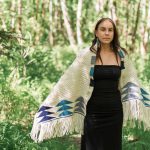
“It’s really important and special to us to know our place names in our territory,” Leon said.
“When we have our guardians come out, we’re honoured to be on those place names such as Xwíʔləm̓nəc.”
It’s a sentiment shared by Katzie’s guardian co-ordinator April Pierre. In a quiet moment of emotion in the circle, she addressed a reality shared by many First Nations people: growing up away from her homelands.
The Xwíʔləm̓nəc restoration project gave Pierre an opportunity to spend time on land she had never been to — the land of her ancestors.
It’s one emotional moment of many that were shared during the celebration, as others reflected on the marine and wildlife already making appearances in the marsh.
Farmland saw marsh habitat ‘alienated’ from river
Dikes were built to create flat land for agriculture in the area since the late 1800s.
Restoring the marsh’s connection to the river has immense ecological benefits and cultural benefits for local First Nations.
“Conservation organizations in previous decades had a different approach to conservation land management that I think sometimes excluded other organizations and nations,” said Eric Balke, a senior restoration biologist with Ducks Unlimited.
“I think we are learning new and better ways of moving forward — more collaborative ways — and this project is a great example of that.”
Balke has been involved with restoring Xwíʔləm̓nəc since brainstorming and planning stages, eventually passing the reins to his colleague Alison Martin, a conservation specialist with degrees in ecological restoration.
The project is “all about restoring relationships,” Balke said, something he’s particularly excited about.
“You’re restoring the relationship between the river and these wetlands that were formerly alienated by dikes,” he explained.
“You’re restoring the relationship between Xwíʔləm̓nəc and juvenile salmon that previously were prevented from accessing the site … It’s also restoring the relationship between Katzie and their kin.”
Wetland restoration benefits salmon
In the Pacific Northwest, both people and the ecosystem know how important salmon is.
Xwíʔləm̓nəc is connected to Stó:lō waterway, the country’s largest salmon-bearing watershed.
“Floodplains provide critical, food-rich habitat for juvenile salmon,” explains the Pacific Salmon Foundation.
“These low-lying areas adjacent to stream channels allow young salmon to grow healthy and strong before their journey to the ocean.”
But dikes disrupt the river’s connection to the marsh, blocking valuable nutrients and harming the salmon and other species.
Tidal marshes and other wetlands collect nutrient-rich sediment, helping protect communities from flooding, he said.
“This land that settlers found is super valuable for farming and agriculture,” he said. “It was valuable because of the sediment that was delivered — because of the nutrients that were delivered — by the river.
“When we construct dikes we disconnect the river from its floodplain. The river can no longer deliver those critical ingredients.”
A huge benefit of restoring tidal marshes is that they are one of the most effective ways of capturing and storing carbon, contaminants, and pollutants that flow downstream.
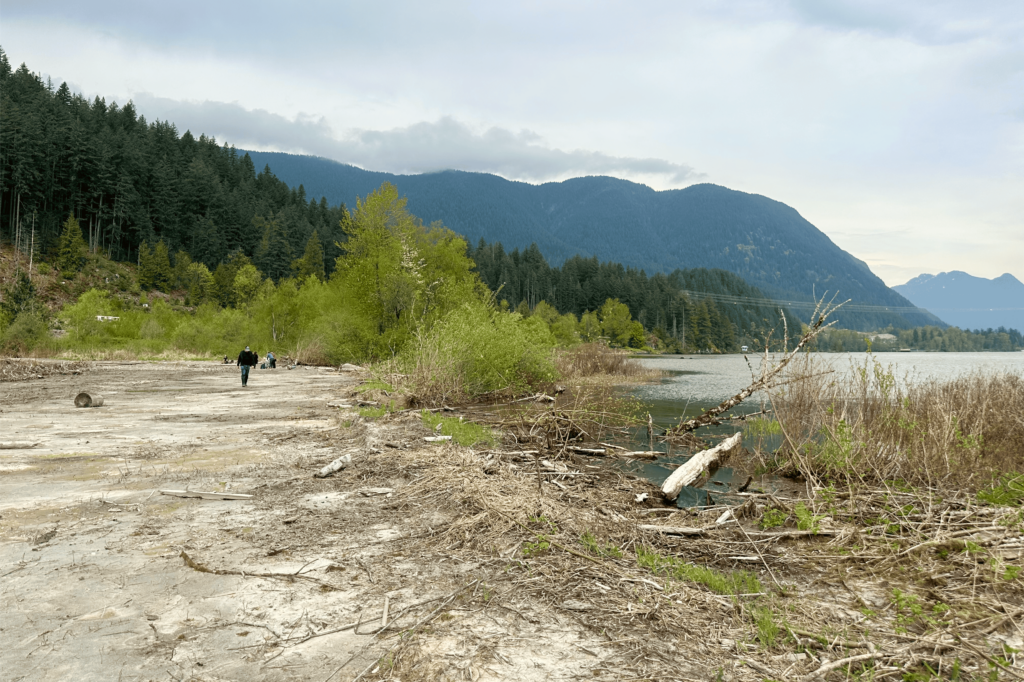
Further, Xwíʔləm̓nəc is home to wapoto and tule, two traditional plants for Katzie First Nation that have been impacted from dikes.
Members of the nation say restoring their wetland is giving hope that these plants can be harvested for food and mat-making once again.
The marsh is also home to sandhill cranes, whose local population has hovered around just 30 to 35 birds for decades, wildlife biologist Myles Lamont told the Narwhal.
He joined the restoration project as a sandhill crane consultant. He said the few remaining birds often next on golf courses and small regional parks.

“Unfortunately they’ve been getting struck by golf balls,” he said.
“Quite commonly over the last 10 to 15 years, I’ve had to rescue a few birds that have had broken legs or injuries as a result of golf ball strikes.”
He hopes restoring Xwíʔləm̓nəc to a wetland will bring in enough water to create a nesting habitat for the birds, drawing them away from golf courses.
As participants spoke around the sharing circle, Lamont spotted a sandhill crane flying above the gathering, and called out, “Crane!”
To Adams, being part of the restoration initiative was “really cool … knowing that we’re making a difference,” recalled the Katzie guardians member.
“The salmon habitat has a place to go throughout the winter, and so do the sandhill cranes and [other] birds,” Adams said.
“It’s a good feeling … I feel accomplished.”
Author
We live in a media ecosystem that thrives on misinformation. Big Tech and AI companies are consuming the work of real human beings and Canadian news has been banned on Facebook and Instagram.
And yet, I have hope for journalism because of the work we’re doing at IndigiNews.
At IndigiNews, we embody tâpwêwin — the Cree value of integrity and responsibility in truth-telling. We are committed to our independent, Indigenous-led newsroom rooted in community, accountability, and relationality. We believe storytelling is a sacred fire that connects our pasts, presents, and futures through the storytellers in our Storytelling Lodge. IndigiNews creates space for Indigenous journalists, storytellers, Knowledge Keepers, and communities to gather, learn, and share stories that matter.
As a registered charity, we are building a fire that allows our work not just to ignite but to thrive. Rather than relying on advertising or corporate acquisition, IndigiNews is sustained by people like you who believe Indigenous stories are important for the future of our communities.
Your support is making a real difference.
Our community of supporters, our Firekeepers, make it possible to grow our newsroom, publish award-winning journalism, train emerging Indigenous journalists through initiatives like the ReFocus Photojournalism Fellowship, and publish trustworthy stories that serve our communities across the country. Every story we publish helps fill in gaps left by mainstream media and ensures Indigenous perspectives are represented with care, accuracy and respect.
But there is still more work to do.
As the media landscape becomes more and more uncertain, community support is as necessary and essential as it’s ever been. Every new Firekeeper helps protect the independence of our newsroom and strengthens journalism that is accountable to our many and varied communities over corporations.
That’s why we’re inviting you to become a Firekeeper.
Firekeepers tend to and protect the sacred fire. Your monthly contributions directly support IndigiNews’s Storytelling Lodge, helps sustain our independent, Indigenous-led newsroom, and ensures future generations of Indigenous storytellers have the resources they need to do the work.
As a registered Canadian charity, all eligible donations receive a charitable tax receipt.
If you believe Indigenous stories matter, if you value independent journalism, and if you want to help build a strong future for Indigenous media, we invite you to join our circle of Firekeepers today.
Together, we can keep the fire burning.
— Eden Fineday, Publisher, IndigiNews
Support us nowLatest Stories
-

Olympic bobsledder Eden Wilson aims to ‘help open doors’ for aspiring Indigenous athletes
Recently inducted into the North American Indigenous Athletics Hall of Fame, the ‘Calgary’-based Métis athlete is working to break barriers for the next generation
-
In Simpcw First Nation, Secwe̓pemc women are revitalizing hide tanning
Working with animal pelts is a lengthy, labour-intensive process — but teachers in the ‘B.C.’ community are ensuring the tradition is passed on