In Simpcw First Nation, Secwe̓pemc women are revitalizing hide tanning
Working with animal pelts is a lengthy, labour-intensive process — but teachers in the ‘B.C.’ community are ensuring the tradition is passed on
This article has been co-published with The Narwhal, as part of their 2026 Indigenous journalism fellowship.
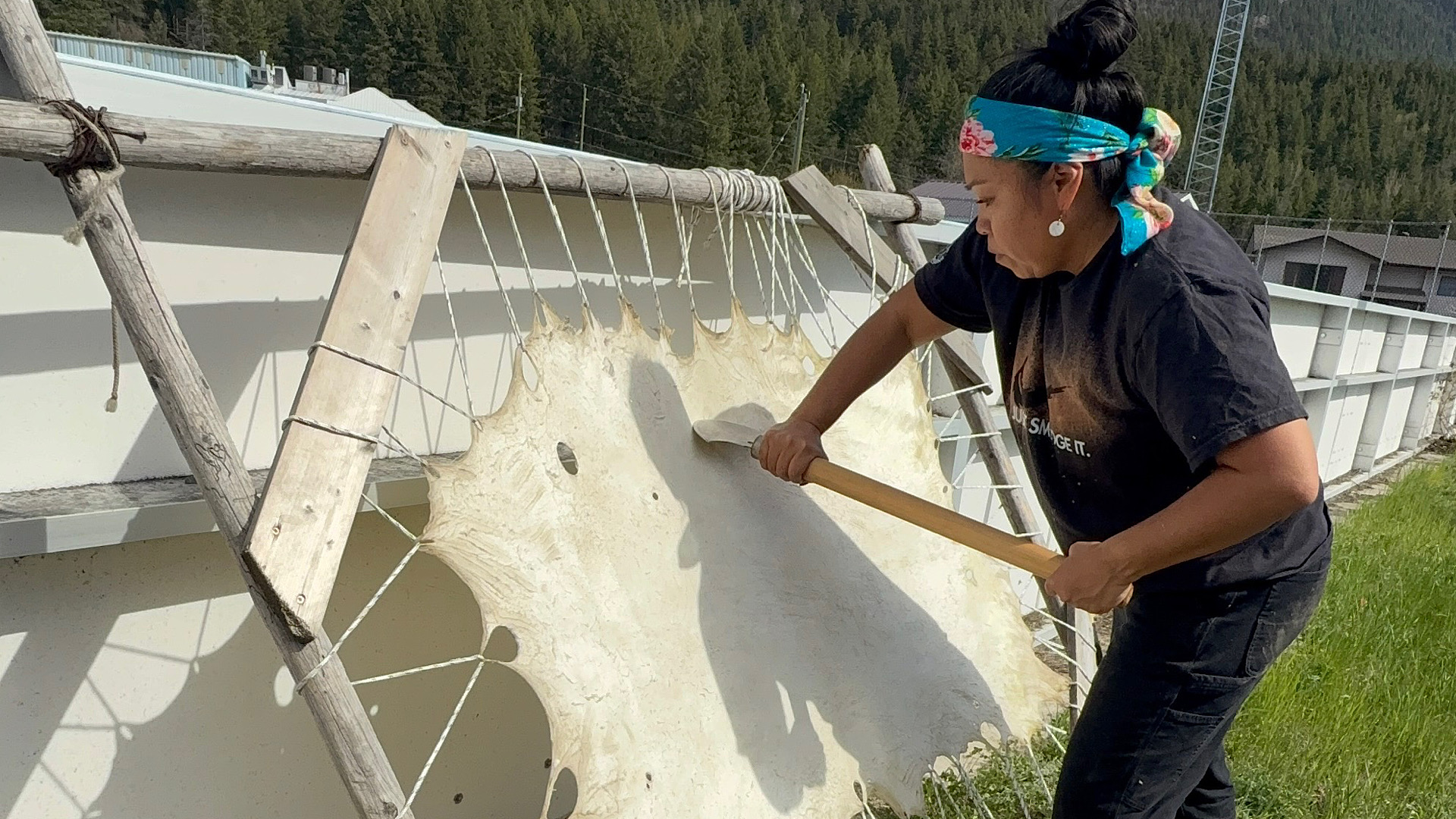
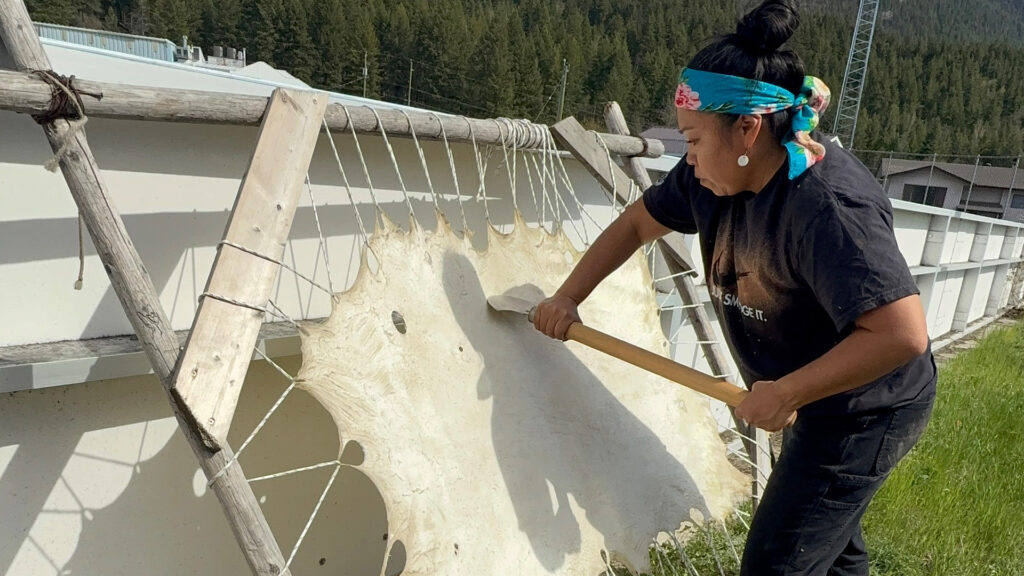
Working with animal hides can be a messy process — and children in Tiffany Bowser’s community of Simpcw First Nation “absolutely love it.”
“They love scraping the hide. They love stretching it,” she shares.
“I don’t know why, but brain water is one of their favourite things,” she adds, laughing.
“I’m like okay, just don’t get it in your mouth.”
Bowser hosts hide-tanning workshops in her First Nation, come-and-go style, so people with different needs can attend.
Her workshops are also hosted during the school day, so children and Youth from the Secwe̓pemc community — located north of Tkʼemlúps (Kamloops) — are able to participate.
From hunting the animal, to skinning and tanning the hide, it is a lengthy, expensive and labour-intensive process that many people struggle to make time for. And finding people who carry the knowledge about how to properly tan an animal hide is becoming rare.
Despite those challenges, the tradition lives on in the Simpcw First Nation. In Secwe̓pemc culture, women are typically tasked with preparing animal hides — a responsibility that Bowser takes seriously.
Roberta Haller, who also teaches hide tanning in the community, agrees.
“There’s not too many people on the reserve who know how to tan a hide,” Haller says. “I feel very proud that I’m one of them.”
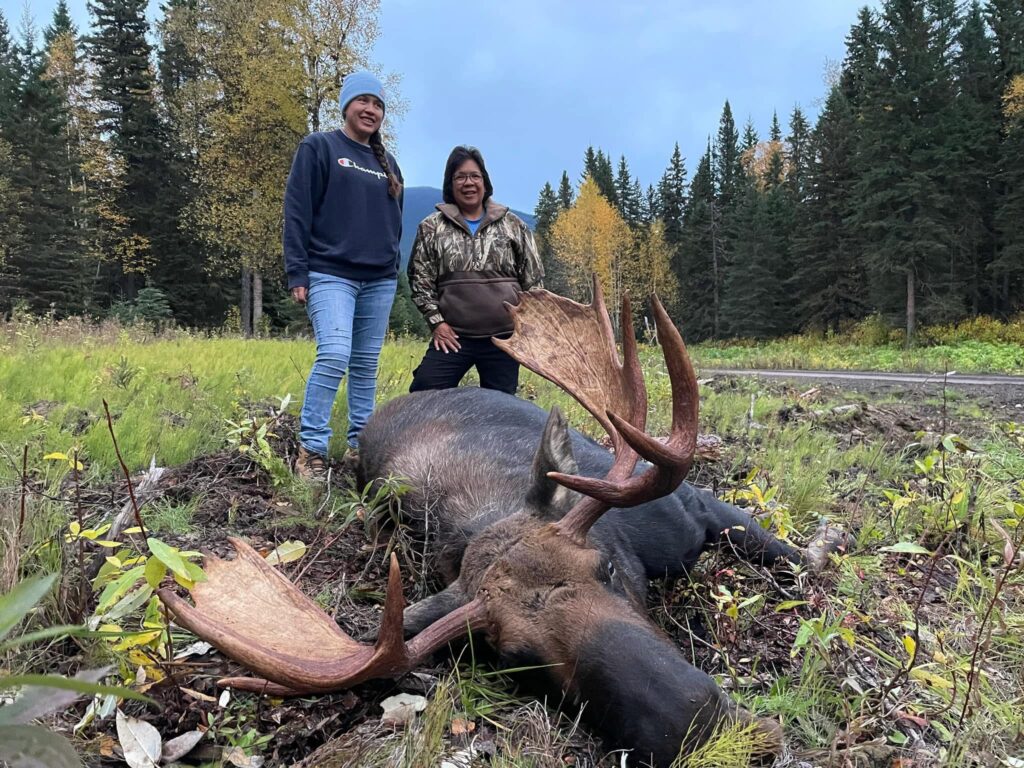
Bowser says she has been hunting since she was just three years old.
“Some of my earliest memories are sitting on my dad’s shoulders, packing a handful of gophers around and fishing,” she says.
“It’s just something I grew up doing.”
This year, she hosted a 10-day workshop, calling her mentor Haller over the phone for advice each day.
Haller was mentored by the late Virginia Donald, her aunt, who was known in the area for her tanned deer hides.
“I’m probably pretty biased, but she was one of the best hide tanners out there. Her deer hides came out white and perfect,” Bowser says.
Following the tradition of women who came before and taught them, Bowser and Haller support one another, teaching the next generation of hide tanners in their community how it’s done.
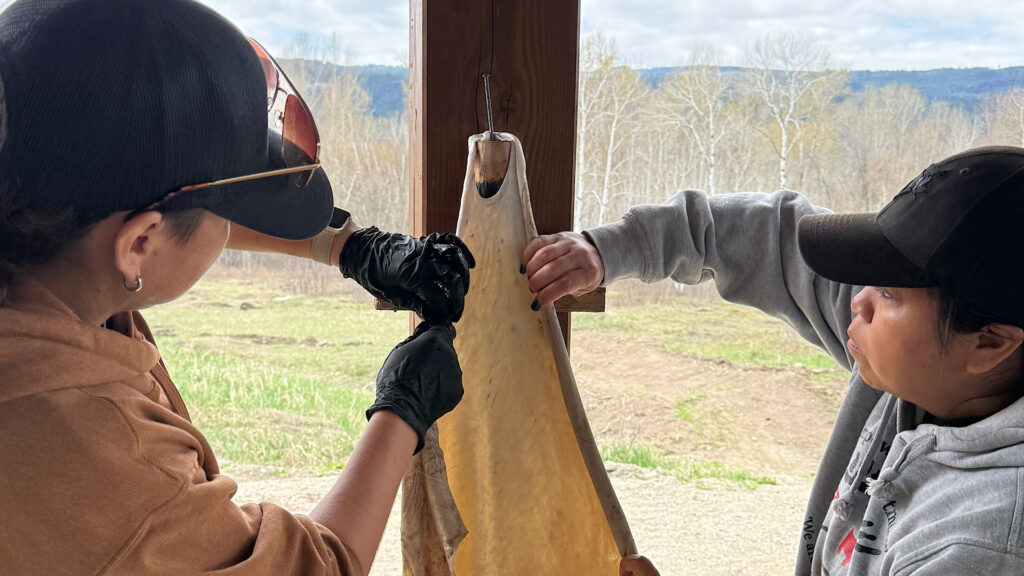
Hide tanning process and usage
While methods to prepare animal hides vary from person to person and community to community, Bowser and Haller follow the methods passed down to them from generations of Secwe̓pemc women.
After harvesting and skinning the animal, Haller explains, the hide gets soaked in water.
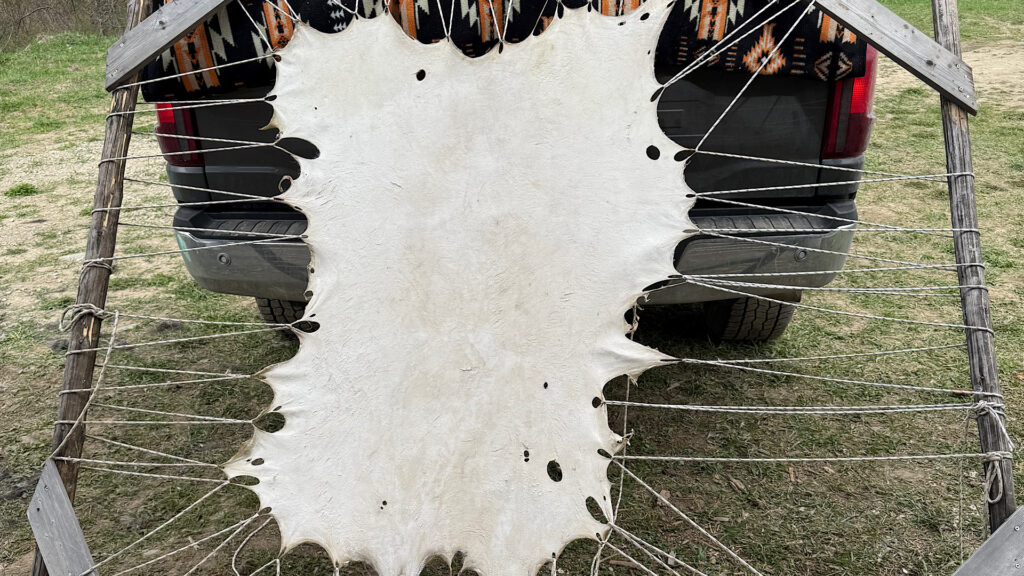
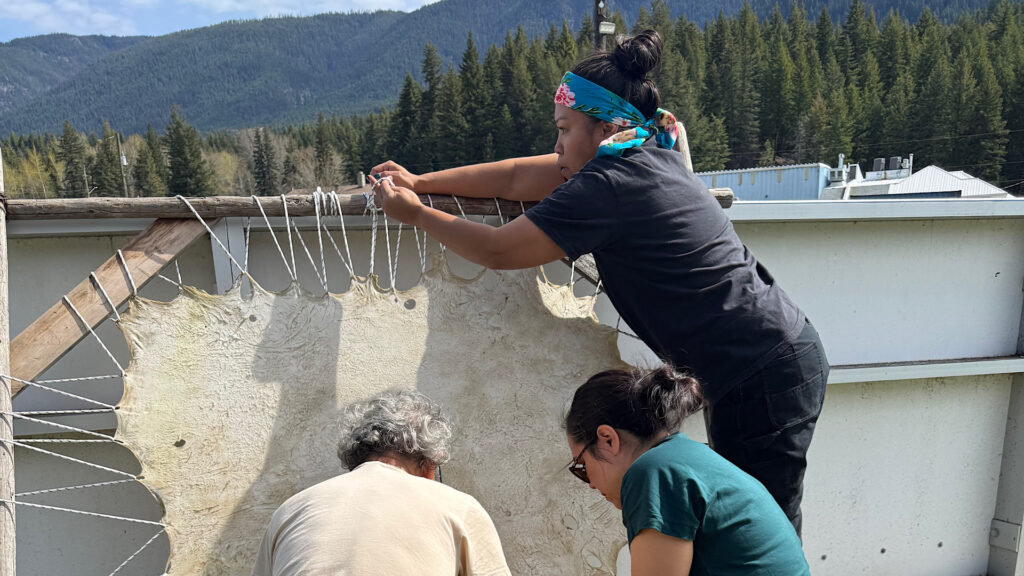
After it’s soaked, the hair is cut and scraped off the hide before it’s carefully placed on a frame.
This part can be tricky: experienced tanners know where to cut holes to properly stretch the hide on the frame, without ruining it by piercing in the wrong places.
Once on the frame, the hide is pounded and stretched, over a gentle heat source.
“Not too hot, so it doesn’t try out too fast,” she says.
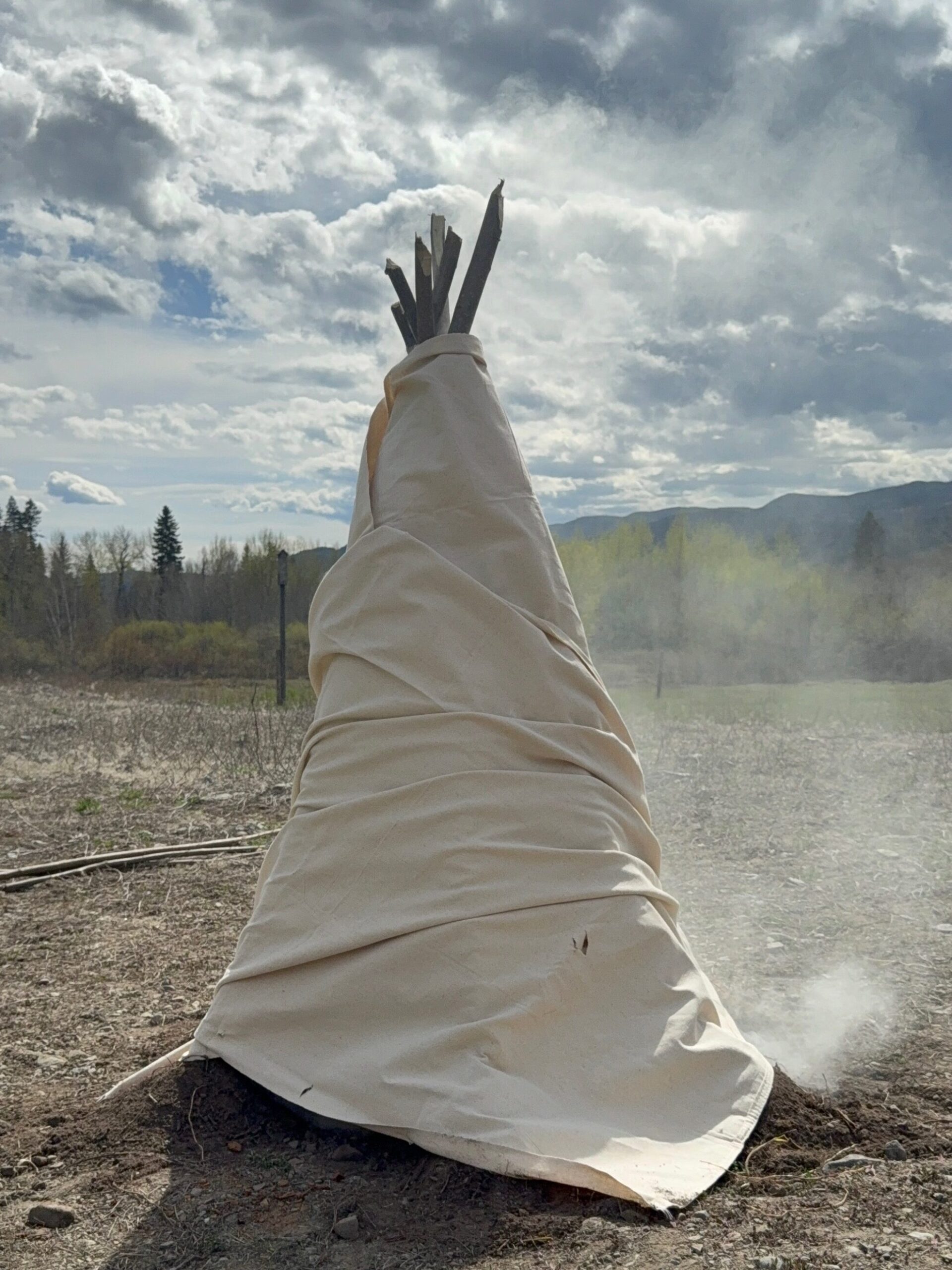
After that, the hide is taken off of the rack and smoked, which adds colour, prevents stiffness and makes the fabric not water-resistant, but washable.
The next step is the brain water.
“We take the brains from the deer and then we dissolve it in warm water so it becomes a milky liquid, in there we soak the hide again,” Haller says.
“As we’re soaking, we’re stretching it out again … then you put it back on the frame, pound it out again and start the whole process over again.”
All of this takes days, weeks or months, depending on the animal size, and what outcome the tanner is going for.
But if the steps aren’t completed properly, the whole process must be started over.
Smaller game animals can take weeks to complete, while larger animals like moose can take up to a year.
It takes time, commitment, muscles and know-how to make it all happen.
Passing the tradition through generations
Haller started working with animal hide in her 30s, wanting to pass the tradition onto her children.
And since tanning was so intensive, she wanted to help her mentor Virginia continue the practice as she aged, while learning the practice from her.
“Auntie Virginia didn’t like to take any shortcuts,” Haller says.
That meant skipping modern tools including pressure washers and trimmers to remove animal hair during the tanning process, which weren’t available back in her day.
“She just liked to do it the way she was taught, she didn’t try any other way. She knew one way would work, and that’s how she taught me, and that’s what we still do.”
Since learning from her auntie, Haller has mentored Bowser and anyone else who wants to learn at the community workshops in Simpcw First Nation.
Though they focus on involving Youth, anyone from the general community is also welcome to attend, as long as they are respectful of the animal hide.
One of those community participants is Fred Fortier, a Simpcw member who has attended many hide-tanning workshops hosted by Bowser and Haller.
Fortier grew up connected to the land. After recovering from cancer five years ago, animal hide workshops have become a more accessible way for him to practice culture, although he still goes hunting sometimes.
Visiting, speaking Secwepemctsín, sharing meals, telling hunting stories and laughing together at the workshops are “just a lot of fun,” Fortier says.
Watching his grandchildren participate in the workshops is exciting.
“I think that’s a really important component, our kids wanting to learn and not feeling ashamed to learn our cultural ways … for them to keep their head up and be proud,” he says.
He encourages hunters in the nation to keep the hide, bones and brains in mind when harvesting deer to be in alignment with Secwe̓pemc culture.
“We have a lot of women in our community who have stepped forward to teach people our cultural ways,” he says.
“For those people like Tiffany and Roberta, and all of the women who have stepped forward … I think they are the backbone of our community.”
Author
We live in a media ecosystem that thrives on misinformation. Big Tech and AI companies are consuming the work of real human beings and Canadian news has been banned on Facebook and Instagram.

And yet, I have hope for journalism because of the work we’re doing at IndigiNews.
At IndigiNews, we embody tâpwêwin — the Cree value of integrity and responsibility in truth-telling. We are committed to our independent, Indigenous-led newsroom rooted in community, accountability, and relationality. We believe storytelling is a sacred fire that connects our pasts, presents, and futures through the storytellers in our Storytelling Lodge. IndigiNews creates space for Indigenous journalists, storytellers, Knowledge Keepers, and communities to gather, learn, and share stories that matter.
As a registered charity, we are building a fire that allows our work not just to ignite but to thrive. Rather than relying on advertising or corporate acquisition, IndigiNews is sustained by people like you who believe Indigenous stories are important for the future of our communities.
Your support is making a real difference.
Our community of supporters, our Firekeepers, make it possible to grow our newsroom, publish award-winning journalism, train emerging Indigenous journalists through initiatives like the ReFocus Photojournalism Fellowship, and publish trustworthy stories that serve our communities across the country. Every story we publish helps fill in gaps left by mainstream media and ensures Indigenous perspectives are represented with care, accuracy and respect.
But there is still more work to do.
As the media landscape becomes more and more uncertain, community support is as necessary and essential as it’s ever been. Every new Firekeeper helps protect the independence of our newsroom and strengthens journalism that is accountable to our many and varied communities over corporations.
That’s why we’re inviting you to become a Firekeeper.
Firekeepers tend to and protect the sacred fire. Your monthly contributions directly support IndigiNews’s Storytelling Lodge, helps sustain our independent, Indigenous-led newsroom, and ensures future generations of Indigenous storytellers have the resources they need to do the work.
As a registered Canadian charity, all eligible donations receive a charitable tax receipt.
If you believe Indigenous stories matter, if you value independent journalism, and if you want to help build a strong future for Indigenous media, we invite you to join our circle of Firekeepers today.
Together, we can keep the fire burning.
— Eden Fineday, Publisher, IndigiNews
Support us nowLatest Stories
-

Tr’ondëk Hwëch’in celebrates as Gavin McKenna picked first in NHL draft
The 18-year-old left winger from the ‘Yukon’ joined the Toronto Maple Leafs roster, saying he wants to inspire other young Indigenous players
-
Innu Nation ‘moved to anger, to strength’ after accusing province of censoring history
Solidarity pours in after ‘Labrador’ history exhibition abruptly cancelled after province ordered removal of cultural items and timelines older than 300 years