Travelling in dugout canoes, syilx Okanagan paddlers complete weeklong Unity Trek
‘Unity is connecting the people to each other, and connecting ourselves to the land,’ said one participant about the commemorative journey that wrapped up on Aug. 1
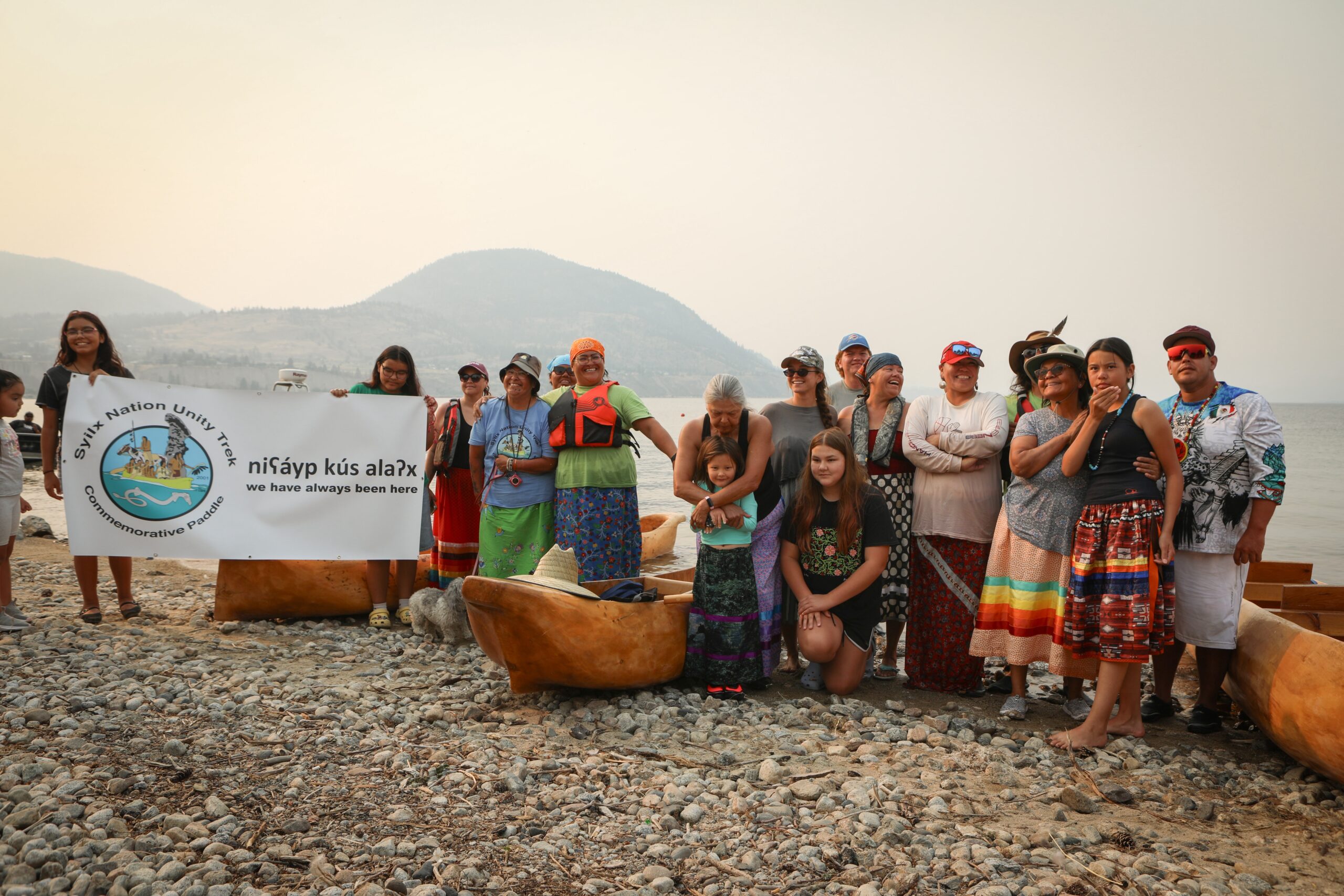
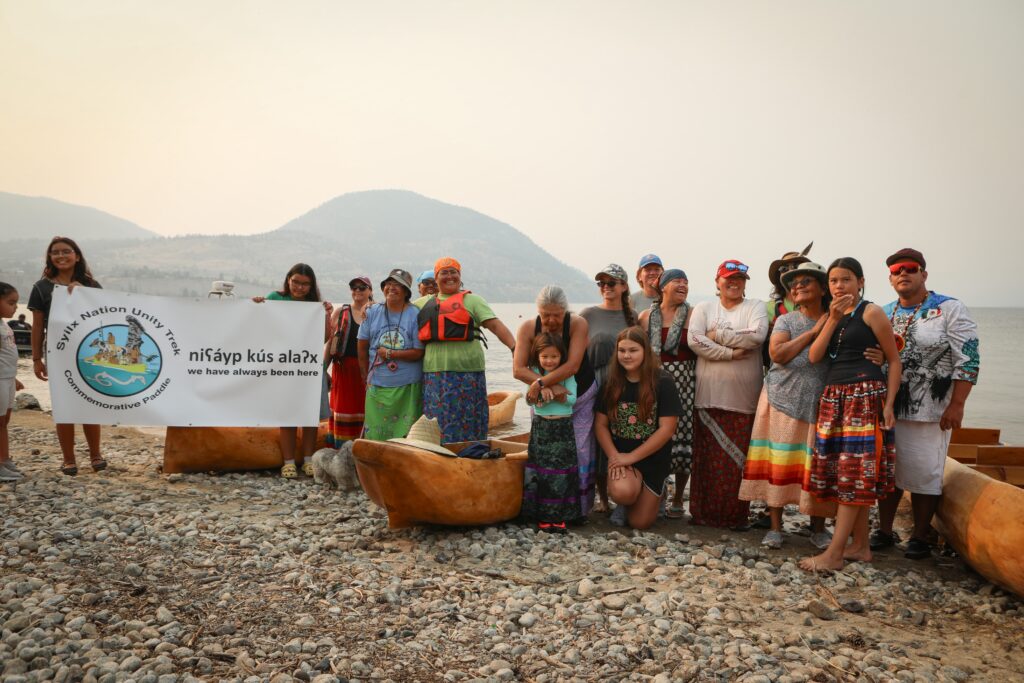
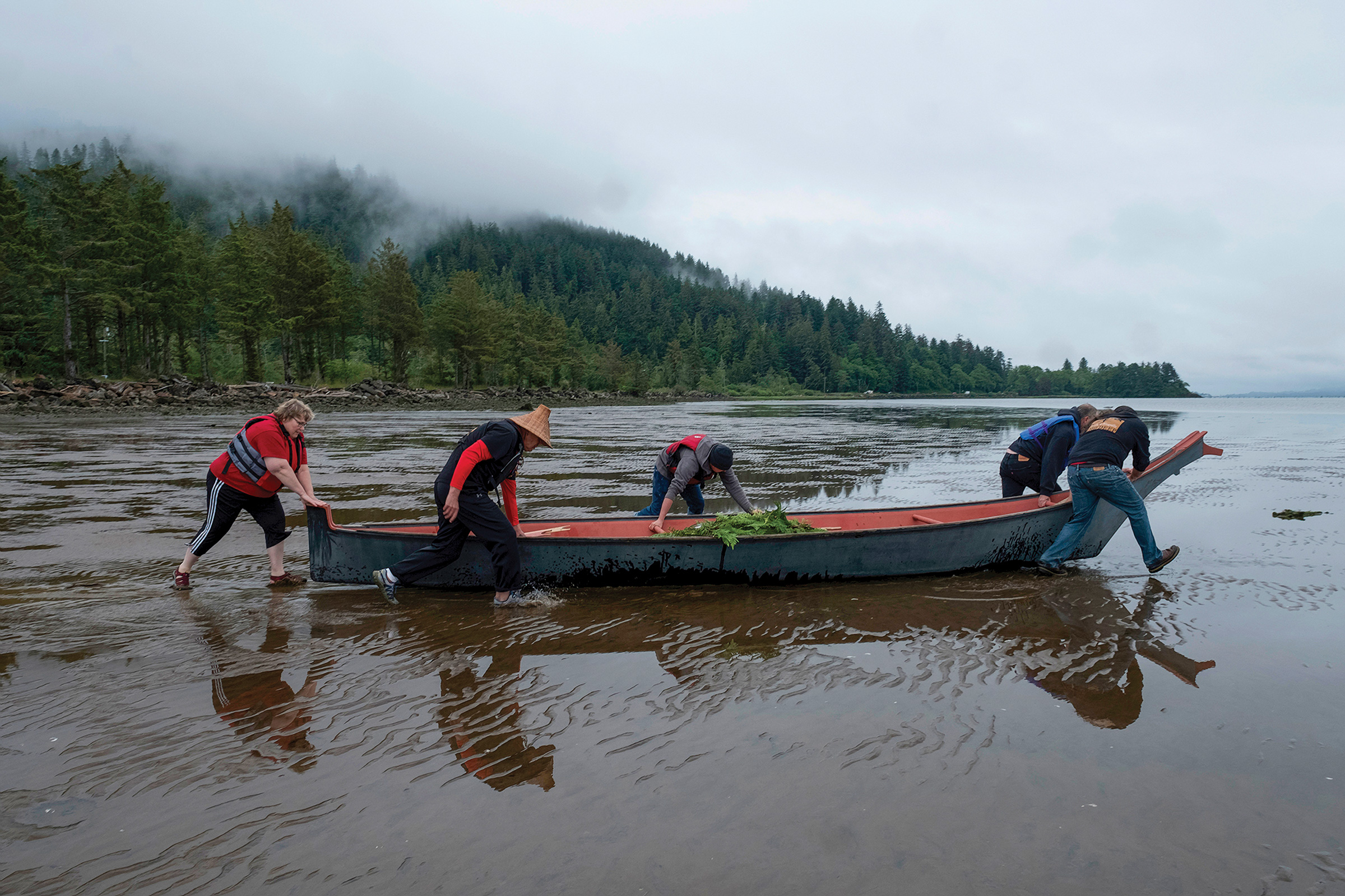
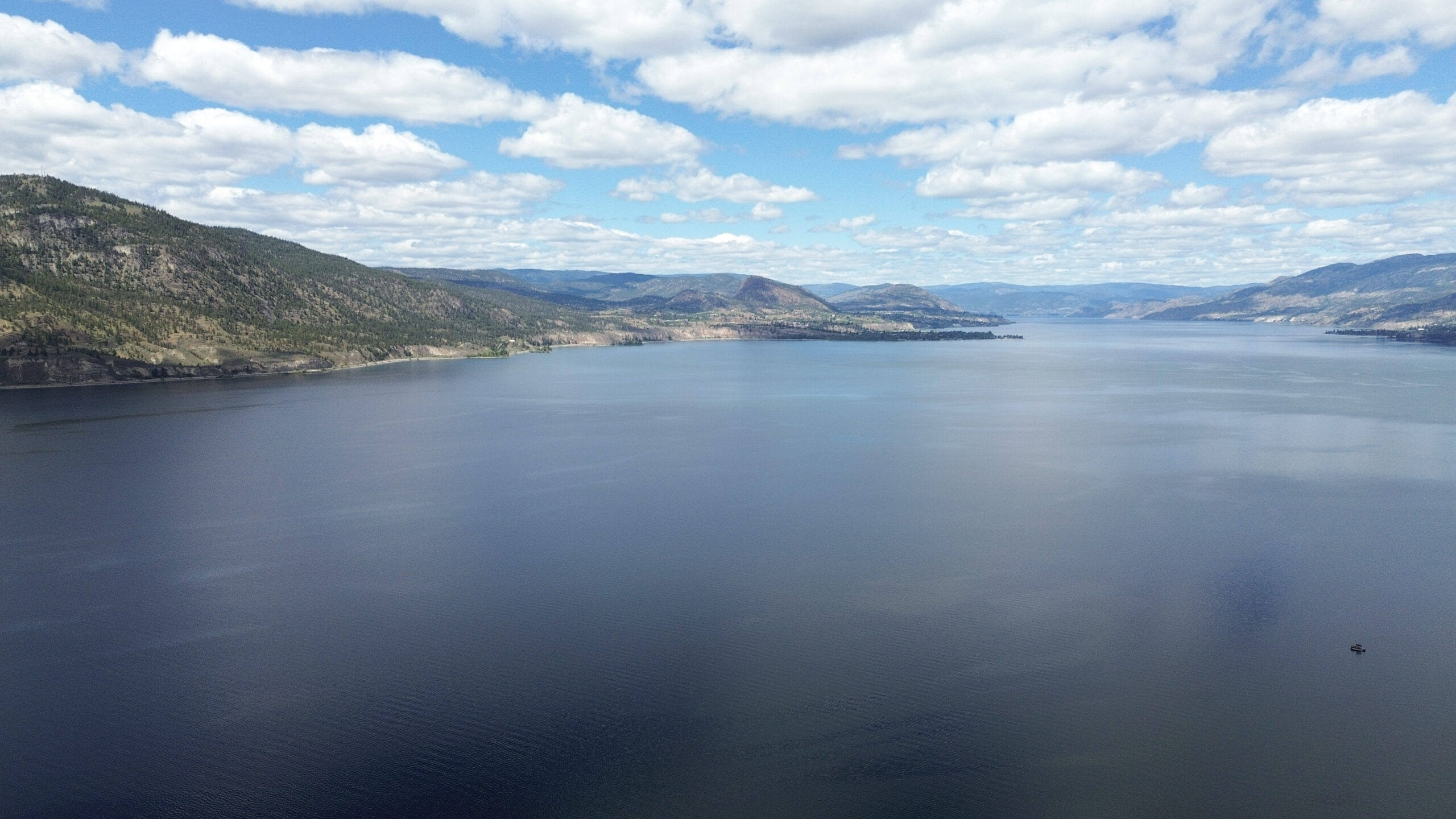
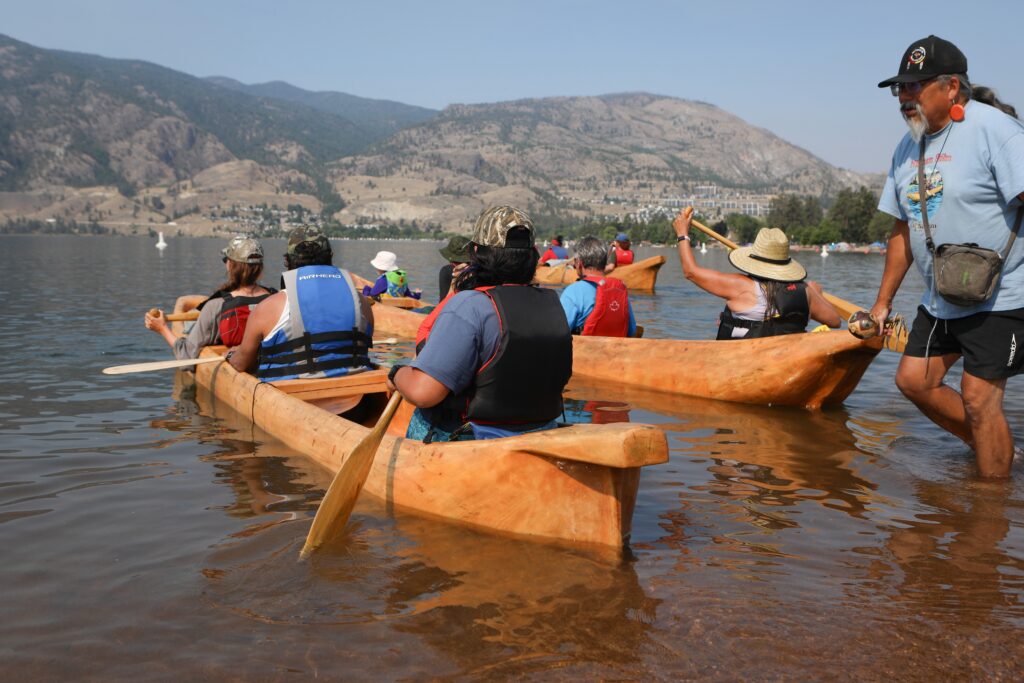
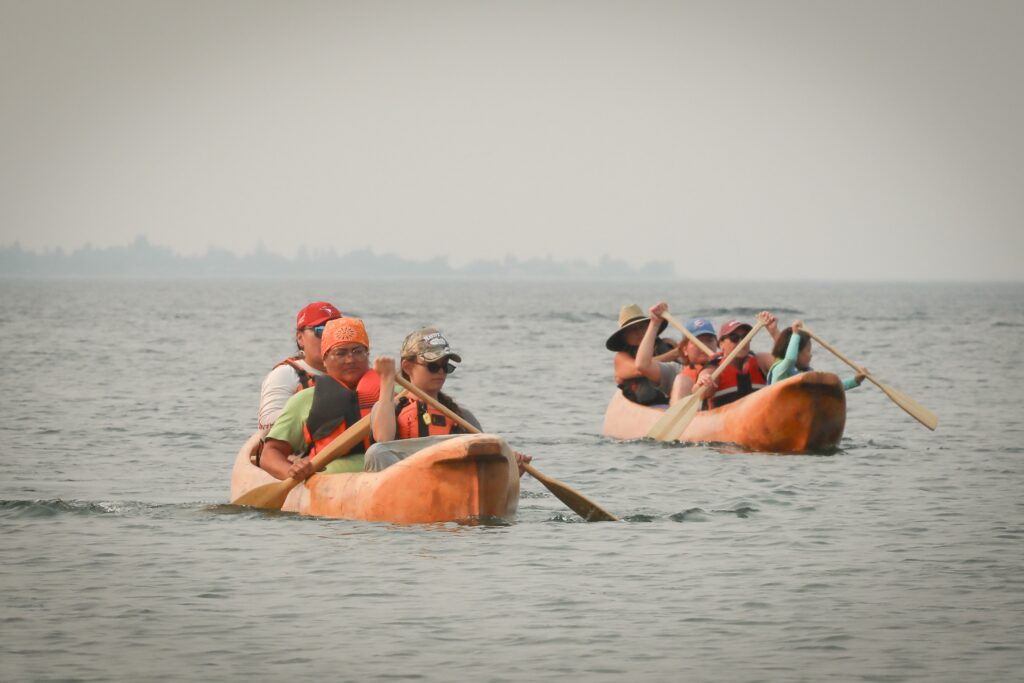
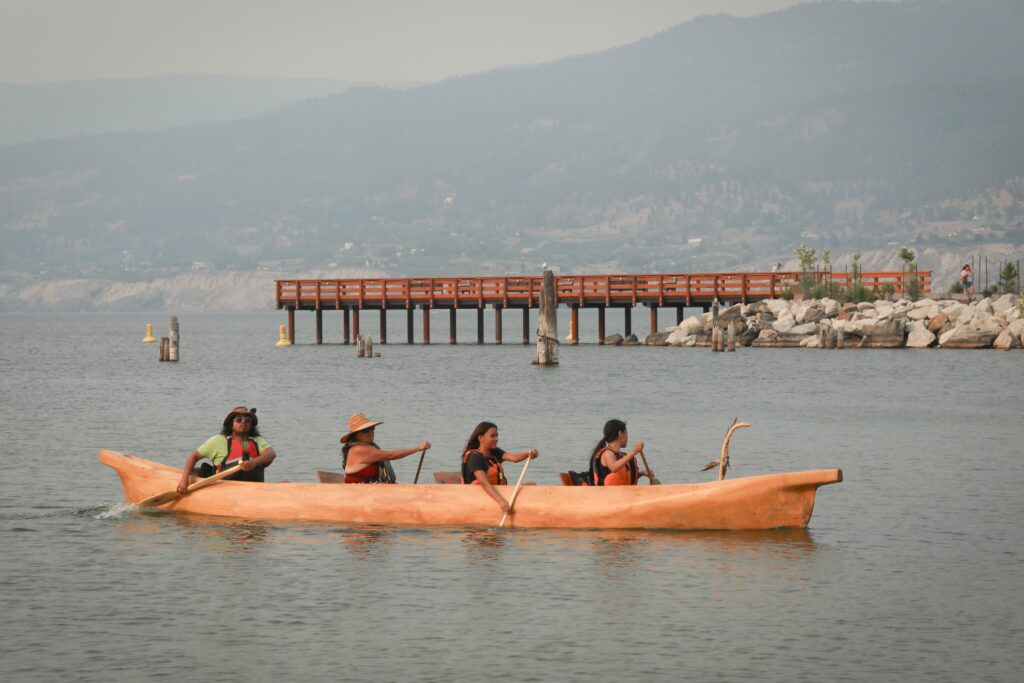
Five days after departing from nk̓maplqs (the head of Okanagan Lake), three dugout canoes carrying members of the syilx Nation landed in Penticton on Thursday evening.
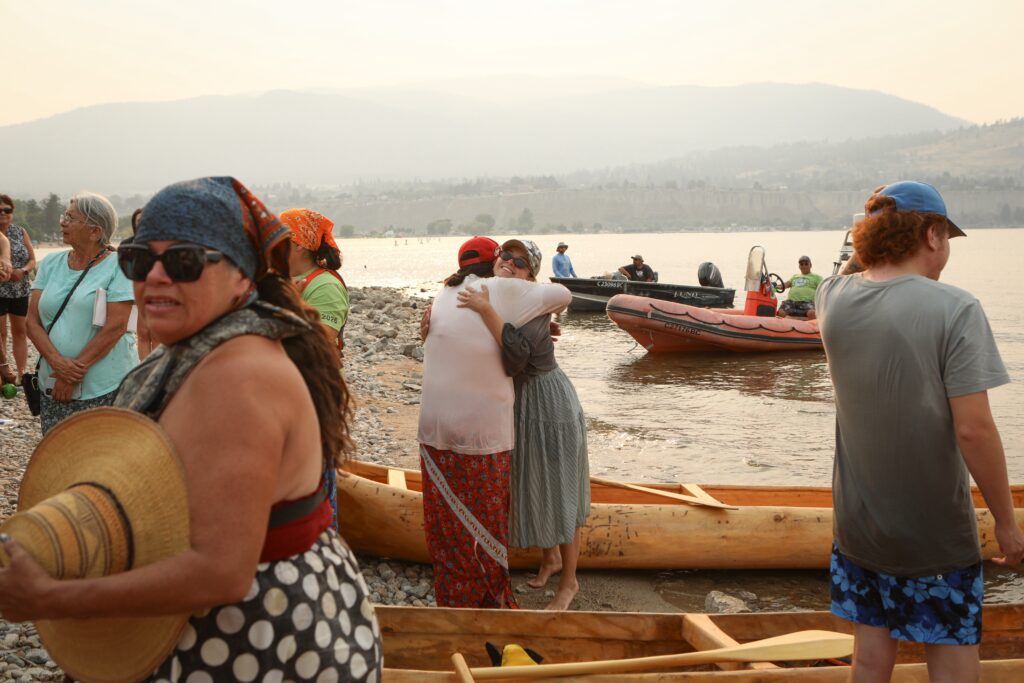
At the lake’s end, about a dozen paddlers were emphatically welcomed by their relatives and community, including Penticton Indian Band Chief Greg Gabriel, as they emptied out of the vessels.
“You amaze our community. You amaze our nation,” Gabriel told them as they disembarked. “So, job well done. We love you.”
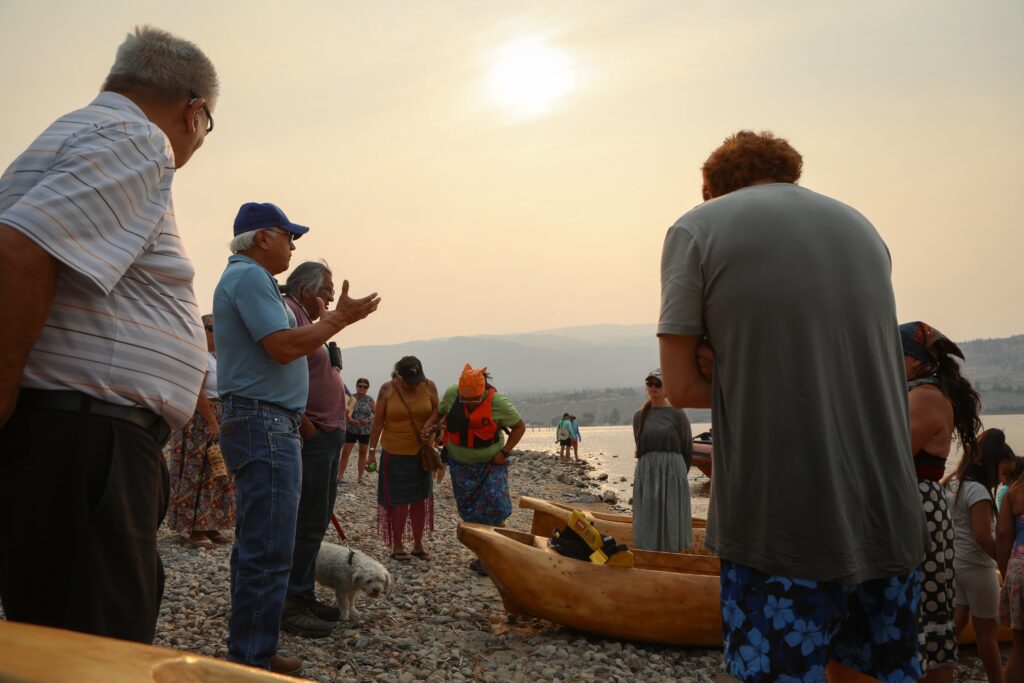
The canoes were part of the syilx Nation’s 2026 Unity Trek Commemorative Paddle, hosted 25 years after the first one in 2001. A handful of similar journeys have been attempted over the years, but not to the full scope of the original.
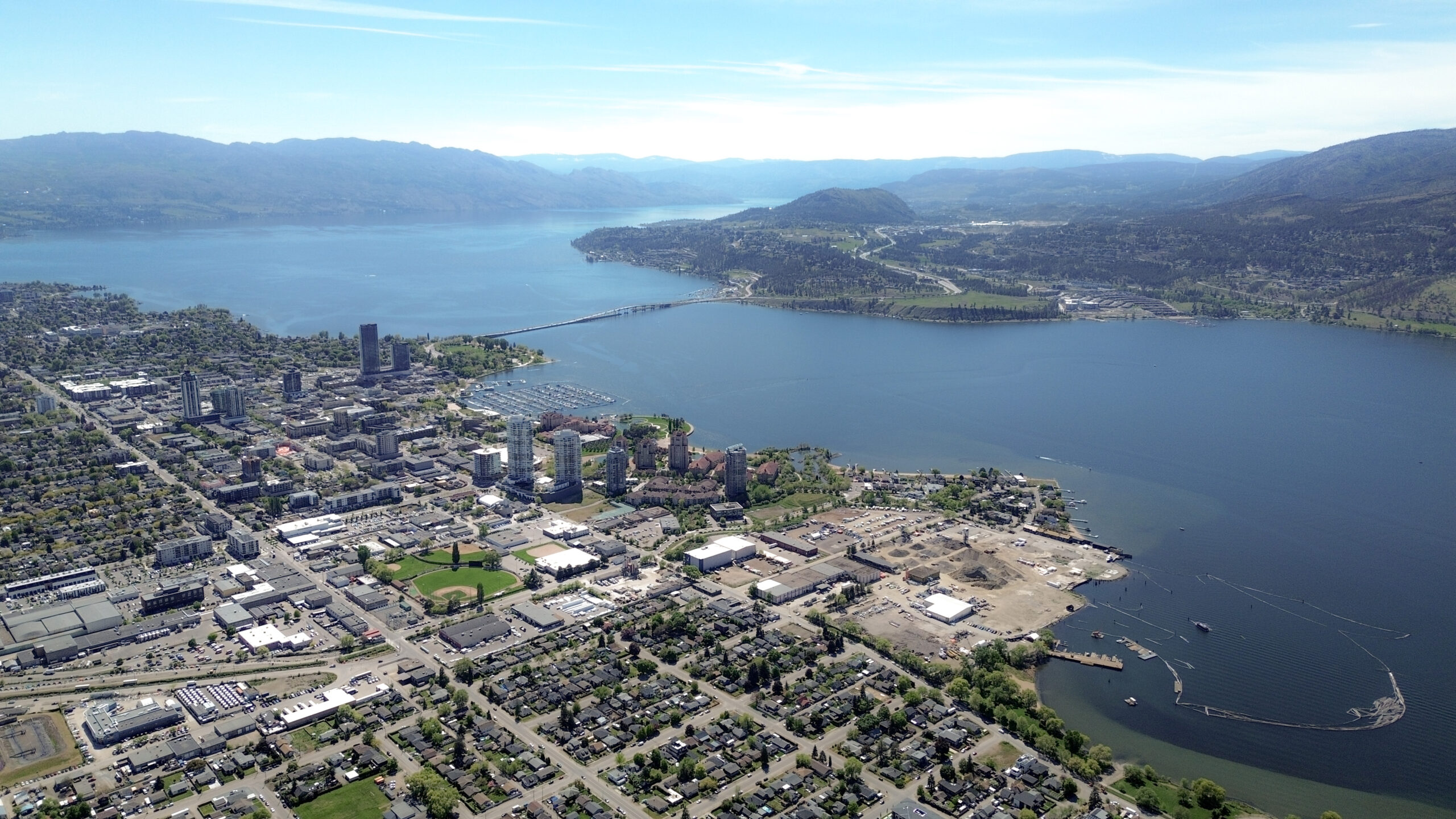
After completing their more than 100-km journey across kɬúsx̌nítkʷ (Okanagan Lake) on Thursday and camping for the night, the three canoes departed from Skaha Lake the following morning, with Okanagan Falls being their end destination for the next day.
They paddled through the waters of Osoyoos Lake for the remainder of the long weekend, starting on the “Canadian” side of the border until they reached the lake’s end in “Oroville, Washington,” on Aug.1.
There, they were greeted and welcomed by Elder Arnie Marchand, a member of the Confederated Tribes of the Colville Reservation, who has supported similar unity canoe journeys for more than 20 years.
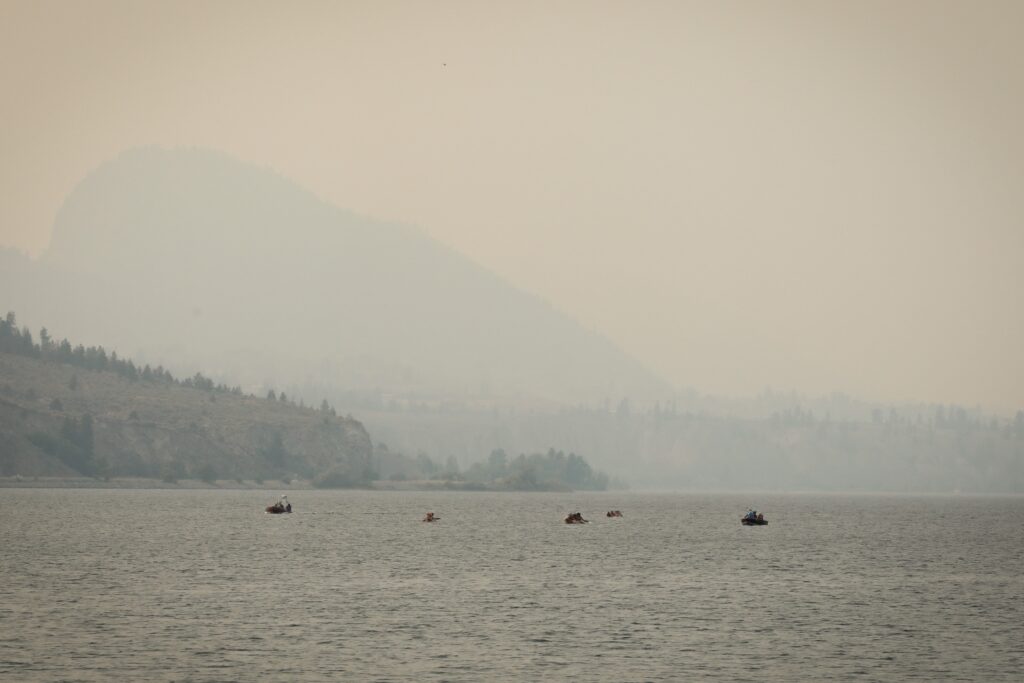
In Penticton late last week, choppy waters had delayed the canoes’ arrival by a few hours. But community members waited patiently on the shoreline, sometimes sitting in the shade and looking through binoculars to get a better glimpse of the paddlers wading through heavy waves and thick wildfire smoke that blanketed the air that hot summer night.
As the canoes and two safety boats accompanying them slowly emerged on the hazy horizon and into better vision, community members gathered closer to the water to greet them, cheering and singing songs. They held up a large banner that read “niʕáyp kús alaʔx — we have always been here.”
“This will be a part of your legacy, and we thank you for what you do,” Gabriel said.
He relayed a message from Julius Bloomfield, the mayor of Penticton, who described the paddlers as “warriors of the nation,” a sentiment that was met with loud applause by the community.
‘She had a dream that she saw canoes back on the water’
The inaugural syilx Nation Unity Paddle Trek in 2001 — a days-long journey across syilx homelands spanning more than 300 km that also began at the head of Okanagan Lake but ended in “Brewster, Washington” — was conceived by the late PIB Elder Louise Gabriel, the mother of Chief Greg Gabriel.
“She had a dream that she saw the canoes back on the water,” said Bruce Manuel, a member from the Upper Nicola Band, who supported both canoe treks and has served as a skipper across different paddle journeys over the years.
“In her living memory, she recalled being a girl and being told stories about the canoes being on the water. She had never seen it in her lifetime.”
According to syilx knowledge keeper and event organizer Herman Edward from the Lower Similkameen Indian Band, Louise was the first syilx woman to serve as a councillor in her nation.
“It used to be all men all the time. But she got in there because she knew a lot and she cared a lot,” said Edward, who also annually organizes the July 4 syilx canoe journey through the “Canada-U.S.” border on Osoyoos Lake.
Louise’s vision for the initial unity canoe trek, Manuel said, was to unite members from the historical seven bands of the syilx Okanagan Nation Alliance together.
“We’re all one nation. We’re related to one another many times over in different ways and family lines. And yet, we would argue and fight with one another. And that continues even on to today,” said Manuel.
“When we look at what Louise Gabriel was talking about, she wanted people to remember that we are one nation; we are one language; we have one culture; we have one land. We are one people.”
Her dream was brought to life with the help of the community 25 years ago. At that time, Manuel said that the late syilx artist Gordon Marchand played a key role in not only helping to carve some of the dugout canoes, but also teaching other members — such as Edward — how to carve them, which are made of cottonwood trees.
Both Marchand and Edward carved canoes for the original trek, as did Mervyn Louis; the late Richard Louis; and the late Jay Louis of the Okanagan Indian Band.
The late Leon Louis of the Lower Similkameen Indian Band was one of the main coordinators of the 2001 journey. Before his passing earlier this year, he regularly spoke of organizing a similar canoe journey to honour the trek’s 25th anniversary.
To this day, Edward continues to carve and work on canoes and their paddles.
The three dugout canoes used for the majority of the journey this year were carved by Edward. A fourth canoe that was used by Westbank First Nation members at the beginning of the trek was carved by Marchand, and is on display at the community’s museum.
While he participated in the original, Edward has taken a step back from paddling.
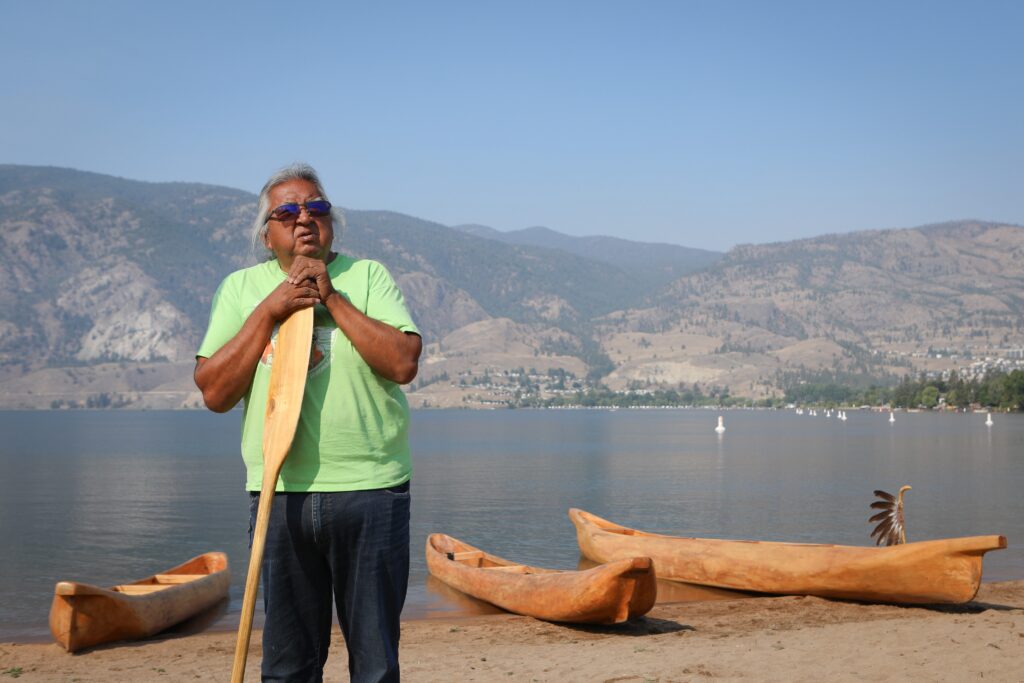
“I think it’s time for the Youth to step up … I know what it’s like to be out there. I don’t need to be out there. I want them to experience what it’s like,” he told IndigiNews.
“We went through all kinds of rough water. We went through all kinds of problems when we were out there. It’s their time to shine.”
The 2001 canoe journey brought around 100 members and at least 10 dugout canoes. There were even members riding on horses on the shoreline alongside the paddlers in the water, Manuel said.
“A lot of the people that were there initially are no longer here,” he said.
“Anytime we look at our way of life, our way of doing things, we’re re-asserting what we’ve always maintained — if we don’t use the land, we’re going to lose it.”
Lessons on the water
The commemorative canoe journey this year saw just the three dugouts on the water for the majority of the trek. They were escorted by two safety boats, who were there to provide any relief for the paddlers.
When they initially departed from the head of Okanagan Lake on July 25, they were joined by a fourth canoe that was steered by members of Westbank First Nation.
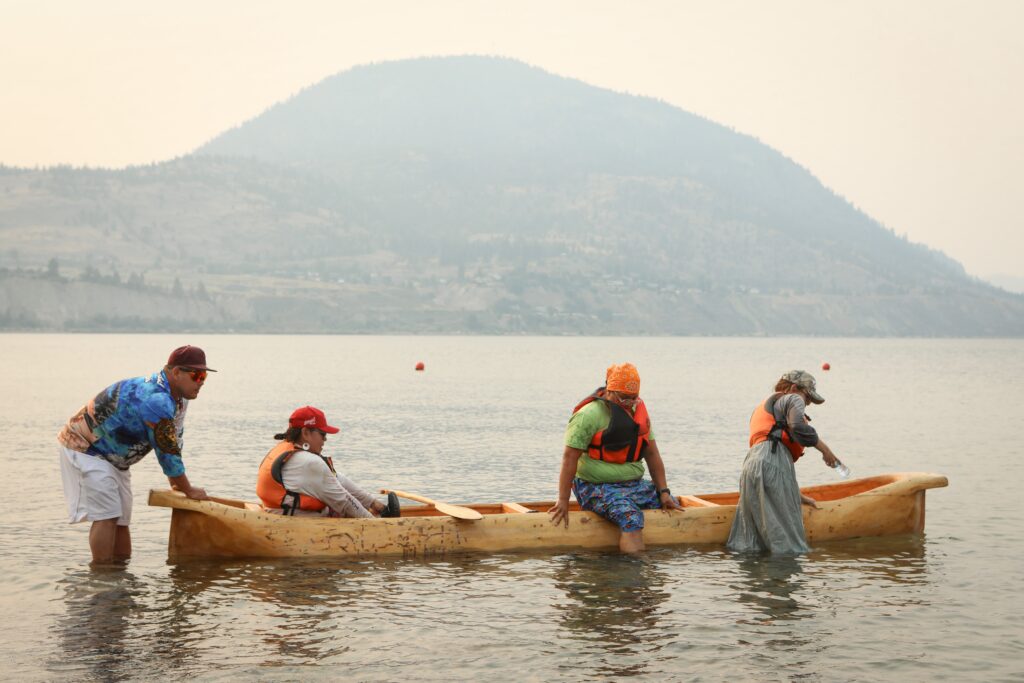
“When we first started out, it was a little rough. But we had our ceremonies, and the water settled down for us,” said Edward.
“We’ve done a lot of prayers — we do a lot of prayers. It’s a part of the healing journey — for our Youth, our young life.”
When they got to the middle of the lake where Westbank is located, the fourth canoe departed, leaving just three remaining.
Regardless of the numbers, Manuel said that it’s important for members to “put their footprint on the water and on the land.”
“When we look at unification and things that can instill in young people — and even older people — the belief in who they are and where they come from,” he said.
“púti kʷu aláʔ — we are still here. We haven’t gone anywhere.”
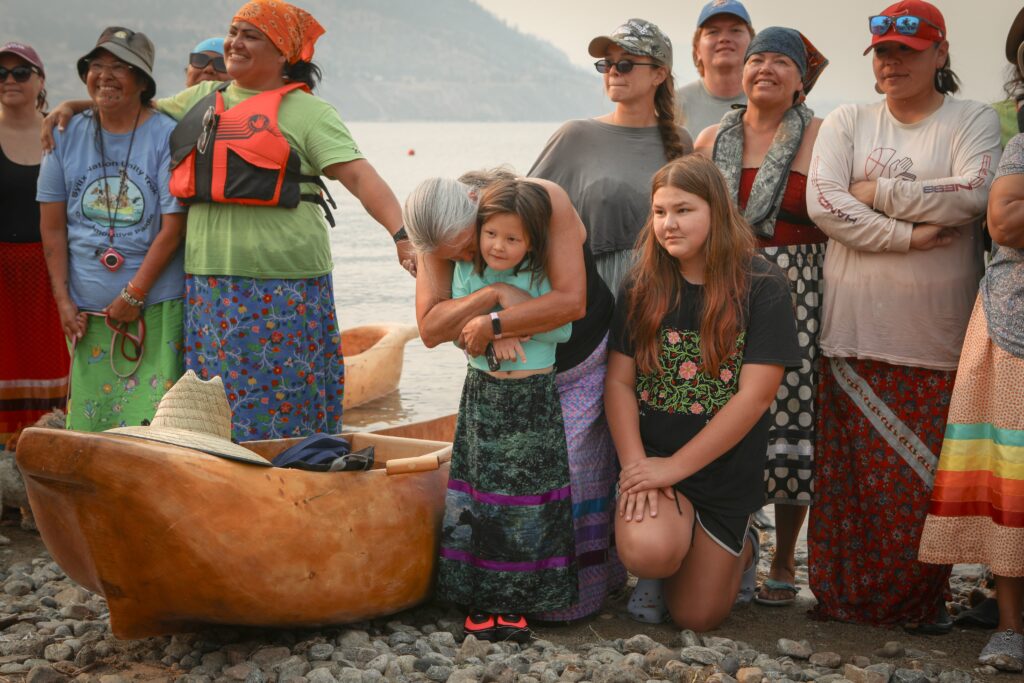
The canoe journey is also a way to create discussion with non-Indigenous people about the history of the land and the people who have called it home before European settlement.
“We’re coming to a place where the settler populations are starting to understand a little bit more about the facts of what actually is the history of this country,” he said.
Edward added that part of the syilx Nation claiming their land and their waters means “we should travel them and use them.”
Canoeing, he continued, allows members to slow down and appreciate the beauty of the land and waters around them.
“Enjoy the journey. Have all the time to think while you’re enjoying the journey. If you’re speeding through, you have no time to enjoy it. You’re just there,” he said.
“It forces you to slow down. You work together. We fight the waves if we have to.”
By having more Youth on canoes and out on the land, he added that he hopes that they have a greater understanding and appreciation for water.
“We’re praying for the water … Everyone’s responsible for the water. Everybody that’s here is responsible for the water,” said Edward.
“If we don’t take care of the water, the water won’t take care of us one day.”
Connections to the water and land
One of the young leaders on this year’s canoe journey was Tristan Marshall, a 28-year-old from the Upper and Lower Nicola Indian Bands.
His grandmother, Joanne Lafferty-Edward, helped organize the event alongside Edward, who is her husband. She also has been helping to coordinate the July 4 paddles with Edward for several years now.
“As (Herman) is getting older — and the younger generations need to have the opportunity to learn about the canoe history — he agreed to bring the dugout canoes for the people to experience,” Lafferty-Edward said.
Marshall said that it was through those July 4 paddle journeys where he became part of the canoe family, having participated in seven of them.
After living away in “Ontario” to complete his university education in recent years, Marshall moved back to his home territory two years ago.
“That’s really important to me, that I can go anywhere and call it home around here,” he said.
“Whereas when I’m outside of my territory, it doesn’t have that same feeling. Being on the water is a big part of that too.”
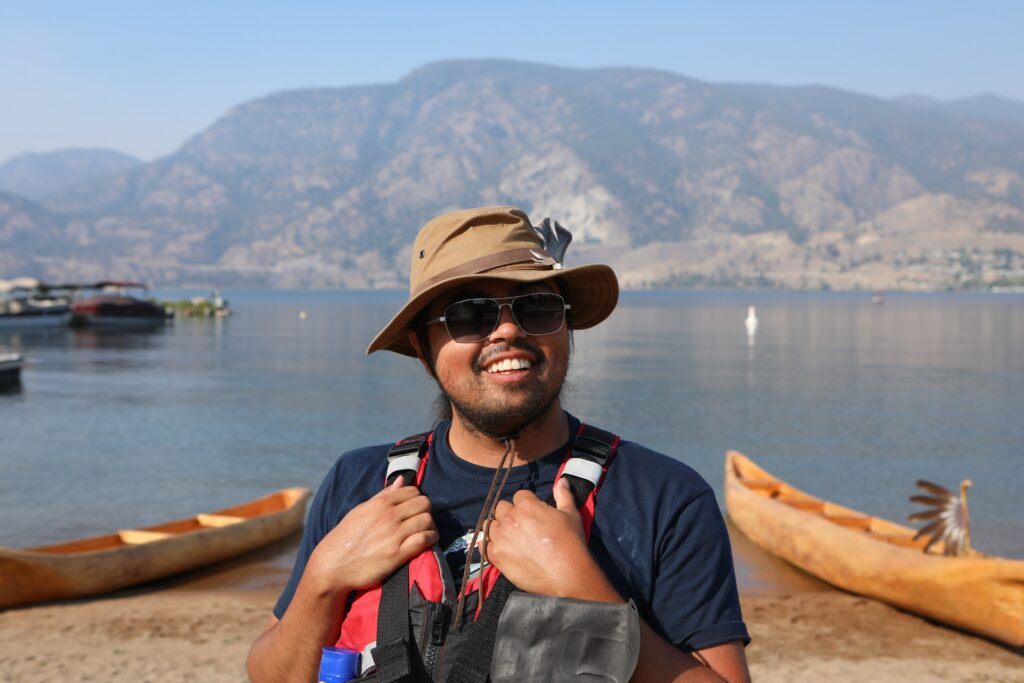
He told IndigiNews that it was this canoe journey — on which he served as the unity trek’s lead skipper — was an opportunity to “reconnect with my community, my culture, my family and the people.”
“I met a lot of new people, and a lot of cousins, relatives that I haven’t gotten to know. We get to bond on the water, and at camp. And then we see that we have a lot of shared vision about our future as young people, too,” Marshall said.
The lead boat was not to be passed by the other boats. Marshall was the skipper on the lead, with the role’s main responsibility being to make sure that the canoe is steering in the right direction and “is going where it’s supposed to.”
He is currently training to be a lead skipper. Later this winter, he’ll learn how to be a dugout canoe carver as well.
“This commemorative paddle has inspired at least two people to have a desire to learn how to carve canoes,” said Lafferty-Edward.
“This is significant so the tradition can carry on.”
The six-day journey down Okanagan Lake alone taught Marshall “a lot of grit and patience,” he said.
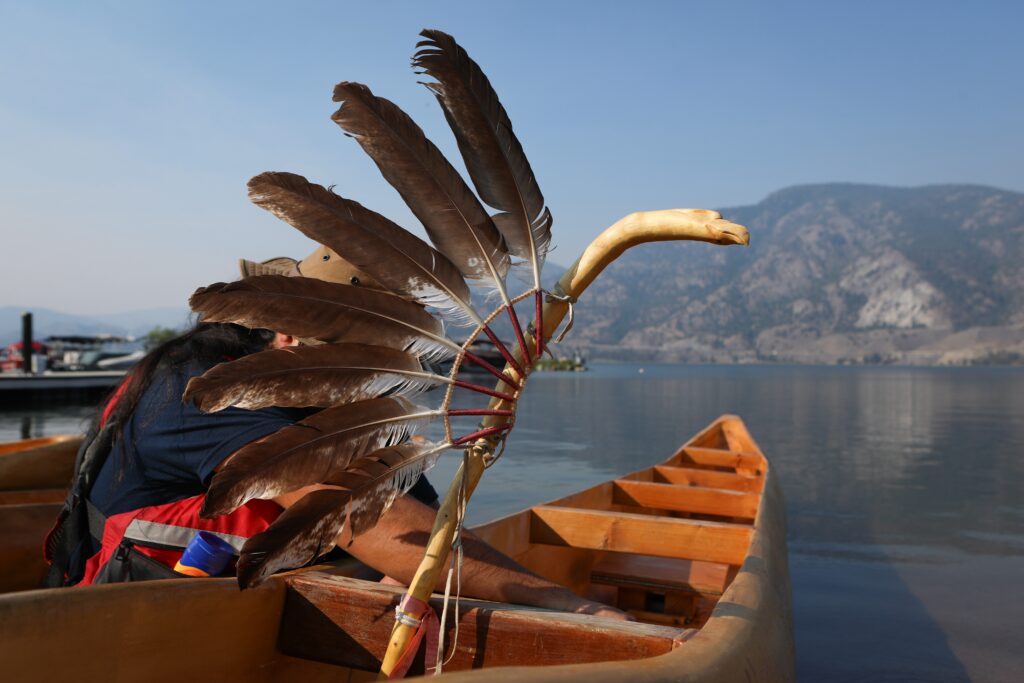
“It showed me that there are people who have that. They’re here — they were here from the start. Some of them paddled the whole way with me,” he said.
“You just gotta go with the flow. That’s a teaching.”
He said that one of the highlights of the trek across the lake was the unpredictability of the waters.
“There’s areas of the lake that are more choppy and more calm. The energy of the waters — we get to experience that more on a long journey like that,” he said.
Both community and connecting to the land, he said, “is everything.”
“Unity amongst the people, and then unifying ourselves to the tmxʷulaxʷ (land). Unity is connecting the people to each other, and connecting ourselves to the land,” he said.
He echoed the sentiment of his Elders, highlighting that “we need the Youth to come out.”
“That call for unity is going to be seen amongst the Youth,” he said. “In our generation, I think unity is where it’s going to happen.”
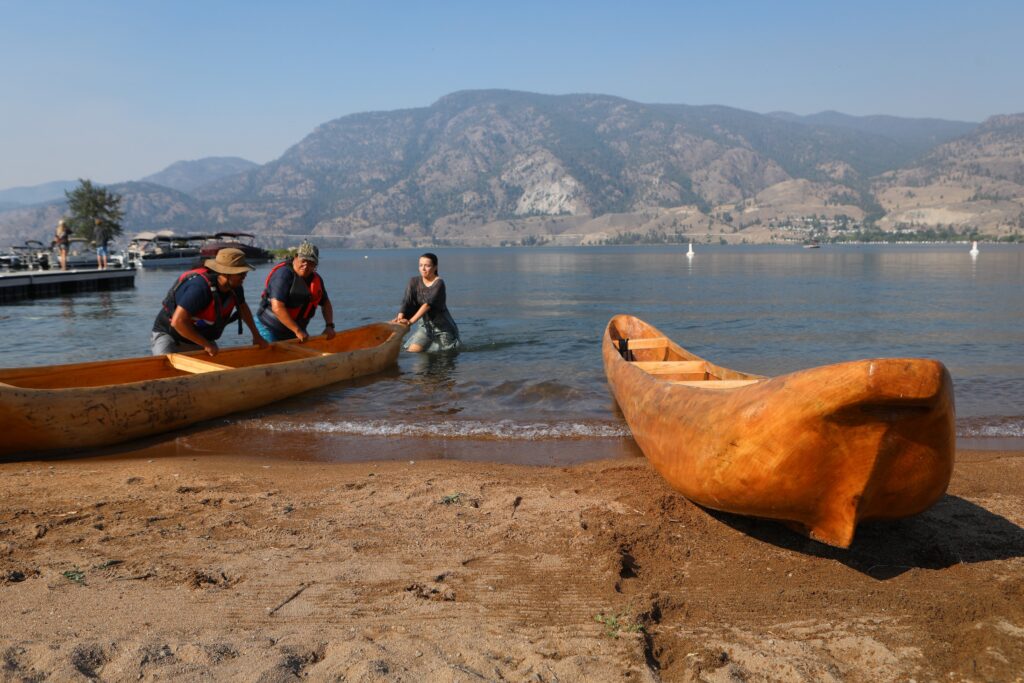
Before they got on their boats at Skaha Lake and left for Okanagan Falls, Marshall said that he could feel the emotions starting to brew as the journey neared its end.
“Sometimes, I wanna tear up and cry, because of how beautiful it is. I see how happy everyone is, and I feel that too. I’ve been on these journeys for a couple years now, so I know those feelings. I recognize those feelings when it’s coming to an end. So I’m mindful of that,” he said.
“It’s sad, because we become a little family when we’re here.”
But to be able to participate and carry on Louise’s dream all these years later “gives him chills,” he said.
“The need for unity is still there, in that vision 25 years ago,” he said.
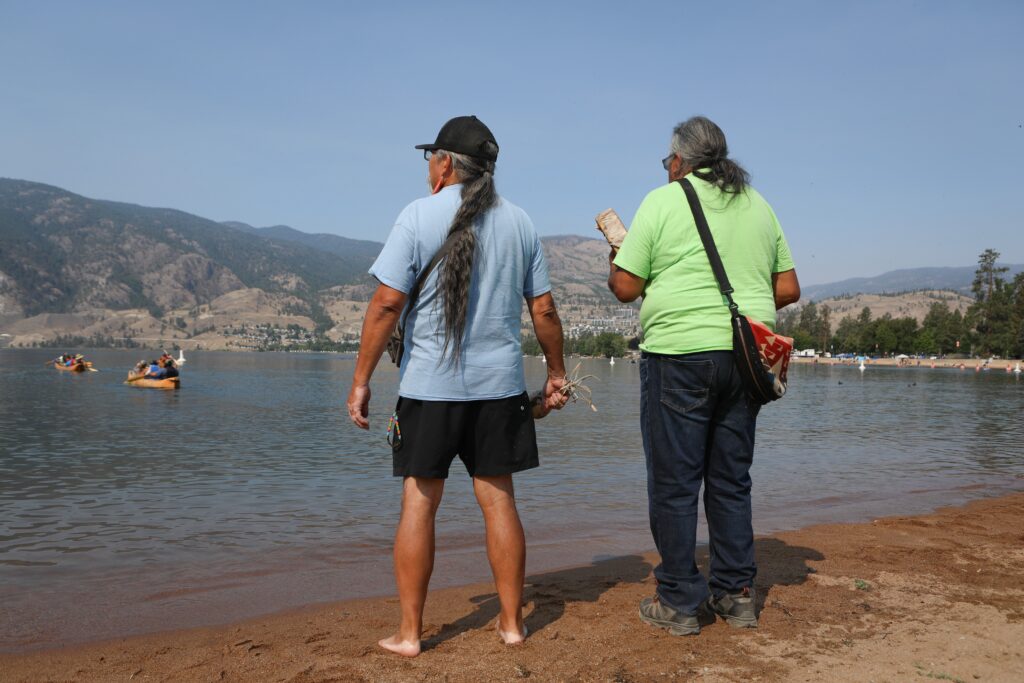
As they prepared to paddle through the waters of Skaha Lake, Chief Gabriel had one final sendoff to the paddlers.
“You’re bringing so much honour, respect and pride to your individual communities, as well as the nation. I really do love what you’re doing,” Gabriel told them.
“My mother is smiling down on all of you.”
Author
We live in a media ecosystem that thrives on misinformation. Big Tech and AI companies are consuming the work of real human beings and Canadian news has been banned on Facebook and Instagram.
And yet, I have hope for journalism because of the work we’re doing at IndigiNews.
At IndigiNews, we embody tâpwêwin — the Cree value of integrity and responsibility in truth-telling. We are committed to our independent, Indigenous-led newsroom rooted in community, accountability, and relationality. We believe storytelling is a sacred fire that connects our pasts, presents, and futures through the storytellers in our Storytelling Lodge. IndigiNews creates space for Indigenous journalists, storytellers, Knowledge Keepers, and communities to gather, learn, and share stories that matter.
As a registered charity, we are building a fire that allows our work not just to ignite but to thrive. Rather than relying on advertising or corporate acquisition, IndigiNews is sustained by people like you who believe Indigenous stories are important for the future of our communities.
Your support is making a real difference.
Our community of supporters, our Firekeepers, make it possible to grow our newsroom, publish award-winning journalism, train emerging Indigenous journalists through initiatives like the ReFocus Photojournalism Fellowship, and publish trustworthy stories that serve our communities across the country. Every story we publish helps fill in gaps left by mainstream media and ensures Indigenous perspectives are represented with care, accuracy and respect.
But there is still more work to do.
As the media landscape becomes more and more uncertain, community support is as necessary and essential as it’s ever been. Every new Firekeeper helps protect the independence of our newsroom and strengthens journalism that is accountable to our many and varied communities over corporations.
That’s why we’re inviting you to become a Firekeeper.
Firekeepers tend to and protect the sacred fire. Your monthly contributions directly support IndigiNews’s Storytelling Lodge, helps sustain our independent, Indigenous-led newsroom, and ensures future generations of Indigenous storytellers have the resources they need to do the work.
As a registered Canadian charity, all eligible donations receive a charitable tax receipt.
If you believe Indigenous stories matter, if you value independent journalism, and if you want to help build a strong future for Indigenous media, we invite you to join our circle of Firekeepers today.
Together, we can keep the fire burning.
— Eden Fineday, Publisher, IndigiNews
Support us nowLatest Stories
-

In the Okanagan desert, snakes offer lessons on protecting a fragile ecosystem
For two decades, researchers at the Nk’Mip Desert Cultural Centre have tracked snakes across syilx homelands — while helping people appreciate the often-feared creatures
-
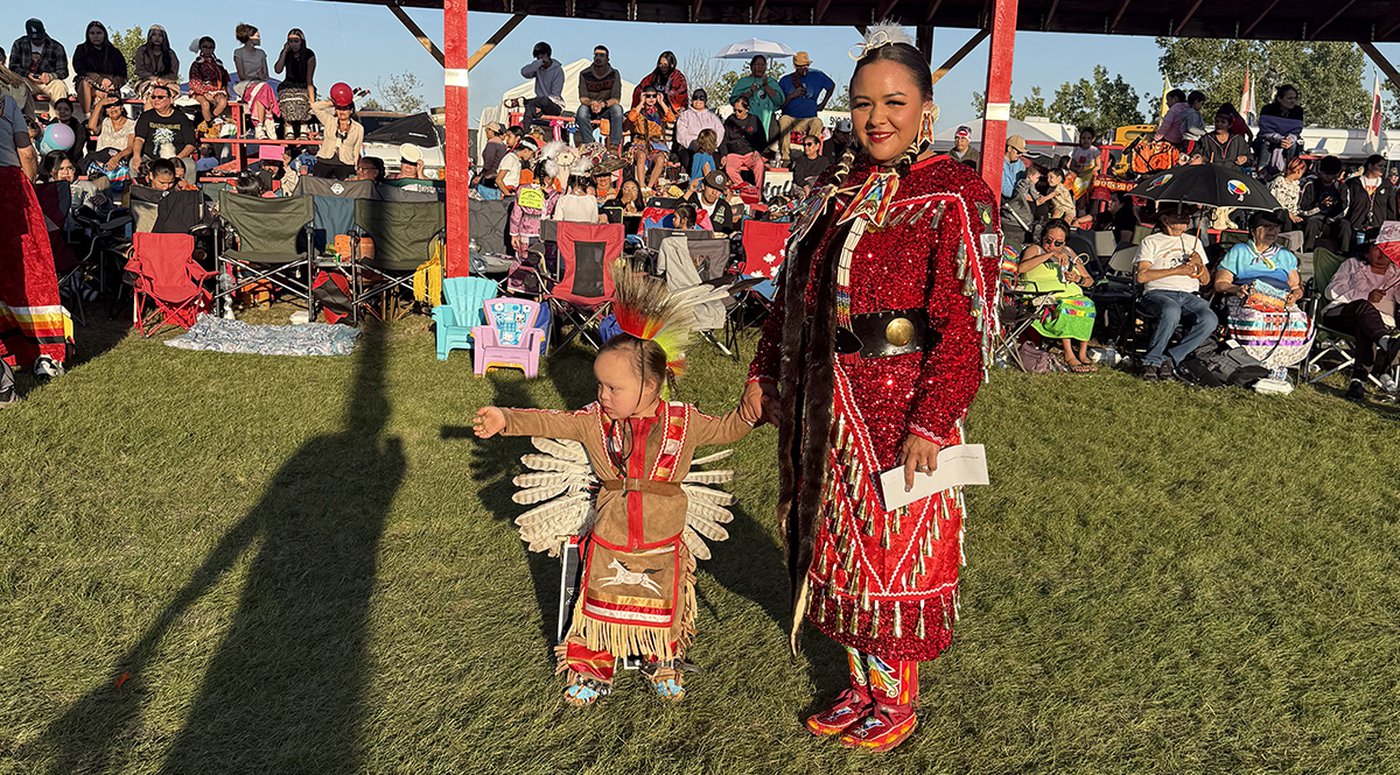
Beloved on the powwow circuit, young boy’s connection to the drum inspires
Now four, Waseskwan Redcrow was dancing ‘before he could even fully walk’ — his family says participating in powwows has brought them joy and belonging