Indigenous grads share stories at Camosun College’s 50th anniversary event
‘We could start to feel what we were good at and see that our culture was something that could be helpful,’ says Frank Shannon, who studied at Camosun in the 1990s.
Frank Shannon says it was his father who convinced him to hang up his fishing gear and hit the books.
“I actually started out as a fisherman in Haida Gwaii with my dad, all around Prince Rupert, up and down the coast,” he told a crowd gathered at Camosun College on the unceded territories of the Lekwungen and W̱SÁNEĆ Peoples in Victoria, B.C.
“[When I was] about 20, my father said, ‘You need to do something else. It’s not going to work. The industry’s falling. Go to school.’”
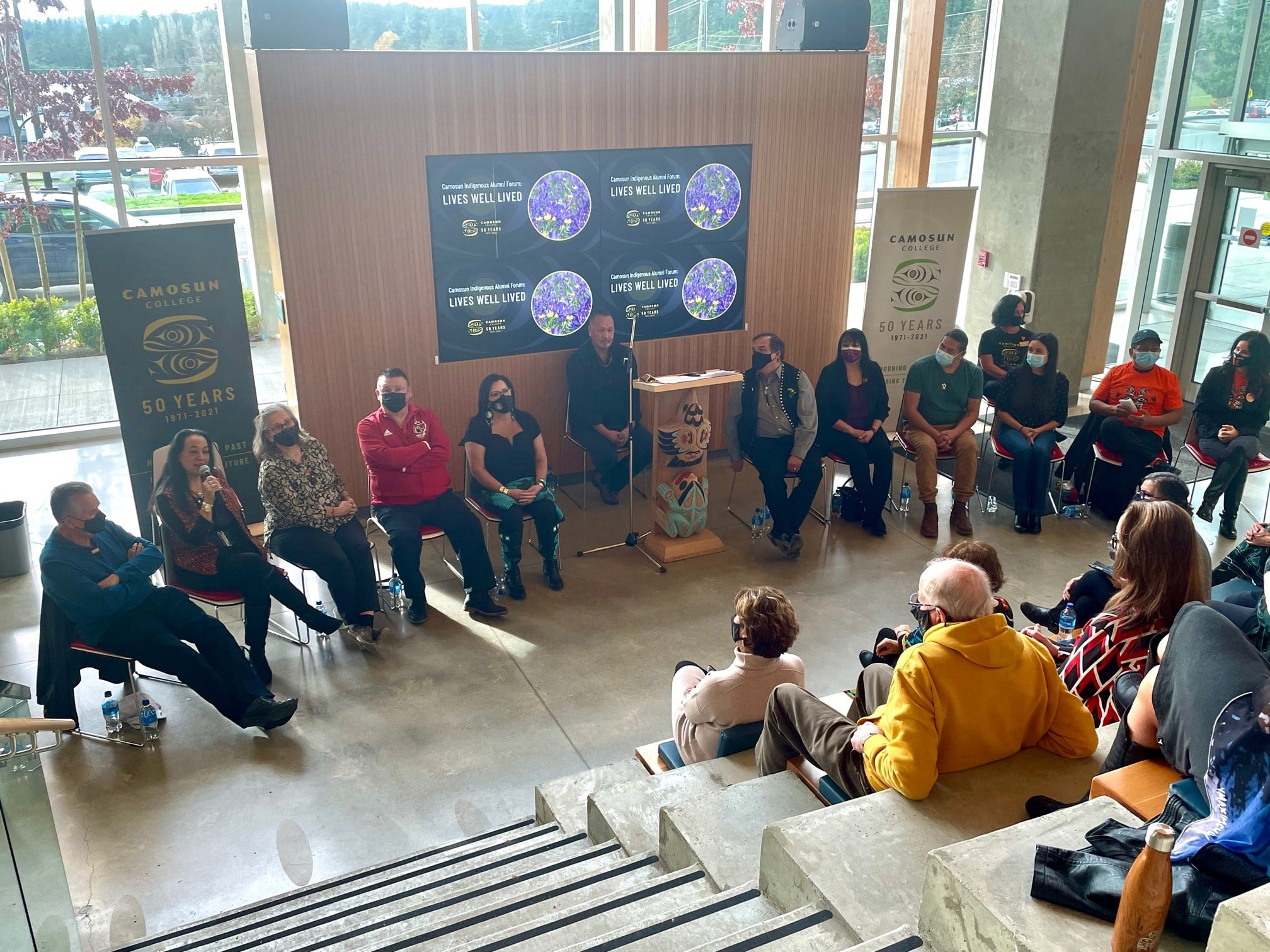
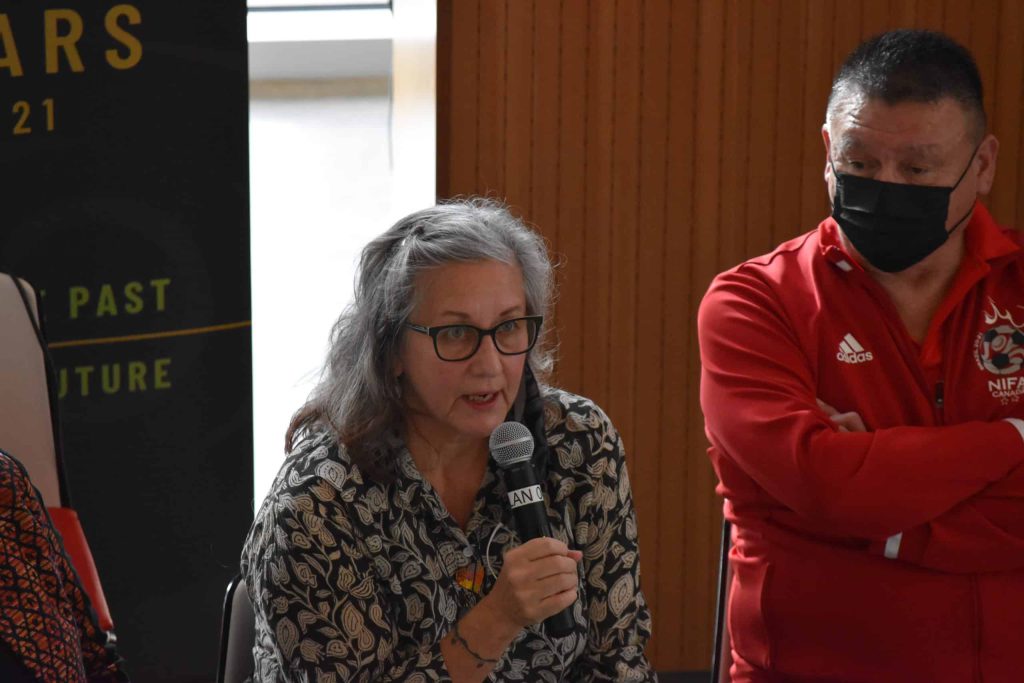
Shannon was one of ten Indigenous alumni to speak about their lives as part of the college’s 50th anniversary alumni forum on Nov. 26.
The Lives Well Lived panel was hosted by Art Napoleon of the Saulteau First Nation, co-host of the TV show Moosemeat & Marmalade. It featured Indigenous alumni with a range of experiences — an artist and Knowledge Keeper; a social worker; a youth recreation and sports director; a nurse; as well as experts in education and language revitalization.
They spoke about what they learned during their time at Camosun and what supported them on their journeys.
In the early 1990s, Shannon completed the Adult Basic Education program and the First Nations Teachers Aid program at Camosun.
“It was just so nice to be around Indigenous people that were all trying to do the same thing and all had their own little struggles. And at the same time we could start to feel what we were good at and see that our culture was something that could be helpful,” Shannon said.
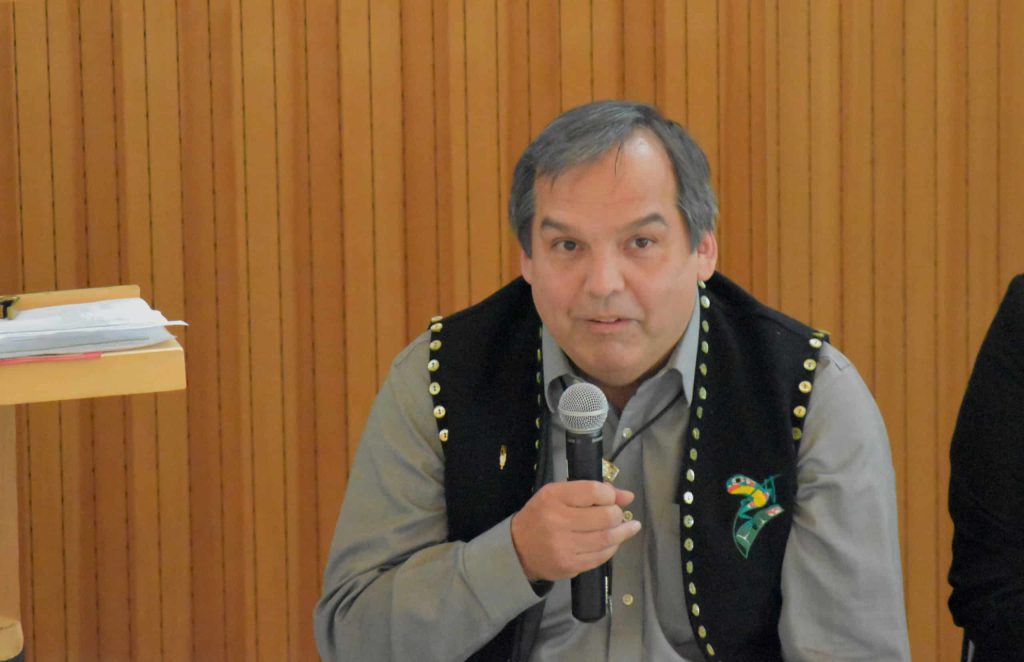
Shannon went on to become a counsellor who specializes in working with “children and youth in care who have experienced complex trauma,” according to his bio on Camosun’s website.
STOLȻEȽ (John Elliot), from W̱JOȽEȽP Tsartlip First Nation joined the West Coast Native Indian Arts at Camosun in the 1970s.
He shared that the college had community ties to Lekwungen and W̱SÁNEĆ Peoples even back then. Camosun “was putting in place some of our own people,” he said. “I felt accepted by that.
“It was difficult in those days. Being a student and a First Nations person was difficult,” Elliot says.
“I remember the Institute of Adult Studies where we went. Just the word ‘institute’ was a frightening thing to us because of our experiences with residential schools … that our families went through back then. We were a little bit afraid and intimidated by being in a situation like that.”
Elliot has since worked with both Camosun and the University of Victoria to help implement Indigenous knowledge, culture and language revitalization. He teaches a land and language course in the Indigenous Education program, according to his bio on the school’s website.
“I’m really glad things have changed, that we have that acceptance,” he says.
Cathi Charles Wherry studied visual arts at Camosun from 1989-91, according to the school’s website.
“I was forced to try a lot of things I wouldn’t have tried voluntarily around different techniques and materials and ways of making art … we had to do ceramics and photography and performance art.”
“I found my authentic voice,” she adds. “I realized that I wasn’t crazy, I was just an artist.”
While at Camosun, Wherry says she received an award for Indigenous students, “which was really validating.”
A place at Camosun where Indigenous students can be their ‘authentic self’
Throughout the forum panelists spoke highly of Janice Simcoe, director of Eyēʔ Sqȃ’lewen Centre for Indigenous Education & Community Connections at Camosun.
“I learned self-esteem … and my motivator was Janice,” said Charlene Thompson-Reid, a Nuu-chah-nulth woman who now works as a resource social worker at Usma Nuu-chah-nulth Family and Child Services, according to her bio on Camosun’s website. .
“I was at her door everyday. I didn’t know my path, I just knew I was [at Camosun] and I was taking courses. Janice had time for me all the time.”
Eyēʔ Sqȃ’lewen’s stated mission is to ensure that “Indigenous students have the best possible pathway into their education … appropriate, relevant and welcoming programming.”
Simcoe is Anishinaabe of Chippewas of Rama First Nation and she’s been at Camosun since 1991. She says Camosun’s support for Indigenous students ranges from cultural to financial and academic.
Today Eyēʔ Sqȃ’lewen is a space where Indigenous students, regardless of what nation or community they’re from, “can come and be [their] authentic self as a cultural person,” says Simcoe.
“Or if you have been for … colonial reasons been separated from your identity, as a cultural person … we really endeavor to have that space that enables students walking back into their identity.”
She says Friday’s panel gave her hope.
“I found the presentations on Friday to be moving, and they filled me with hope because we can see that what people plan in their hearts, in their hands, when they’re studying, just continues to grow when they’ve stopped their formal education.”
Hearing from respected Elders on the panel helped her remember that the 19 and 20 year-olds they’re educating today are also going to be Elders someday, she says.
“They’re going to have a lifetime of contributions … It just made me feel like as long as we still have a planet that works, things are going to be okay with our people.”
To watch the recording of the Lives well Lived panel, click here.
Author
We live in a media ecosystem that thrives on misinformation. Big Tech and AI companies are consuming the work of real human beings and Canadian news has been banned on Facebook and Instagram.
And yet, I have hope for journalism because of the work we’re doing at IndigiNews.
At IndigiNews, we embody tâpwêwin — the Cree value of integrity and responsibility in truth-telling. We are committed to our independent, Indigenous-led newsroom rooted in community, accountability, and relationality. We believe storytelling is a sacred fire that connects our pasts, presents, and futures through the storytellers in our Storytelling Lodge. IndigiNews creates space for Indigenous journalists, storytellers, Knowledge Keepers, and communities to gather, learn, and share stories that matter.
As a registered charity, we are building a fire that allows our work not just to ignite but to thrive. Rather than relying on advertising or corporate acquisition, IndigiNews is sustained by people like you who believe Indigenous stories are important for the future of our communities.
Your support is making a real difference.
Our community of supporters, our Firekeepers, make it possible to grow our newsroom, publish award-winning journalism, train emerging Indigenous journalists through initiatives like the ReFocus Photojournalism Fellowship, and publish trustworthy stories that serve our communities across the country. Every story we publish helps fill in gaps left by mainstream media and ensures Indigenous perspectives are represented with care, accuracy and respect.
But there is still more work to do.
As the media landscape becomes more and more uncertain, community support is as necessary and essential as it’s ever been. Every new Firekeeper helps protect the independence of our newsroom and strengthens journalism that is accountable to our many and varied communities over corporations.
That’s why we’re inviting you to become a Firekeeper.
Firekeepers tend to and protect the sacred fire. Your monthly contributions directly support IndigiNews’s Storytelling Lodge, helps sustain our independent, Indigenous-led newsroom, and ensures future generations of Indigenous storytellers have the resources they need to do the work.
As a registered Canadian charity, all eligible donations receive a charitable tax receipt.
If you believe Indigenous stories matter, if you value independent journalism, and if you want to help build a strong future for Indigenous media, we invite you to join our circle of Firekeepers today.
Together, we can keep the fire burning.
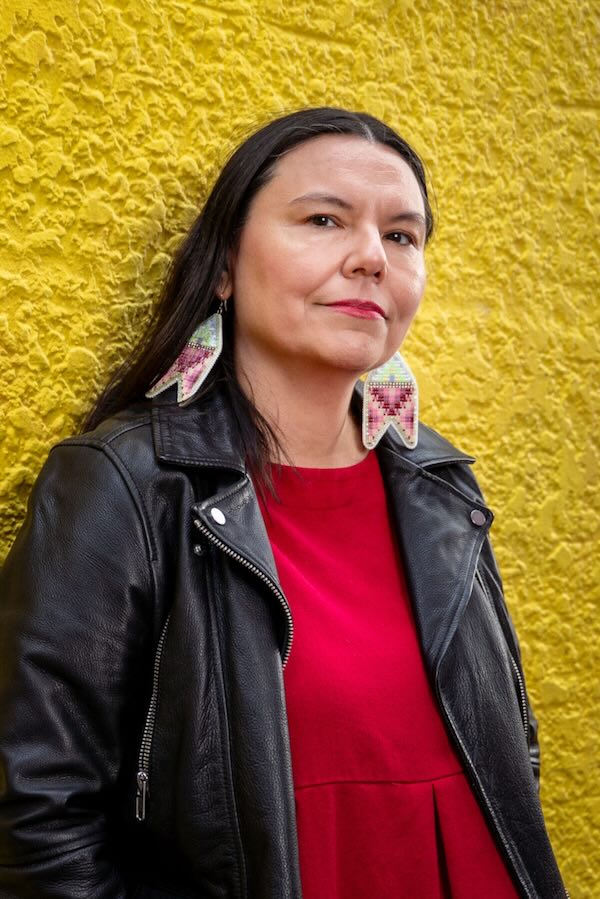
— Eden Fineday, Publisher, IndigiNews
Support us nowLatest Stories
-
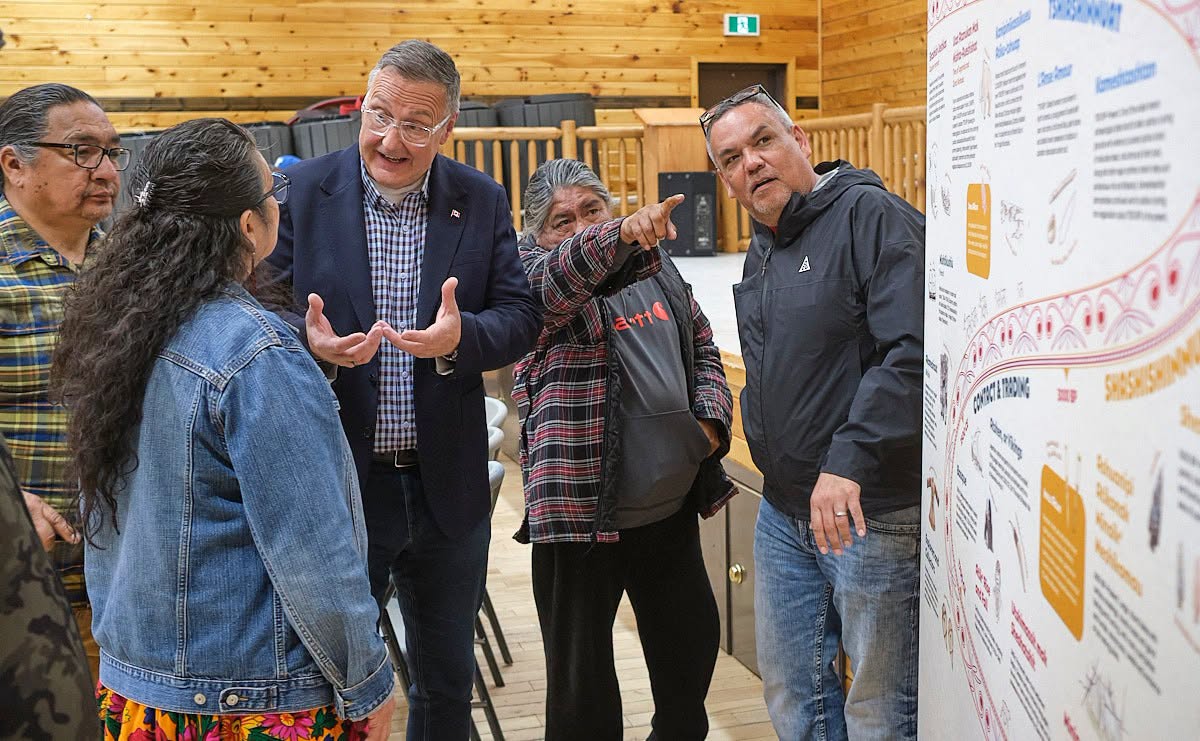
Innu Nation ‘moved to anger, to strength’ after accusing province of censoring history
Solidarity pours in after ‘Labrador’ history exhibition abruptly cancelled after province ordered removal of cultural items and timelines older than 300 years
-
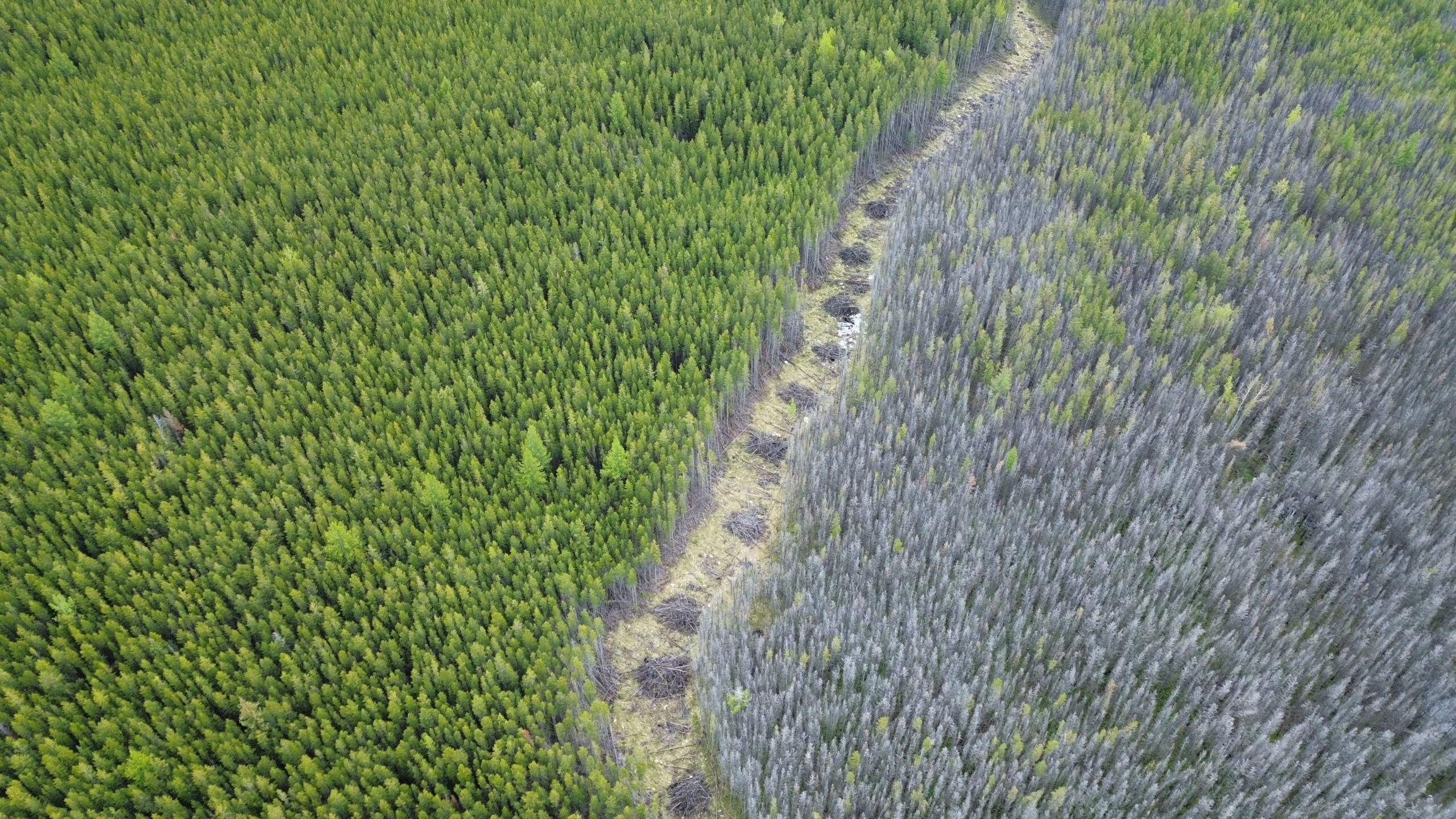
Osoyoos Indian Band set to restore native plants, species in wildfire-ravaged forests
The First Nation plans to clear out burned spaces and restore trees, berries and medicinal plants to the area, encouraging biodiversity and wildlife to return