‘Surreal’: Cree composer’s song featured in new season of ‘Stranger Things’
The track ‘May 25’ by amiskwacîwâskahikan-based musician Matthew Cardinal is played in episode one of the popular series
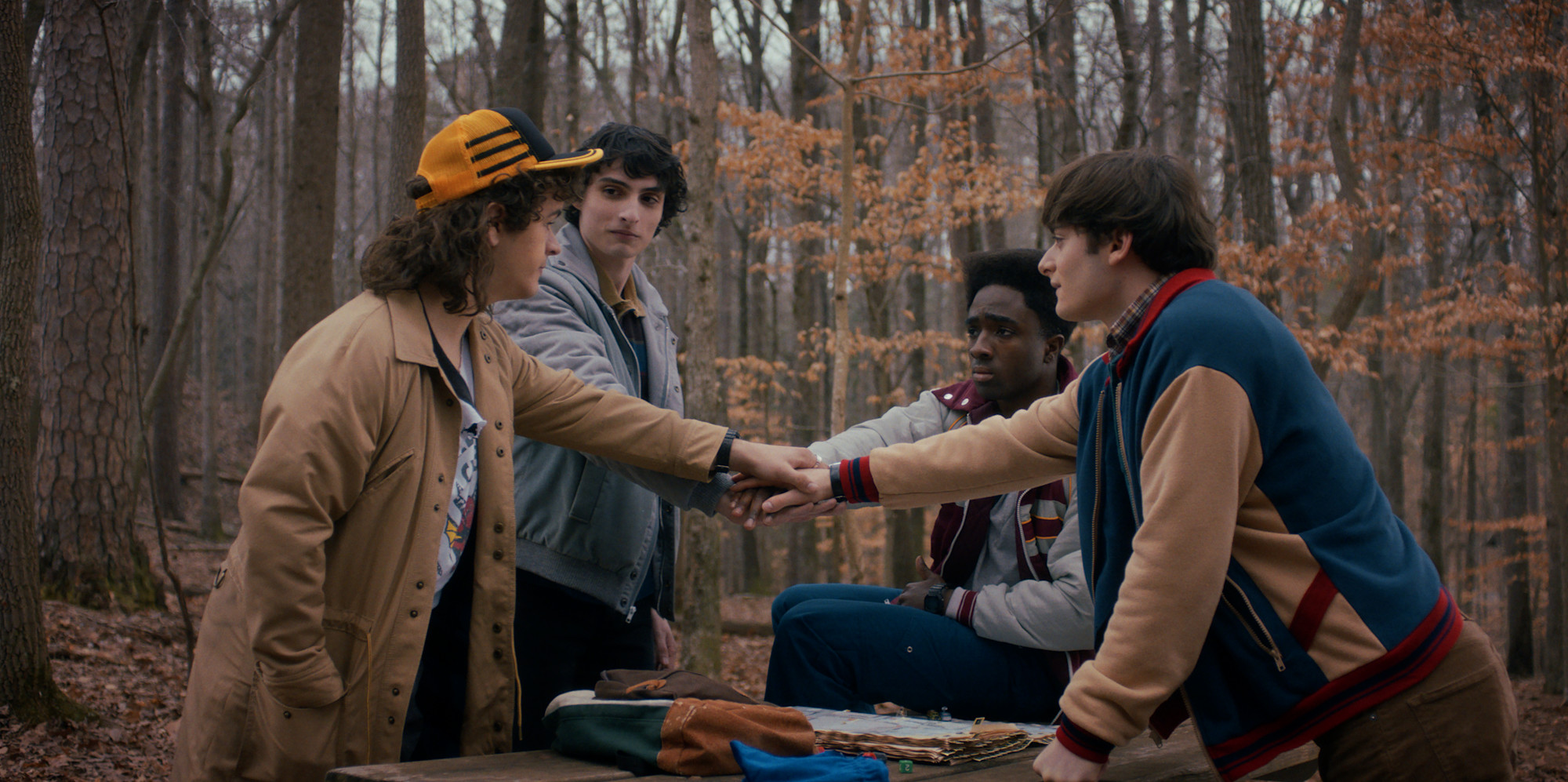

When Matthew Cardinal received an email marked “urgent,” asking if one of his songs could be played in the popular TV show Stranger Things, he didn’t believe it was real at first.
He read the email multiple times, the Cree musician and composer said, before confirming with his record label that the request was indeed legitimate.
“That was nice and exciting and kind of a surreal email to get,” said Cardinal, who is based in amiskwacîwâskahikan (Edmonton).
“It’s so weird, like, all the things that had to happen just for them to hear my music.”
The song “May 25” is one of the tracks on his 2020 solo album Asterisms. The ambient electronic song with an eerie feeling plays during the first episode of Stranger Things season five, which premiered on Netflix on Nov. 26.
With a project as big as Stranger Things – which had 59.6 million views in its first five days of streaming according to Variety – Cardinal noted they could have “gotten anything” but it was his song that was chosen for a scene.
“I was also not told where it was going to be used, or how much of the song was going to be used,” he said.
“So I was kind of on edge the entire time until it played.”
Almost the entire song, which is about a minute and a half long, was featured in the episode during a scene between the characters Joyce Byers, played by Winona Ryder, and Jim Hopper, played by David Harbour.
Cardinal is among good company as he notes other music licensed for the episode includes songs by Michael Jackson and Diana Ross.
‘It’s all about crafting a sound’
Cardinal’s album Asterisms, released on the label Arts & Crafts, explores electronic music as an “audio journal” of his life.
It’s described as “captured moments of experimentation and expression” using analogue synthesizers, electric piano, processed voice and more.
Cardinal said he recorded “May 25” after the song “May 24” (all the track titles on Asterisms are dates) with equipment set up on his floor. Cardinal said the whole process took no longer than 25 minutes to record.
Cardinal used synthesizers in the creation of Asterisms, which he notes gives it a unique tone and pure waveform to the sound.
“It affords you more control over the tone of it. You know, it’s all about crafting a sound,” he said.
It’s an instrument that Cardinal has liked the sound of since he first began listening to house and electronic music as a teenager. He also notes the nostalgic association it brings for the 8-bit sounds of the Nintendo Entertainment System.
“A lot of music I make is like, very stream of consciousness and just kind of intuitive,” he said.
“I am very influenced and inspired by instruments themselves. I feel like just the sound — reacting to the sound and trying to make something that works with that sound.”
Cardinal’s music has evolved over the years with some out of necessity. For example, he describes his movement away from touring with a guitar as out of functionality since travelling with it was a hassle. His use of modular synthesizer was easier as he could build a custom synthesizer and it fit in suitcases.
“I’m always exploring new sounds and new techniques and new instruments,” he said.
Asterisms was released in 2020 and it reflected Cardinal’s style at the time.
“I would call Asterisms, kind of unintentional music, as in, it’s not super planned out. It was just kind of spur of the moment things,” he said.
Now — five years after its release — he is changing and hoping to try new methods to his music creation.

“I want to do more kind of intentional music, where I’m, you know, forming ideas and maybe trying to map things out in advance and execute these ideas,” he said.
He adds that it may be less ambient while still using similar sounds, but more rhythmic while possibly using traditional song structures.
For his next album — that he is currently working on — Cardinal hopes to be “more dancey” with percussion elements, which he notes that he only used for one track on Asterisms.
Cardinal has options though as he is recording all types of songs that range from acoustic with guitars and drums to ambient songs. He adds that he is “sorting through things and seeing what fits together.” Through the connection of songs he is seeing “what makes the most sense or feels like it makes the most sense to put out next.”
Creating music for film
Since he was 13, Cardinal recalls experimenting with all types of music. After beginning to get involved in music as a teen, Cardinal got his first guitar and notes that around that time he also started to get into more atmospheric and textural music.
While he looks up to plenty of artists, alternative music in the ‘90s became what brought Cardinal into the music space. He describes music as “all encompassing” as listening to it was his main pastime.
“It was kind of like listening to music is all I ever did, and kind of discovering new music was a big part of my life as a teenager,” he said.
Discovering the new music brought him in many directions in terms of the style and genre. He then went on to learn to play his guitar and get involved in bands.
This eventually turned to him realizing that he liked both making music and watching films — so he thought about making music for the screen.
He recalls getting the word out to friends and anyone he knew who made films that he was interested in putting music together for them. After his first project, he began working with more people through word of mouth and them hearing the music he made for the films.
“It’s kind of spread from there, you know, just putting my name out there and telling people that I wanted to do it and I was available to do it,” he said.
“I’ve been very lucky that it’s been a lot of just word of mouth and, you know, occasionally reaching out to people.”
At this year’s imagineNATIVE Film + Media Arts Festival Cardinal had his music featured in four films, including Siksikakowan: The Blackfoot Man and Wilfred Buck’s Star Stories.
From this credit of his song used in Stranger Things, Cardinal hopes to continue being contacted to use music from his catalogue and to create songs for projects.
“I hope this kind of sets a precedent,” he says, noting how production companies may see his name attached to large projects like Stranger Things and continue reaching out.
“I think it’s a good thing to get my music in more people’s ears and on people’s radars,” he said.
“I would hope it brings more opportunities for, you know, licensing or scoring work, composition work.”
Cardinal hopes to keep making music and releasing his songs, performing and even touring.
“I just want to keep doing this. And, you know, hopefully people respond well to it,” he said.
“That’s the best thing that I think any artist can hope for, is that it finds the people that it speaks to.”
Author
We live in a media ecosystem that thrives on misinformation. Big Tech and AI companies are consuming the work of real human beings and Canadian news has been banned on Facebook and Instagram.

And yet, I have hope for journalism because of the work we’re doing at IndigiNews.
At IndigiNews, we embody tâpwêwin — the Cree value of integrity and responsibility in truth-telling. We are committed to our independent, Indigenous-led newsroom rooted in community, accountability, and relationality. We believe storytelling is a sacred fire that connects our pasts, presents, and futures through the storytellers in our Storytelling Lodge. IndigiNews creates space for Indigenous journalists, storytellers, Knowledge Keepers, and communities to gather, learn, and share stories that matter.
As a registered charity, we are building a fire that allows our work not just to ignite but to thrive. Rather than relying on advertising or corporate acquisition, IndigiNews is sustained by people like you who believe Indigenous stories are important for the future of our communities.
Your support is making a real difference.
Our community of supporters, our Firekeepers, make it possible to grow our newsroom, publish award-winning journalism, train emerging Indigenous journalists through initiatives like the ReFocus Photojournalism Fellowship, and publish trustworthy stories that serve our communities across the country. Every story we publish helps fill in gaps left by mainstream media and ensures Indigenous perspectives are represented with care, accuracy and respect.
But there is still more work to do.
As the media landscape becomes more and more uncertain, community support is as necessary and essential as it’s ever been. Every new Firekeeper helps protect the independence of our newsroom and strengthens journalism that is accountable to our many and varied communities over corporations.
That’s why we’re inviting you to become a Firekeeper.
Firekeepers tend to and protect the sacred fire. Your monthly contributions directly support IndigiNews’s Storytelling Lodge, helps sustain our independent, Indigenous-led newsroom, and ensures future generations of Indigenous storytellers have the resources they need to do the work.
As a registered Canadian charity, all eligible donations receive a charitable tax receipt.
If you believe Indigenous stories matter, if you value independent journalism, and if you want to help build a strong future for Indigenous media, we invite you to join our circle of Firekeepers today.
Together, we can keep the fire burning.
— Eden Fineday, Publisher, IndigiNews
Support us nowLatest Stories
-
Okanagan Indian Band ‘getting stronger everyday’ amid devastating wildfire
Entire reserve has been evacuated and more than 30 people have lost homes, chief says, as blaze continues to burn as of Thursday
-

Interior Salish culture camps create ‘a safe haven’ during provincial wildfires
Organizers move ahead with caution, connecting young people with land-based teachings, healing and kinship