Labrador Friendship Centre celebrates Inuit, Innu cultures on National Indigenous Peoples Day
Event will highlight local Indigenous communities and raise funds for programs with a new t-shirt design, as the province is accused of ‘erasure’
Growing up, Heather McLean always looked forward to National Indigenous Peoples Day as a time to experience Inuit culture.
“It’s not always easy to do that, so having a day that’s highlighted and special for traditional foods and activities is really special,” she says about the annual holiday.
McLean is from Happy Valley-Goose Bay, which is located in central “Labrador,” and she is Inuk from Nunatsiavut.
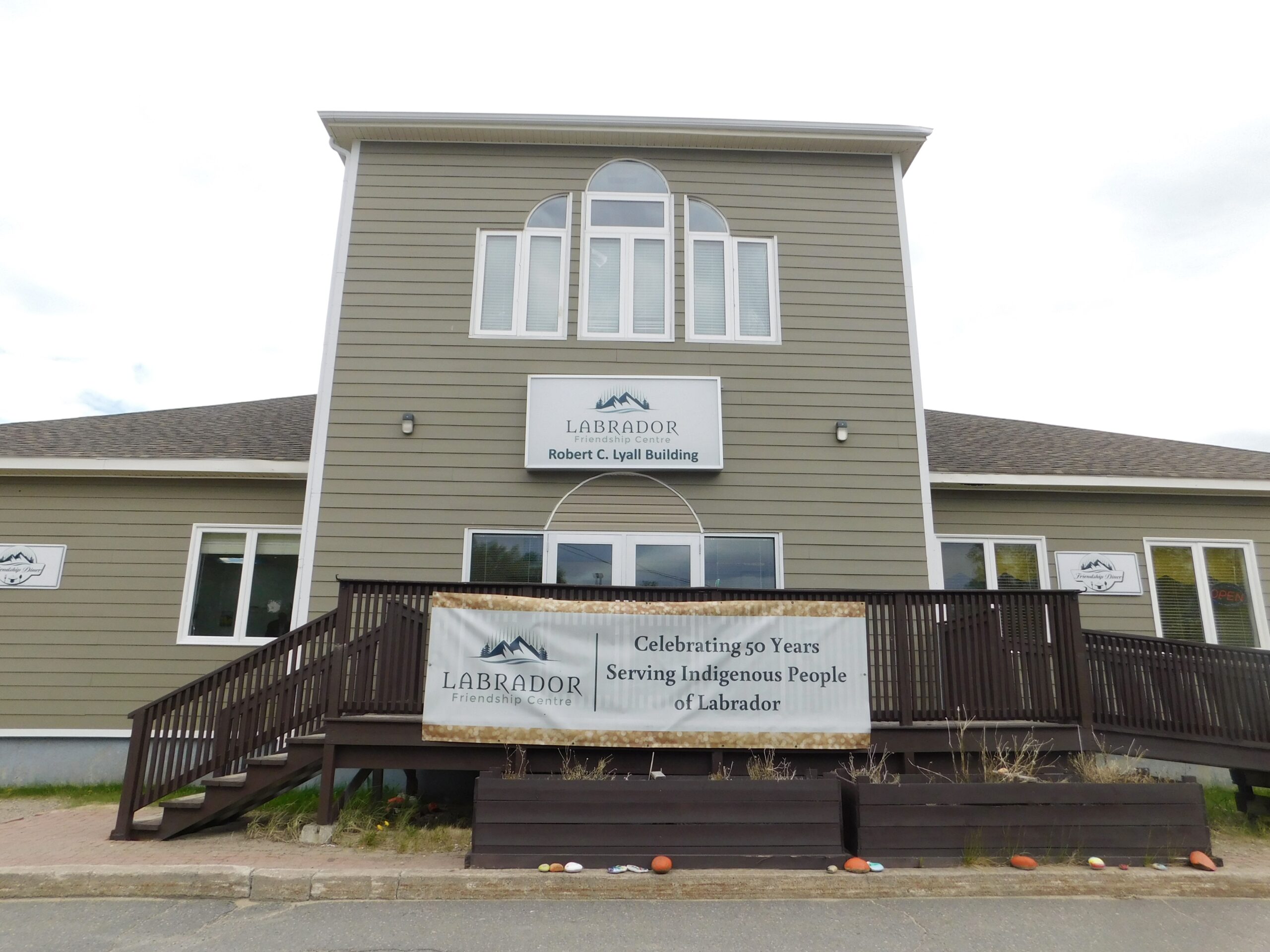
McLean works at the Labrador Friendship Centre as a Northern Women’s Circle Co-ordinator, and is helping plan the centre’s National Indigenous Peoples Day event on June 21.
McLean says to expect traditional foods, prize events, live music, drum dancing, an Indigenous craft market, and more for the event today.

The event is one of dozens planned across the country to mark the annual holiday that takes place on the summer solstice. The day has been formally recognized since 1996.
In “Labrador,” this year’s events hold added significance as the Innu Nation is accusing the province of “erasure” of their culture and history.
A planned exhibition called “Innu Pakassiun” had been set to open at the Labrador Interpretation Centre in North West River on National Indigenous Peoples Day — but was cancelled after the Newfoundland and Labrador government intervened.
The province wished to portray Innu existence dating back only 300 years in “Labrador,” which the Innu Nation said is not accurate and pulled the exhibition as a result. The Labrador Friendship Centre released a solidarity statement with Innu Nation’s decision.

For the centre’s National Indigenous Peoples Day celebration, McLean designed a t-shirt that celebrates Innu and Inuit culture.
Displayed on the t-shirt, there is an Inukshuk, Inuit drum, blueberries, Labrador tent, ulu, bakeapples, fish, and Innu drum. The words around the designs say “It’s a good day to be Indigenous” and “National Indigenous Peoples Day.”
She says she wanted to “make something that when they look at it they can see something that represents them or interpret however they want.”
Proceeds from the shirt will raise funds for the Labrador Friendship Centre, which offers programs that address food insecurity, housing insecurity, navigation in the justice system, community outreach, and more to urban Indigenous Peoples in Happy Valley-Goose Bay.
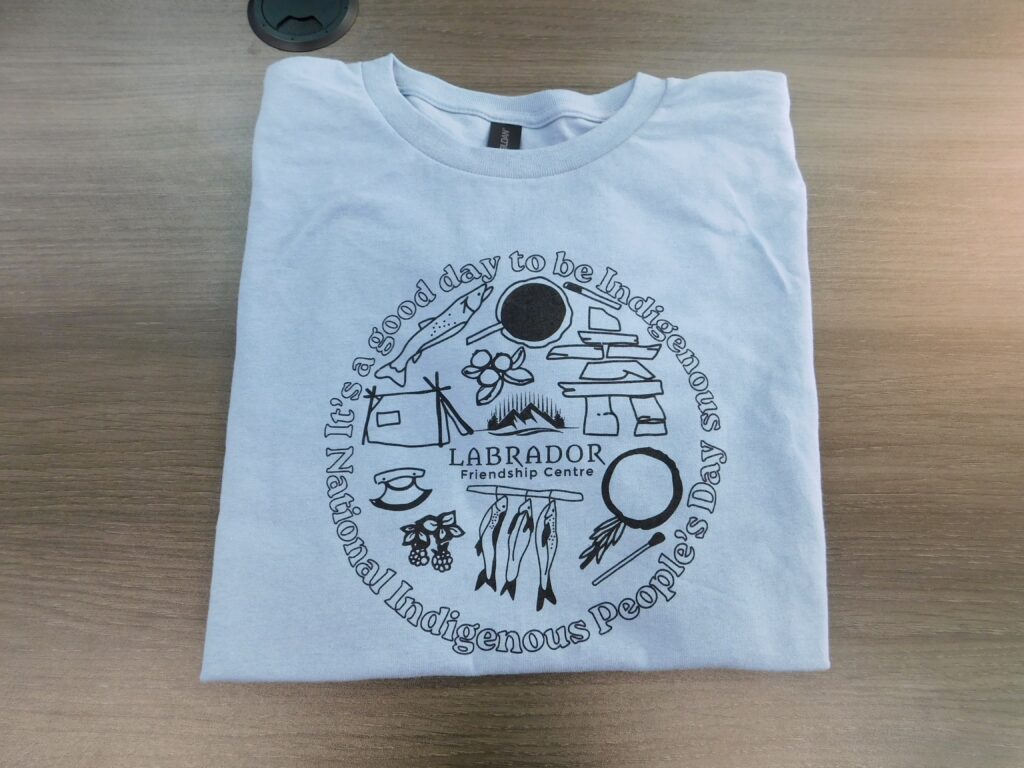
“I wanted to try and find symbols that are representative of all the different, unique Indigenous groups in Labrador because we have so many traditions, but there are so many similarities shared between them,” she says.
Inuit in Nunatsiavut represent approximately 7,000 Inuit in “Labrador.” The Labrador Inuit Land Claims Agreement spans across northern “Labrador” to the border of “Quebec” with five Inuit communities Nain, Hopedale, Makkovik, Postville, and Rigolet, and is one of four Inuit Nunangat regions in the country.
The Innu Nation in “Labrador” represents approximately 3,200 Innu, with Sheshatshiu Innu First Nation and Mushuau Innu First Nation in Natuashish. Innu Nation spans across Nitassinan in both what is now called “Quebec” and “Labrador.”
To create her National Indigenous Peoples Day t-shirt, McLean found pictures online to reference and draw from, and cut them out to place on a blank piece of paper to her liking numerous times. She says she’s always been creative, but doesn’t have a background in graphic design.
“I was like, ‘I want to find something that would be a nice saying, and maybe could be worn all throughout the year,’” she says.
The centre’s National Indigenous Peoples Day event is set to take place across the street from the facility at Leon Cooper Memorial Park between 1 and 4 p.m.
Author
We live in a media ecosystem that thrives on misinformation. Big Tech and AI companies are consuming the work of real human beings and Canadian news has been banned on Facebook and Instagram.

And yet, I have hope for journalism because of the work we’re doing at IndigiNews.
At IndigiNews, we embody tâpwêwin — the Cree value of integrity and responsibility in truth-telling. We are committed to our independent, Indigenous-led newsroom rooted in community, accountability, and relationality. We believe storytelling is a sacred fire that connects our pasts, presents, and futures through the storytellers in our Storytelling Lodge. IndigiNews creates space for Indigenous journalists, storytellers, Knowledge Keepers, and communities to gather, learn, and share stories that matter.
As a registered charity, we are building a fire that allows our work not just to ignite but to thrive. Rather than relying on advertising or corporate acquisition, IndigiNews is sustained by people like you who believe Indigenous stories are important for the future of our communities.
Your support is making a real difference.
Our community of supporters, our Firekeepers, make it possible to grow our newsroom, publish award-winning journalism, train emerging Indigenous journalists through initiatives like the ReFocus Photojournalism Fellowship, and publish trustworthy stories that serve our communities across the country. Every story we publish helps fill in gaps left by mainstream media and ensures Indigenous perspectives are represented with care, accuracy and respect.
But there is still more work to do.
As the media landscape becomes more and more uncertain, community support is as necessary and essential as it’s ever been. Every new Firekeeper helps protect the independence of our newsroom and strengthens journalism that is accountable to our many and varied communities over corporations.
That’s why we’re inviting you to become a Firekeeper.
Firekeepers tend to and protect the sacred fire. Your monthly contributions directly support IndigiNews’s Storytelling Lodge, helps sustain our independent, Indigenous-led newsroom, and ensures future generations of Indigenous storytellers have the resources they need to do the work.
As a registered Canadian charity, all eligible donations receive a charitable tax receipt.
If you believe Indigenous stories matter, if you value independent journalism, and if you want to help build a strong future for Indigenous media, we invite you to join our circle of Firekeepers today.
Together, we can keep the fire burning.
— Eden Fineday, Publisher, IndigiNews
Support us nowLatest Stories
-
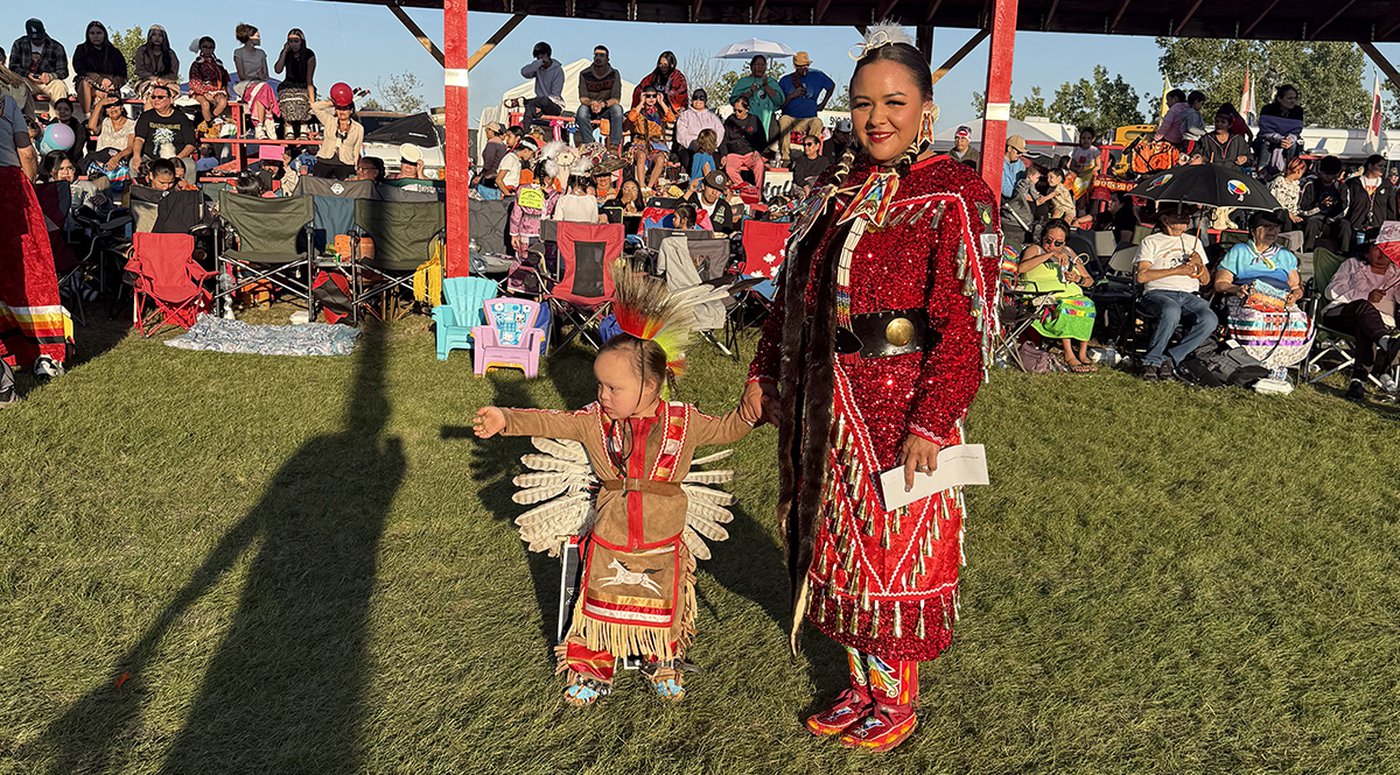
Beloved on the powwow circuit, young boy’s connection to the drum inspires
Now four, Waseskwan Redcrow was dancing ‘before he could even fully walk’ — his family says participating in powwows has brought them joy and belonging
-
Indigenous leaders give the UN a roadmap for protecting their peoples
Amidst prayers and vows of solidarity, UN Expert Mechanism on the Rights of Indigenous Peoples ends annual meetings with demands for ‘action we’re not seeing globally’