From síyaʔ to sage, sknir̓mn Anona Kampe teaches syilx plant knowledge
‘It’s a reciprocal relationship, where I take but I always give,’ said the knowledge-keeper during a community tour in ‘Summerland’ last week

Only take what you need, and use what you take. And whatever you don’t use, you give it back to the land.
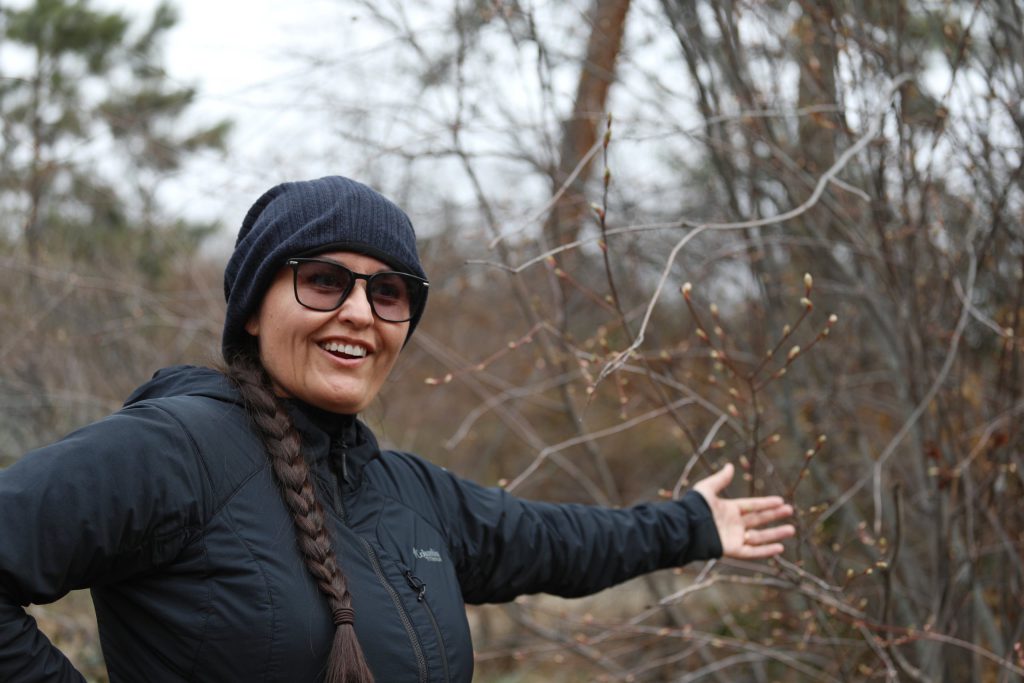
These three simple protocols rooted in reciprocity are still followed today. These laws, shared by sknir̓mn (Buttercup) Anona Kampe, have enabled the syilx Okanagan people to live in complete sustainability in their territory for thousands of years.
“It’s a reciprocal relationship, where I take but I always give,” said Kampe, a knowledge keeper from the Penticton Indian Band.
This set of teachings was amongst many shared by Kampe during a community tour that she led of various Indigenous plants and medicines found at “Summerland’s” Ornamental Gardens in syilx Okanagan homelands on March 22.
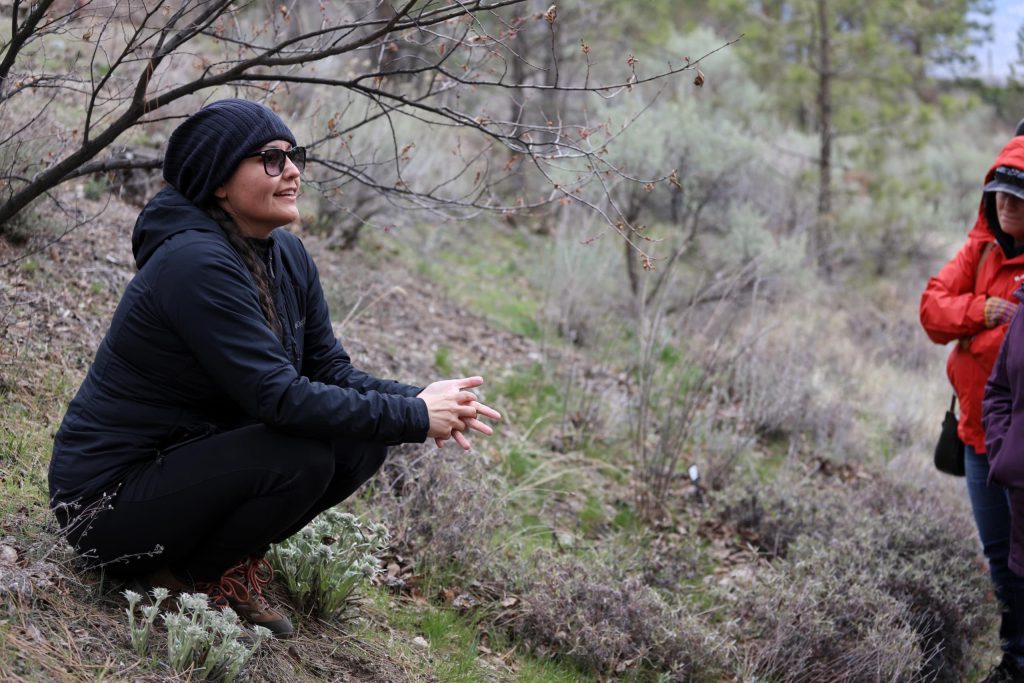
While still early in the blooming season, around 20 people from throughout the territory gathered at the community garden to learn about the cultural significance of different plants offered by the land and how syilx Okanagan people harvest and utilize them.
“The land wants us to be part of it. If you have a sage bush that isn’t being cut upon or harvested from, it will start to dwindle,” Kampe said.
“It takes us to be part of that system in order for it to thrive.”
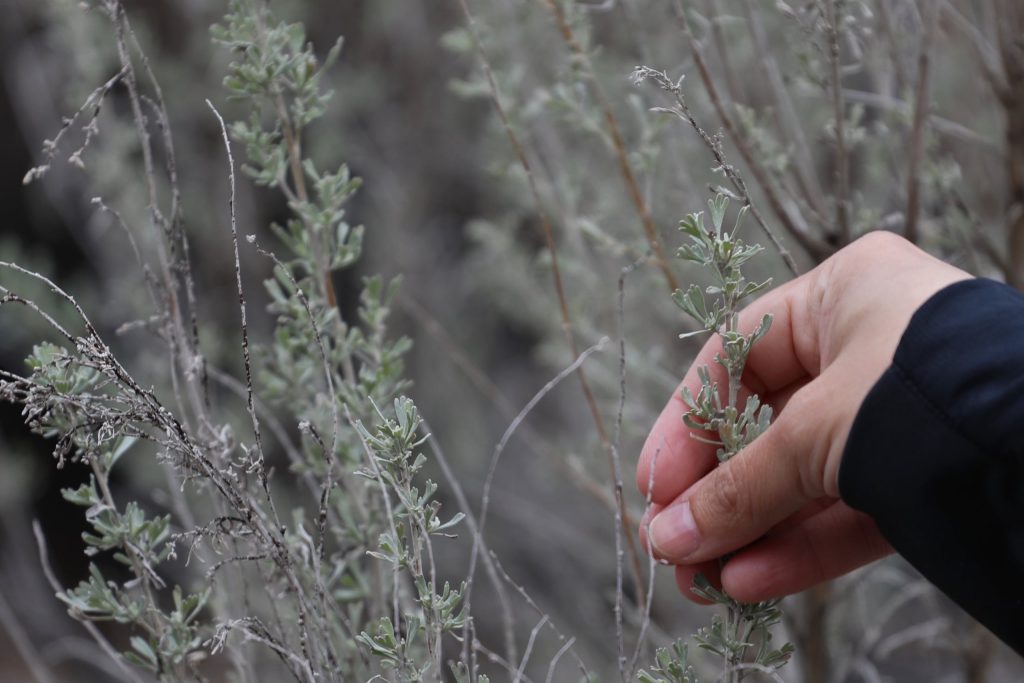
Big sagebrush — called qʷl̓qʷlm̓niłp in nsyilxcən — is typically used for smudging. An indicator in finding the proper sage for smudging versus the one used for culinary purposes is to look at the fingers on each leaf, Kampe shared.
“It’s said that those fingers will wipe away the bad energy.”
When sage is harvested and dried, its leaves are used for smudging, while placing the stems in a fire can act as a natural mosquito repellant.
syilx Okanagan people, she said, have traditionally used abalone shells as the fire-proof vessel in the practice of smudging. These shells come from the ocean, and syilx Okanagan people would travel far distances to trade for goods, including abalone shells.
“Some of the main highways that we travel on in our vehicles today — those were our old trading routes,” she said.
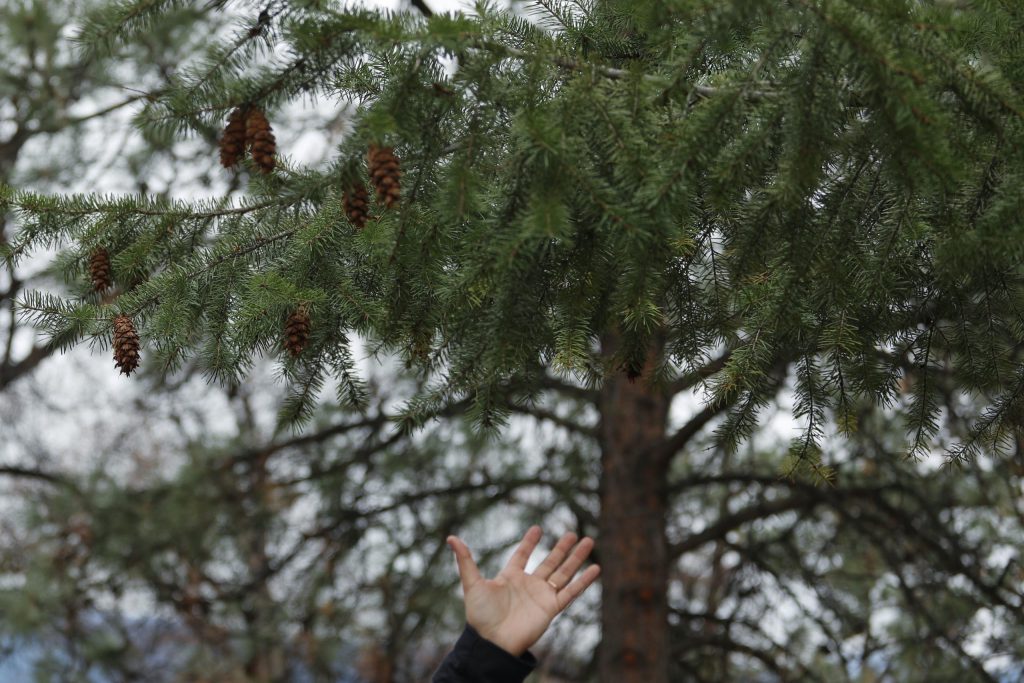
She also discussed the different trees found throughout the territory, including sʔatqʷɬp (ponderosa pine tree) and ćqiɬp (douglas fir tree).
Fallen needles from ponderosa pine trees continue to be used to create pine needle baskets for harvesting roots, berries, and other medicines. Harvested items such as sinew — a rope-like material that comes from the ligaments of animals — or sp’its’n (dogbane hemp) are utilized in sewing the baskets together.
In the warmer seasons, ponderosa pine trees emit a vanilla-like scent and even a sap that her grandma called Indian Gum. Depending on the time of year, the sap can be peeled off and chewed like a piece of bubblegum.
The fir boughs of a douglas fir tree continue to be utilized for ceremonial purposes, such as sweat house ceremonies. During a sweat, she said that the fir boughs are placed on the floor inside the sweat house for people to sit on.
“This is a way that we’re completely connected to the Earth and taking up all that goodness that the Earth provides for us. It’s here to take care of us, provide for us, and protect us,” she said.
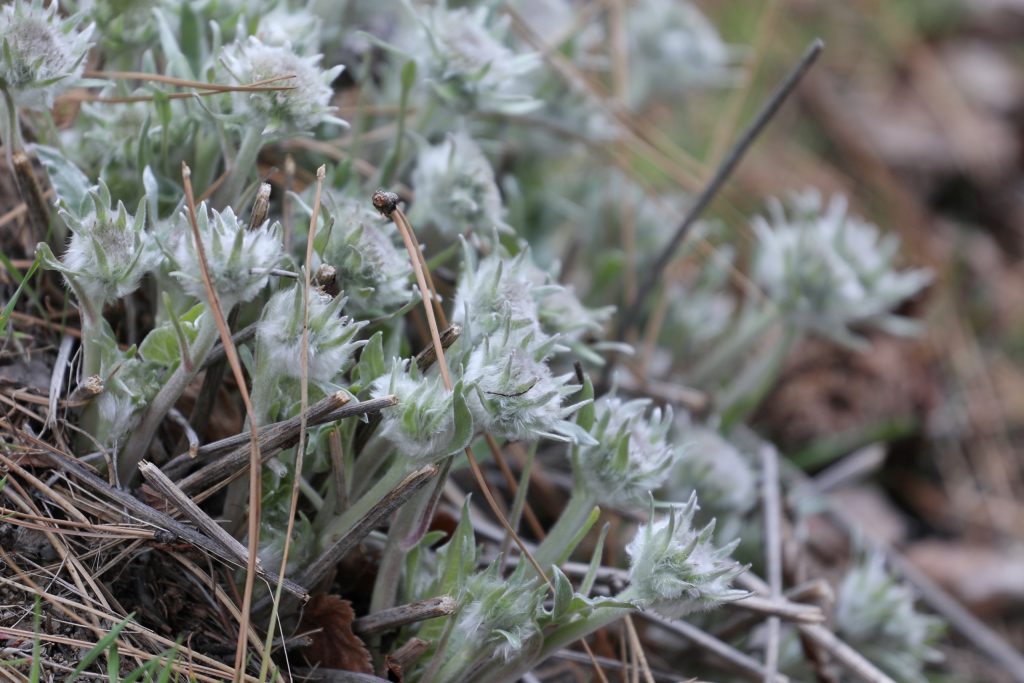
She shared about smúkʷaʔxn (arrowleaf balsamroot), a plant where all parts of it are either edible or used for food production. Before it blooms, the stem can be peeled and eaten, and its texture is similar to that of celery. But once bloomed, the stem becomes inedible as it takes on a wooden texture.
Its leaves are used for wrapping meat that’s prepared for a pit cook. And the plant’s taproot can grow six feet under the ground.
“Our territory can be quite dry,” she said. “This plant, because it goes down so far, reaches the water so it can survive and thrive in our territory.”
She also spoke of sc̓c̓ris (Oregon grape), a berry that creates a staining red colour when cracked open. As for the bush itself, it’s called sc̓rsiɬp. The grape was one of the ingredients used for pictograph paintings, often mixed with ochre, bear grease, fish slime and a number of different plants and berries — such as síyaʔ (Saskatoon berry).
“These pictographs are hundreds — if not thousands — of years old,” she said. “When anthropologists were first making their journey throughout our territory, they came to the false conclusion that this was our first attempt at a written language. And we knew that wasn’t true.”
The day concluded with an outdoor breathing exercise and reflections from participants. Awakened, grateful, humbled, and connected were just some of the words people used to describe how they felt.
Kampe reminded people how important it is to get outside every day — not just for their own wellness but for the land as well.
“Our land is lonesome for us. There are some folks who believe that things should be fenced off,” she said. “I’m here to tell you that the land needs us to be part of it.”
Author
We live in a media ecosystem that thrives on misinformation. Big Tech and AI companies are consuming the work of real human beings and Canadian news has been banned on Facebook and Instagram.
And yet, I have hope for journalism because of the work we’re doing at IndigiNews.
At IndigiNews, we embody tâpwêwin — the Cree value of integrity and responsibility in truth-telling. We are committed to our independent, Indigenous-led newsroom rooted in community, accountability, and relationality. We believe storytelling is a sacred fire that connects our pasts, presents, and futures through the storytellers in our Storytelling Lodge. IndigiNews creates space for Indigenous journalists, storytellers, Knowledge Keepers, and communities to gather, learn, and share stories that matter.
As a registered charity, we are building a fire that allows our work not just to ignite but to thrive. Rather than relying on advertising or corporate acquisition, IndigiNews is sustained by people like you who believe Indigenous stories are important for the future of our communities.
Your support is making a real difference.
Our community of supporters, our Firekeepers, make it possible to grow our newsroom, publish award-winning journalism, train emerging Indigenous journalists through initiatives like the ReFocus Photojournalism Fellowship, and publish trustworthy stories that serve our communities across the country. Every story we publish helps fill in gaps left by mainstream media and ensures Indigenous perspectives are represented with care, accuracy and respect.
But there is still more work to do.
As the media landscape becomes more and more uncertain, community support is as necessary and essential as it’s ever been. Every new Firekeeper helps protect the independence of our newsroom and strengthens journalism that is accountable to our many and varied communities over corporations.
That’s why we’re inviting you to become a Firekeeper.
Firekeepers tend to and protect the sacred fire. Your monthly contributions directly support IndigiNews’s Storytelling Lodge, helps sustain our independent, Indigenous-led newsroom, and ensures future generations of Indigenous storytellers have the resources they need to do the work.
As a registered Canadian charity, all eligible donations receive a charitable tax receipt.
If you believe Indigenous stories matter, if you value independent journalism, and if you want to help build a strong future for Indigenous media, we invite you to join our circle of Firekeepers today.
Together, we can keep the fire burning.
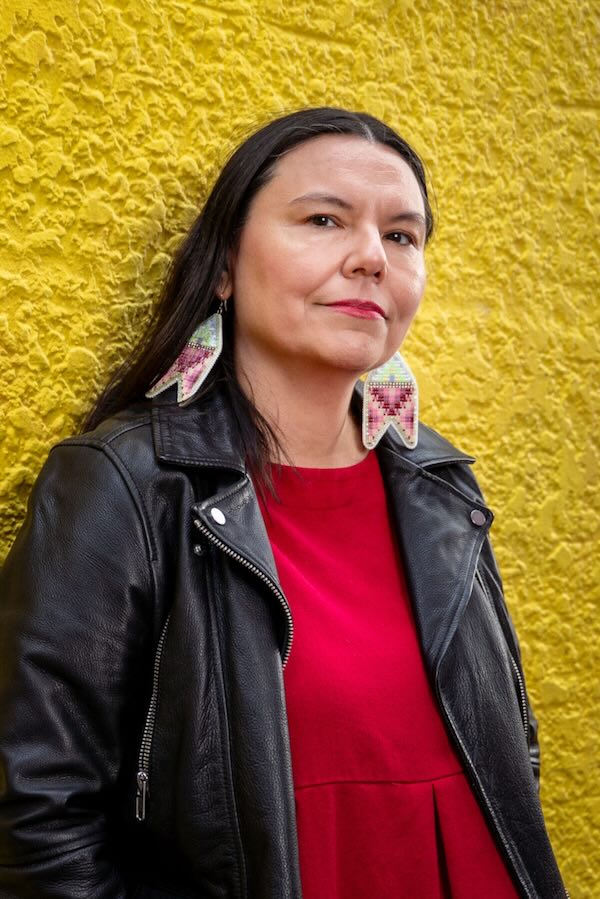
— Eden Fineday, Publisher, IndigiNews
Support us nowLatest Stories
-
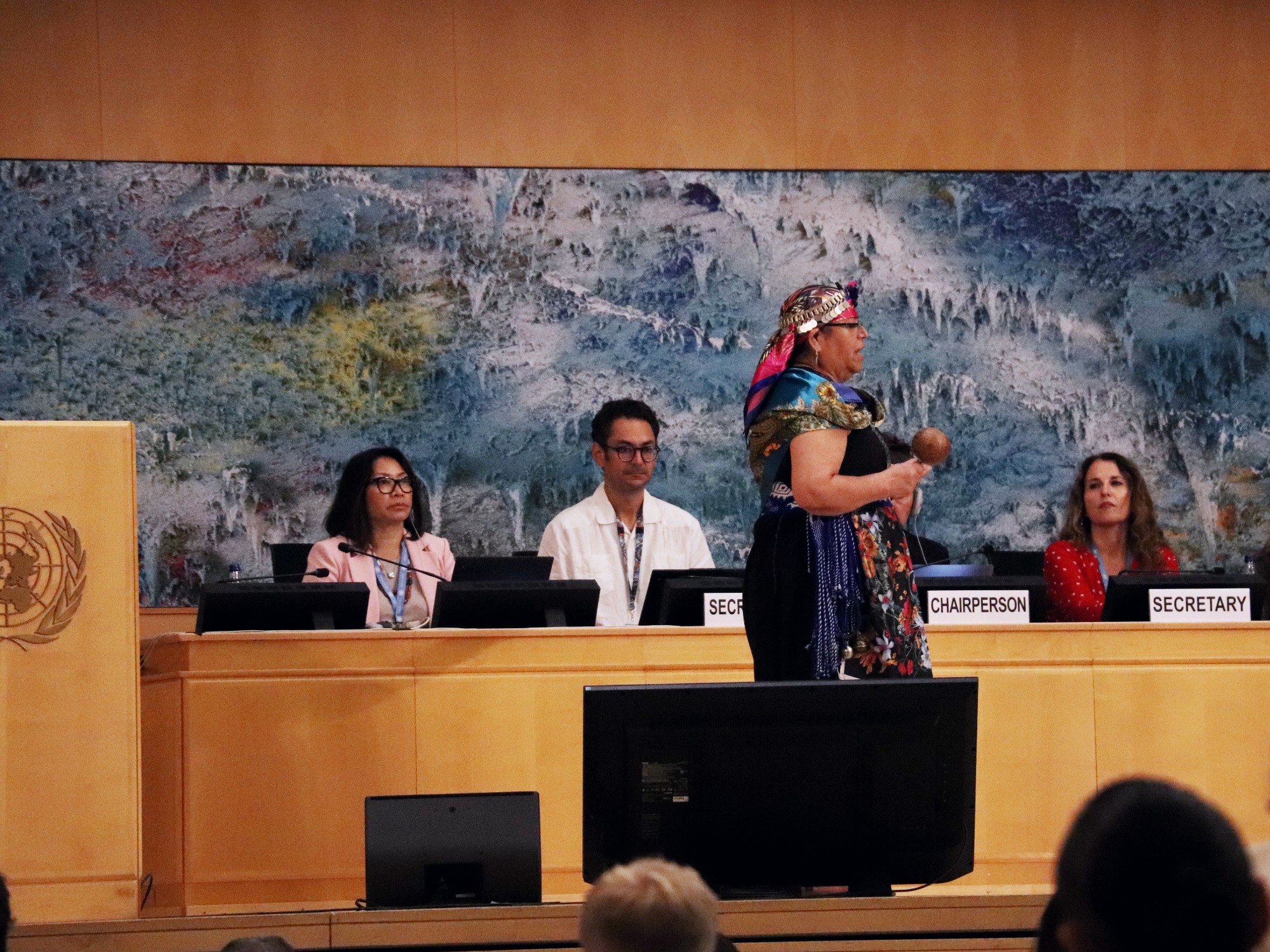
Indigenous people demand more say at the UN, as new crises hit their homelands
Indigenous nations live ‘on the frontlines’ of climate, conflict and new tech. But their voices remain sidelined in the global halls of power.
-
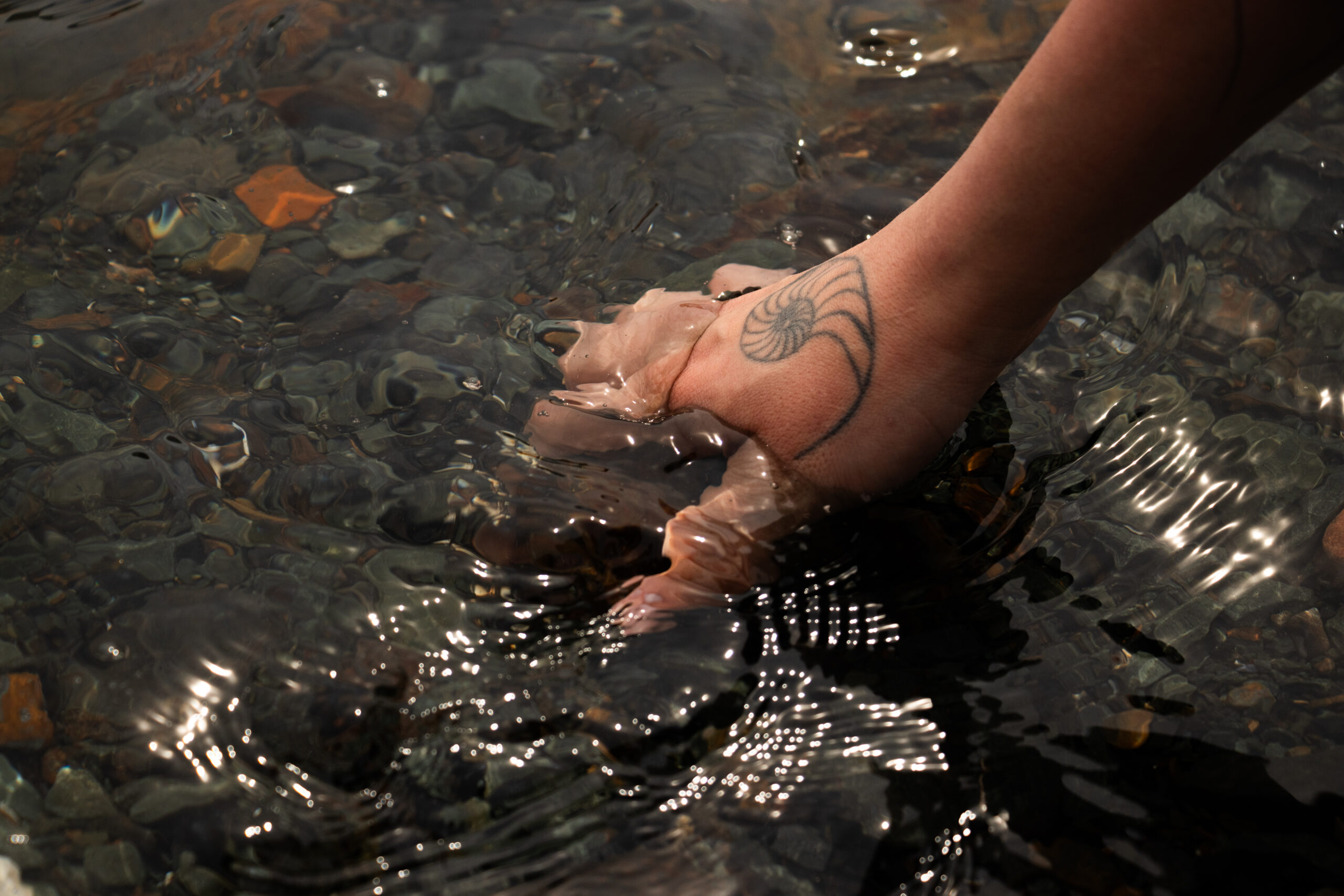
Through their lenses: Showcasing the work of our 2026 ReFocus fellows
Get to know our photojournalism training cohort through a series of portraits shot during a week in Kjipuktuk (Halifax)