We’re covering education for Indigenous students, teachers, and families: Here’s the latest
Following what’s happening in the education space, so you don’t have to.

As IndigiNews’s education reporter covering Vancouver Island, I’m following all of the latest developments. Every other week, I’ll bring you a roundup of what you need to know about what’s relevant to Indigenous students, teachers, parents and families across Vancouver Island and beyond.
What you need to know: K-12
- Federal funding of $2 billion has been allocated to help provinces and territories reopen their schools and economies safely, reports CBC. Based on student population per province, B.C. will be allocated $242.4 million.
- Details of B.C.’s Phase 2 Restart Plan for schools will vary based on district. School districts will contact all families in their school community to share their safety plan and confirm if they plan to have their child attend classes in September or require another option.
- A hybrid blend of home study, in-class and remote learning was under consideration by the District of Greater Victoria SD61. Surveys were sent to 13,400 student families to determine what options they would choose for their child. The Greater Victoria School District Facebook page, released the results. Approximately 80% out of 13,000 respondents said they want the option of having their child back in school full days.
- Judy Darcy, B.C. ‘s minister of mental health and addictions, announced that $2 million will be provided to schools throughout the province for mental health support amid the COVID-19 crisis.
- The First Nations Education Steering Committee (FNESC) recently released a statement of support for First Nations on school restart on their website recognizing that the authority of First Nations independent schools exempt them from government requirements to fully open schools and that they fully respect the authority of individual First Nations to make decisions about school operations in the best interest of their schools and communities and we recognize that there will be a diversity of delivery methods in place for September.
- The W̱SÁNEĆ School Board of Directors says that they hold the health and safety of students, staff and the W̱SÁNEĆ community as the highest priority which is why the W̱SÁNEĆ School Board will be offering remote learning for all their educational programs starting on September 10 until further notice.
What you need to know: Post-secondary
- The University of Victoria (UVic) has announced online classes for the spring, in consultation with the Ministry of Advanced Education, Skills and Training. Following the advice and guidance of the Provincial Health Officer, UVic will continue to offer predominantly online instructions for the spring term (January to April 2021).
- The UVic Students’ Society made a presentation to the Saanich Police Board on Sept. 1, calling on the Saanich Police Board to end street checks in Saanich and to build a more effective response to citizens experiencing mental health distress.
- Uvic announced a $13 million investment by the province that will enable the school to build its much-anticipated national centre for Indigenous law. The new addition will be home to the world’s first joint degree in Indigenous legal orders and Canadian common law (JD/JID). The 2,440-square-metre (26,264-sq.-ft.) addition to the Anne and Murray Fraser (Law) Building is designed to reflect and honour the law school’s location and long-standing relationship with the Songhees, Esquimalt and WSÁNEĆ Peoples on whose territory the university resides.
- Camosun College president Sherri Bell released a Covid-10 Update on Sept. 2 stating that the college will be opening its doors to students on campus this fall with the amount of students at any one time being very limited as they plan for a mix in the delivery of courses. Delivering courses remotely when possible and for courses that require students to come onto campus the college will deliver course teachings in a way that is safe for students and employees.
Our latest:
- Victoria Native Friendship Centre’s annual Aboriginal Back to School Picnic was held on Sept. 1, supplying Indigenous students in need with free back to school supplies.
- Child welfare advocate Ruby Barclay is uplifting youth to address local barriers through the Nanaimo Youth Advisory Council.
- Indigenous crisis line KUU-US is seeing a rise in COVID-19 related calls. Based in Port Alberni, KUU-US provides crisis line services to Indigenous Peoples throughout B.C.
This week many schools are reopening, so however your back to school looks this fall, we hope that you stay well while you learn!
That’s it for this week! If you have news or information that you want to share, email me: catherine@indiginews.com.
Author
We live in a media ecosystem that thrives on misinformation. Big Tech and AI companies are consuming the work of real human beings and Canadian news has been banned on Facebook and Instagram.
And yet, I have hope for journalism because of the work we’re doing at IndigiNews.
At IndigiNews, we embody tâpwêwin — the Cree value of integrity and responsibility in truth-telling. We are committed to our independent, Indigenous-led newsroom rooted in community, accountability, and relationality. We believe storytelling is a sacred fire that connects our pasts, presents, and futures through the storytellers in our Storytelling Lodge. IndigiNews creates space for Indigenous journalists, storytellers, Knowledge Keepers, and communities to gather, learn, and share stories that matter.
As a registered charity, we are building a fire that allows our work not just to ignite but to thrive. Rather than relying on advertising or corporate acquisition, IndigiNews is sustained by people like you who believe Indigenous stories are important for the future of our communities.
Your support is making a real difference.
Our community of supporters, our Firekeepers, make it possible to grow our newsroom, publish award-winning journalism, train emerging Indigenous journalists through initiatives like the ReFocus Photojournalism Fellowship, and publish trustworthy stories that serve our communities across the country. Every story we publish helps fill in gaps left by mainstream media and ensures Indigenous perspectives are represented with care, accuracy and respect.
But there is still more work to do.
As the media landscape becomes more and more uncertain, community support is as necessary and essential as it’s ever been. Every new Firekeeper helps protect the independence of our newsroom and strengthens journalism that is accountable to our many and varied communities over corporations.
That’s why we’re inviting you to become a Firekeeper.
Firekeepers tend to and protect the sacred fire. Your monthly contributions directly support IndigiNews’s Storytelling Lodge, helps sustain our independent, Indigenous-led newsroom, and ensures future generations of Indigenous storytellers have the resources they need to do the work.
As a registered Canadian charity, all eligible donations receive a charitable tax receipt.
If you believe Indigenous stories matter, if you value independent journalism, and if you want to help build a strong future for Indigenous media, we invite you to join our circle of Firekeepers today.
Together, we can keep the fire burning.
— Eden Fineday, Publisher, IndigiNews
Support us nowLatest Stories
-
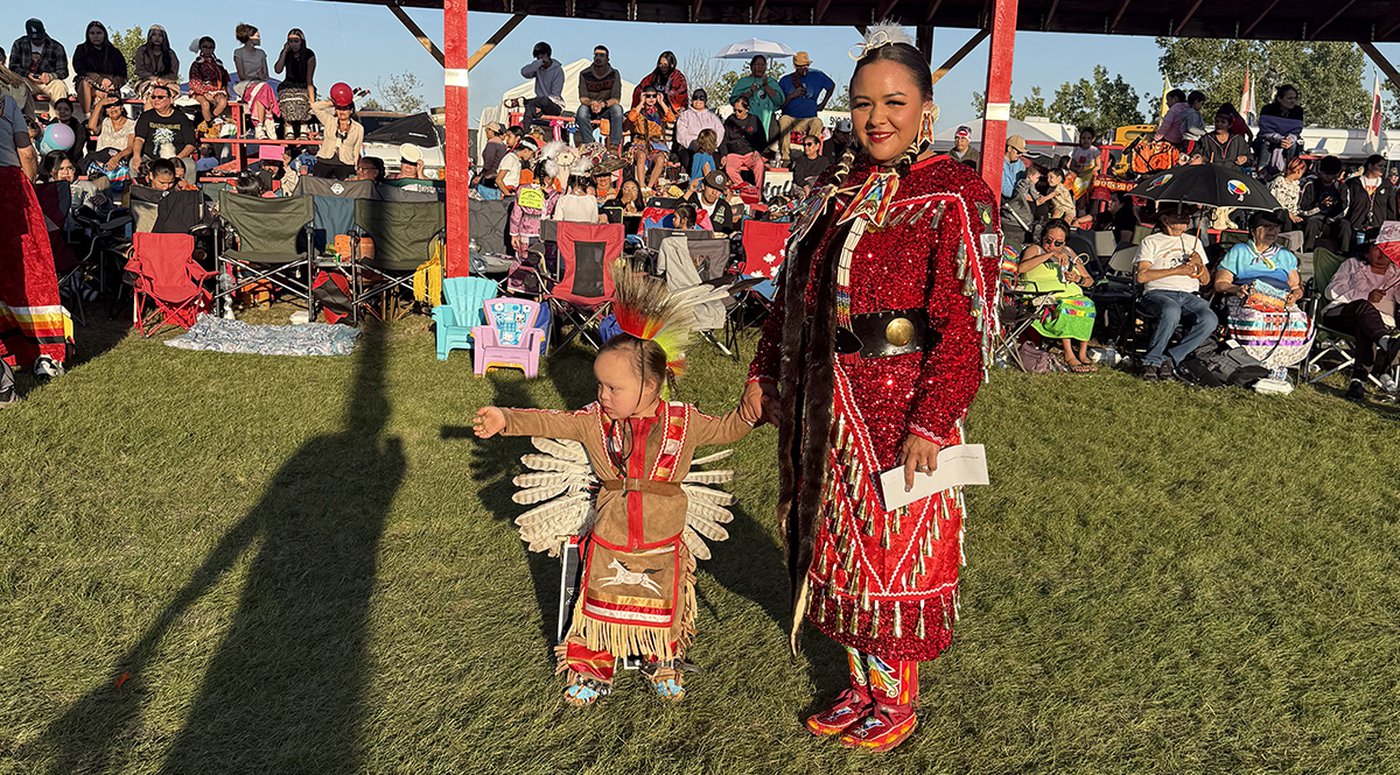
Beloved on the powwow circuit, young boy’s connection to the drum inspires
Now four, Waseskwan Redcrow was dancing ‘before he could even fully walk’ — his family says participating in powwows has brought them joy and belonging
-
Indigenous leaders give the UN a roadmap for protecting their peoples
Amidst prayers and vows of solidarity, UN Expert Mechanism on the Rights of Indigenous Peoples ends annual meetings with demands for ‘action we’re not seeing globally’