Indigenous guardians: Meet PIB’s two-man crew looking out for the land
Clint Gabriel and Dean Schreiber patrol the reserve, monitor the environment and alert members of potential threats

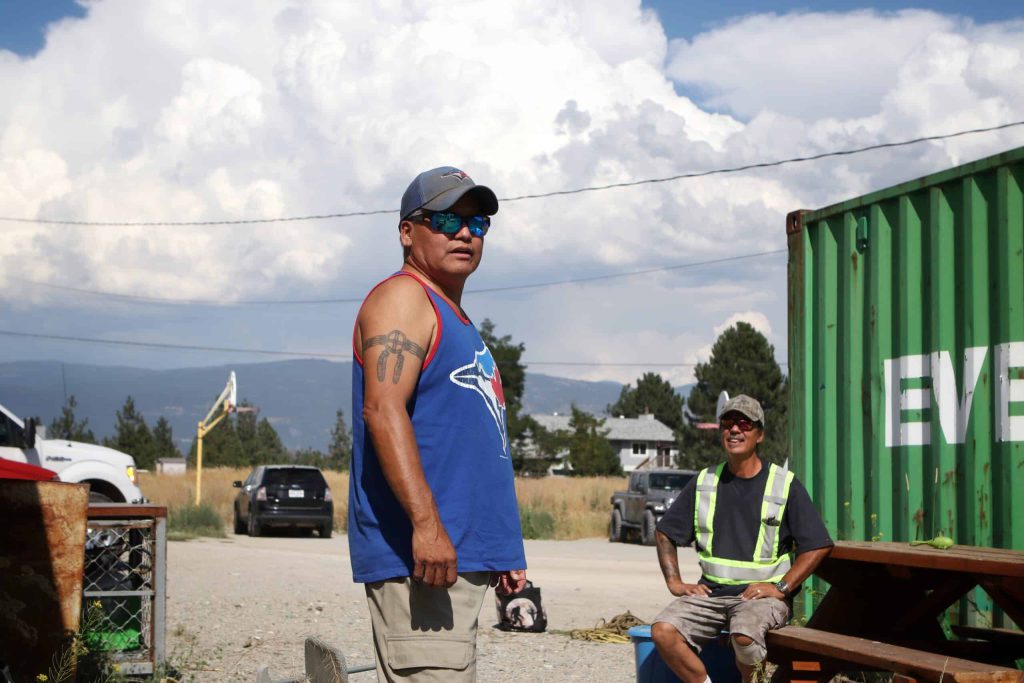
Since its inception in 2016, the Penticton Indian Band’s (PIB) Guardian Program has evolved from a land-monitoring initiative to a service that aims to provide safety and security for the entire community.
A part of PIB’s Natural Resource Department, the two-man crew of Clint Gabriel and Dean Schreiber patrol the band’s reserve in syilx homelands, where they protect the land and notify band members about any signs of danger.
From wildlife roaming near properties to possible burglaries or carjackings, the guardians also address illegal campsites, notifying such campers that they are trespassing, before cleaning up whatever waste is left behind.
PIB’s Guardian Program is funded entirely through grants, with a major funder being Canadian Wildlife Service. Across “Canada,” there are more than 80 similar guardian programs operated by different Indigenous communities. In August 2021, the Government of Canada announced up to $173-million in funding for new and existing Indigenous guardian initiatives — with many leaders talking about it as a climate change solution and a form of reclamation.
James Pepper, the director of PIB’s Natural Resources Department, said that the program initially started as a way to restore and enhance areas on the reserve that were sensitive in nature, had species at risk or species of cultural significance.
As that work was being carried out, Pepper said that illegal dumping was identified – some new, while others had been sitting there for years.
“It’s a lot of work to pick up very dangerous garbage, often with needles, drugs and sharp things,” he said.
He said that people continue to illegally camp and dump in wetlands and sensitive ecosystems.
“When people camp, they leave garbage often or deleterious substances, like digging toilets or whatever. Or they start fires,” he said.
Illegal campers are given a formal eviction notice signed by PIB’s lands department, and are given 24 hours to leave the area. Pepper said that more often than not, people comply, but will often leave behind items at the site, which is then taken to the dump by the guardians.
“We don’t just take everyone’s belongings and take them to the dump,” he said. “Even if they haven’t vacated in 24 hours, and they have what are clearly belongings there – and not garbage – we wait.”
Campers who are passing through who just need a place to stay – and aren’t lighting fires, digging toilets or damaging vegetation – are granted a few more days of exemption, Pepper said.
“They’re not causing problems, they’re just passing through no problem. We still give them that support they need,” he said.
Those with mental health issues are connected with organizations in town, such as the Brain Injury Society of the South Okanagan. Anyone who is camping on band land is provided with a booklet called The Little Red Book, which is full of community resources for food, shelter, addiction and other services available throughout the south Okanagan.
“Community tells us what they want,” said Pepper. “Right now, it’s evolved to a security program. But it also does a whole host of other things.”
During wildfire season, the guardians will monitor for smoke and address prohibited burns. Last wildfire season, the guardians coordinated runway lanes for skimmer planes and fire bombers.
They will also alert band members in rural locations across the 46,000 acre reserve of any potential wildfire threats. If a visitor on the reserve seems lost, the guardians will pull over and see how they can help.
On hot, summer days, they’ll distribute fruits and water to people experiencing homelessness on band land. If PIB needs assistance with giving out salmon to the community, the guardians lend a hand. When Christmas rolls around, the guardians will also help distribute hampers to families.
“We’re keeping an eye on each other,” said Gabriel, who also sits on PIB’s Council.
“It’s not just the property or the valuables. Our community is like most communities: your valuables are your people.”
Gabriel said that band members will often send tips about potential threats in the area to help get the word out.
“We have a lot of eyes out there now because the more we work with the public, the more they let us know,” he said. “They’ve been really good at letting people know that they will let us know.”
When they’re not out protecting the land and the community, the guardian crew also conducts environmental monitoring. They’ll carry out beaver dam removals and environmental surveys to ensure that the creek is healthy with cattle.
“They’re just trying to keep the land clean and healthy, and engage with people. That’s what makes it effective,” said Pepper.
For years now, the guardians have also been helping with a program designed to re-introduce burrowing owls to the region. In early spring, the guardians build burrows for the small owls, creating homes for them to live in. Their monitoring duties also include feeding the owls once or twice a week until the end of September.
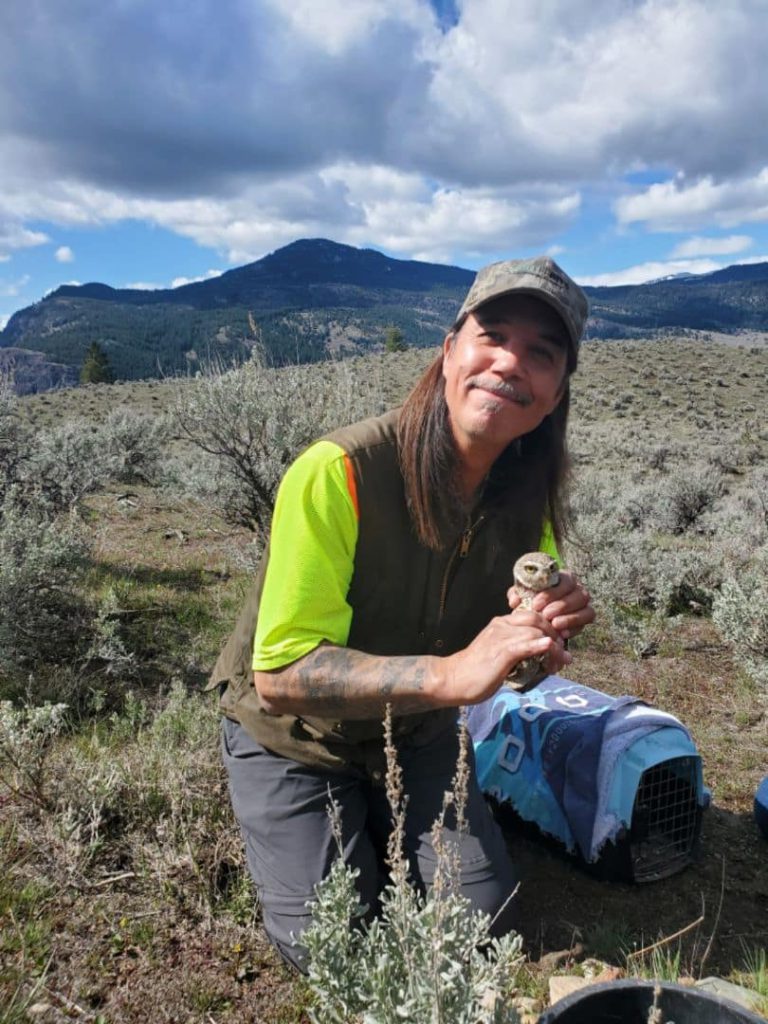
“It’s an awesome, awesome program,” Gabriel said of the initiative.
Nearly two years into his role as guardian, Gabriel said that the job has been a great tool in helping him learn and educate others about the area.
“A lot of people don’t know their own backyards. If they ask me about their backyard, I’d be able to tell them what’s here,” he said.
“That’s important: to know where you’re from. It empowers you because you’re not just living with four walls around you. There’s so many different ways to live out there. The siyaʔ (Saskatoon berry) is here. The sp’itł’m (bitterroot) is here. The deer and the moose – we have the odd moose come through here.”
Gabriel enjoys his role as guardian to the point where he’s hesitant to even describe it as work.
“We enjoy what we’re doing,” he said. “We don’t talk like it’s work.”
For Gabriel, it’s all the engaging with the community that makes the role so rewarding for him.
“The community does respect the land and appreciate what we do,” he said.
“Everybody’s waving – regardless if you’re driving your own vehicle or company vehicle – you’re waving and everybody else is waving. It’s a good thing.”
Author
We live in a media ecosystem that thrives on misinformation. Big Tech and AI companies are consuming the work of real human beings and Canadian news has been banned on Facebook and Instagram.

And yet, I have hope for journalism because of the work we’re doing at IndigiNews.
At IndigiNews, we embody tâpwêwin — the Cree value of integrity and responsibility in truth-telling. We are committed to our independent, Indigenous-led newsroom rooted in community, accountability, and relationality. We believe storytelling is a sacred fire that connects our pasts, presents, and futures through the storytellers in our Storytelling Lodge. IndigiNews creates space for Indigenous journalists, storytellers, Knowledge Keepers, and communities to gather, learn, and share stories that matter.
As a registered charity, we are building a fire that allows our work not just to ignite but to thrive. Rather than relying on advertising or corporate acquisition, IndigiNews is sustained by people like you who believe Indigenous stories are important for the future of our communities.
Your support is making a real difference.
Our community of supporters, our Firekeepers, make it possible to grow our newsroom, publish award-winning journalism, train emerging Indigenous journalists through initiatives like the ReFocus Photojournalism Fellowship, and publish trustworthy stories that serve our communities across the country. Every story we publish helps fill in gaps left by mainstream media and ensures Indigenous perspectives are represented with care, accuracy and respect.
But there is still more work to do.
As the media landscape becomes more and more uncertain, community support is as necessary and essential as it’s ever been. Every new Firekeeper helps protect the independence of our newsroom and strengthens journalism that is accountable to our many and varied communities over corporations.
That’s why we’re inviting you to become a Firekeeper.
Firekeepers tend to and protect the sacred fire. Your monthly contributions directly support IndigiNews’s Storytelling Lodge, helps sustain our independent, Indigenous-led newsroom, and ensures future generations of Indigenous storytellers have the resources they need to do the work.
As a registered Canadian charity, all eligible donations receive a charitable tax receipt.
If you believe Indigenous stories matter, if you value independent journalism, and if you want to help build a strong future for Indigenous media, we invite you to join our circle of Firekeepers today.
Together, we can keep the fire burning.
— Eden Fineday, Publisher, IndigiNews
Support us nowLatest Stories
-
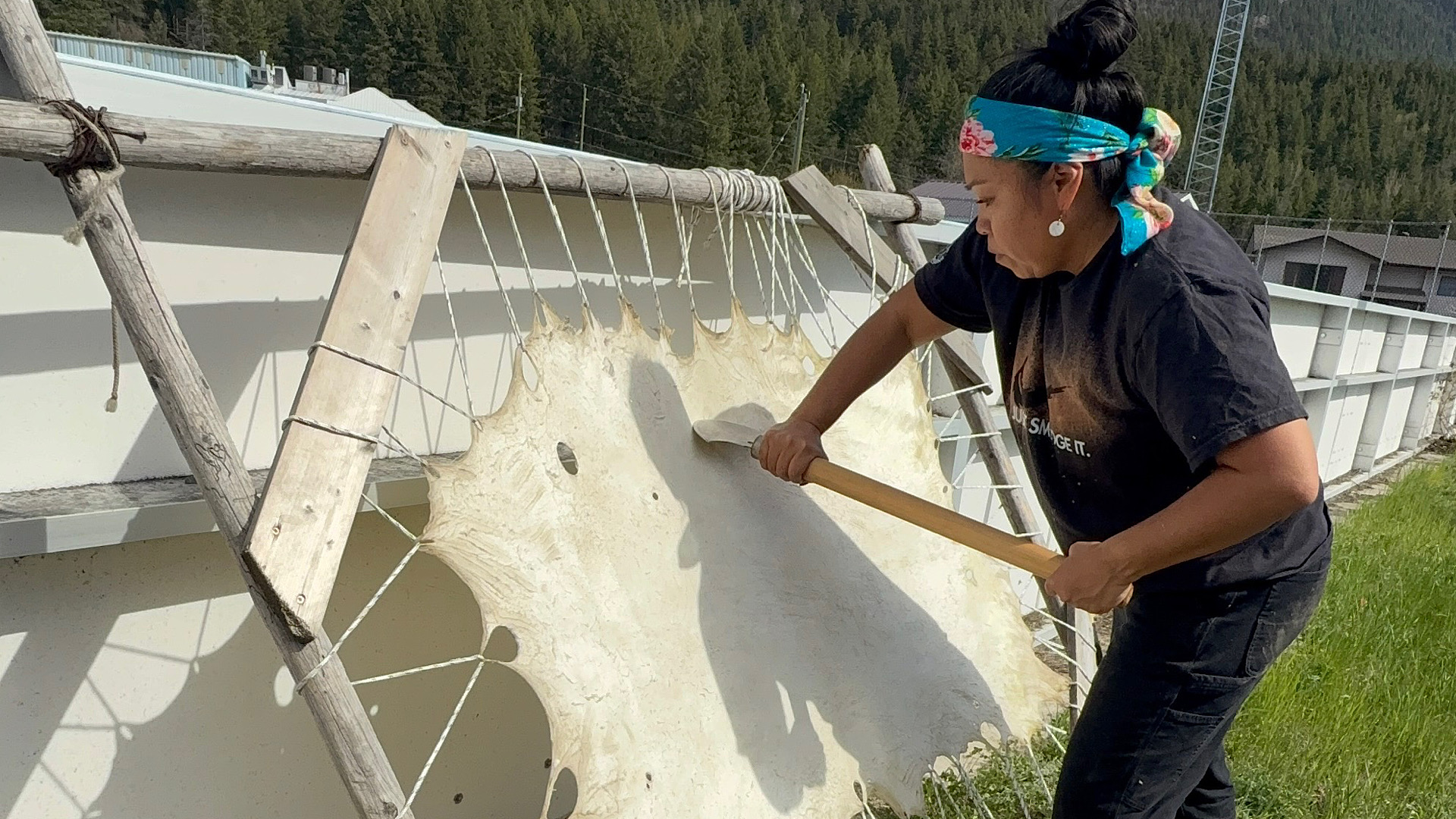
In Simpcw First Nation, Secwe̓pemc women are revitalizing hide tanning
Working with animal pelts is a lengthy, labour-intensive process — but teachers in the ‘B.C.’ community are ensuring the tradition is passed on
-

Tr’ondëk Hwëch’in celebrates as Gavin McKenna picked first in NHL draft
The 18-year-old left winger from the ‘Yukon’ joined the Toronto Maple Leafs roster, saying he wants to inspire other young Indigenous players