Total number of Indigenous nurses in B.C. unknown as registry says data is “incomplete”
The TRC’s 23rd call to action was for an increase in Indigenous health care practitioners. Without clear numbers, how can this call be met?

Despite ongoing calls for more Indigenous health care workers, IndigiNews has learned that there is no publicly available data on the number of Indigenous nurses in the province — and those who are trying to track these statistics say the data is currently incomplete.
“I think this identifies a real gap in knowledge to help support Indigenous nurses,” says Kathleen Harris, FNHA Regional Manager for Nursing on Vancouver Island.
“There is an Indigenous Nurses of Canada organization that I have been a member of but it is a voluntary and paid membership so would not be an accurate reflection. To my knowledge, the union has never tracked this information.”
“It is common knowledge that an increase in the number of Aboriginal health professionals is needed to improve the future health outcomes for Aboriginal peoples in Canada,” according to the Canadian Indigenous Nurses Association website.
But without concrete data, how can progress be tracked?
A spokesperson from the BC Union of Nurses told IndigiNews via email, that they do not track the number of Indigenous nurses, and that this would fall under the registry.
The British Columbia College of Nurses and Midwives (BCCNM) registers nurses in the province. Since 2006, the registry has had a box that people can select to identify as an Indigenous person, choosing “FN, Metis or Inuk.” There is also an option to specify which Nation, community, or band they identify with. This is offered in the registration form, but that information is incomplete, they say.
“Unfortunately the data we have is incomplete, so we’re not able to release it,” Johanna Ward, communications specialist for BCCNM wrote in an email to IndigiNews.

The Canadian Indigenous Nurses’s Association (CINA) tells IndigiNews that they do track the numbers but only when a nurse identifies themselves to their organization.
“We had previously obtained information from a mix of sources and the last resource was a collaboration with the University of Saskatchewan. Of course, we anticipate that these numbers are higher but “identification” becomes a very sensitive issue for many,” a representative from CINA explains via email.
The 2016 study from the University of Saskatchewan found that there were 1305 Indigenous nurses in B.C., out of 43,495 total nurses in the province. This study counts registered nurses, not licensed practical nurses.
“The lack of data is problematic for several reasons – primarily for workforce analysis, and for educational institutions,” the CINA representative says adding that they “continue to work with multiple stakeholders in addressing this issue” and “are truly grateful to organizations that have made a commitment towards ‘reconciliation.’”
Indigenous travel nurse and nursing instructor Diane Strong Eagle says she has been seeking actual numbers for years. An increase in Indigenous nurses “would answer the [Truth and Reconciliation Commission’s] call for action to educate more indigenous health care workers,” she says.
The TRC’s 23rd call to action is for an increase in the number of Aboriginal professionals working in the health-care field.
“We call upon all levels of government to increase the number of Aboriginal professionals working in the health-care field. Ensure the retention of Aboriginal health-care providers in Aboriginal communities. Provide cultural competency training for all health-care professionals,” the call to action states.
Strong Eagle says every year she “participates in the B.C. Association of Aboriginal Friendship Centres event, ‘Gathering Our Voices’, so we can encourage and speak to youth about becoming nurses, and offer mentorship.”
She believes there is more work to be done on educating the general population about the barriers that Indigenous people face to becoming educated.
According to CINA, “this will not be a situation that can be resolved in the short term.” The organization is “looking forward to” reporting on the TRC’s calls to action and the “great strides” that have been made in addressing Indigenous nursing needs.
“We also look forward to the leadership roles that Indigenous nurses will play in shaping the many issues in Indigenous healthcare,” CINA tells IndigiNews.
Our series on reproductive health access is made possible in part with funding from First Nations Health Authority (FNHA) and Thunderbird Partnership Foundation. Their support does not imply endorsement of or influence over the content produced.
Author
We live in a media ecosystem that thrives on misinformation. Big Tech and AI companies are consuming the work of real human beings and Canadian news has been banned on Facebook and Instagram.

And yet, I have hope for journalism because of the work we’re doing at IndigiNews.
At IndigiNews, we embody tâpwêwin — the Cree value of integrity and responsibility in truth-telling. We are committed to our independent, Indigenous-led newsroom rooted in community, accountability, and relationality. We believe storytelling is a sacred fire that connects our pasts, presents, and futures through the storytellers in our Storytelling Lodge. IndigiNews creates space for Indigenous journalists, storytellers, Knowledge Keepers, and communities to gather, learn, and share stories that matter.
As a registered charity, we are building a fire that allows our work not just to ignite but to thrive. Rather than relying on advertising or corporate acquisition, IndigiNews is sustained by people like you who believe Indigenous stories are important for the future of our communities.
Your support is making a real difference.
Our community of supporters, our Firekeepers, make it possible to grow our newsroom, publish award-winning journalism, train emerging Indigenous journalists through initiatives like the ReFocus Photojournalism Fellowship, and publish trustworthy stories that serve our communities across the country. Every story we publish helps fill in gaps left by mainstream media and ensures Indigenous perspectives are represented with care, accuracy and respect.
But there is still more work to do.
As the media landscape becomes more and more uncertain, community support is as necessary and essential as it’s ever been. Every new Firekeeper helps protect the independence of our newsroom and strengthens journalism that is accountable to our many and varied communities over corporations.
That’s why we’re inviting you to become a Firekeeper.
Firekeepers tend to and protect the sacred fire. Your monthly contributions directly support IndigiNews’s Storytelling Lodge, helps sustain our independent, Indigenous-led newsroom, and ensures future generations of Indigenous storytellers have the resources they need to do the work.
As a registered Canadian charity, all eligible donations receive a charitable tax receipt.
If you believe Indigenous stories matter, if you value independent journalism, and if you want to help build a strong future for Indigenous media, we invite you to join our circle of Firekeepers today.
Together, we can keep the fire burning.
— Eden Fineday, Publisher, IndigiNews
Support us nowLatest Stories
-
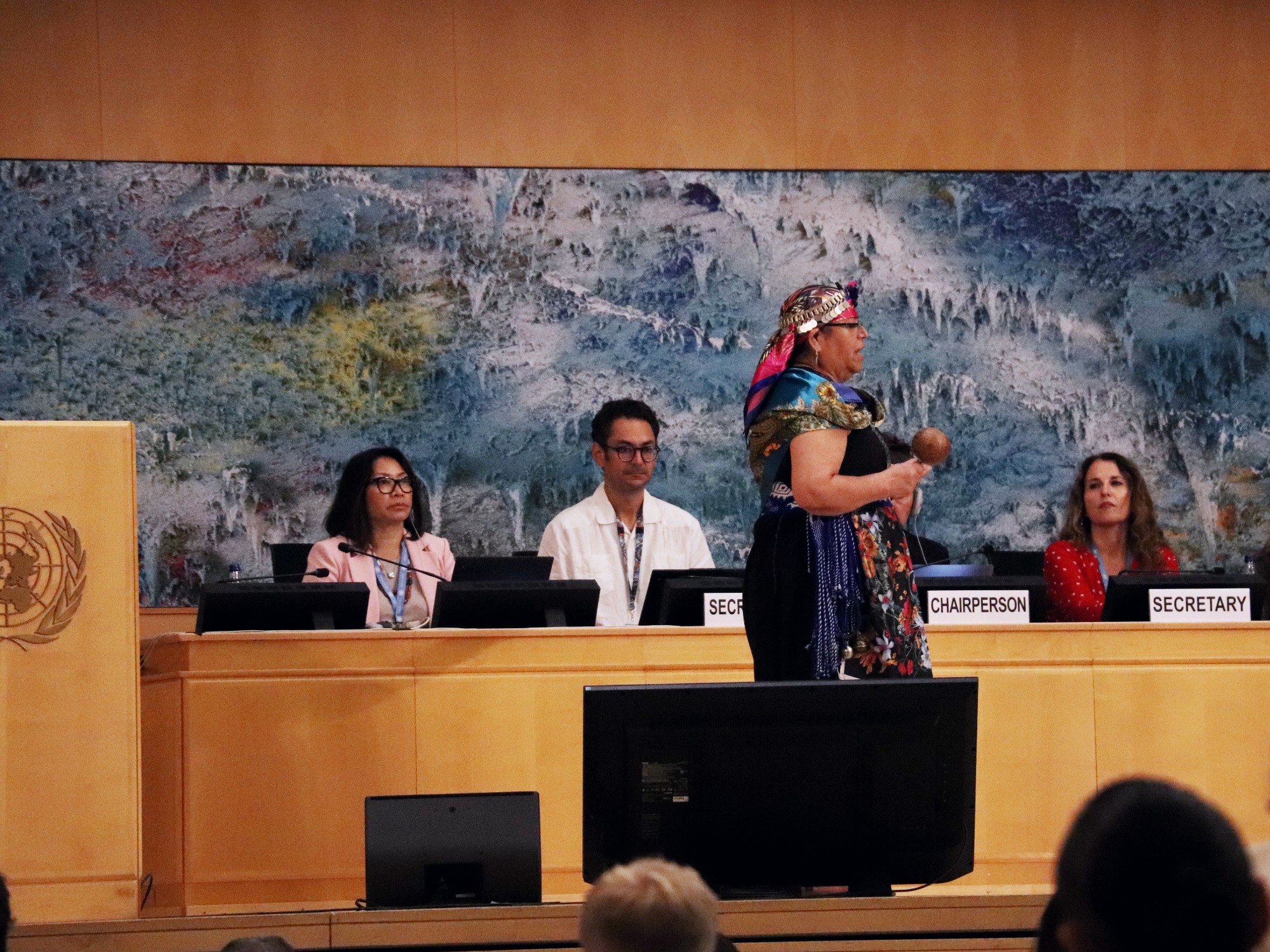
Indigenous people demand more say at the UN, as new crises hit their homelands
Indigenous nations live ‘on the frontlines’ of climate, conflict and new tech. But their voices remain sidelined in the global halls of power.
-
Through their lenses: Showcasing the work of our 2026 ReFocus fellows
Get to know our photojournalism training cohort through a series of portraits shot during a week in Kjipuktuk (Halifax)