Confronting colourism in Métis communities
To be âpihtaw’kos’ân is to always be learning how to be a good relative, and sometimes being a good relative is having the hard conversations


We need to have a conversation about the weaponization of Métis identity, colourism in our communities, and the race to innocence that white settlers embark upon by calling upon tenuous Métis ancestry.
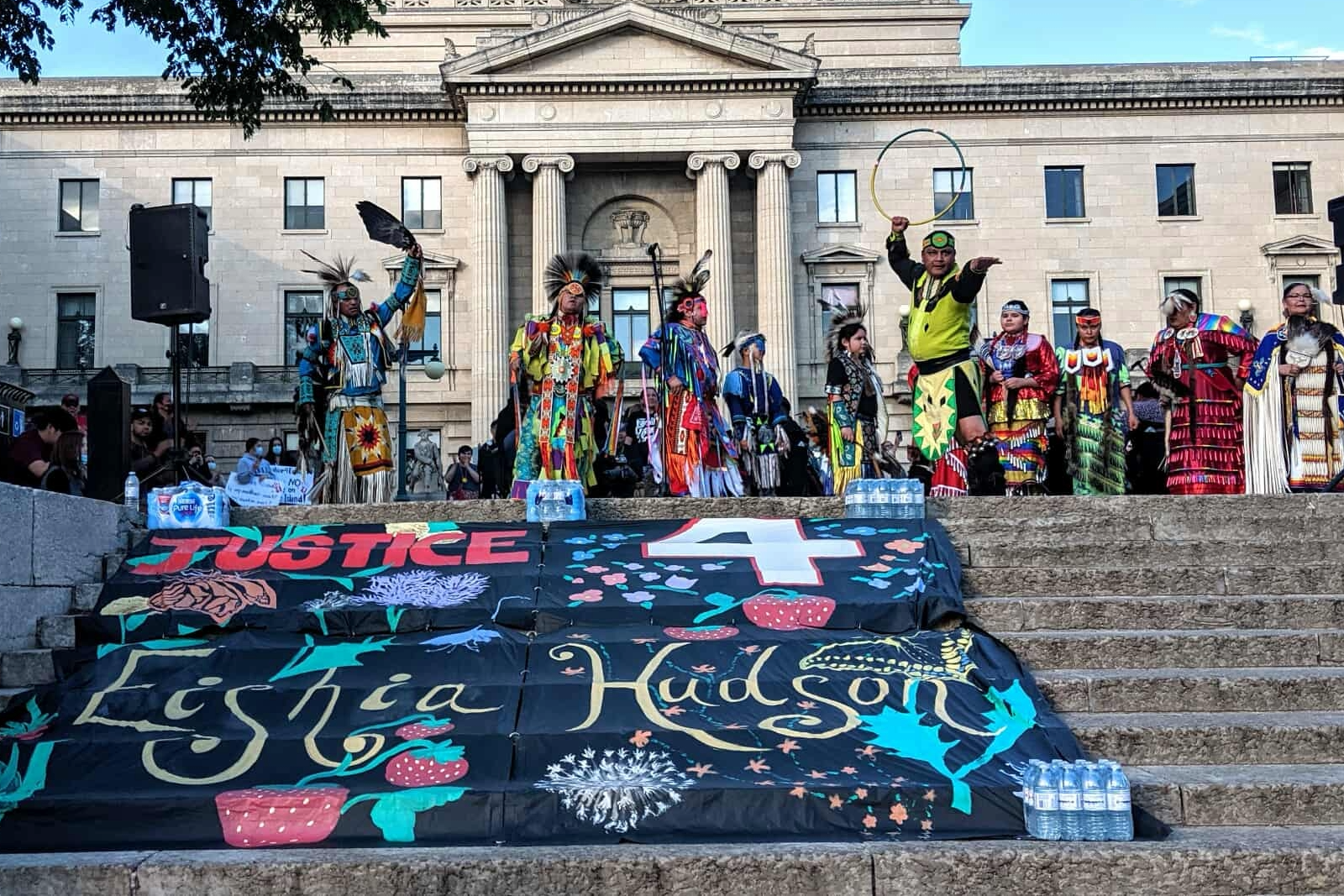
Recently, we witnessed this weaponization of Métis identity in the case of a Gitxsan family fighting for custody of their niece. The enormity and complexity of this topic is impossible to capture in only so many words, and it’s not an easy conversation to hold.
I want to begin in a good and intentional way. So, to open, I will introduce myself to you.
My name is Samantha Nock, I am an âpihtaw’kos’ân iskwew. I grew up in Treaty 8 territory in the Peace Region. This area is the lands of the Dane-zaa, Cree and Saulteaux peoples, as well as the only part of British Columbia in the Métis homeland. My family originally comes from Ile-a-la-Crosse, Saskatchewan, with connections to Manitoba and Northern Alberta.
My family names are Morin, Bouvier, Gardiner, and Aubichon, with further connections to LaFleur, Merasty, and Daigneault. These connections come from my mother’s side, through her mother. On my father’s side, I have British, Welsh, French, and Métis heritage. I didn’t grow up in the community my family comes from, and as such, am always in a place of reconnecting. I feel incredibly lucky to call the Peace Region home, and to swim in its rivers and eat the berries from its shores.
I hold my Métis heritage on my father’s side differently. On my father’s side, there is no continued and sustained connection to Métis community and, as such, no Métis community claims us. This is starkly different from my maternal side, where this living connection is unbroken. I do feel a deep call to honour the Métis ancestors on my paternal side, and through them, have connections to the Gariepy, Ducharme, Cardinal, and De Montigny families from Manitoba and Jasper House.
My paternal family’s disconnection from our Métis ancestors doesn’t make those ancestors any less Métis, but time, colonization, and lived realities mean our family is no longer connected to their ancestral community. If my father’s side was my only connection to the Métis Nation, I would not consider myself Métis, and would find nuanced ways to hold and honour these ancestors. I don’t say this in a disparaging way, but in an honest and kind way.
Recently, at a forum on Indigenous identity held by the First Nations University, a Métis participant said that “kindness isn’t always softness,” and this is something I want to bring into this conversation.
I hold the last name Nock, brought here from Shropshire, England by my paternal grandpa’s family. My great grandma and grandpa Nock immigrated to Canada in the 1930s. Holding both settler and Indigenous stories is not something I am ashamed of. I am continuing to learn more about the Nocks. Naming is important, and I’ve learned that Nock comes from an Old English word meaning “at the oaks.” Somewhere along the way, my long-ago ancestors lived in an oak grove. This little-named connection to land and nature feels very special to me, just as my grandpa — and being a Nock — are special to me.
I am telling you all of this in such detail, because I want to be open and transparent. I don’t want there to be lingering questions. Maybe we’re related, or maybe you want to talk shit about me after this article, but either way I want you to have the facts.
And let me be clear: I am only speaking for myself and providing what information I have.I do not speak for all Métis people, my community, prairie people, Indigenous people, third-generation English settlers from Shropshire, or anyone with chubby cheeks and blunt cut bangs.
I am not going to tell you what being Métis is, or what it is not — nor am I going to split hairs on who is or is not Métis. That’s between you, your community, and Creator.
OK, astam, let’s get into it.
White Métis and colourism in Mètis communities
There is a common narrative that all Métis look white. I have heard, time and time again, the old adage that “Métis come in many shades, even blond and ginger.” This is a half-truth steeped in colourism that needs to be unpacked. Colourism, broadly defined, is the way in which we hold prejudice against our own kin who have darker skin tones. It is important to note that colourism is a tool of white supremacy and is intrinsically intertwined with anti-Blackness. Unchecked colourism within the Métis Nation has left the door open for the weaponization of whiteness by our own relatives and by white settlers.
I am implicated in whiteness, as a white-passing, white-coded, or white Métis. The conversations around passing are nuanced, and there are degrees to ‘passingness.’ For the purpose of this piece, I am considering white passing as the ability to move through the world being racially perceived as white and benefiting from the privileges that this awards. To simplify this, I will be referring to white-passing or white-coded Métis as “white Métis.”
To white Métis kin: if you’re feeling yourself getting defensive reading this terminology, I challenge you to sit with this discomfort. To complicate our realities is not to challenge our ‘Nativeness’ or our legitimacy. To be blunt, we do not experience the brunt of colourism. When we navigate Indigenous spaces, and are questioned by our darker skinned relatives, that is not colourism. It is not lateral violence to be asked who we are and where we come from.
We cannot continue holding our white fragility at our centre, as a way to scapegoat our role in upholding white supremacy in our communities. Remember, kindness is not always softness. I come from a brown Métis family. I am amongst some of the lightest of my cousins and also one of the first to receive a university degree and experience class mobility. I am proud of the achievements that I fought hard for, but I cannot deny that my skin has given me access to historically-white spaces and opportunities.
Connected to the “all Métis look white” narrative is the now-dominant story of people “discovering” their Métisness later in life. This is not to discredit relatives who have come into community when they are older, or kin who have done the hard work of reconnecting after being adopted out.
The Sixties Scoop and Millennium Scoop displaced many of our relations who have a rightful place amongst our people. Often layered in “later in life Métis” stories is a recounted tale of intergenerational white passing: their ancestors were able to “hide” amongst white people, in order to avoid persecution.
I want to walk gently through unpacking this, and acknowledge that the persecution those ancestors were ‘hiding’ from was colonial violence on behalf of the state. These stories are not illegitimate, but it is concerning when these stories become the dominant narrative of Métisness.
Wrapped in these family stories of generational passing is the unsaid part: the historical ability to pass as white and gain those privileges was to the detriment of our darker-skinned relatives.
This is not about blood quantum, nor is it about a phenotypical requirement to “be Indigenous,” this is about harm caused by the unsaid part. I say this out of kindness: coming from a family that has historically passed as white and growing up as a white person, only to find out later in life Métis ancestry, does not automatically erase a lived experience and socialization of whiteness.
Much too often I see later-in-life white Métis profiting off of their newly discovered Métis heritage: gaining privileged positions in powerful institutions, speaking from places of unearned authority, or weaponizing their ancestors to silence conversations. This need to dominate, take space, resources, capitalize from, and grasp for control is at its core, settler colonialism.
The rise of Métis race-shifting
Between 2006 and 2016, the number of individuals claiming Métis identity in Nova Scotia increased by more than 100 per cent. Many of the new Maritimes claimants have origin stories that are born out of the “assimilate to survive” narrative, stretching it further by claiming ancestry through the same Indigenous women from the 1600s.
These newly formed Eastern Métis groups — unrecognized by the Métis National Council and the broader Métis community — have weaponized their newly discovered “Métisness” in land claims which have been directly rejected by Mi’kmaq.
Maritime “Métis” have used their new “Métisness” to demand access to hunting and fishing resources, in a place where the rights to these resources have been contested. In 2020, non-Indigenous fishers cut the nets and enacted racist violence against Mi’kmaq fishers during the fall lobster harvest, leading to the United Nations Committee on the Eliminations of Racial Discrimination to call on “Canada” to directly respond to this violence.
We are living in a time where land claims and control over natural resources are hotly debated. I can’t help but think: after centuries of passing, why now? It doesn’t feel very wahkotowin to live for centuries as white settlers and then enact an ancestor in order to lay claim to threatened resources.
Becoming Métis is not an escape from white settler colonialism, and it is not a means to white innocence. The synonymization of whiteness with Métisness further marginalizes our racialized relatives. Additionally, it erases Black Métis kin and delegitimizes their rightful place in our communities. To normalize whiteness in our Nation and our communities is to continue centering white supremacy, which in turn is enacting violence on Black and brown relatives.
White Métis, we need to do better. To actively fight colonization is not to perpetuate the oppressor’s behaviours against our own people while wearing beaded earrings. We need to be accountable and humble in order to live in and uphold our sacred duties to each other, our ancestors, and our homelands.
To leave whiteness unchecked in our Nation is to continue to let ethnic frauds weaponize our existence and let our own people enact harm in our name. In 2021, the First Nations Leadership Council rejected the Métis Nation of British Columbia’s (MNBC) claim of Aboriginal rights in “B.C”. This came on the heels of MNBC voting to declare self-government, which happened in the aftermath of B.C becoming the first province to bring in the United Nations Declaration on the Rights of Indigenous People into legislation. This has set up MNBC to claim Aboriginal rights and title to lands in B.C. west of the Rocky Mountains, outside of the Métis homelands.
It is not our fault, as a Nation, that the provincial and federal governments have created resource scarcity, but fighting for our people cannot happen behind the backs of First Nations. We need to challenge the ways B.C. Métis leadership continues to weaponize Métisness as a means to directly challenge the sovereignty of First Nations.
This is settler colonialism, this is the continued centering of whiteness and white supremacy in our communities. If Métis in “B.C” want to talk about resource sharing, we should be doing this on a Nation-to-Nation basis with the First Nations whose land we are on. To continue to directly negotiate with the colonial government over unceded resources is to be in bad relation here and to enact harm in our name.
To be âpihtaw’kos’ân is to hold a beautiful and sacred connection to my ancestors through space and time; it is to hold humility in what little I have learned in my short years earthside.
To be âpihtaw’kos’ân is to always be learning how to be a good relative, and sometimes being a good relative is having the hard conversations.
Author
We live in a media ecosystem that thrives on misinformation. Big Tech and AI companies are consuming the work of real human beings and Canadian news has been banned on Facebook and Instagram.
And yet, I have hope for journalism because of the work we’re doing at IndigiNews.
At IndigiNews, we embody tâpwêwin — the Cree value of integrity and responsibility in truth-telling. We are committed to our independent, Indigenous-led newsroom rooted in community, accountability, and relationality. We believe storytelling is a sacred fire that connects our pasts, presents, and futures through the storytellers in our Storytelling Lodge. IndigiNews creates space for Indigenous journalists, storytellers, Knowledge Keepers, and communities to gather, learn, and share stories that matter.
As a registered charity, we are building a fire that allows our work not just to ignite but to thrive. Rather than relying on advertising or corporate acquisition, IndigiNews is sustained by people like you who believe Indigenous stories are important for the future of our communities.
Your support is making a real difference.
Our community of supporters, our Firekeepers, make it possible to grow our newsroom, publish award-winning journalism, train emerging Indigenous journalists through initiatives like the ReFocus Photojournalism Fellowship, and publish trustworthy stories that serve our communities across the country. Every story we publish helps fill in gaps left by mainstream media and ensures Indigenous perspectives are represented with care, accuracy and respect.
But there is still more work to do.
As the media landscape becomes more and more uncertain, community support is as necessary and essential as it’s ever been. Every new Firekeeper helps protect the independence of our newsroom and strengthens journalism that is accountable to our many and varied communities over corporations.
That’s why we’re inviting you to become a Firekeeper.
Firekeepers tend to and protect the sacred fire. Your monthly contributions directly support IndigiNews’s Storytelling Lodge, helps sustain our independent, Indigenous-led newsroom, and ensures future generations of Indigenous storytellers have the resources they need to do the work.
As a registered Canadian charity, all eligible donations receive a charitable tax receipt.
If you believe Indigenous stories matter, if you value independent journalism, and if you want to help build a strong future for Indigenous media, we invite you to join our circle of Firekeepers today.
Together, we can keep the fire burning.
— Eden Fineday, Publisher, IndigiNews
Support us nowLatest Stories
-

Olympic bobsledder Eden Wilson aims to ‘help open doors’ for aspiring Indigenous athletes
Recently inducted into the North American Indigenous Athletics Hall of Fame, the ‘Calgary’-based Métis athlete is working to break barriers for the next generation
-
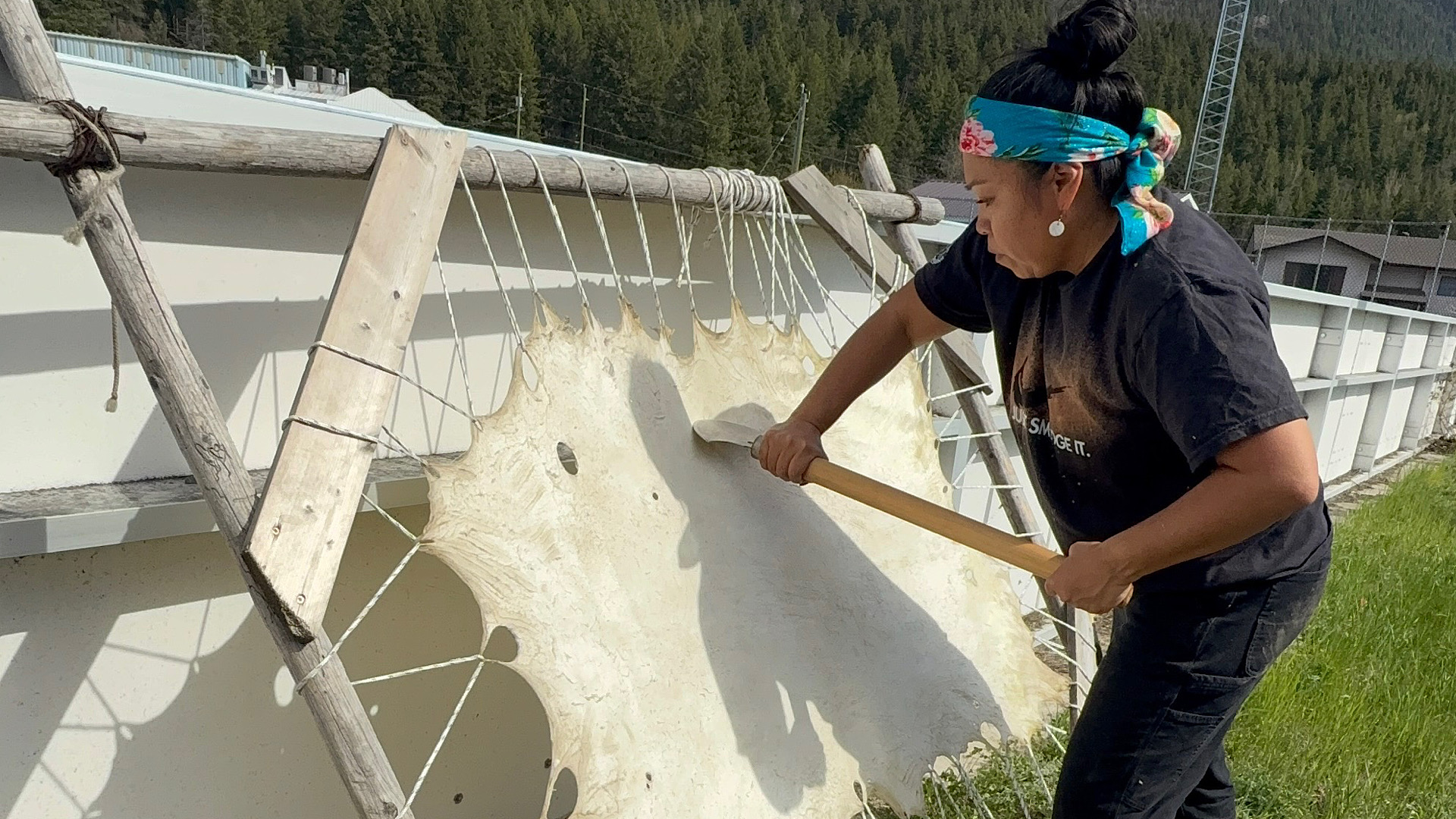
In Simpcw First Nation, Secwe̓pemc women are revitalizing hide tanning
Working with animal pelts is a lengthy, labour-intensive process — but teachers in the ‘B.C.’ community are ensuring the tradition is passed on