Our grandmothers, who lived as ‘subjects’ of the queen, deserve to be uplifted
My kokum Irene Fineday was a leader in her community — today I am thinking about her life and legacy
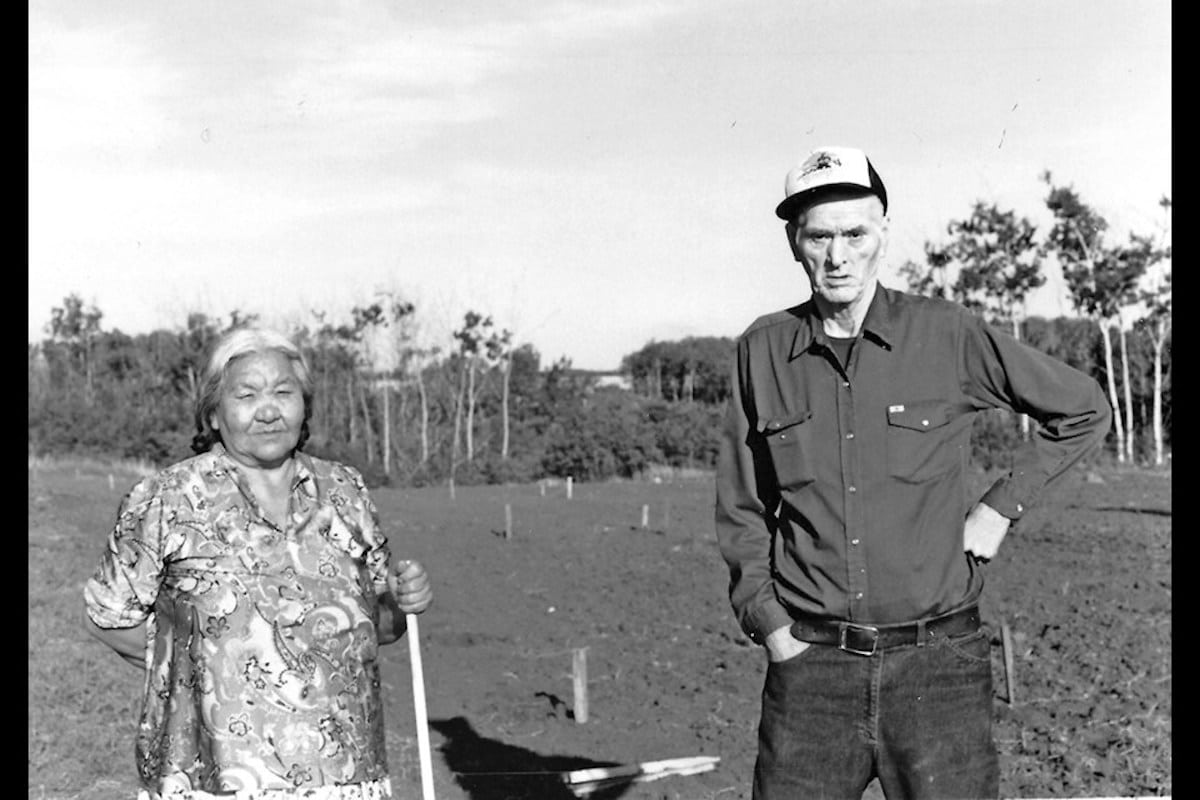

She lived to be 94 years old. She was majestic, powerful. She gave birth to eleven children that we know of, six of whom died before she did. Born into what most people would call abject poverty, Irene Fineday was a nehiyaw woman — a “subject” of Queen Elizabeth II. My grandmother. I was given my middle name in honour of her.
In Cree culture we don’t recognize hierarchies in the same way that the monarchy does — the notion that one person is superior to another isn’t something we abide by — but we do hold our matriarchs in high esteem. My kokum was never given a crown, but she holds an important legacy in our community and family all the same. Today, as “Canada” mourns the queen, I want to hold space for all of our grandmothers who are, and were, leaders in our communities. In my family, Irene has always held that role.
Irene’s mother was a medicine woman and midwife from “Montana,” the only state that is home to a Cree reserve outside of “Canada.” Her grandfather was Fine Day, the man from whom all Finedays descend, and a storied leader and warrior. Historians refer to him as a chief, but he was actually the head of the warrior society of our band, meaning that in times of war he was the leader. He was a very respected man whose lifetime spanned the transition from the nomadic lifestyle of his ancestors to the reserve system. He died at Sweetgrass First Nation. His son Sam was Irene’s father.
Irene was born in 1922 and attended St. Barnabas residential “school” for six or seven years. She would spend the rest of her life on the Sweetgrass reserve on Treaty Six homelands in “Saskatchewan.” Her first child, Billy, died at the age of fifteen in a farming accident. He had gone to work on a farm in another province. The family was told that a tractor tipped over onto him, and not much more. That’s where she was living in April of 1977 when she received the news that one of her adult sons had been killed in a car accident. She would again receive horrible news a year years later, when two more of her children were killed in another car accident.
These were two of many heartbreaking events she survived in her lifetime.
Cree was my kokum’s first language, and the language she spoke the most often. As a young woman visiting the rez, I would sit shyly at her formica kitchen table, listening to her give directions to the younger family members — make the tea, offer the guest some food, tidy the room — she would say this all in nehiyawewin. She laughed loudly and often. I can still see her with her hand over her face, laughing as she exclaimed: “Wah wah!”

My younger cousins called Irene mama, because she had raised them from infancy. Like many grandmothers of her time, her own children had been so damaged from residential school that they were unable to face the challenges of parenthood. They had turned to her, and like many grandmothers on the reserve, she had accepted her grandchildren into her home and raised them. They were a gift, even if they were also a huge responsibility. The fact that they would be raised in poverty was not a factor in these decisions — all of the community lived in poverty, regardless of how many children they had.
Three days before I received the call from one of my brothers that she was ill and would likely die in the coming days, I was driving home at night. The white face of a huge Great Horned Owl appeared in the darkness, descended in front of my vehicle, swooping low and then up again, flying directly over my windshield with its great wingspan.
“Nature will use animals to send you messages,” my father has said, “It is an acknowledgement of your connection to the Spirit World.”
In my culture, owls portend death. This is not a “bad omen” or a negative sign of any kind, like some folks who have been taught to fear nature believe. It was the spirit world letting me know that my grandmother’s time was coming near. It was a message, one that I am grateful for.
I was lucky enough to be there at Irene’s three-day wake — to approach her coffin with deference and thank her for my life. I was there when she was lowered into the ground a few days later.
I’m glad I was able to take my son to her 90th birthday party, and to her funeral. I am glad I was able to know her at all, even if she at times seemed impenetrable to me. Now that I am older, and have suffered losses of my own, I understand her a bit more.
What an incredible woman. What a queen. Thank you, kokum. On this day, I honour you, and all the incredible grandmothers who survived in spite of the monarchy. Hiy hiy kapimyitweyan.
Author
We live in a media ecosystem that thrives on misinformation. Big Tech and AI companies are consuming the work of real human beings and Canadian news has been banned on Facebook and Instagram.
And yet, I have hope for journalism because of the work we’re doing at IndigiNews.
At IndigiNews, we embody tâpwêwin — the Cree value of integrity and responsibility in truth-telling. We are committed to our independent, Indigenous-led newsroom rooted in community, accountability, and relationality. We believe storytelling is a sacred fire that connects our pasts, presents, and futures through the storytellers in our Storytelling Lodge. IndigiNews creates space for Indigenous journalists, storytellers, Knowledge Keepers, and communities to gather, learn, and share stories that matter.
As a registered charity, we are building a fire that allows our work not just to ignite but to thrive. Rather than relying on advertising or corporate acquisition, IndigiNews is sustained by people like you who believe Indigenous stories are important for the future of our communities.
Your support is making a real difference.
Our community of supporters, our Firekeepers, make it possible to grow our newsroom, publish award-winning journalism, train emerging Indigenous journalists through initiatives like the ReFocus Photojournalism Fellowship, and publish trustworthy stories that serve our communities across the country. Every story we publish helps fill in gaps left by mainstream media and ensures Indigenous perspectives are represented with care, accuracy and respect.
But there is still more work to do.
As the media landscape becomes more and more uncertain, community support is as necessary and essential as it’s ever been. Every new Firekeeper helps protect the independence of our newsroom and strengthens journalism that is accountable to our many and varied communities over corporations.
That’s why we’re inviting you to become a Firekeeper.
Firekeepers tend to and protect the sacred fire. Your monthly contributions directly support IndigiNews’s Storytelling Lodge, helps sustain our independent, Indigenous-led newsroom, and ensures future generations of Indigenous storytellers have the resources they need to do the work.
As a registered Canadian charity, all eligible donations receive a charitable tax receipt.
If you believe Indigenous stories matter, if you value independent journalism, and if you want to help build a strong future for Indigenous media, we invite you to join our circle of Firekeepers today.
Together, we can keep the fire burning.
— Eden Fineday, Publisher, IndigiNews
Support us nowLatest Stories
-
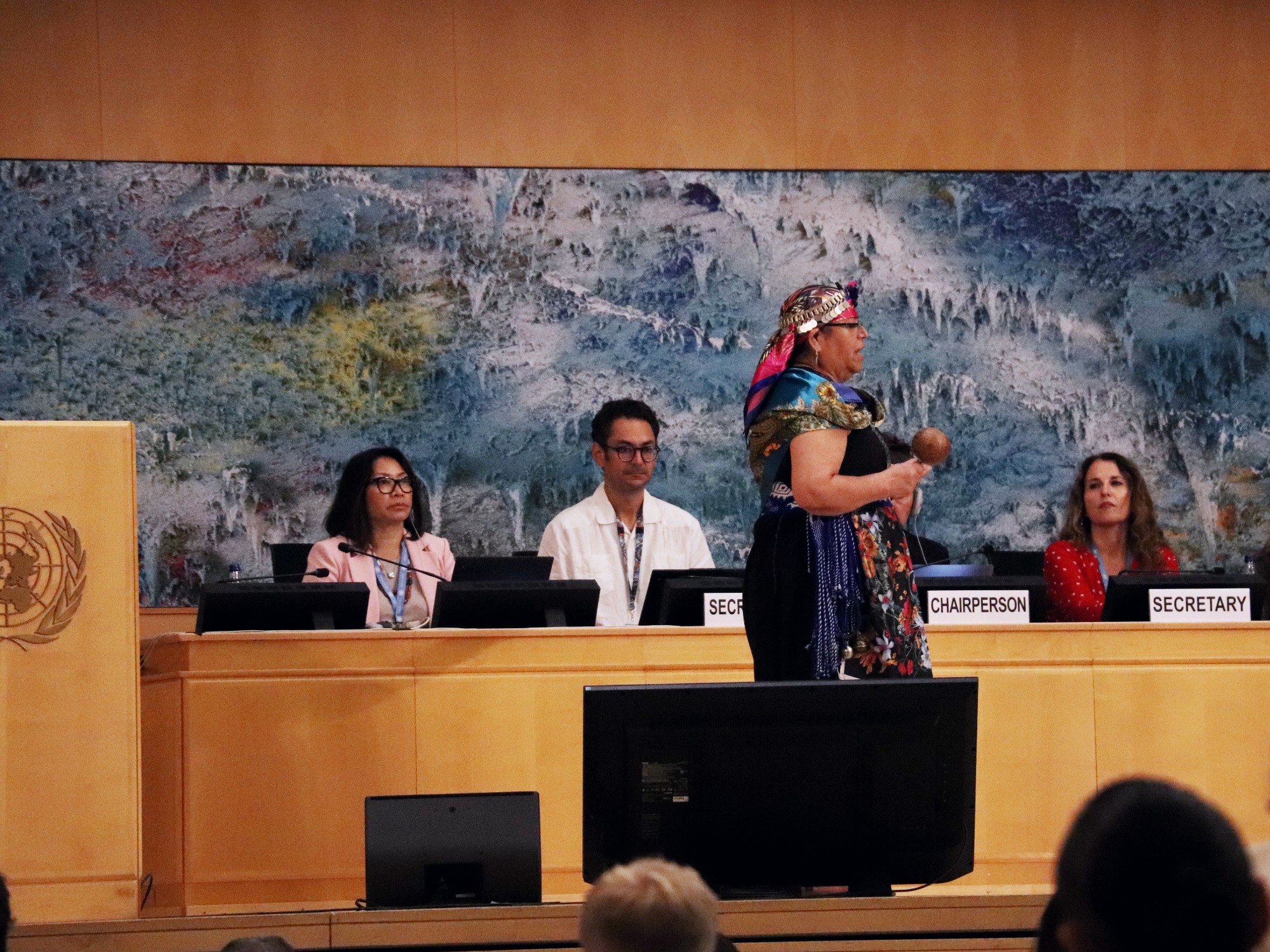
Indigenous people demand more say at the UN, as new crises hit their homelands
Indigenous nations live ‘on the frontlines’ of climate, conflict and new tech. But their voices remain sidelined in the global halls of power.
-
Through their lenses: Showcasing the work of our 2026 ReFocus fellows
Get to know our photojournalism training cohort through a series of portraits shot during a week in Kjipuktuk (Halifax)