Will Indigenous voices be lost in battle with Big Tech over online news?
The digital era made it easy for IndigiNews to connect with Indigenous communities. The Online News Act threatens that.

This op-ed was originally published in the Toronto Star and reappears here with permission and minor stylistic edits
Most Indigenous reserves are isolated. This was done on purpose, by colonists who wanted to remove Indians from our land so that they could populate it with white people — and so that we would not be able to cause trouble for the incoming white civilization. As a result, many folks growing up on reserves have been isolated from the rest of the country, as “Canada’s” reserve system is an apartheid (and was the inspiration for the South African system).
The digital era heralded a new way for people in far-flung places to connect with friends and family in cities. The Internet allowed Indigenous folks to interact with the world in a new way. Facebook, for whatever reason, became the central digital meeting space of many Indigenous communities across so-called Canada. It’s where all the aunties and uncles were. It’s where I went when I wanted to find out what was happening in my home community.
It’s not surprising, then, that Facebook has become such an important delivery method for IndigiNews. IndigiNews is a decolonized take on journalism. Based out of “British Columbia,” we are a news outlet led by Indigenous women, writing for and about Indigenous people. We love our communities and we are proud to be who we are. We uplift our people by focusing on celebrating the joy, beauty and strength in our cultures. We also hold to account institutions who harm our communities.
We found our people on Facebook. In fact, more than 43 per cent of website traffic to www.indiginews.com comes directly from Facebook.
We’ve posted hundreds of stories on our Facebook page since launching in May of 2020. Stories like this one by Anna McKenzie that got over 7,500 shares and became our most viral story ever.
In June, Bill C-18, the Online News Act, was given royal assent in the house. It’s a piece of legislation designed to address a decades-long industry crisis that has seen thousands of journalism jobs disappear. The law is designed to force big tech, including Meta and Google, to pay news providers for links to content that appear on their platforms.
The problem, as it almost always is, is money.
Journalism is expensive to produce. It takes a team of people to create a news article. Reporters sometimes travel to see a situation firsthand. People may need to be interviewed. The story must be written coherently by someone who is good at explaining things and understands journalistic ethics.
Then come the edits. At IndigiNews, we generally do three rounds of edits. The first is focused on the narrative and basic fact-checking. The second round is a cultural one — do we have permission to tell this story? Is our framing of the issue correct? Did we get the names of nations and territories right? The third and final edit is a copy edit, where we make sure periods and spaces are where they should be. Then, and only then, do we hit “Publish.”
It’s a lot of work. And it requires a lot of person-hours. And journalists, like everyone, need places to live and food for their families. We can’t make news for free. Someone has to pay for it.
But who? Passive consumers of news don’t want to pay for it. It’s a scary time for the industry and for IndigiNews. I don’t know what happens next. If IndigiNews loses Facebook, do we lose almost half of the audience we’ve grown?
If so, it seems that, as usual, when times get tough, the people on the bottom are kicked the hardest.
What is Meta and Google’s obligation to Indigenous Peoples in so-called Canada? Do they have one? What is a fair price to pay for quality journalism and who should pay it? I don’t have the answers to these questions. I just hope IndigiNews survives the showdown happening in “Ottawa” right now.
Author
We live in a media ecosystem that thrives on misinformation. Big Tech and AI companies are consuming the work of real human beings and Canadian news has been banned on Facebook and Instagram.

And yet, I have hope for journalism because of the work we’re doing at IndigiNews.
At IndigiNews, we embody tâpwêwin — the Cree value of integrity and responsibility in truth-telling. We are committed to our independent, Indigenous-led newsroom rooted in community, accountability, and relationality. We believe storytelling is a sacred fire that connects our pasts, presents, and futures through the storytellers in our Storytelling Lodge. IndigiNews creates space for Indigenous journalists, storytellers, Knowledge Keepers, and communities to gather, learn, and share stories that matter.
As a registered charity, we are building a fire that allows our work not just to ignite but to thrive. Rather than relying on advertising or corporate acquisition, IndigiNews is sustained by people like you who believe Indigenous stories are important for the future of our communities.
Your support is making a real difference.
Our community of supporters, our Firekeepers, make it possible to grow our newsroom, publish award-winning journalism, train emerging Indigenous journalists through initiatives like the ReFocus Photojournalism Fellowship, and publish trustworthy stories that serve our communities across the country. Every story we publish helps fill in gaps left by mainstream media and ensures Indigenous perspectives are represented with care, accuracy and respect.
But there is still more work to do.
As the media landscape becomes more and more uncertain, community support is as necessary and essential as it’s ever been. Every new Firekeeper helps protect the independence of our newsroom and strengthens journalism that is accountable to our many and varied communities over corporations.
That’s why we’re inviting you to become a Firekeeper.
Firekeepers tend to and protect the sacred fire. Your monthly contributions directly support IndigiNews’s Storytelling Lodge, helps sustain our independent, Indigenous-led newsroom, and ensures future generations of Indigenous storytellers have the resources they need to do the work.
As a registered Canadian charity, all eligible donations receive a charitable tax receipt.
If you believe Indigenous stories matter, if you value independent journalism, and if you want to help build a strong future for Indigenous media, we invite you to join our circle of Firekeepers today.
Together, we can keep the fire burning.
— Eden Fineday, Publisher, IndigiNews
Support us nowLatest Stories
-
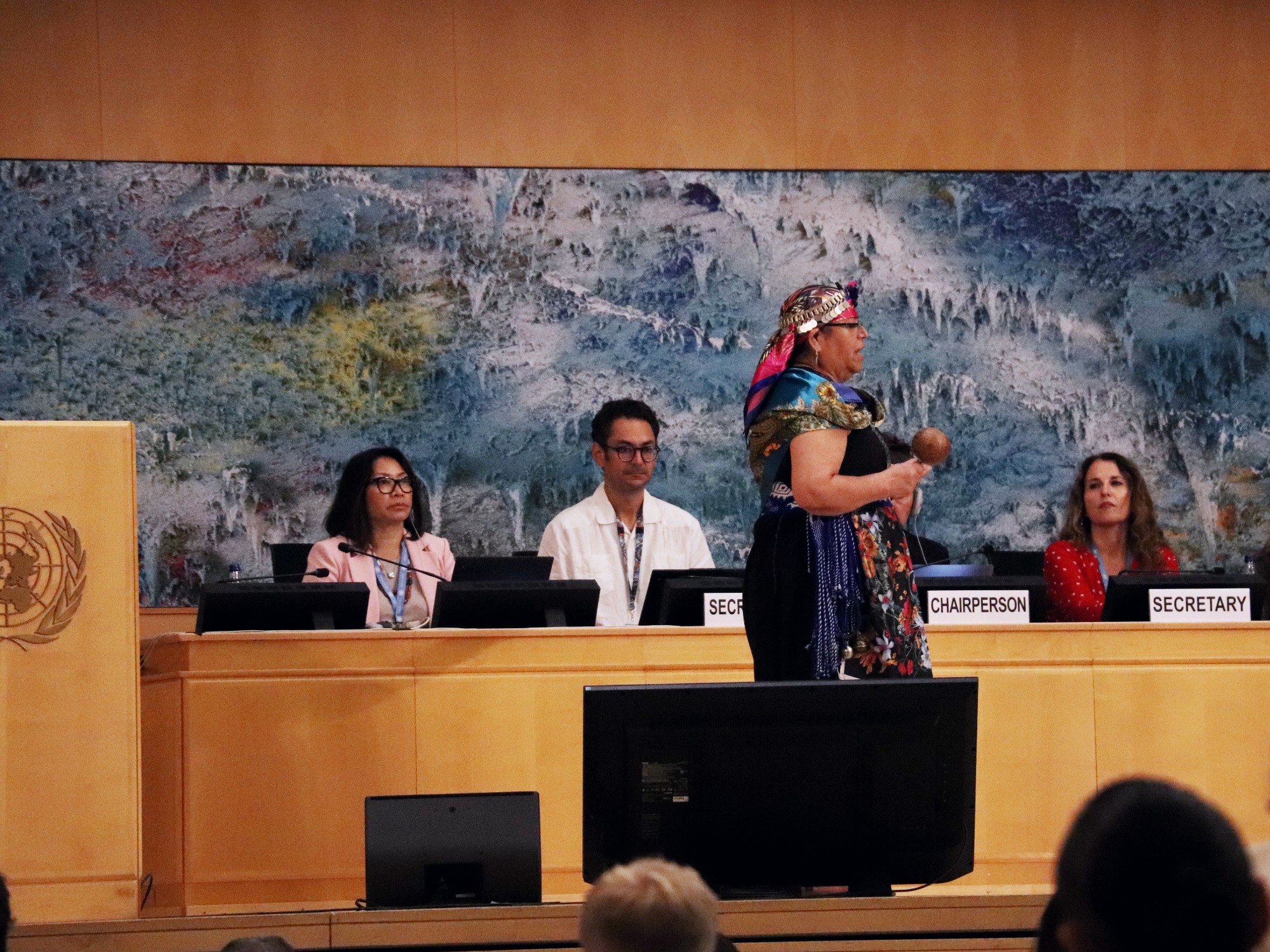
Indigenous people demand more say at the UN, as new crises hit their homelands
Indigenous nations live ‘on the frontlines’ of climate, conflict and new tech. But their voices remain sidelined in the global halls of power.
-

Through their lenses: Showcasing the work of our 2026 ReFocus fellows
Get to know our photojournalism training cohort through a series of portraits shot during a week in Kjipuktuk (Halifax)