Judge sides with First Nations to prevent ‘Alberta’ separatist petition count, for now
Chiefs raise concerns about provincial government and pro-separation lawyers talking outside court — as Court of King’s Bench orders a temporary stay
This story originally appeared in Alberta Native News in two parts (here and here), and is published through the Local Journalism Initiative with edits
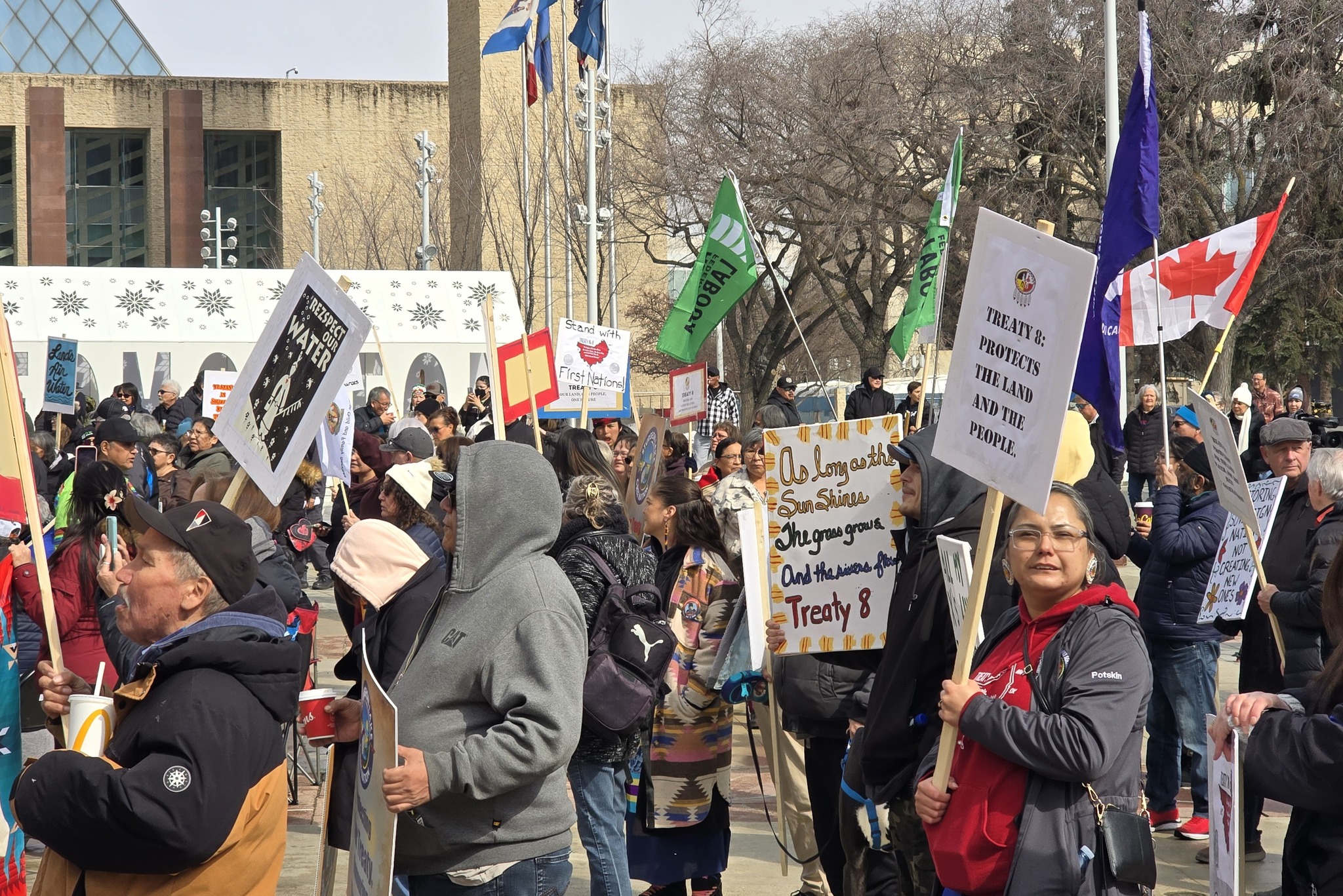
An “Alberta” court has sided with First Nations opposing a petition to hold a separatist referendum in the province — until a decision is reached in the constitutional challenge.
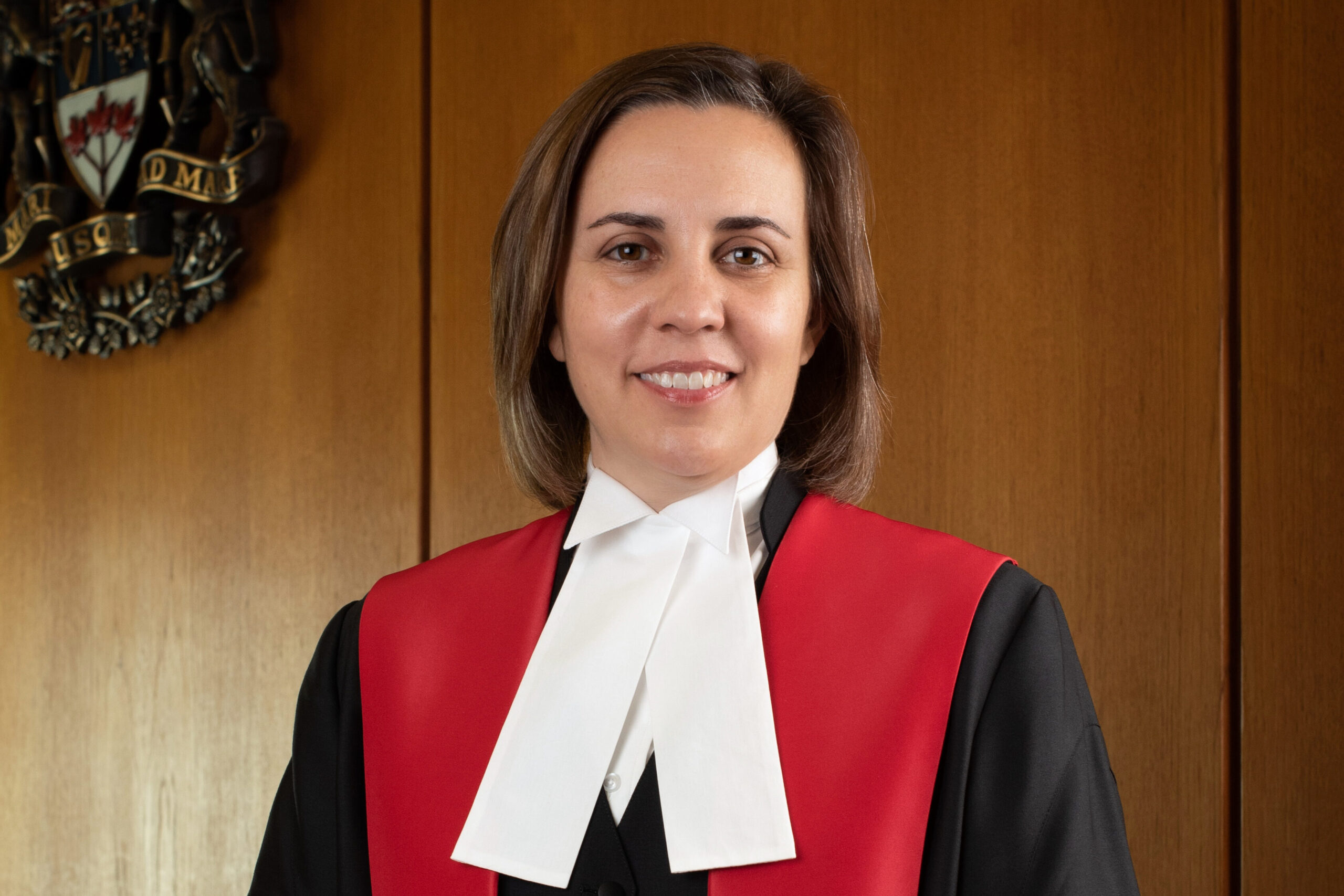
On April 10, Court of King’s Bench of Alberta Justice Shaina Leonard ruled in favour of Athabasca Chipewyan First Nation (ACFN) and the Blackfoot Confederacy.
She granted a stay in certifying the petition, which proponents say has already surpassed its required 177,800-signature threshold to spark a referendum to leave “Canada.”
But Leonard emphasized that separatist organization Stay Free Alberta can continue collecting signatures for its referendum petition and that her “decision has no impact whatsoever” on its May 2 deadline.
“Specifically, the chief electoral officer shall not certify the petition results or make a referral to the minister of justice until the court has ruled on the application by ACFN and the Blackfoot Nation,” she wrote.
The citizen-led petition to hold a referendum vote, led by Stay Free Alberta, calls for the province to become its own “sovereign country.”
Its proposed question for voters: “Do you agree that the Province of Alberta should cease to be part of Canada to become an independent state?”

But multiple First Nations are challenging the province in court for changing its laws to enable the referendum, after another judge ruled it would be unconstitutional and violate Treaties 6, 7 and 8.
Those treaties were signed with the federal Crown between 1875 and 1899, predating the existence of “Alberta.” The plaintiffs argue that since the province isn’t a party to treaties, it cannot alter them without First Nations’ consent.
In their lawsuits, ACFN and the Kainai, Piikani and Siksika bands of the Blackfoot Confederacy named as respondents the provincial Crown, the Chief Electoral Officer of Alberta, and Stay Free Alberta CEO Mitch Sylvestre. Their arguments were heard on April 8 and 9.
“While Ottawa sleeps, Alberta’s first inhabitants are doing everything we can to save confederation,” said ACFN Chief Allan Adam in a news release welcoming Leonard’s decision.
“We shall never allow our treaties to be broken, and we will never bend the knee to foreign tyrants or their useful idiots.”
‘Cozy relationship’
Separatist leaders have met with “U.S.” State Department officials three times to request support from President Donald Trump, who has advocated annexing “Canada,” The Financial Times reported in January.
Among them was lawyer Jeffrey Rath, who represented Stay Free Alberta’s Sylvestre in court last week.
Rath told right-wing YouTuber Rachel Parker in March 2025 that he would like to see “Alberta” become a “U.S.” territory.
Chief Adam emphasized in his statement that ACFN is fighting for “all Albertans, especially children and youth, who deserve to grow up in a country that respects the rule of law and recognizes the supremacy of the constitution” and protected treaty rights.
“We are standing up for our treaties, for our people and for the land that is all under threat through this referendum effort,” he said.
A day earlier, on the final day of court submissions, three First Nations leaders raised concerns about the perceived proximity of government and separatist lawyers.
Adam, of ACFN, posted a photo on Facebook of Rath speaking with government lawyers, including Neil Dobson and Jennifer Kelliher, outside the courtroom.
Sturgeon Lake Cree Nation (SLCN) Chief Sheldon Sunshine alleged that he repeatedly saw the team of lawyers enter a private room when they saw him.
“It’s just not a good look,” he said.
The apparent collaboration between Rath and the provincial government lawyers reflect the “cozy relationship” between Premier Danielle Smith and the separatist movement, Sunshine added.
Chief Adam said the provincial government “should completely stay neutral from the separatist legal advisors,” likening the separatist movement to “some kind of a cult.”
“When you see the representatives that are supporting the separation movement, and then you’ve got the Province of Alberta lawyers standing beside hand-in-hand talking about what’s going on, what does that tell you?” asked Adam.
‘Constitutionally defective’
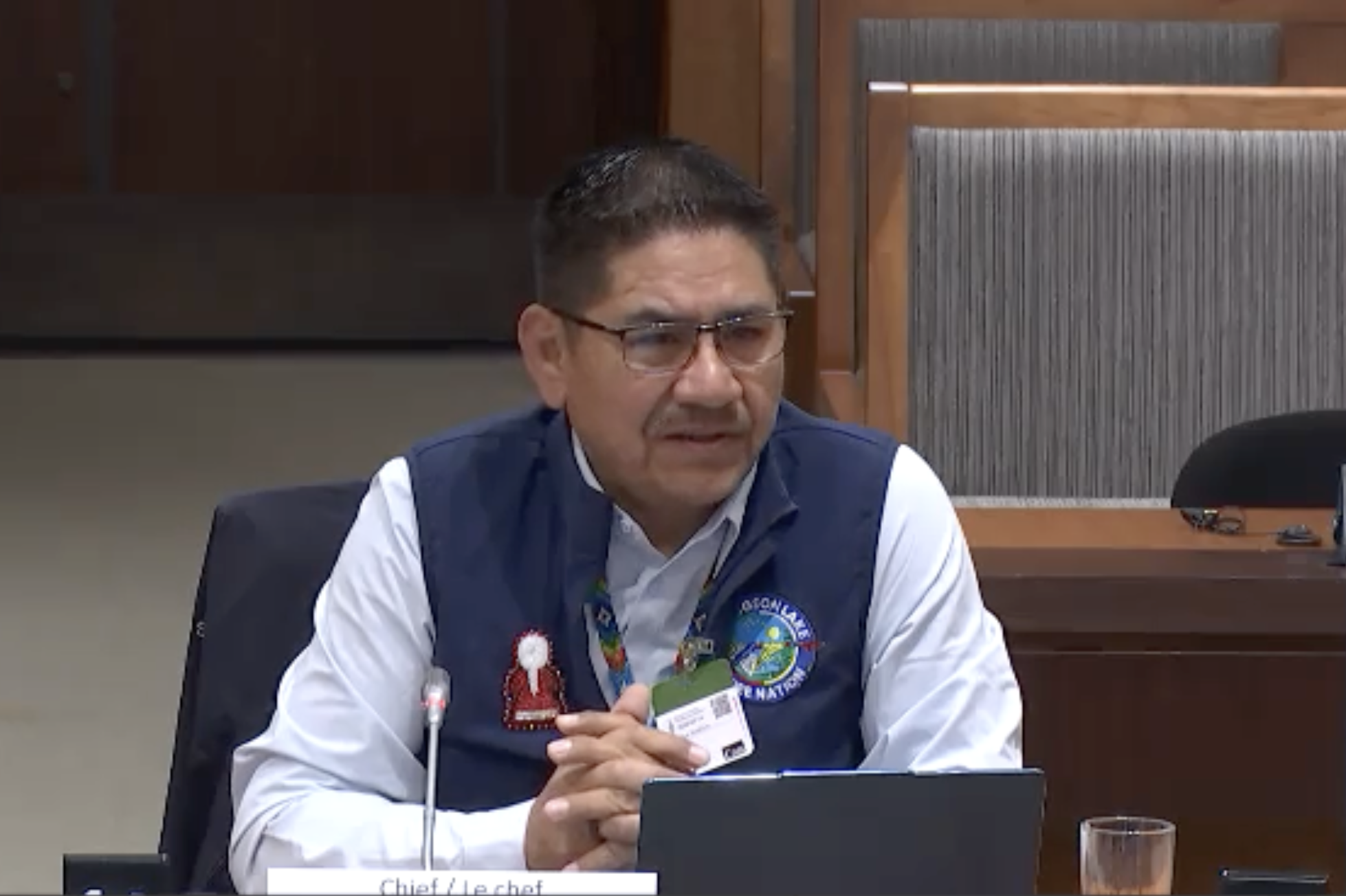
Meanwhile, Sunshine and Mikisew Cree First Nation (MCFN) Chief Billy-Joe Tuccaro issued a statement focused on their shared concern that even if the independence referendum is halted in court, Premier Smith might put it on the ballot in October anyway.
On April 7, the court heard arguments from SLCN asking for an injunction against the province’s changes to the Citizen Initiative Act to permit referendums, amendments the First Nation argued could violate constitutional rights, including Indigenous rights.
The legislation received royal assent after an earlier decision on Dec. 10, when Court of King’s Bench Justice Colin Feasby ruled that an independence referendum couldn’t proceed under the act as it was then written, because “Alberta” independence would by definition remove constitutional protections.
MCFN has also filed a lawsuit against what it called the province’s “referendum regime,” which will be heard at a later date.
“In and out of court, we have watched Alberta’s lawyers openly collaborate with separatist lawyers,” reads the April 9 statement from Chiefs Sunshine and Tuccaro.
“Now it has come to our attention that the premier will conspire to call the referendum at the demand of the separatists.”
Inside the courtroom, lawyer Mary Macaulay, representing Piikani Nation, argued that the chief electoral officer had a “duty to consult” the First Nations whose treaty rights would be impacted by an independence referendum, because he was acting on behalf of the Crown.
“The duty to consult arises before a decision is made,” she said.
Paul Reid, another lawyer for the Blackfoot Confederacy, argued that McClure should have declared the sections of the Citizen Initiative Act that enabled him to approve the separatist petition “constitutionally defective.”
‘Nobody’s rights have been infringed’
Government lawyer Dobson argued that there’s no duty to consult at this point in the referendum process, because there’s no guarantee a referendum will occur.
“The only issue that’s under review here is the decision to allow the collection of signatures,” he said.
“What harm is the collection of signatures?”
Lawyer Rath, of Stay Free Alberta, told the court that the petition is “nothing more than a legislatively mandated process of communication between the citizens of Alberta and their elected officials in the legislature.”
“Nobody’s rights have been suspended. Nobody’s rights have been infringed, even the smallest, tiniest little bit by the gathering of signatures,” said Rath.
Echoing Dobson, he argued that the government is under no obligation to ensure that “Alberta” independence will make it to a referendum, even if the petitioners gathered enough signatures, because the Referendum Act only states the government “may order that a referendum be held [emphasis added].”
Rath told Justice Leonard that the First Nations’ lawyers “misled you and have misstated the law” when they argued that the government is obligated to proceed with a citizen-initiated referendum.
The Referendum Act deals with government-initiated referendums, whereas the Citizen Initiative Act relates to referendum petitions.
Ken Hille, a lawyer for the ACFN, noted in response that the Citizen Initiative Act states that the government “shall refer [emphasis added]” a constitutional referendum petition to a referendum, overriding the discretion in the Referendum Act.
Justice Leonard said that she intends to “work very quickly” on the First Nations’ request for a stay on counting the independence petition signatures, aiming to have a decision on that aspect of the case early next week.
The First Nations’ lawyers requested that Leonard issue her written decision before May 2, the deadline for the collection of signatures.
‘Evidence of harm from lack of consultation’
Orlagh O’Kelly, SLCN’s lawyer, said in a statement that she and her client are “delighted” that Leonard imposed a “limited pause to consider this momentous case on its merits.”
“We’re looking forward to the court’s final decision on this harmful process, set in motion by Alberta without any authority under our treaty,” added Chief Sunshine in the same statement.
“We also expect Alberta will follow this court order and not move the goal posts on us while the court deliberates.”
In order to obtain a stay, the First Nations’ lawyers had to demonstrate that a failure to do so would cause “irreparable harm” to their clients.
They argued that this harm would primarily take the form of an erosion of treaty rights.
Leonard emphasized that she wasn’t yet ruling on whether the “Crown,” as represented by the province, had a duty to consult at this stage in the petition process.
However, she ruled that the First Nations “have provided evidence of harm from lack of consultation and harm to treaty relationships.”
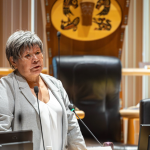
“The alleged harm is irreparable and ongoing,” she wrote. “In contrast, the stay sought is for a short time” and only goes into effect once the petition signatures are submitted to the chief electoral officer.
In an interview with The Canadian Press, Rath questioned how quickly Leonard reached her decision, noting that it came less than 24 hours after three days of arguments concluded.
“I suspect that it’s just going to motivate our volunteer base and our canvassers and Albertans even more to get out and sign the petition,” said Rath.
Leonard said she intends on having a decision on whether the chief electoral officer acted appropriately in permitting the referendum petition within the next month.
“All parties who have participated in this matter, and the public, are entitled to have this process completed as expeditiously as possible,” she wrote.
Author
We live in a media ecosystem that thrives on misinformation. Big Tech and AI companies are consuming the work of real human beings and Canadian news has been banned on Facebook and Instagram.
And yet, I have hope for journalism because of the work we’re doing at IndigiNews.
At IndigiNews, we embody tâpwêwin — the Cree value of integrity and responsibility in truth-telling. We are committed to our independent, Indigenous-led newsroom rooted in community, accountability, and relationality. We believe storytelling is a sacred fire that connects our pasts, presents, and futures through the storytellers in our Storytelling Lodge. IndigiNews creates space for Indigenous journalists, storytellers, Knowledge Keepers, and communities to gather, learn, and share stories that matter.
As a registered charity, we are building a fire that allows our work not just to ignite but to thrive. Rather than relying on advertising or corporate acquisition, IndigiNews is sustained by people like you who believe Indigenous stories are important for the future of our communities.
Your support is making a real difference.
Our community of supporters, our Firekeepers, make it possible to grow our newsroom, publish award-winning journalism, train emerging Indigenous journalists through initiatives like the ReFocus Photojournalism Fellowship, and publish trustworthy stories that serve our communities across the country. Every story we publish helps fill in gaps left by mainstream media and ensures Indigenous perspectives are represented with care, accuracy and respect.
But there is still more work to do.
As the media landscape becomes more and more uncertain, community support is as necessary and essential as it’s ever been. Every new Firekeeper helps protect the independence of our newsroom and strengthens journalism that is accountable to our many and varied communities over corporations.
That’s why we’re inviting you to become a Firekeeper.
Firekeepers tend to and protect the sacred fire. Your monthly contributions directly support IndigiNews’s Storytelling Lodge, helps sustain our independent, Indigenous-led newsroom, and ensures future generations of Indigenous storytellers have the resources they need to do the work.
As a registered Canadian charity, all eligible donations receive a charitable tax receipt.
If you believe Indigenous stories matter, if you value independent journalism, and if you want to help build a strong future for Indigenous media, we invite you to join our circle of Firekeepers today.
Together, we can keep the fire burning.
— Eden Fineday, Publisher, IndigiNews
Support us nowLatest Stories
-
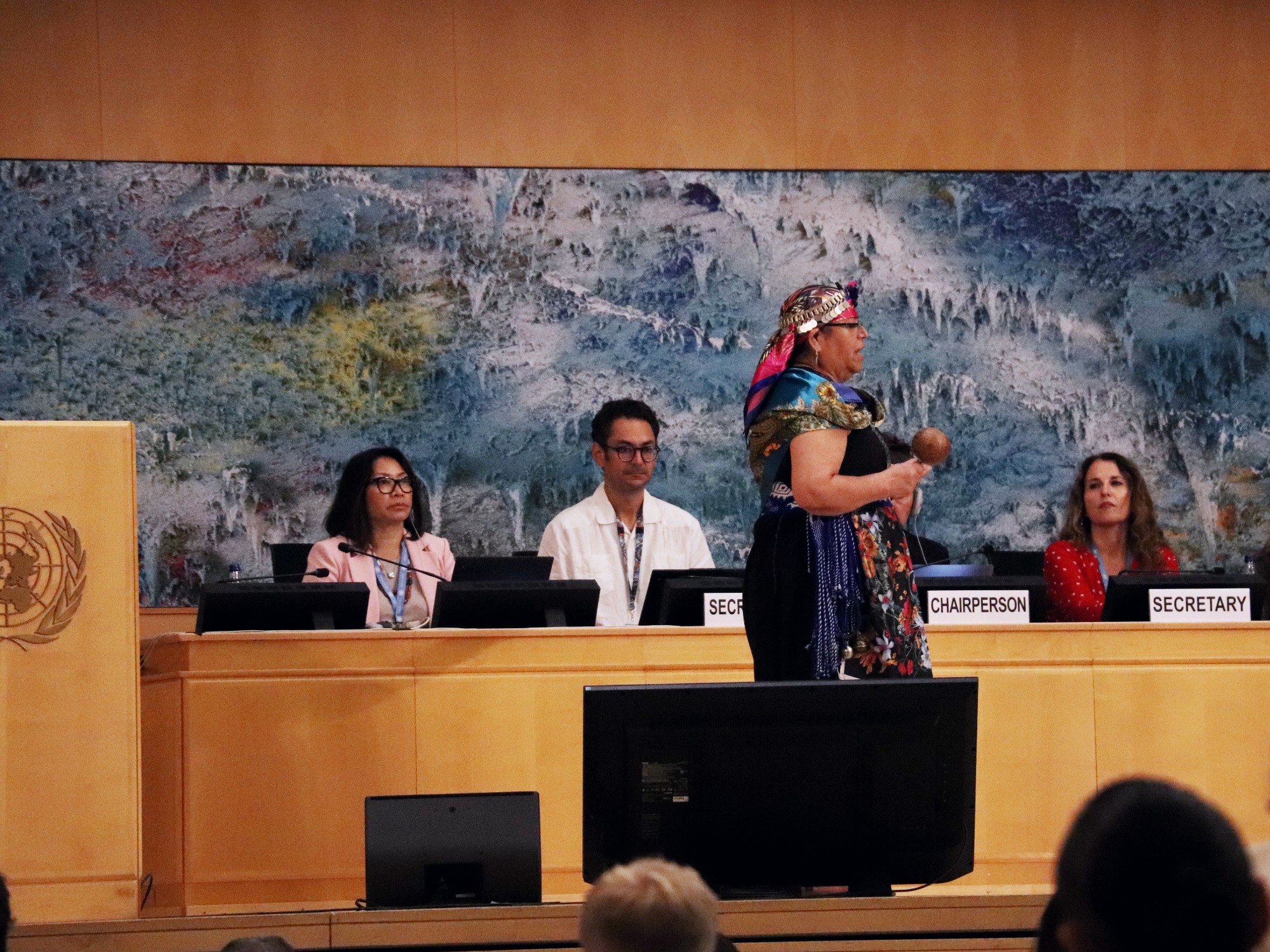
Indigenous people demand more say at the UN, as new crises hit their homelands
Indigenous nations live ‘on the frontlines’ of climate, conflict and new tech. But their voices remain sidelined in the global halls of power.
-
Through their lenses: Showcasing the work of our 2026 ReFocus fellows
Get to know our photojournalism training cohort through a series of portraits shot during a week in Kjipuktuk (Halifax)