Are the Fairy Creek blockaders protesting legally?
The Discourse answers community members’ questions about Fairy Creek.

This story was originally published on June 24 by our partners at The Discourse. For more analysis on Fairy Creek, sign up for The Discourse’s pop-up newsletter.
While our rights to protest are protected under the Charter of Rights and Freedoms, it’s an offense to block a highway or a workplace “for the purpose of compelling a person to abstain what he or she has a lawful right to do,” according to the April 1 court decision that approved logging company Teal-Jones’ request to ban blockaders so the company could continue cutting down trees in the area.
“What is at stake in this Court is the maintenance of law and order and respect for the rule of law. The protestors are free to protest, demonstrate, and attempt to influence the government in any lawful way they may choose. But no one has the right to disobey a court order, no matter how passionately they may believe in their cause.”
Refusing to abide by a court-ordered injunction is typically a civil offense, known as a civil contempt of court. But if a person further resists the injunction following a civil charge or resists police efforts to enforce the injunction it can result in a criminal charge, known as a criminal contempt of court.
Importantly, members of Pacheedaht and Ditidaht First Nations, whose traditional territories encompass what is called Fairy Creek, have special rights when it comes to accessing their lands as they have their own nations’ laws to follow. As journalists Erin Seatter and Jerome Turner ask in an explainer for Richochet related to the Wet’suwet’en standoff, these types of conflict beg the question: “Whose laws apply? And which laws?” Legal scholars have found that the use of injunctions overwhelmingly favours corporations at the expense of Indigenous rights.
At the same time, the tradition of civil disobedience uses non-violent protest as a way to challenge laws that are deemed unjust. In an information sheet about arrests created by organizers of the Fairy Creek blockades, they remind potential arrestees to stay calm and peaceful and remember that “what is legal is not a measure of what is right.” Demonstrators that are currently chaining themselves to trees or underground say they are knowingly risking arrest to protect old-growth forests. Whether or not their actions respect the rights and wishes of the Indigenous title holders of the lands in question is another matter.
History shows that these tactics work. Canada’s largest act of civil disobedience, which resulted in nearly 1,000 arrests in the forests of Clayoquot Sound in the ‘90s, resulted in significant changes to forestry practices in B.C. and the creation of a provincial park. Logging company Macmillan-Bloedel gradually turned over control of its tree farm licence to the Nuu-chah-nulth First Nations, The Narwhal reports.
In its section outlining lessons from other jurisdictions, the old-growth strategic review notes that “most of the areas that adopted a system of significant old forest protection did so as a response to overwhelming public pressure that included either civil disobedience or legal actions.”
Author
We live in a media ecosystem that thrives on misinformation. Big Tech and AI companies are consuming the work of real human beings and Canadian news has been banned on Facebook and Instagram.

And yet, I have hope for journalism because of the work we’re doing at IndigiNews.
At IndigiNews, we embody tâpwêwin — the Cree value of integrity and responsibility in truth-telling. We are committed to our independent, Indigenous-led newsroom rooted in community, accountability, and relationality. We believe storytelling is a sacred fire that connects our pasts, presents, and futures through the storytellers in our Storytelling Lodge. IndigiNews creates space for Indigenous journalists, storytellers, Knowledge Keepers, and communities to gather, learn, and share stories that matter.
As a registered charity, we are building a fire that allows our work not just to ignite but to thrive. Rather than relying on advertising or corporate acquisition, IndigiNews is sustained by people like you who believe Indigenous stories are important for the future of our communities.
Your support is making a real difference.
Our community of supporters, our Firekeepers, make it possible to grow our newsroom, publish award-winning journalism, train emerging Indigenous journalists through initiatives like the ReFocus Photojournalism Fellowship, and publish trustworthy stories that serve our communities across the country. Every story we publish helps fill in gaps left by mainstream media and ensures Indigenous perspectives are represented with care, accuracy and respect.
But there is still more work to do.
As the media landscape becomes more and more uncertain, community support is as necessary and essential as it’s ever been. Every new Firekeeper helps protect the independence of our newsroom and strengthens journalism that is accountable to our many and varied communities over corporations.
That’s why we’re inviting you to become a Firekeeper.
Firekeepers tend to and protect the sacred fire. Your monthly contributions directly support IndigiNews’s Storytelling Lodge, helps sustain our independent, Indigenous-led newsroom, and ensures future generations of Indigenous storytellers have the resources they need to do the work.
As a registered Canadian charity, all eligible donations receive a charitable tax receipt.
If you believe Indigenous stories matter, if you value independent journalism, and if you want to help build a strong future for Indigenous media, we invite you to join our circle of Firekeepers today.
Together, we can keep the fire burning.
— Eden Fineday, Publisher, IndigiNews
Support us nowLatest Stories
-
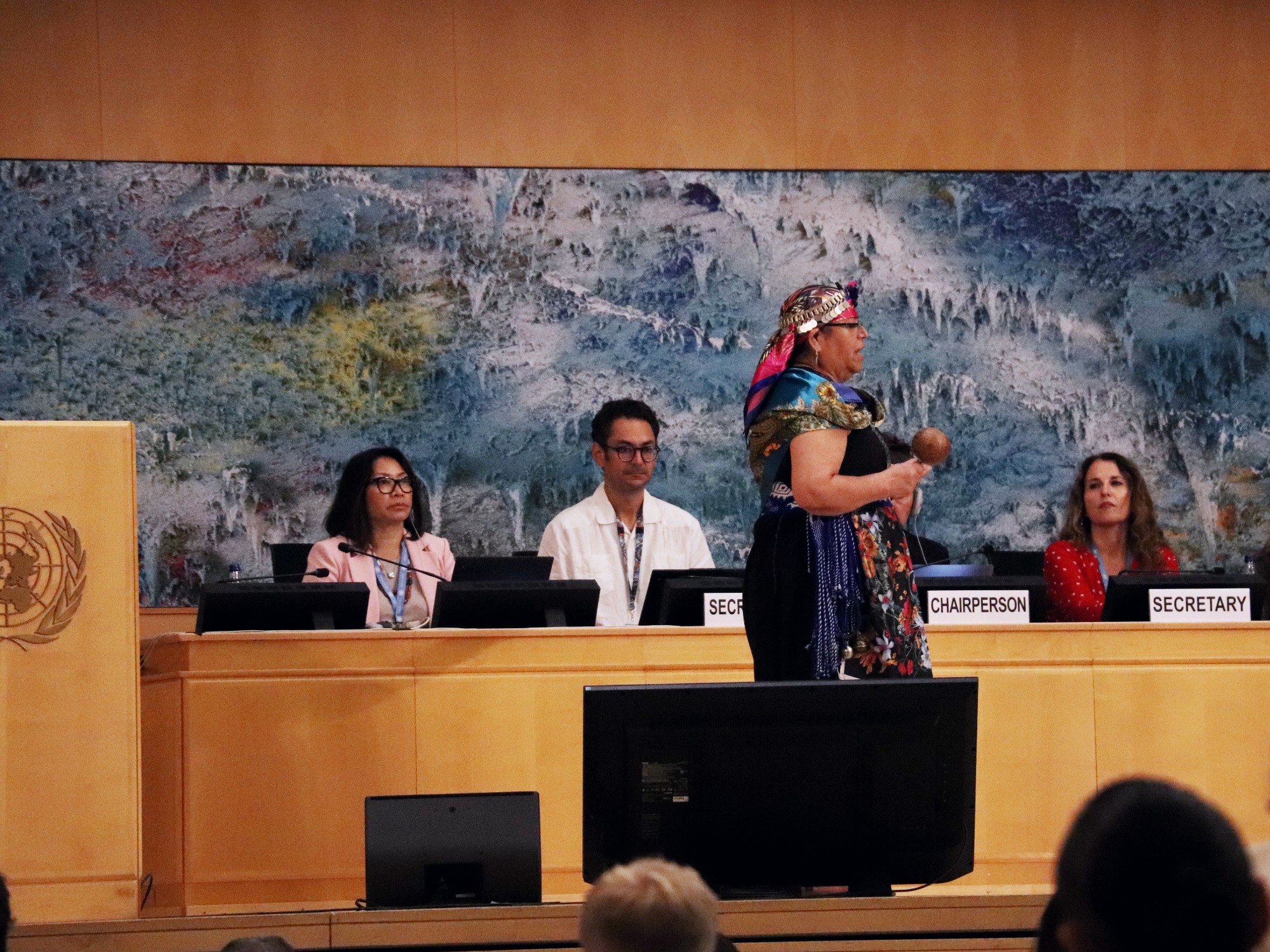
Indigenous people demand more say at the UN, as new crises hit their homelands
Indigenous nations live ‘on the frontlines’ of climate, conflict and new tech. But their voices remain sidelined in the global halls of power.
-

Through their lenses: Showcasing the work of our 2026 ReFocus fellows
Get to know our photojournalism training cohort through a series of portraits shot during a week in Kjipuktuk (Halifax)