Education administrators concerned over disparities in COVID-19 funding for First Nations students
$112 million in federal funds distributed to First Nations schools is inaccessible to the approximately 9,000 First Nations students who go to school off-reserve in B.C.

First Nations students attending schools off of reserves are receiving significantly less in federal education funding for COVID-19 related costs than their peers who attend schools on reserves.
Extra federal funding has been necessary at all schools across the country so they can operate safely. However, First Nations education administrators are concerned about the disparities in per-student funding among First Nations kids in B.C.
Specifically, the First Nations Education Steering Committee says that the “majority” of federal funding has gone to schools on-reserve. They say this gap in funding is unfortunate.
“It is essential that First Nations receive equitable funding to support all of their students, regardless of where they live or are enrolled in school,” reads an email statement sent to IndigiNews by the organization’s president Tyrone McNeil. The statement was jointly signed by Dr. Verna Billy-Minnabarriet, chair of the Indigenous Adult and Higher Learning Association.
Funding is based on what kind of school kids are attending, rather than whether or not they belong to a First Nation.
COVID-19 education funding
The federal government has allocated $242.2 million to B.C. to distribute to school districts for the 2020-2021 school year. At least $202 million will be distributed to public school districts. Based on enrollment numbers from Fall 2019, this would work out to roughly $370 in federal funding per B.C. public school student.
So far, no specific additional federal funding has been announced for First Nations kids who attend B.C. public schools off-reserve. This means that schools would be receiving the same amount of COVID-19 funding for First Nations students as they are non-First Nations students.
In addition, B.C. has kicked in $45.6 million of provincial money in extra funding for its public and independent schools across the province.
At the same time, on-reserve First Nations schools across Canada, which operate separately from the provincial school system, received a $112 million injection of extra cash from the federal government in August. Based on 2016-2017 federal enrolment numbers, this breaks down to about $1,600 per student for schools on reserve.
The First Nations Education Steering Committee says the federal funding for kids at schools on reserves has helped school administrators to respond to “unexpected costs resulting from the pandemic.” This includes costs related to additional technology, learning resources, staffing, and supplies.
According to the email statement, the approximately 9,000 First Nations students who live in B.C. on reserve, but attend schools located off-reserve are receiving “far less funding.”
“In many cases, those students are now being supported within communities.”
A recent statement from the steering committee and the First Nations Schools Association, says the committee has distributed $6.7 million in COVID-19 funding for First Nation schools in B.C.
It also said it would be allocating $3 million from the federal government’s Safe Return to School Fund and $2 million of its own funds to bands to support students that go to school off-reserve.
First Nations schools on Vancouver Island
Kevin Brand, the principal of the Qwam Qwum Stuwixwulh School in Nanaimo, B.C., says that his school has been well supported throughout the pandemic. This is despite the fact that it is not receiving federal funds that are distributed through the First Nations Education Steering Committee.
“We’ve been able to have both time and resources to properly put in protocols and safety measures to ensure that families can be assured of the foundation of safety for all their kids,” he says.
“They can have confidence in sending their children to a safe environment.”
Despite being on-reserve, the Quam Qwum Stuwixwulh School is a bit of an anomaly for funding, Brand says. The school is managed by Snuneymuxw First Nation along with the Nanaimo-Ladysmith school district. Therefore it only receives the per-student funding intended for B.C. public and independent schools.
Ted Cadwallader, the director of instruction at Nanaimo-Ladysmith Public Schools says that the majority of the district’s extra funding has gone to paying additional custodians. This is to ensure that schools are fulfilling safety guidelines set out by the provincial government.
At another Vancouver Island school serving First Nations kids, the concerns are different.
Reed Allen, the principal of Gwa’sala-’Nakwaxda’xw School, an independent First Nations elementary school on the Tsulquate reserve in Port Hardy has said previously that despite the funding announcements, his school is still facing some challenges. Specifically, his biggest budget concern is paying for additional staffing, such as when teachers call in sick.
For schools in less populated areas like his, it can be more difficult to arrange for substitute teachers. Allen says that the teachers available to his school may have to travel from out of town to teach and may have been at multiple schools in the same week.
With additional funding, Allen says he would like to hire a support teacher, and perhaps offer online learning to his students.
IndigiNews reached out to Indigenous Services Canada for comment, but did not get a response by the time of publication.
In previous statements, Minister of Indigenous Services Marc Miller has stated that Indigenous Services Canada will remain “flexible” and will be there to support First Nations with the specific issues that they face.
“We will also address challenges in urban areas, where we have seen larger spikes of positive cases of the virus,” reads Miller’s statement from August.
“Those children who attend school off-reserve to study are particularly vulnerable. We will continue to work with communities to make sure the needs of their children and families are met.”
Author
We live in a media ecosystem that thrives on misinformation. Big Tech and AI companies are consuming the work of real human beings and Canadian news has been banned on Facebook and Instagram.
And yet, I have hope for journalism because of the work we’re doing at IndigiNews.
At IndigiNews, we embody tâpwêwin — the Cree value of integrity and responsibility in truth-telling. We are committed to our independent, Indigenous-led newsroom rooted in community, accountability, and relationality. We believe storytelling is a sacred fire that connects our pasts, presents, and futures through the storytellers in our Storytelling Lodge. IndigiNews creates space for Indigenous journalists, storytellers, Knowledge Keepers, and communities to gather, learn, and share stories that matter.
As a registered charity, we are building a fire that allows our work not just to ignite but to thrive. Rather than relying on advertising or corporate acquisition, IndigiNews is sustained by people like you who believe Indigenous stories are important for the future of our communities.
Your support is making a real difference.
Our community of supporters, our Firekeepers, make it possible to grow our newsroom, publish award-winning journalism, train emerging Indigenous journalists through initiatives like the ReFocus Photojournalism Fellowship, and publish trustworthy stories that serve our communities across the country. Every story we publish helps fill in gaps left by mainstream media and ensures Indigenous perspectives are represented with care, accuracy and respect.
But there is still more work to do.
As the media landscape becomes more and more uncertain, community support is as necessary and essential as it’s ever been. Every new Firekeeper helps protect the independence of our newsroom and strengthens journalism that is accountable to our many and varied communities over corporations.
That’s why we’re inviting you to become a Firekeeper.
Firekeepers tend to and protect the sacred fire. Your monthly contributions directly support IndigiNews’s Storytelling Lodge, helps sustain our independent, Indigenous-led newsroom, and ensures future generations of Indigenous storytellers have the resources they need to do the work.
As a registered Canadian charity, all eligible donations receive a charitable tax receipt.
If you believe Indigenous stories matter, if you value independent journalism, and if you want to help build a strong future for Indigenous media, we invite you to join our circle of Firekeepers today.
Together, we can keep the fire burning.
— Eden Fineday, Publisher, IndigiNews
Support us nowLatest Stories
-
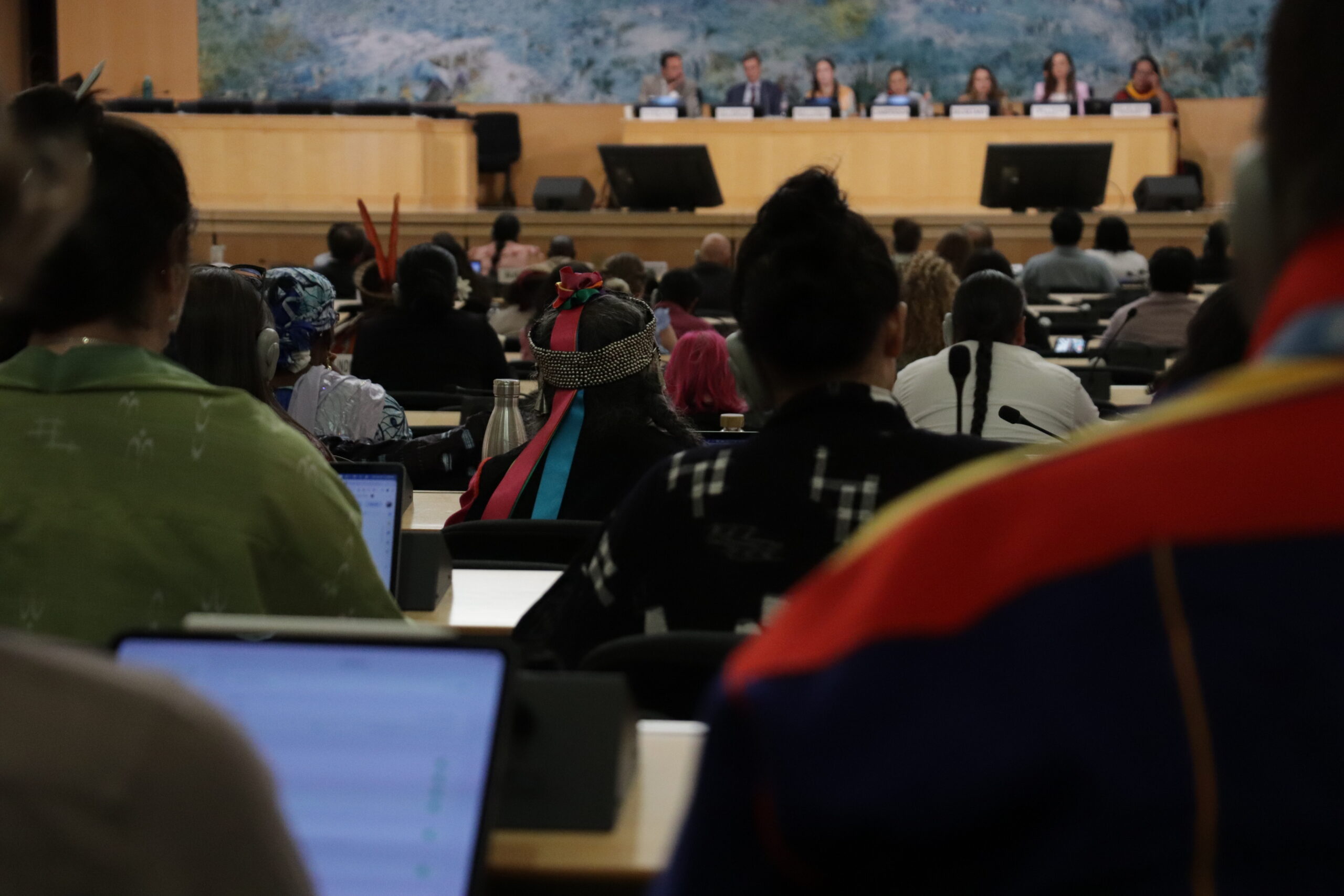
Indigenous leaders give the UN a roadmap for protecting their peoples
Amidst prayers and vows of solidarity, UN Expert Mechanism on the Rights of Indigenous Peoples ends annual meetings with demands for ‘action we’re not seeing globally’
-
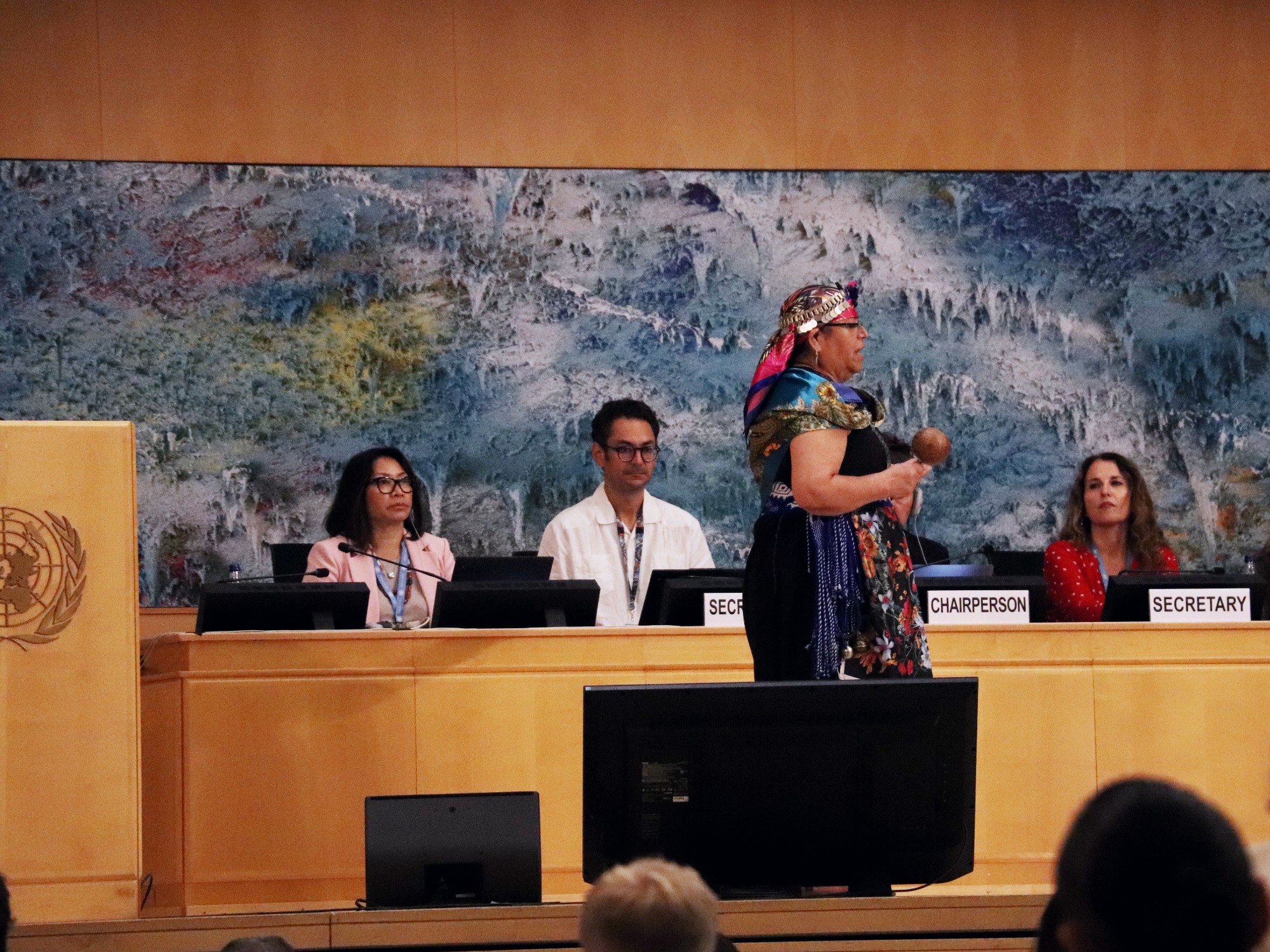
Indigenous people demand more say at the UN, as new crises hit their homelands
Indigenous nations live ‘on the frontlines’ of climate, conflict and new tech. But their voices remain sidelined in the global halls of power.